Skip to content

Art is 80

  • I Just Do Not Understand! Or Do I?

    November 12th, 2024

    There is no reason why Donald Trump won the recent presidential election. His vote totals were almost exactly the same as they were in 2020 (just about a million votes more, but the population increased). But Kamala Harris earned almost 10 million votes fewer than Joe Biden received four years ago. And, according to the New York Times, this lowering of voting occurred across all areas and all voting groups.

    All I can think of is that, in 2020, people were feeling the problems with the Trump chaos, and in 2024, it had receded. But that doesn’t really satisfy me, nor do the various other possible causes listed in the Times’ front page article today. I also can’t believe that 10 million people felt that Kamala Harris was unqualified, while Joe Biden was qualified to run the country. And I can’t blame it on the way she campaigned which, although there were a few things she said that she should not have, was very professional and, I thought, demonstrated her capabilities.

    Of course, sitting vice presidents are often faced with dilemmas campaigning for the presidency, especially when they are vice president to unpopular presidents, as Joe Biden now clearly is. They cannot be disloyal to the president, yet they must show that their administration will not be a continuation of an administration that many found less than successful. When asked what she wished the Biden administration had done differently, on national TV, Harris simply said “nothing”. And, even though she tried to set a more independent course later, this remark stuck. Perhaps fear of another four years hung in the air.

    So why did so many people stay home? Why did so many people stay home when, supposedly and perhaps accurately, “democracy was at stake”? Wouldn’t such a dire warning increase the turnout? After all, what is more essential to democracy than voting?

    Let me suggest another possibility, one that I have not heard elsewhere (yet). American democracy will be 250 years old in less than two years. 250 years is a long time, and maybe we are tired of it. Maybe we have questions about the effectiveness of democracy (democracy as it is manifest in this country), maybe we think our democratic vote doesn’t really matter. In part this might be because each of us is a very, very small peg in an increasingly large machine. Or it may be that the distortion caused by the Electoral College (why do I capitalize that?) diminishes our vote (even though the smaller vote totals were equally found in the battleground states). Maybe we compare ourselves with other “western” countries, including Canada and much of Europe and see that our lives are shorter, our crime is worse, our infrastructure is well behind those of the others, our income gaps are greater, our internal dissent seems more pronounced, our health care system is messed up, our borders are porous, our economy looks better statistically but not per our bank accounts, and so forth. Maybe we simply don’t think, in 2024, American democracy works.

    And if we don’t have faith in our 250 year old (and very hard to change) system, we just sit back and let others take over. We want a parent (father) figure. Someone who will protect us and take care of us, and keep us from making decisions we seem incapable of making. We don’t want democracy – we want a strong leader, so that we can forget about the greater world, and find our individual worlds more welcoming.

    This would, in a sense, explain why right wing Christian evangelicals, in spite of the details of their faith, flock to Trump. Just like Jesus, or God, or a combination (or maybe they are the same, I don’t know evangelicals think about that), Trump will lead us; we can look up to him. We can rely on him. He will be our protector and savior.

    You (the collective you) and I pay a lot of attention to politics. Most people really don’t. They just want to know that their country is working in their interests. And this is why, for those of us who do pay attention, people often seem to vote against their interests. They just don’t think about how policies that might seem helpful at first glance would, in fact, work out. And they aren’t going to think in those terms; they don’t want to. They want someone else to do that type of thinking.

    Of course, we will see how all this works out. Trump inherits some of Biden’s successes, and we don’t know what he will do about them. Will he try to halt the push for infrastructure improvements, or will he try to take credit for them? That is just one question of many. And how serious will he be in letting Elon Musk fire hundreds of thousands of federal employees in order to bring our national debt down?

    I look at Trump’s presumptive policies and believe that they will be destructive. We shall see what happens. And we will be able to alter the course of American government once again in 2026 if things look bad. Unless everyone decides to stay home.


  • The Muddy Missouri and the Mighty Mississippi – a Lucky Strike Extra

    November 11th, 2024

    From the airplane, you can see what happens. Just north of St. Louis at the confluence of the two rivers. The first time I have been able to get a picture this clear.

  • “Here you go, Sugar Pop.”

    November 11th, 2024

    I quote Sharon, the Alamo Car Rental shuttle driver, as Edie gets on the bus to take us to the St. Louis airport. How she knew Edie’s pet name I don’t know.

    We are waiting for our plane, having breakfast across from Gate C9, getting enough energy to sprint to Gate C24.  Boarding is in 35 minutes. As we left Judy’s gated community, I once again tried to understand the instructional sign at the exit, and once again failed.

    Carlyle Lake Drive

    We are eating at the Kingside Diner and I give the spinach omelet an A+. It has spinach and onions, they have a sauce on top, and they fold the omelet over a lightly fried egg with a fairly runny yolk (or that’s what it seemed), giving it moisture you don’t normally find in an omelet.

    Kingside Diner

    The only downside is that we were sitting next to the winner of the Most Obnoxious Father of the Year, sitting with his quiet wife and his two unfortunate children who were clearly unable to do anything correctly.

    Time to board..”and remember a fanny pack counts as your personal carry on item”.

    We are on the plane.

    What else to report from this morning? We had to fill the gas tank before turning the car in. Anyone know how to open the gas cap on a Mitsubishi Outlander Sport? The obvious lever opens the hood. Thanks to the Internet, I found a 44 second video, made by someone who was very sympathetic, knowing that without his help, the search might take hours.

    Regrets from the trip? Sure. First, I didn’t buy any pickles.

    Pearlies

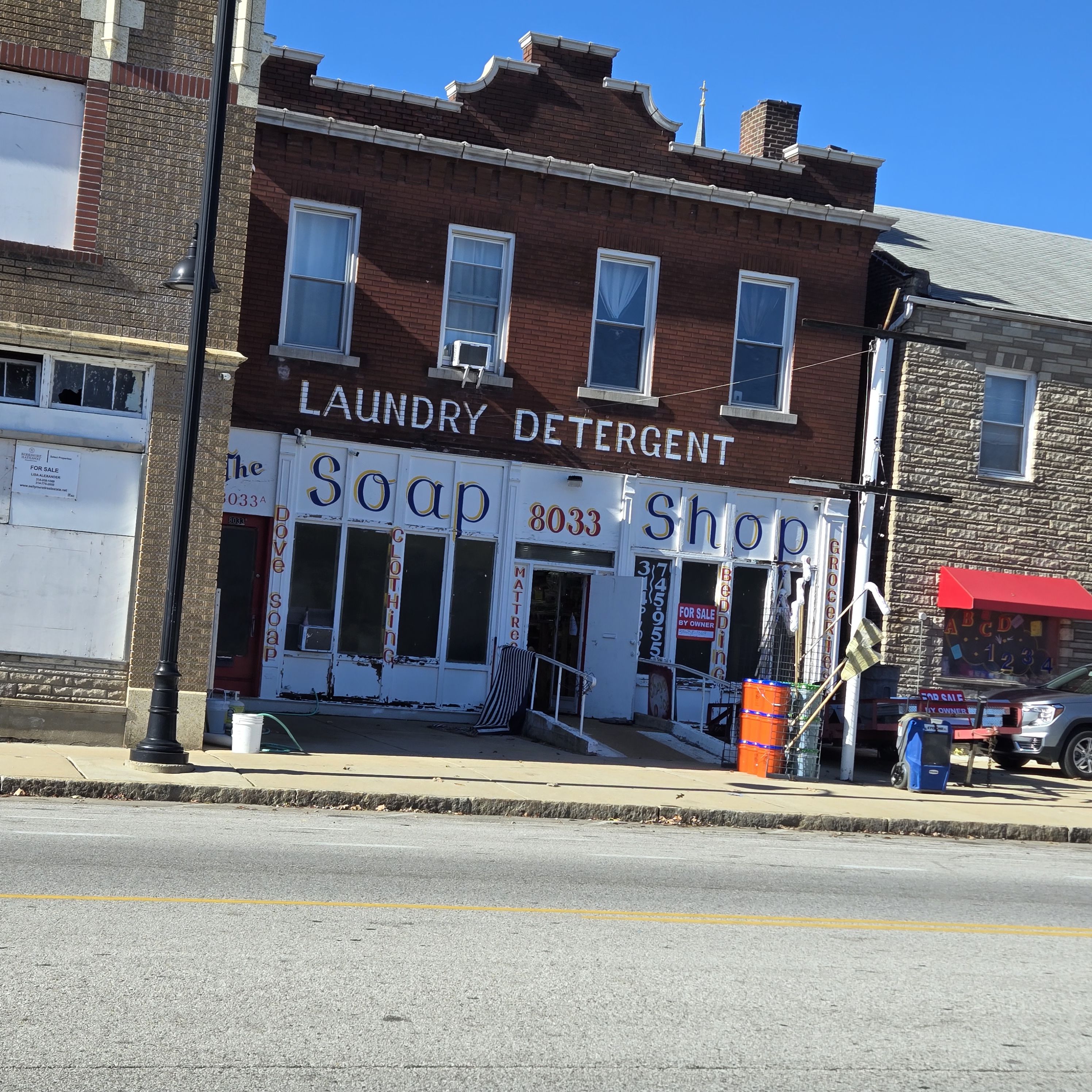
    And second, I didn’t fill up on detergent.

    The Soap Shop

    But we did see the Mississippi from Riverview Park. Bet you never even heard of that park. Bet I am right, too.

    Riverview Park, North St. Louis

    Time to stow my stuff, they say.

  • Random Notes from St. Louis

    November 10th, 2024

    We are spending a lot of time with our cousins Donna and Ed Karfeld, and our host with the most, Judy Pass. We had an excellent whitefish dinner with good friends Michael Bobroff and Wendy Olk, and last night spent time with friends Pat and Brigid McCauley, Betsy and Stuart Zimbalist, and Jerry Lander. Tonight adding cousins Bob, Simone, Rich and Jacqui Schnidman to the mix. What more could you want?

    We return to DC tomorrow, so it looks like we may miss some of our usual stops, like the Art Museum, but that’s life. People are as upset about the presidential election here as much as they are in Washington, it appears, but I have been avoiding unnecessary mourning.

    We did go to a new, for us, spot – the Union Station train shed, home to a large Ferris Wheel, carousel, and all the usual accompaniments. It also houses the St. Louis Aquarium. We did not go in – as you know, aquariums (should it be aquaria?) are quite pricey. I think it’s about $30 per person for seniors.

    But we did gape at the extensive rope course. The instructions are daunting.

    The adult course

    And the reality more so.

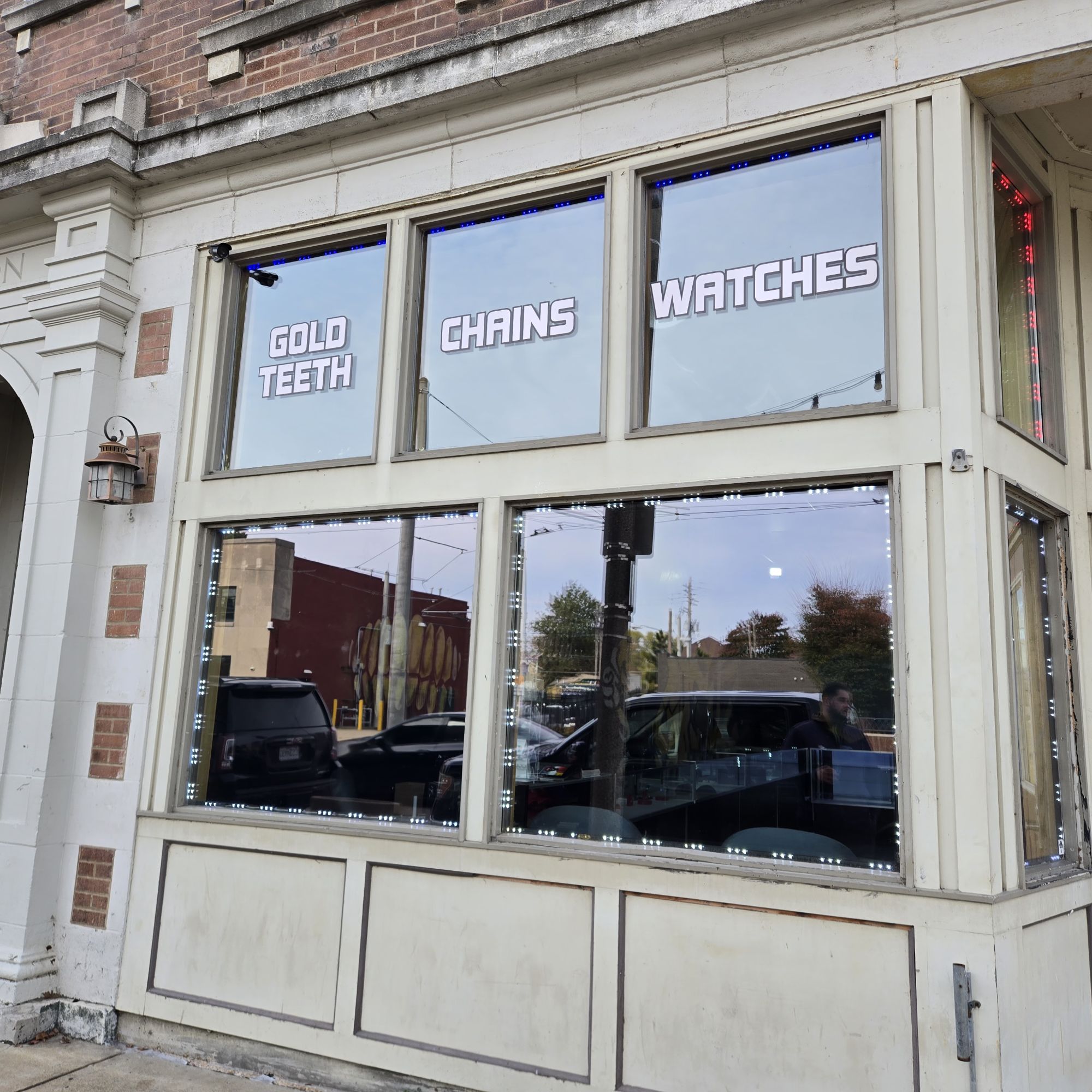
    And, oh, yes, the gold teeth. In case you forgot:

    Stl Grillzz

    Grillz (or, to the more conservative,  grills) are removable or permanent gold (or silver, or diamond studded) dental covers or replacements, which Wikipedia says started in the hip hop world and are now “mainstream”. Really?

    When we saw this shop, in the 5800 block of Delmar, it hadn’t opened for the day yet, but the owner of the vape/hookah supply store next door told me that the owner was a master craftsman, whose customers included nationally known celebrities, including people as famous as Chris Brown (who he?). I looked up Chris Brown, saw many photos, none with grillz. He also told me that the owner worked with a dentist, who did the actual implant work. Looking at the store’s website, I see you can get a full diamond coated mouth at $900 per tooth. Looks like a steal, to me.

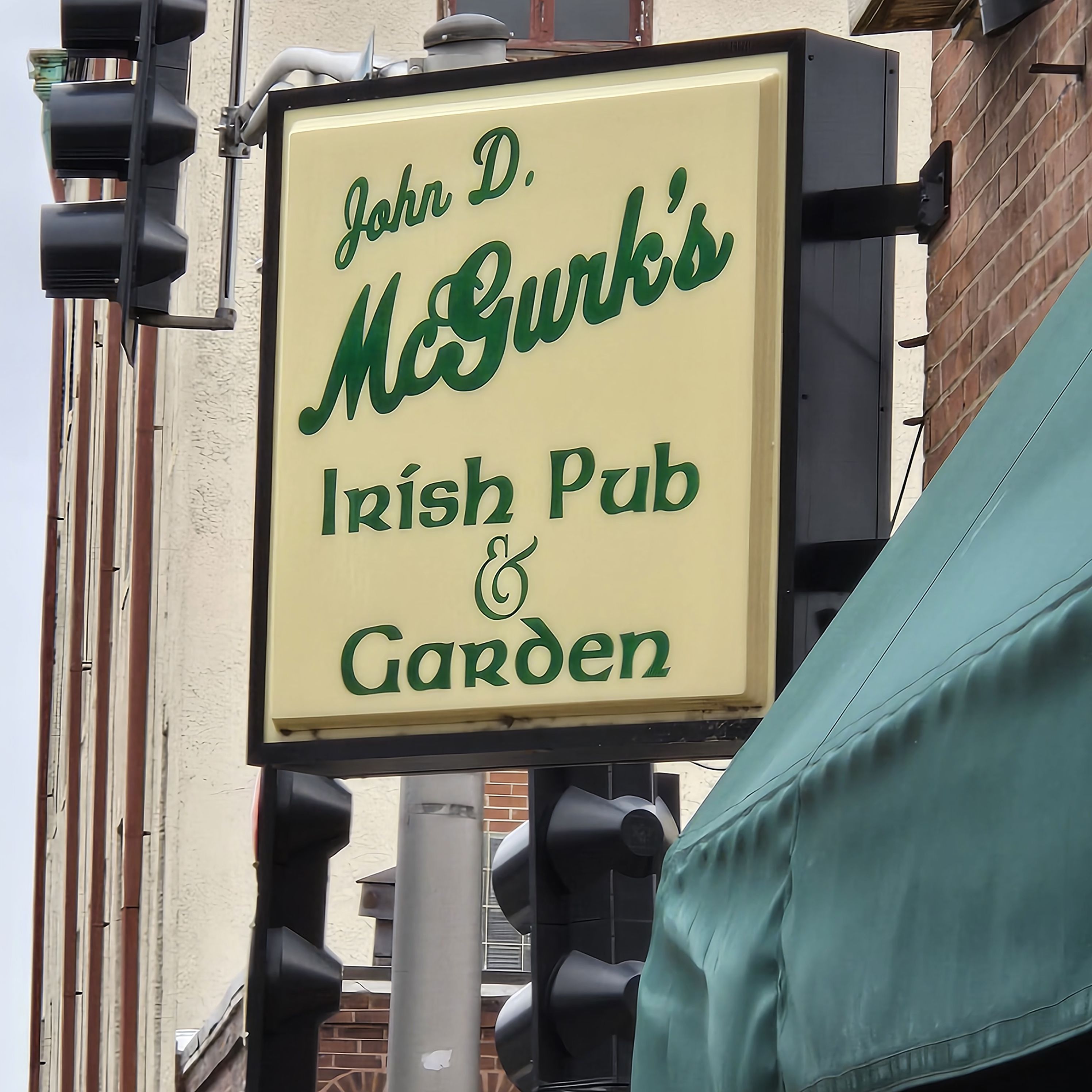
    I also had a cup of Blueprint Coffee, which I highly recommend; it’s a very serious place. We had lunch at the sprawling McGurk Irish pub in the Soulard neighborhood, and dinner at Oishi, a Japanese restaurant in Creve Coeur.

    McGurks
    Blueprint Coffee

    At Oishi, I asked our native Japanese waitress about this sign:

    At Oishi

    What is this? Thinking, I assume, in Japanese, she must have assumed I knew what a hamachi is, so she started, in mime, to show me what part of the body a jaw is.

    That is it from flyover country.

  • Despair in the USA, Riot in Amsterdam and Gold Teeth in St. Louis

    November 9th, 2024
    “A holistic harm reduction program for St. Louis”

    So many people I know are not OK after the presidential election results became known. After all, I live in Washington D.C,  where over 90% voted for Harris, and I am now in St.Louis, where Harris got 81% of the vote, and St. Louis County, where she got 61%. And virtually everyone I know in these places voted with the local majority only to find out that nationwide, they are in the national minority.

    They are almost all surprised that I don’t seem as upset as most of them do (someone told me I was numb, having a delayed reaction), although I do believe that we are in for the rockiest of rides. But I am willing to sit back for now and see how things play out. I want to see if Trump can make anything better and give him credit for that, while I will of course revile him for things that don’t work out best for the country.

    But even now, there are some worrying signs, including threats that have been reported against Blacks, warning them that the reestablishment of slavery is a possibility. Of course, it’s not. But……

    As for the Jews, I don’t have much concern at this point, although you can’t take anything for granted. For sure, there are antisemites who are supportive of MAGA. But most of his supporters are not, and you can expect Trump and his evangelical base to be more supportive of Israel, although this might have a backlash effect, especially abroad. The coordinated attacks on Jewish soccer fans in Amsterdam at the Tel Aviv Maccabi game are especially worrisome. This attack was carried out by Muslim men, although many were born and raised in the Netherlands.

    We heard a very interesting podcast yesterday.  The host was Dan Senor, and the guests were Omer Bigger, a Jewish/Israeli resident of Amsterdam, and Ayaan Hirsi Ali, a former member of the Dutch  parliament, native of Somalia, and wife of historian Niall Ferguson. She is very vocal about the dangers of radical Islam, a description no longer much heard, and she has been outspoken for some time. I have read her first memoir, which I found very instructive.

    Bigger talked about the general dangers of being Jewish in Amsterdam since October 7, and gave a description of what he experienced running back home from the soccer stadium a few days ago during the recent attack. Ali spoke more generally about the problems in Europe resulting from the large number of Muslims allowed into Europe over the past 20 years, about the refusal of so many to integrate culturally and their development of what she calls a parallel society, about the influence of Hamas and other groups often sponsored by the Muslim Brotherhood, and about birth rates and prospective demographic changes and so on. She says that Europe better start working to save Europe, or the Brotherhood will eventually achieve its aims by conquering Europe through peaceful means. She said that as radical, separatist Muslims increase their numbers, all Jews in Europe will be at risk. And, she said, as Muslim numbers increase, so will their political influence.

    They both criticized the Dutch government, saying that its strong verbal response to the riots were not sufficient. They said that although there seemed to be intelligence that something was afoot before the violence occurred, nothing was done about it and security at the stadium and real time response was abysmally absent. The podcast, easy to Google, is worth listening to.

    Back home, even though only about 25 percent of the Jewish vote went to Trump, the number of Jews in his inner circle, in his family and among his financial supporters will, I believe, be protective of the Jewish community here, and about 70 percent of Israeli Jews think Trump was by far the better candidate for Israel. We shall see.

    In the meantime,  back to St. Louis. You need some gold teeth?

    “Stl Grillzz. 5898 Delmar”

    There is a story behind this, but that’s for another day (maybe tomorrow).

  • First Report from Missouri

    November 8th, 2024

    First, the preliminaries. Reagan National Airport has a Greek restaurant,  Kapnos Taverna, which surprised us by serving really good food (yes, pricey) for lunch. I had a chicken gyro, served with tahini, lettuce and a perfectly spiced slivered red cabbage, and Edie a salad with sushi quality tuna.

    Second, I learned an important lesson. Don’t put your cellphone in your pocket along with a poorly wrapped half Snickers bar. And if you want to clean the phone, don’t use a tissue.

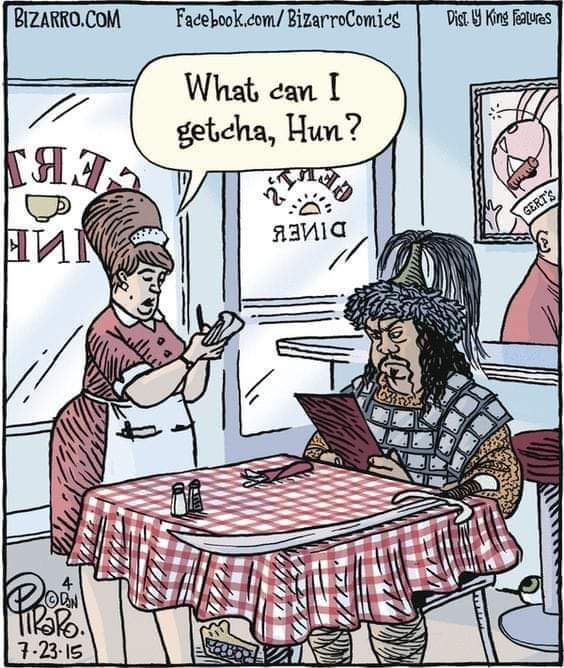
    We saw cousins tonight, but what happens in St. Louis stays in St. Louis, so we won’t talk about that. Instead? A few favorite cartoons that popped up on my Google feed.

  • And We’re Off……..

    November 7th, 2024

    To St. Louis for a few days. So that should be the subject of the next three or four posts. Unless it’s not.

    Of course, many here are still reeling from the election results. I have my concerns, to be sure, but have a much more pressing problem that I am dealing with now…..

    I wear a watch that tells me how many steps I am walking. In fact, it can tell me more than that. For example, it tells me the time. And other things I pay no attention to. It and I have always gotten along very well. Until now.

    Before I detail my problem, I should tell you that the my watch is fine as long as you just let it be. But start fiddling with it, and then you have problems. There are four buttons you can push. You can push them separately, or in various combinations. You can push and let go, or you can push and hold the buttons in for various combinations. Or you can push them (or groups of them) in sequence. But you have to know how to do that, and there is nothing on the watch itself that gives you a clue.

    Yes, there is a little booklet (emphasis on “little”) that gives you hints (it’s written in code so you can be equally confused irrespective of the language you speak), and I needed that booklet last week, when I changed the setting on the watch from Eastern Daylight Time to Eastern Standard Time (or Central Daylight Time, if you please). I figured out how to do this. But in doing this, my watch got confused, or perhaps just got angry at me for challenging its accuracy.

    The problem? My watch thinks that noon is midnight. That means that it no longer sets by steps back to zero at midnight, but at noon. So when I wake up in the morning and look at my watch, it has several thousands steps marked on it – the number of steps I have taken since noon the previous day. So, I guess I am going to set my watch to 24 hours, rather than 12/12, and then I will move the current time up, or back, 12 hours, and then go back to 12/12. But that will take effort, thought, and energy, all of which are things I seem to lack.

    One reason I lack those things, of course, is the election. I am not going to engage in the “she should have” conversations. I think she ran a pretty good campaign, and am not going to look for nits to pick. As to Trump and what will probably be two Republican Houses of Congress, I am going to take a wait and see approach. I assume I will disagree with much that they will do, and I will surely complain along the way, but I am willing to see how it works out. And if it works out well for the country and the world, so be it. And I understand that, as that eminently modest man Elon Musk has said, there may be some discomfort for everyone but him along the way.

    I also still think that Musk is the biggest danger. His plan to shrink the size of government will most likely be very disruptive, if it comes into effect, not only for federal employees and their families, but for the economy of the District of Columbia and environs, as well. Washington is in a very good place now (except for the diminution of the tax base as a result of the reduction in value of much downtown real estate), and I would hate to see that momentum turned back. But I understand that is a real possibility.

    The thousands of officials at the Department of Education may lose their jobs, and the even many more thousands at the Department of Agriculture may find their jobs being moved to, say, Rapid City, South Dakota. We shall see if any of this happens as a part of Musk’s proposed downsizing.

    We shall also see what will happen to electric cars. My guess? Chinese and certain other vehicles will not come into the country, Tesla will be given special treatment, and the electric vehicle capacity of General Motors and other domestic makers will be crippled. Again, we shall see.

    It is quite possible that most of the destabilizing positions taken by Trump in the campaign will never come to fruition. But his effect on judicial appointments will be felt for decades, and his emphasis on deregulation over environmental and climate regulations will surely be felt.

    As to foreign policy, who knows? The answer is “nobody”, because Trump’s foreign policy will be ad-lib and designed to keep everyone off balance. He believes that this fear of the unknown or unstated will keep otherwise predators on America at bay. We shall see how well this works.

    Jeez. Here I go again, immediately after promising not to nit pick now, and letting us see how things will work out. I better stop. Besides…..I have an airplane to catch.

  • Speaking About Yesterday Without Speaking About Yesterday.

    November 6th, 2024

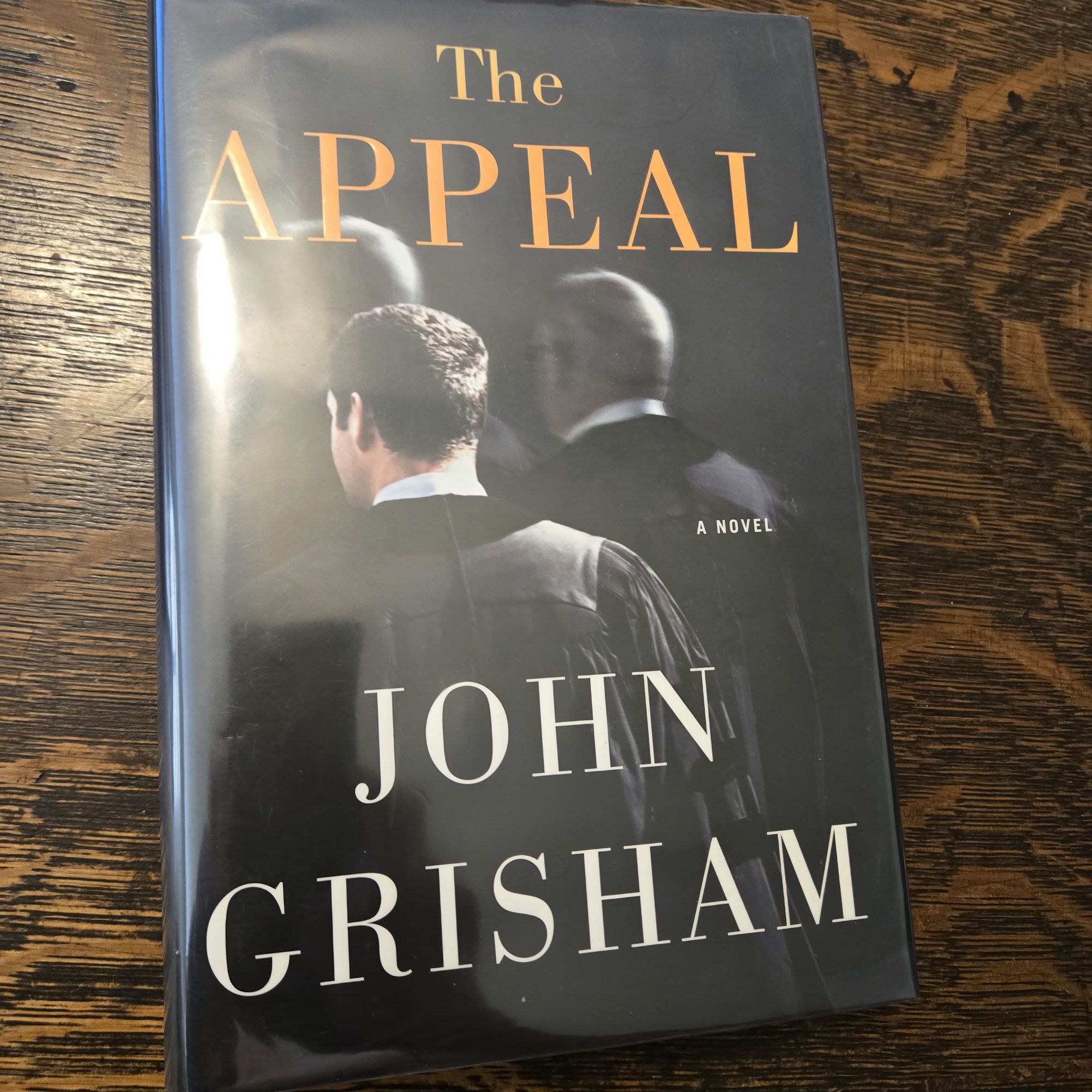
    Yesterday, when I wrote about John Grisham’s The Appeal, I suggested that perhaps all novels were about this year’s presidential race. The Appeal focused on a race to become a Mississippi Supreme Court justice that was based on disinformation believed by a large percentage of the state’s voting population.

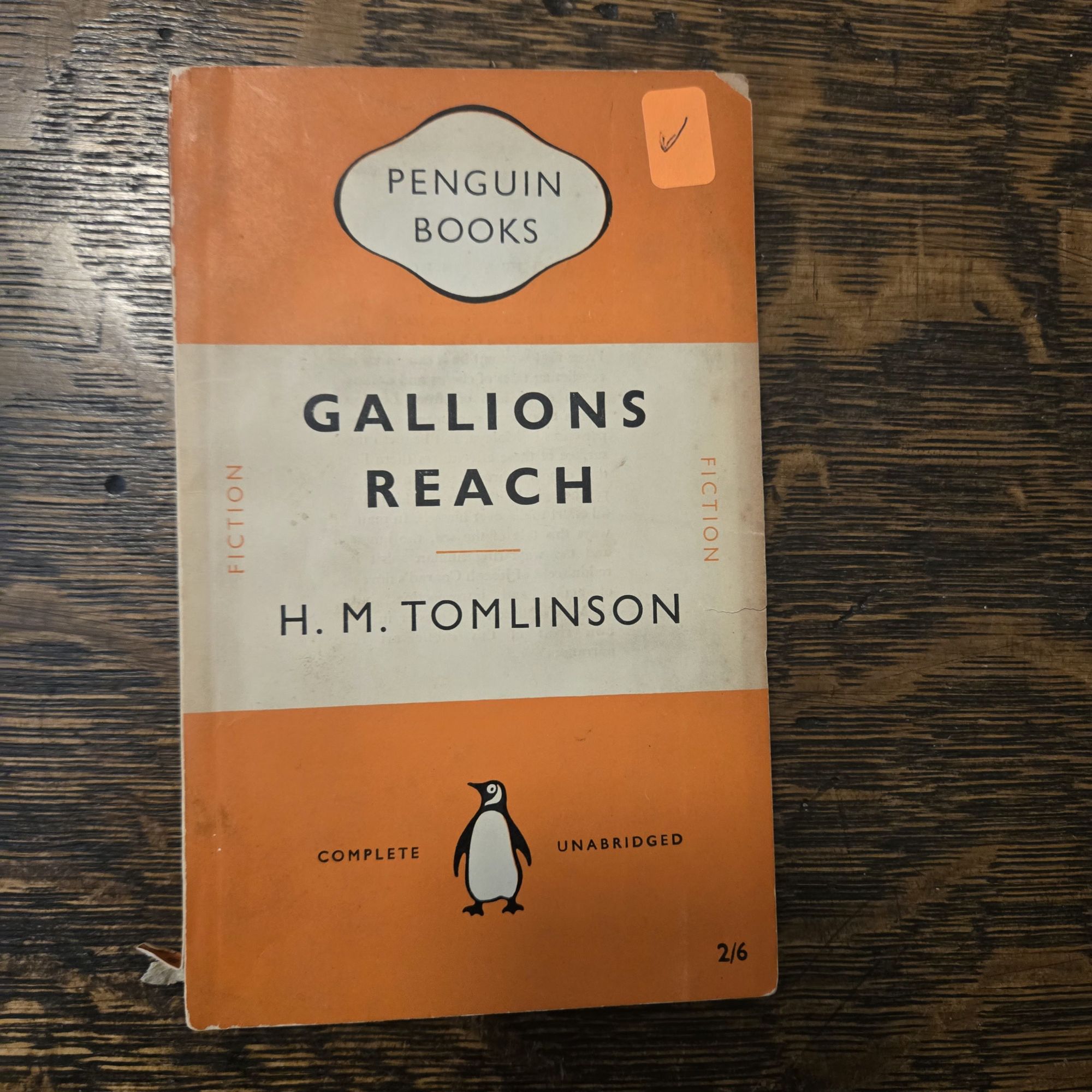
    Last night, as we watched the results of the election on CNN, largely leaving the sound off, I read through another novel that I picked up at random. It was Gallions Reach by H.M. Tomlinson (“there he goes again, how does Art find such obscure titles?”), first published in 1927.

    In this book, a young Londoner, Jimmy Colet, trying to find his identity (he has a job he doesn’t like, working for someone he doesn’t respect, and he is very much afraid of becoming trapped by his maybe girl friend), gets into an argument with his unpleasant boss, gets so mad that he finally lets him have it on the jaw, and is then faced with the discovery that he has unwittingly killed his employer.

    Jimmy doesn’t know what to do, finds himself on the Thames docks (in a neighborhood known as Gallions Reach), agrees to do someone a favor and take a package to a cargo ship and leave it there, walks onto the ship, and fails to get off before the ship embarks on a long voyage that will wind up in Rangoon, with Jimmy, not exactly a stowaway, becoming a member of the crew. The ship encounters a storm at sea, its rudder somehow is loosened and breaks off, the ship founders, Jimmy and others get into lifeboats, the ship sinks, and they are picked up by a passenger ship which drops them off at their destination. Aboard this ship, Jimmy meets an English prospector for precious metals and agrees to become his assistant in prospecting deep into the jungle. After a series of adventures, Jimmy makes his way back to Rangoon, where he finds a ship heading back to London and decides to board it, go back home, and face his fate.

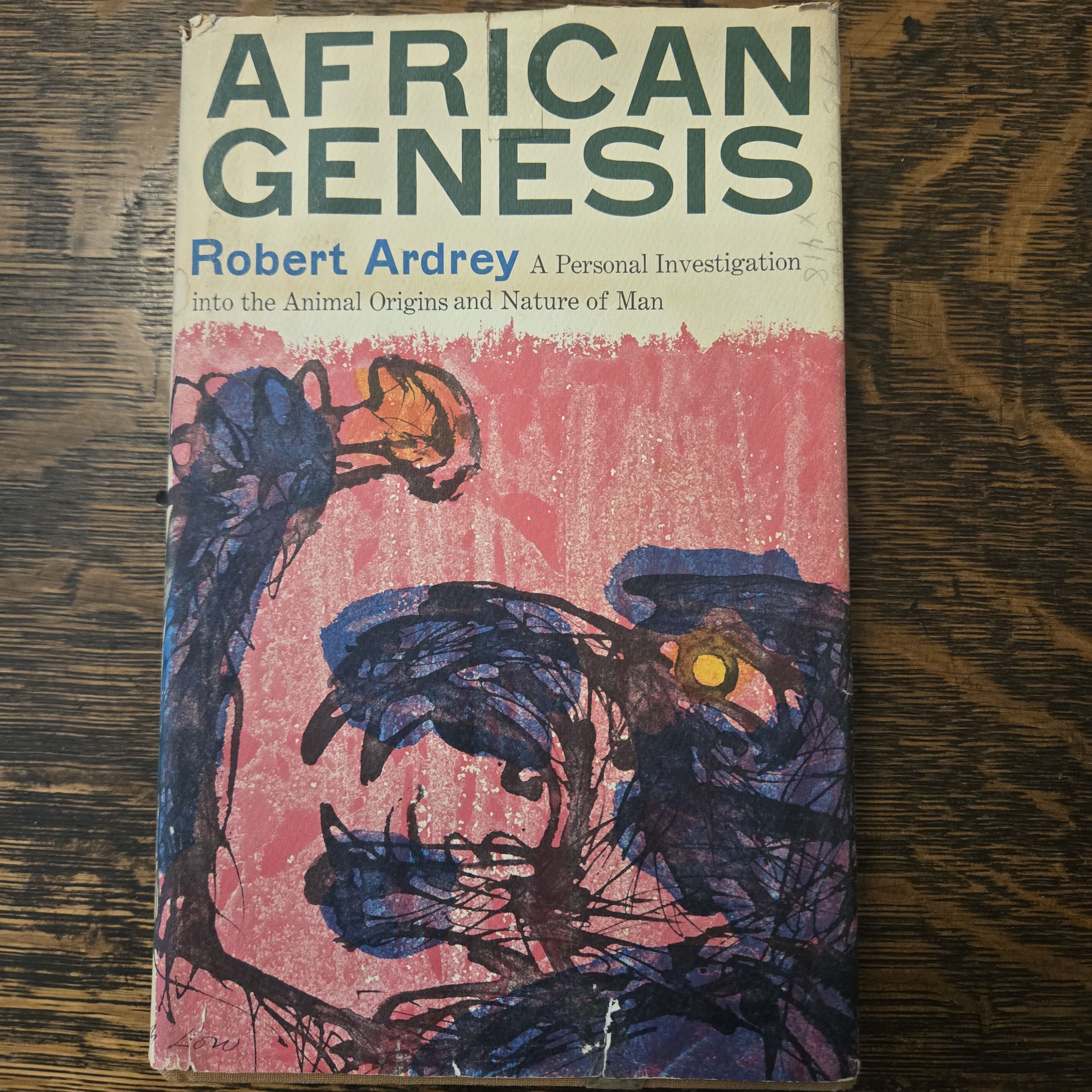
    How does that fit in with the tragedy of yesterday’s election? It reminded me of one of my all time favorite books, African Genesis, by Robert Ardrey, “a personal investigation into the animal origins and nature of man” (from the cover). Ardrey, in his 1961 best seller, looks at the various needs of man – food, shelter, health, love – the usuals. But he concludes that there is one emotional need that trumps (oh, that word again) the others. That is the need to escape boredom.

    Jimmy Colet, in Gallions Reach, is as bored as you can get. So he seeks away to escape that boredom. He slugs his boss, he runs away  to sea, he decides to prospect in the Burmese jungle with a total stranger, and he does that until his boredom escaping adventures themselves become boring. And then he heads back home.
    The economy may be strong, inflation may have been defeated, unemployment may be low…..but people are dissatisfied, they are bored, they need what they perceive as change. “Let’s vote the bastards out”, they say, not quite realizing that in the fact they are voting the bastards in.

    A stretch? Maybe, but that is the way I looked at it.

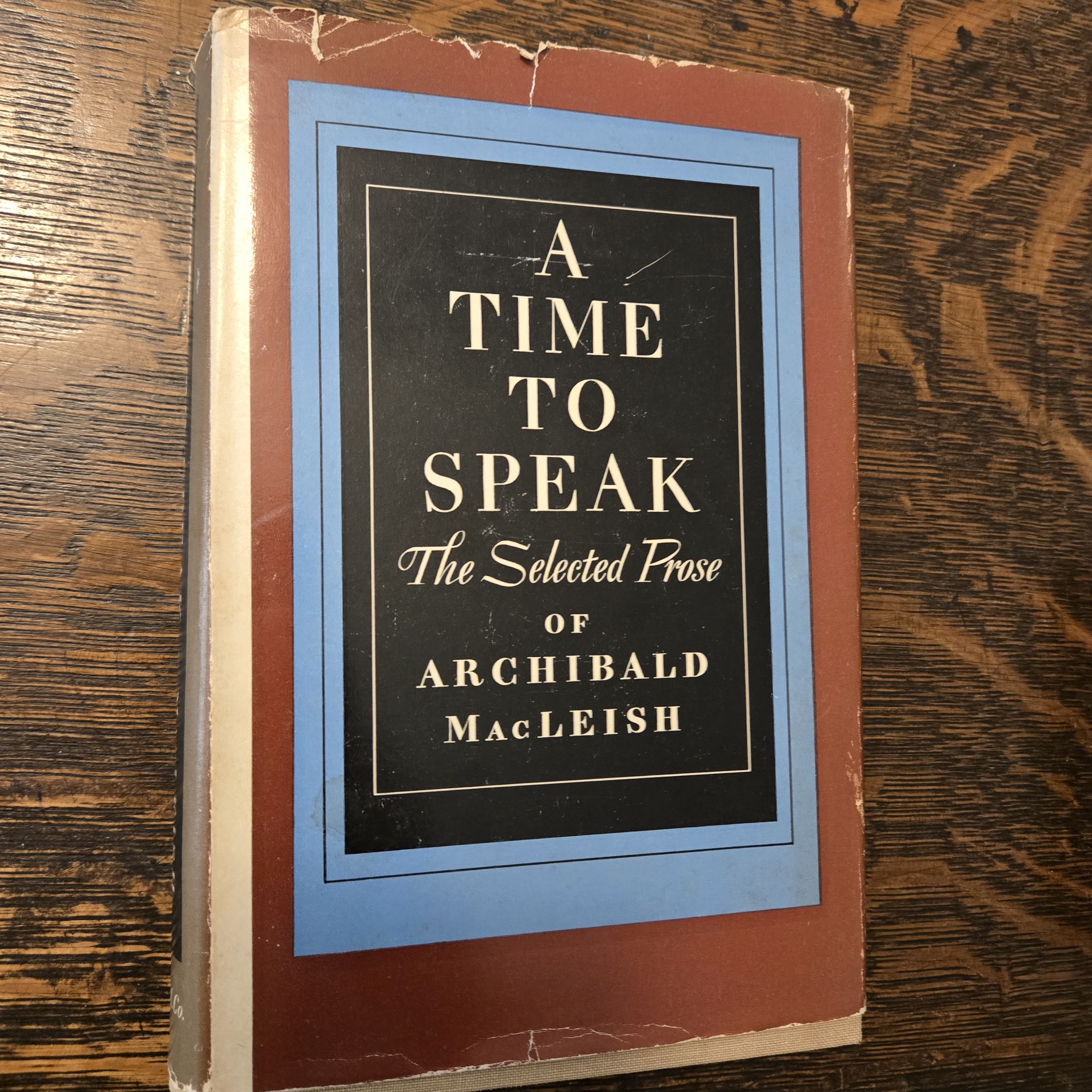
    I should add one more thing. Yesterday, on the outside rack at Lost City Books, in Adams Morgan, I found a $4 copy of Archibald MacLeish’s book from 1940, A Time to Speak, inscribed by the author. It’s a book of essays, published elsewhere in the late 1930s, that all seem to relate, one way or another, to the rise of Hitler and the destabilization of the world.

    One essay, published in 1938, is titled The Irresponsibles. I looked at it because I was intrigued by the name (thinking of the “deplorables”, I guess), and saw it was a sad and angry, and well written, diatribe against the writers and academics who saw what was going on the world with the rise of fascism and other things, and just let it go, not using their bully pulpits to fight against it. Of course, MacLeish says, some did try to alert the rest of the world, but in fact, he concludes, not enough did. In fact, very few.

    MacLeish says: “Why did the scholars and the writers of our generation in this country, witnesses as they were to the destruction of writing and of scholarship in great areas of Europe and to the exile and the imprisonment and murder of men whose crime was scholarship and writing — witnesses also to the rise in their own country of the same destructive forces with the same impulses, the same motives, the same means — why did the scholars and writers of our generation in America fail to oppose those forces while they could…….?”

    You see what I mean? All of the books, no matter which ones you pick up by accident, all of them deal with yesterday’s election.

    Now, back to my regular activities.

  • On Election Day, Do All Books Seem Relevant? Or Is The One I Just Read an Exception by Coincidence?

    November 4th, 2024

    John Grisham has written close to 40 novels, and until three days ago I had not read any of them. But I had found a signed, perfect condition, first edition of The Appeal for $4, so I picked it up and thought I would give it a try. I don’t think this is one of his better known or best reviewed novels (Goodreads 3.64), but I found it readable, quick, and interesting. I also found it very relevant to the political condition of the United States today, and to today’s presidential election.

    The plot is pretty simple. The location is a small town in Mississippi, and a jury awards $41,000,000 (actual damages and punitive) to a woman who claimed that the death of her husband and son from cancer were caused by discharges from a now-closed factory owned by a mega-company headquartered in New York The offending company appeals the case. Hence, the title.

    The plaintiff is an impoverished woman, living in a mobile home park, in a town with cancer rates 30% higher than the national average. Her lawyers are a husband-wife team, who have spent every penny they own (and much more) financing this case, and will face financial and professional ruin if they cannot collect.

    The appeal of the verdict is going to the Mississippi Supreme Court, which has a record of favoring industry in this type of case, but of favoring industry by a dangerously close margin. For this reason, the CEO (and majority owner) of the company in New York is advised to hire an expensive organization in Miami which tends to operate under the radar to help assure that they will win the appeal. And he does.

    Mississippi is one of those states where Supreme Court justices are elected, and two of the least reliably conservative justices are up for reelection. The goal of the Miami firm is to sow questions about one of the justices (the only woman on the Court), and to find someone to run for this important judicial position who will vote the way they would want him to vote. They find a personable young attorney, a partner is a firm somewhere in the south of the state, who becomes excited to run for the Supreme Court, something that his career to date has in no way prepared him for. The campaign, as it turns out, could have been the campaign that the Donald Trump’s runs have modeled themselves after. It was based on a blitz of advertising and the placement of news stories based on lies, half truths and more lies. The candidate himself is not Donald Trump. He is not as evil as he is naive, unaware that his campaign is based on a foundation of lies, and equally unaware that his campaign is being supported and funded by the head of a corporation that is facing a $41,000,000 debt. And, in fact, the $41,000,000 is an understatement, as hundreds of other individual plaintiffs are coming out of the woodwork, and at least two class action suits are in the planning stages.

    It is, to be sure, a clever campaign. His organizers are attempting to redefine the current justice, who is often dissenting from the opinions of a very right wing court, and turn her from a moderate into a perceived outright dangerous left wing out of control liberal, clearly out to destroy Mississippi. They look up old cases where she has written dissents, misstate the facts of the cases, avoid all nuances when discussing her written opinions, and promote the misstatements as obvious truths in their media and print advertising. They create two opposing candidates, not just one. The first is the lawyer discussed above, whom they present as a real son of the Great State of Mississippi, and who is able to speak well and put on a credible campaign. The other is a lawyer, who spends his time in casinos, not in courtrooms, and is generally drunk. He is there to cause chaos and make the voters aware of the overall contest for the seat on the bench (they pay him $100,000 to become a candidate, and then $50,000 to withdraw from the race when he has served his purpose).

    They attempt to keep other attorneys from filing other cases for other dead and dying plaintiffs by holding global settlement conferences, attended by teams of lawyers, which hold promise to the would-be litigators of settlements without having to file cases, but are designed to go on forever and stall for time, and nothing else.

    There are other goings on that I am not going to discuss here, except to say that they are elements which do pull the overall plot together. And, this post is not going to be a total spoiler. I am not going to tell you who won the race for the Supreme Court, or tell you what the Supreme Court decided on appeal. For these you have to read the book. I did it in three sittings of about two hours each. It is an easy read.

    But, back to my title. On this day in the real 2024, when one of the real candidates for the real presidency of the United States runs on a campaign that sounds like the campaign run in make-believe (sort of) Mississippi in make-believe 2008, this fictional story is much too real. Perhaps today, even to John Grisham, it seems more real than when it was published more than 15 years ago, in the halcyon early days of Barack Obama.`

    And again, I don’t want this to be a 2024 spoiler, either. I am not going to tell you who is going to be the next president of the United States. I am not even going to tell you for whom I voted. All I will say is this: may the best woman win.

  • Thinking About Elections (Not THE Election)

    November 4th, 2024

    One of my college roommates lives in the District of Columbia, in a condominium about fifteen minutes from our house. He also has a summer house in Nova Scotia, and generally goes there for about four months a year. This summer, he asked me to do him a favor and drop by his condo every two weeks to bring mail upstairs and water his plants. I did.

    This was not a very difficult assignment, and became rather routine. I didn’t notice anything astounding in his mail (I was surprised that he didn’t get any misdirected mail; we do all the time). One item that came to him sometime in September was the absentee ballot that all registered DC voters receive without asking.

    I looked at the ballot envelope and said to myself: “You know, I could simply fill out this ballot, sign his name to the back, and mail it in. Who would ever know?” The system seemed very vulnerable that day.

    You may remember when Republican Maryland Congressman Andy Harris suggested that, in that the hurricane damage in North Carolina might affect the ability of residents to get to the polls, that an assumption be made that the majority of those voting in western North Carolina would vote Republican and that the state’s Electoral College vote be approved by the State Legislature on that assumption.

    This proposal led to much outrage (and in fact, it seems based on mailed in ballots that western North Carolina’s total vote number is not going to be affected by the hurricane), and was presumably quickly shelved. But then I thought about Jimmy Carter. Carter, now 100, from everything that I have read, is not thinking the way he did when he was, say, 90. So my question is (and I don’t know the answer): is Jimmy Carter mentally competent enough to know or express that he wanted to vote for Kamala Harris? Let’s say, for a moment, that he can’t, or that he is not able to put an X in the box or sign his name.

    Jimmy Carter, reports say, voted for Kamala Harris using a mail in ballot. But did he fill in the ballot? Did he sign his name? Or was the ballot handled by one of his relatives or caretakers? Is it any different that it would have been if I had decided to fill out, sign and mail in my roommate’s ballot? How secure really is our system?

    The Republicans are probably going to contest certain aspects of the election process if Harris is declared the next president. They have already said as much, and telegraphed even more. And the Democrats, for good reason, belittle their suspicions or their nefarious intentions. But in fact, how secure is our system?

    We had supper last night with friends, one of whom is a Montgomery County MD election judge. His volunteer job, as I understand it, is to be convinced that the voting that has taken place at his assigned precinct has been properly performed, and then to take the results on some sort of flash drive and, with another judge, take the flash drive to a location in Gaithersburg, where all Montgomery County precinct flash drives are collected and from where the vote reporting process moves forward.

    He didn’t get a lot of training for this job, and he doesn’t think he was ever really vetted. So what would happen if he decided not to take the flash to the Gaithersburg center? Or if he had an accident on the way? And so forth. The system is not perfect, that’s for sure.

    So there are potential flaws in mail voting, and with in person voting. Mail voting seems the least secure, since anyone can sign and send a ballot. It is surprising that there are as few problems as there are. But even in person voting can be problematic.

    We haven’t yet talked about the problem of identifying eligible voters at the polls, and this certainly is another matter of controversy. Precincts only know if you are a citizen because you say (under penalty of perjury) that you are, for example. And this has become a matter of increasing controversy.

    And, since the demise of the Voting Rights Act, many states have been trying to limit voting by the opposition. Or, to put it another way, Republican states try to make it as hard as they can for presumed Democratic voters to get to the polls.

    It seems to me that we now have the techniques to avoid most of these questions. All we need is a national ID card, with built in technology, to identify a voter. Why don’t we use these techniques? Why are there stated arguments from the “left” that such national ID cards would unconstitutionally limit privacy rights, and from the “right” unstated arguments that such national ID cards would increase Democratic voters? Why do both say that the question of qualification for voting (for federal as well as state and local elections) is a matter of state law, rather than federal law? (As to the last question, you can point to the Constitution; this is one of the many constitutional elements that could be amended, updated and improved)

    We already have a number of ID cards. We have passports, we have driver licenses, we have Medicare cards, we have Social Security cards, we have Selective Service cards. Why not combine all of these into one type of ID card, distributed at birth or naturalization, updated every 5 or 10 years, with built in biometrics and photographs? Over 100 countries do have compulsory national ID cards, and many others have non-mandatory cards which serves as an ID card for voting for those who have it. We could end most of our eligibility questions if we only had national ID cards.

    While ID cards would help, and while voting by mail or by drop box clearly has its potential weaknesses, the number of problematic votes historically has been very limited, and our system is apparently about as accurate as a human-created system can be. And we see that most of the questions that are raised are partisan questions, raised generally by right wing Republican groups, or maybe foreign based groups, looking to create chaos in our voting. This of course raises a different range of questions.

  • A FIOS Update (Read Previous Post First) – Sheesh

    November 3rd, 2024

    When we left this saga this morning…..we were expecting a FIOS representative to come to our house to fix the problems we were having with channels 4 and 9 (504 and 509). The last message we had from FIOS, after the confusion over whether we had Sunday, Monday or Tuesday appointments, was that the Tuesday appointment would be the one.

    So, we were a little surprised when, at about 1:30 this afternoon, the door bell rang and Mr. FIOS was standing on the porch. The Sunday appointment, you may recall, was set by FIOS Lady #1, before I was told by FIOS Lady #2 that FIOS Lady #1 didn’t know what she was doing.

    At any rate, 6′ 4″ Al (my guess as to his height) was here to help. He was amused by the story I told him about the many contradictory appointments and told me “Yup, that sounds about right.”

    He found the problem immediately, saying that we had a unnecessary ether net wire connected to our main TV box, and that this is what was causing interference with some channels. He removed the wire and all was fine. He did not know why the FIOS rep from two weeks ago left the wire connected.

    I thought we were done. But then he said: “Look at this splitter. It’s pretty old. I think I should replace it.” And then, “I am going to look all around the house on the outside.” When he was doing that, he replaced another splitter on the outside. Each time he did anything, of course, the TV went out..

    He came back in the house and said, “you know, the main main box in the basement that controls TV, internet and phone together, is an old model, too. Let’s replace that and all your equipment will be our most up to date and we know everything will be compatible.” Of course, I said “OK” He then told me that all three would be out of commission for about 30 minutes, and that first he had to check the main main main cable box around the corner, and he left the house.

    I didn’t hear him come back in, but apparently he did. When he was finished, he proudly showed me our new main main box in the basement and another new splitter he put in, left me his phone number, and disappeared into the Verizon horizon.

    Let us hope all is well. For at least a while. If not, I have his cell number. And he was a very nice guy.

  • My Trials and Tribulations With My Friends at Verizon (This Could One Day Be You)

    November 3rd, 2024

    It started during the baseball playoffs, when one of the two channels showing the games was TBS, FIOS channel 552, and it would not come in on any of our three TV sets. I did all the self-correcting work prompted on my screen and, failing to access the station, I contacted FIOS. FIOS makes it relatively easy to get in touch with them. A phone call depends on how many hundreds are in line in front of you, but an on-line written “chat” can happen immediately. And it did.

    The nice agent-man did all sorts of things. He gave me instructions, he took over my set, he ran many checks, he captured my phone’s camera so he could look around my house, and channel 552 got fixed. But he also told me my cable boxes were at least four generations old (I don’t know what that means under the concept of time, because we had received new ones within the last five years or so), and that he could send me the latest versions for no cost, and that in fact our monthly bill would be reduced by a few dollars. He asked if I wanted to get them. I asked if there was any possible downside. He said that there wasn’t. I asked if someone would come and set them up and he said they were to be self-installed and the instructions would be clear. The on-line chat lasted a little over 2 hours.

    A few days later, I received a box via UPS. I put the box by the front door and looked at it for several days, and finally took a deep breath, opened everything up, found three little boxes, one big box, a lot of wires and some things I could not identify, and nothing that looked like clear instructions. I called Verizon once more and arranged to have a technician come out to help. The person I talked to said that the technician’s visit would probably cost me $99, but that it was up to the technician. The Verizon written confirmation said there would be no charge.

    The technician came in a few days, and the installation took him almost two hours. He told me that many of the wires in the box were not needed and threw them out. He told me that one of our three televisions was too old for the new equipment, but that we could use our old equipment for that one, and he moved our old master cable box upstairs to our bedroom. There is no way that I (or anyone else) could have installed this new equipment by myself, although the technician told me that he had confidence in me, that I never would have given up in frustration and that I would eventually have done everything I needed to. I did not respond.

    All seemed fine, but the next day, all of our TVs stopped working. I called the technician and he returned that day, and after conversing with the “home office”, told me that the problem was when he connected our old box to the upstairs TV, because he was told that our house could not use both the old and the newer systems at the same time. So he disconnected our upstairs TV, which is now of no value whatsoever, and will need to be replaced. That will happen one day – we hardly ever use the bedroom TV.

    All seemed well (more or less) again until a week ago today (i.e., all was well for about 5 days). Last Sunday, I wanted to watch the Commanders game, and I discovered that channels 4 and 9 (or 504 and 509 in HD) were not working. I got the familiar “channel not available” sign with an “error message”, and again followed the on-screen instructions to no avail. I ignored the problem last week, which was a very busy week, and didn’t contact Verizon again until yesterday afternoon.

    Yesterday afternoon, for some reason, the Verizon phone lines were clear and I could actually speak with someone without a wait. She was a nice soft spoken lady and, if I had to guess, I would say she was sitting somewhere in Hanoi. We spoke for about an hour and a half and she ran test after test, and nothing helped and she finally said that she had done (working with her “technical people”) all she could do, that there might be a wiring problem, and she would send a technician out. She then told me that the first available date was November 19. I told her that was ridiculous. She said that she might be able to expedite it, and came back on the line and said that a technician would be able to come tomorrow (today is tomorrow) and that someone would call me today (yesterday was today) and give me a time. She gave me a long “call number”. I thanked her.

    Ten minutes later, chaos struck and the entire cable system went out. While I could have patiently waited until tomorrow, I called back and got a very nice Verizon lady, who was clearly somewhere in the United States (in my mind, she was in Columbus, Ohio, which is the most American American city I know). She was properly sympathetic and looked at my account, saw everything that went on and said – you do not have an appointment for tomorrow. She said that all the first lady did was request that someone call me to set up an appointment, but that she did not herself set up an appointment, and that she must not understand how Verizon appointments work. She also told me that the idea that the next regular appointment would be the 19th was ridiculous, that if that was the truth, she would advise me to leave Verizon and find another way to watch TV.

    I spent another hour or so on the phone with her, running some of the same tests, and some new ones, being given some new instructions on what buttons to push and so forth and, lo and behold, eventually the cable came on and looked fine. But….I still was not getting channels 4 and 9 (504 and 509). She told me she would set up an appointment. We settled on Tuesday morning between 8 and 9 p.m., and I got a new “call number”.

    I also got a text confirmation from her, something I did not get from the Vietnamese Verizon lady. But I was now sitting with two call numbers, one telling me that someone would come on Sunday and one telling me that someone would come on Tuesday.

    Then what happened? I got a new text from Verizon, telling me that someone would come on Monday. I didn’t know if this was the Sunday time being delayed, the Monday time being expedited, or a third appointment altogether. But I wouldn’t be home for a Monday appointment, so I responded to the text saying that I would be available Tuesday, but not Monday.

    I received another text asking me about possible Tuesday times. I selected the same time as the appointment that I thought I already had on Tuesday, and told Verizon in my response that I thought I already had an appointment, and gave them the call number. They responded with “yes”, and told me they would be here Tuesday.

    In the meantime, when I was talking yesterday afternoon to the second Verizon lady, she asked me why our long time account was not registered on line with a Username and Password. I told her I just had never thought I needed it on line, and she asked me if I knew that with a Username and Password, by going to TV.Verizon.com on a computer, or by downloading the FIOS app on our smart phones, we could watch any station on the FIOS platform on the computer or phones. I admit I had no idea this was possible (does everyone else know this?), and I set everything up and, lo and behold once again, it works.

    This meant that even though channel 4 (504) does not work on our TVs, we could watch Kamala Harris on Saturday Night Live on our computer last night (and – if we wanted to – even record it on the computer to watch later), and that, I think, this afternoon I can watch the Commanders game on the computer, even though I won’t be able to watch in on the TV. Who knew this was possible?

    That’s it. That’s my story. And I’m sticking to it.

  • 16th Street (Part 9) – Meridian Hill Park (For Real)

    November 2nd, 2024

    I titled Part 8 of this series “Meridian Hill Park”, but wound up talking about the west side of 16th Street, and not venturing into the park at all. This time, we will look at the park, and nothing but the park, so help me, God.

    Meridian Hill Park is a beautifully designed, 12 acre park, bordered by W Street on the south, Euclid on the north, 16tth Street on the west and 15th on the east. Meridian Hill itself is a hill, but the park is designed on two flat levels. The north level is centered by a large open space, and the lower level by statuary and (when operating) an extensive cascade of water, with a pool and fountains. They are separated by elegant steps.

    I did state before that, when Washington was planned, 16th Street was to be the longitudinal meridian from which other locations could be measured, and there was an early 19th century mansion named Meridian Hill at the top of what is now the park. That house burned and was not rebuilt, and the land was used for military purposes and known as Camp Cameron during the Civil War.  Mary Foote Henderson and her husband of the Henderson castle across the street had purchased part of the site in the hopes of convincing the government to build a new White House there, or to put the planned Lincoln Memorial there. Her plans failed, and the result, early in the 20th century, was this park, which is still operated by the National Park Service.

    During the 1970s, there was a movement to rename the park for Malcolm X, but the new name was not officially approved, although even today, it is sometimes used.

    These three pictures show the upper park on a weekday afternoon. Weekends are much more crowded. Dogs, children…..the usual. Along with a popular Sunday afternoon drum circle.

    The cascading water has been turned off pending repairs. Will it ever be restored?

    How Dry I Am

    Now, let’s look at statuary.

    Serenity

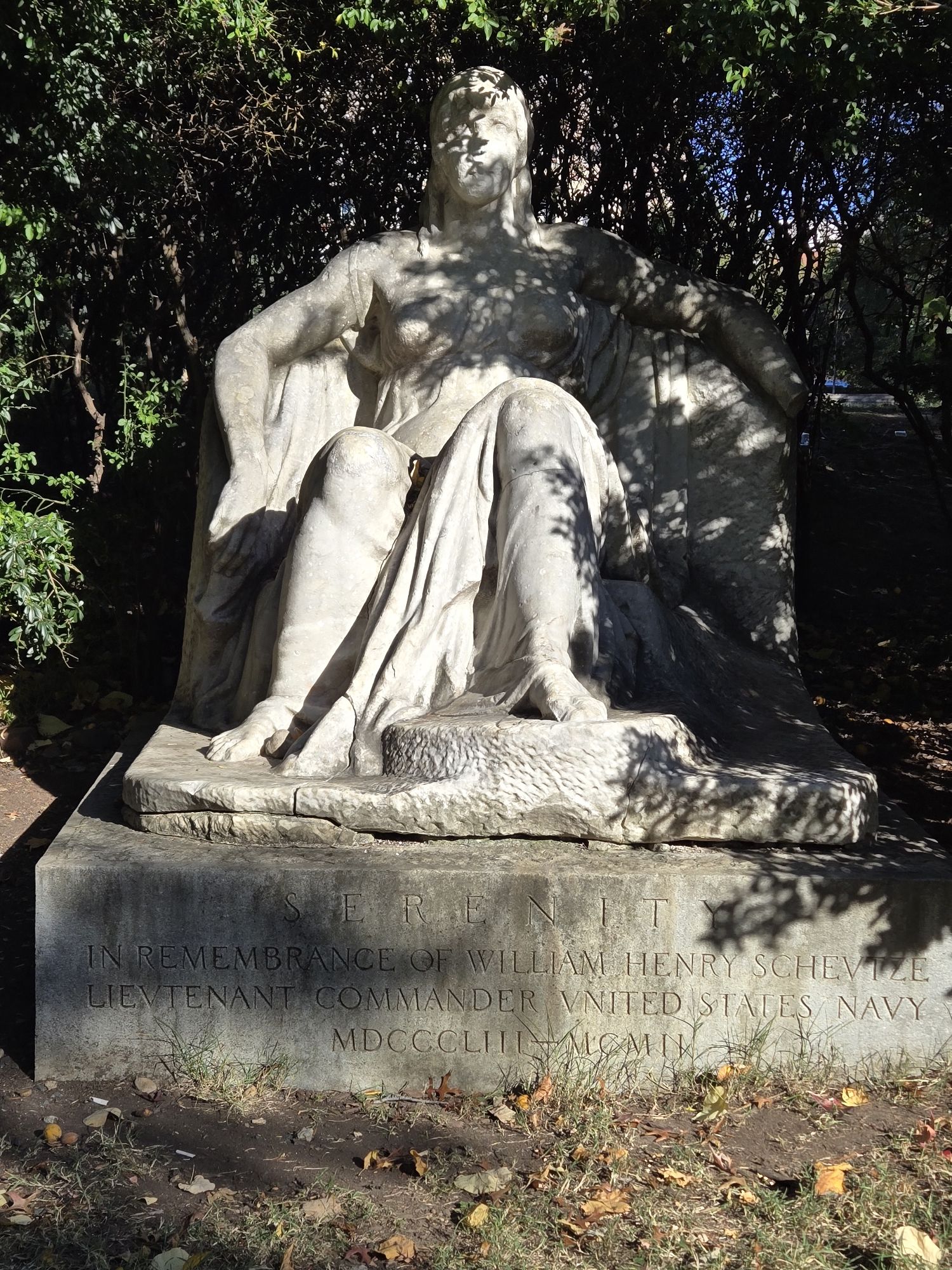
    Serenity, built to honor Navy Commander William Schuetze (misspelled on the statue), has seen better days. She sits, surrounded by greenery, on a side trail in the upper park. Schuetze was in the Navy during the Spanish-American War, and later, the president of International Harvester Company. The statue was commissioned by a classmate after Schuetze’s death.

    Now, below.

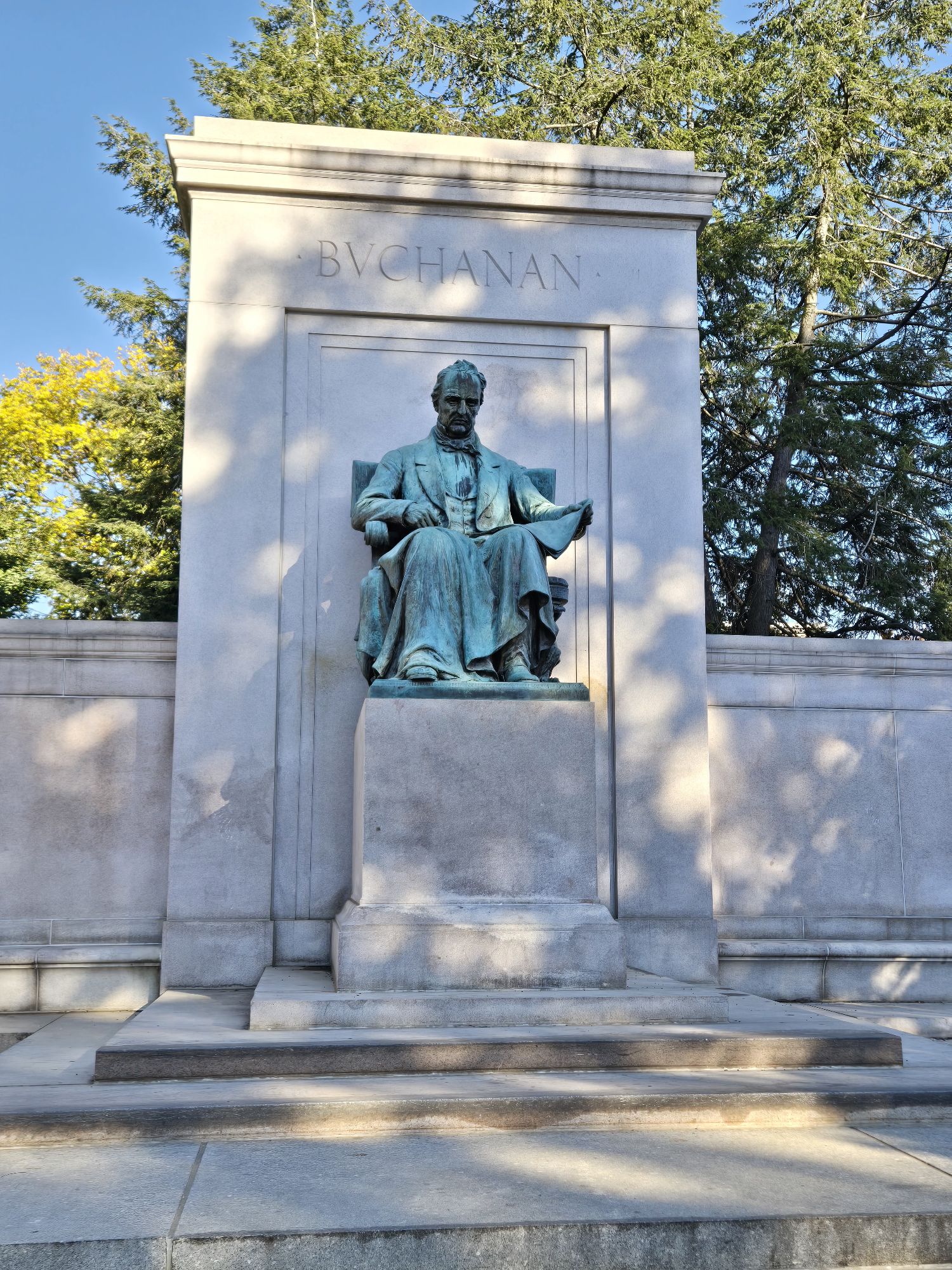
    Buchanan

    I think this is the world’s only memorial to James Buchanan, whose presidency is ranked with Donald Trump’s. Certainly, there is no other in DC. The statue was commissioned by Buchanan’s niece and approved by Congress.

    Joan of Arc

    Joan was a gift to American women by the Ladies of France in Exile in New York in 1922. This is a cast of an earlier statue which sits in front of the Cathedral in Reims.

    Dante

    This is a copy of a statue in New York, meant to celebrate the successes of Italian Americans.

  • November and It’s Still Summertime. And Where is All That Corcoran Art?

    November 1st, 2024

    It’s November, I am having coffee outside in Cleveland Park, and the temperature is supposed to hit 80.

    Our cousin Kiku had a 6:50 pm flight yesterday and we drove her to Dulles. Normally, it would take about 45 minutes, but the Dulles access highway is under repair, and we had to take an alternative route. My GPS has been playing with me a long time now, and yesterday, it led us on a wild plane chase that involved several counterintuitive turns and a long delay caused by a crash ahead of us. Yes, Kiku made her flight, but we understand it was close.

    Yesterday was also our 48th anniversary, so we (okay, I) thought we should have an early, casual, unusual, and celebratory dinner somewhere near Dulles. Chaatwalla, in Herndon, an Indian street food restaurant with a 4.6 Yelp rating, seemed like a good choice.

    It was not only casual, but very casual, and its extensive street food menu was hard to grasp. The friendly owner, from Delhi, became our menu advisor (yes, he had a conflict of interest), and we did all right, but I don’t think we will go there for our 49th.

    You know, when you have a houseguest, you become a tourist in your own town, and are sometimes faced with questions you can’t quite answer satisfactorily.

    Take the Corcoran Gallery of Art, for example.

    The Corcoran

    Have you been there lately?

    I know the answer to that question, because the Corcoran, founded in 1869, closed ten years ago, in 2014. The building is now part of, or perhaps the home of, The George Washington School of Art and Design. But, asked Kiku,  what happened to the art?

    All I could answer is that it went to other museums. But now I know more.

    The Corcoran was a great museum, and I remember feeling quite sad when I went to its closing exhibit.

    I always underestimate the scale of a museum’s collection, and the Corcoran was no exception. But I now see that the Corcoran owned about 20,000 pieces of art, and the task of distributing the art was given to the National Gallery of Art. And yes, like the owner of Chaatwalla, it had a conflict of interest.

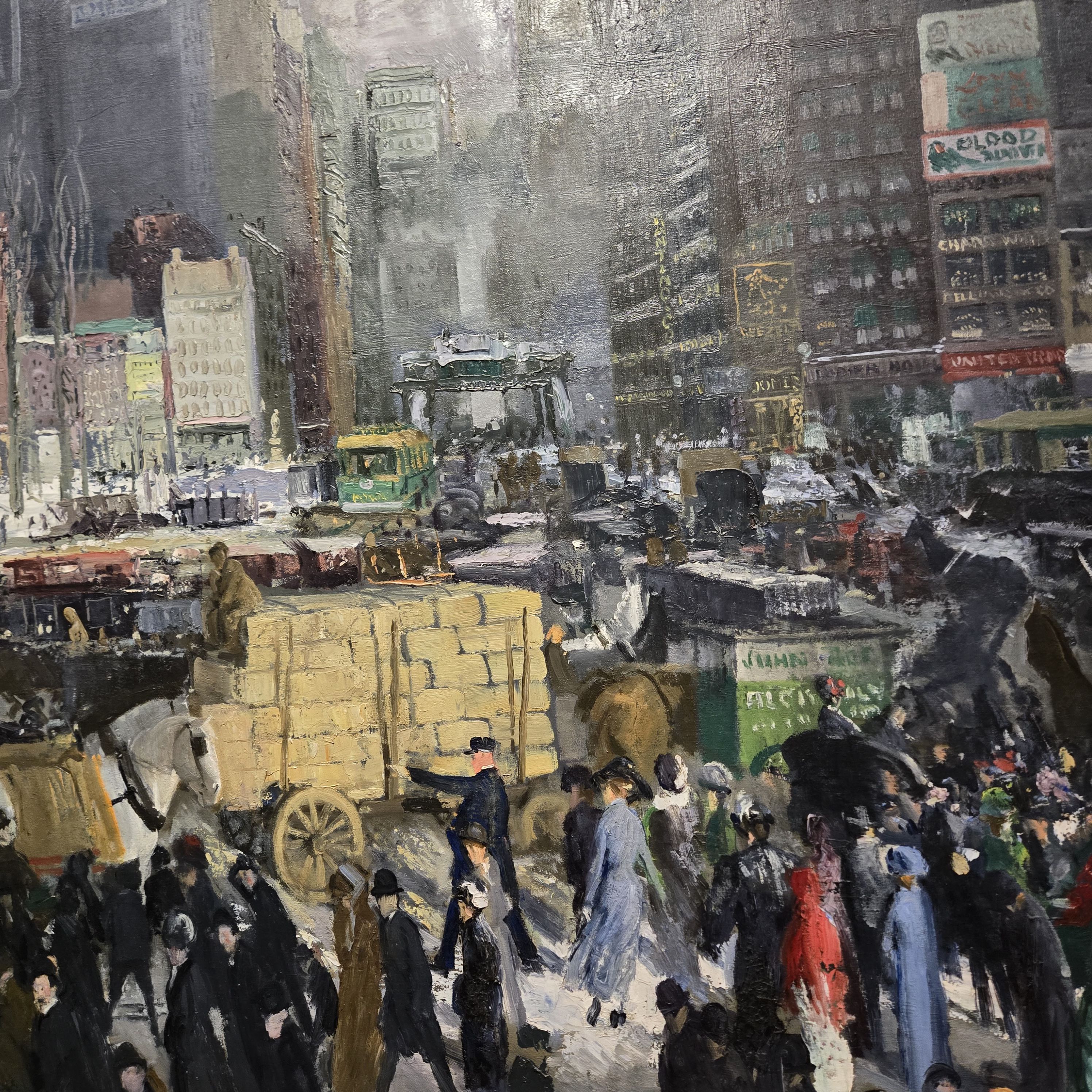
    The National Gallery is now the owner of just less than half of the Corcoran Collection, about 9000 pieces. Yesterday, we visited the National Gallery with Kiku, and went through the part of their Corcoran exhibit that is housed in the East building. Here are a few examples:

    George Bellows
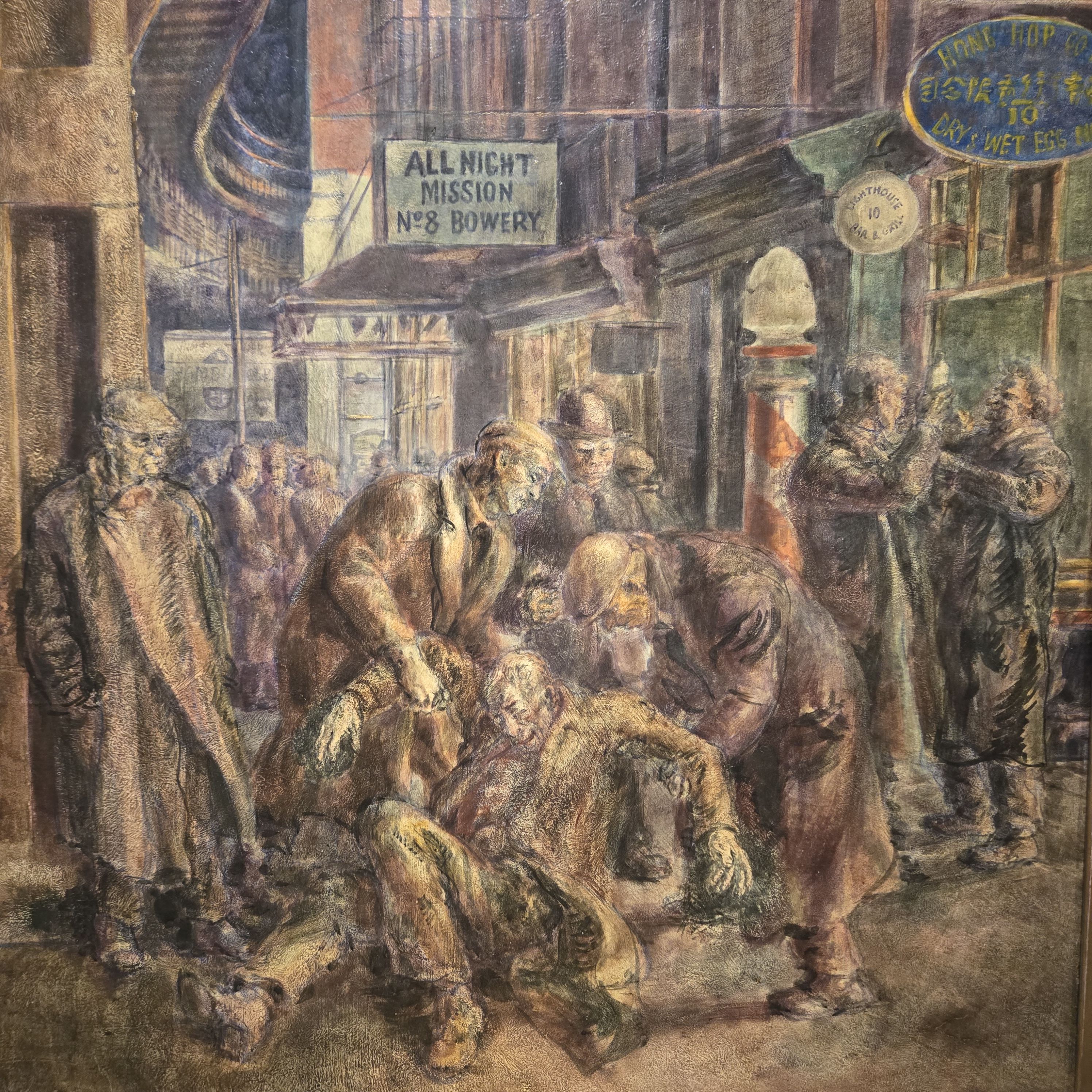
    Reginald Marsh
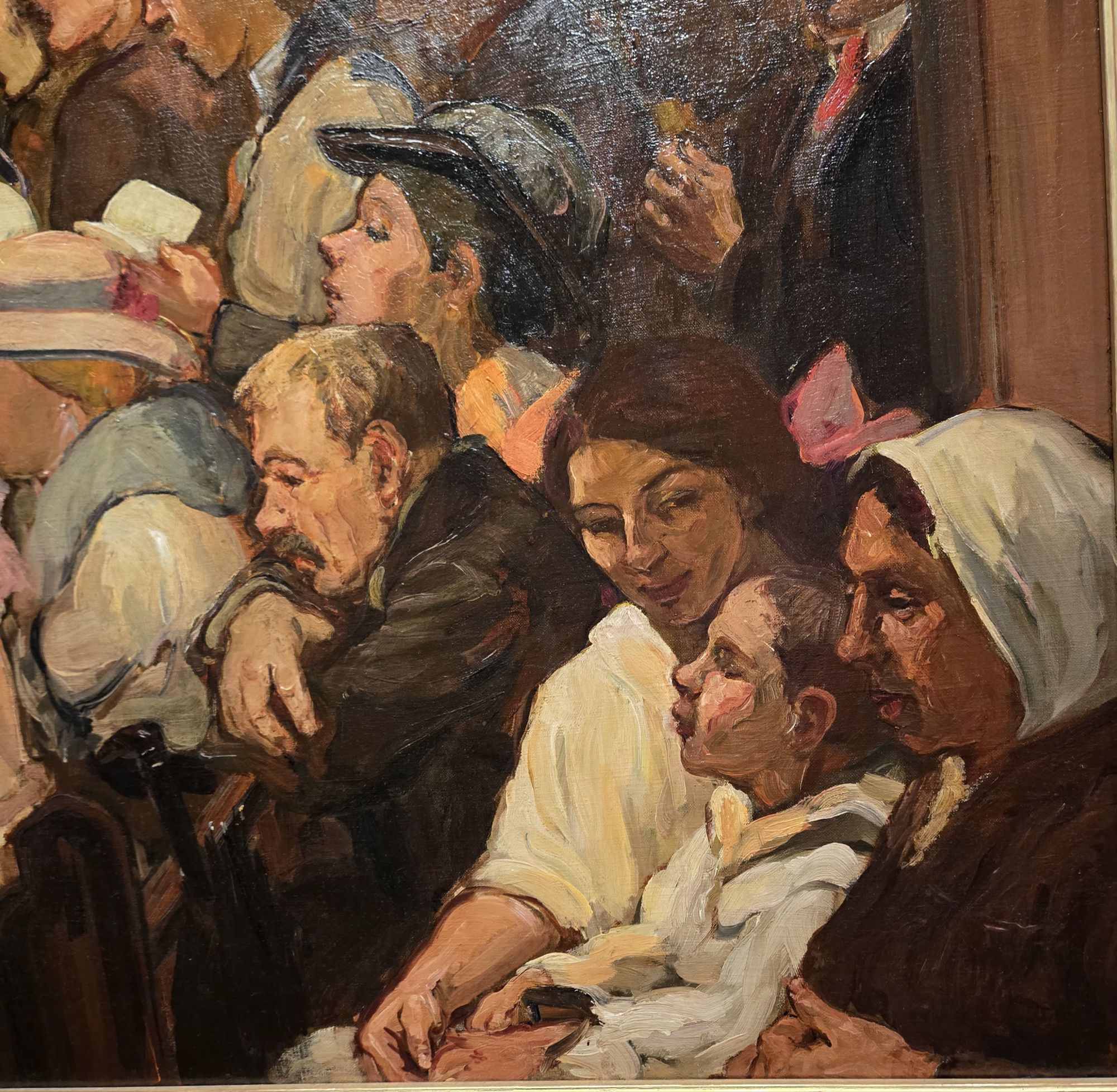
    Theresa Bernstein
    Edward Hopper

    But where are the remaining 11,000 pieces? You can download a list off the Corcoran website that will tell you where every piece is. The download itself is about 1200 pages long.

    The answer is that the majority of pieces were given to the American University Museum in DC, with smaller numbers given to George Washington and Howard Universities and the University of the District of Columbia. Others were given to various Smithsonian museums, and to various DC government agencies. Very few were sent out of town.

    Now you know as much as I do.

    The founder of the Corcoran was also a founder of Riggs Bank, now part of PNC. And the original location was today’s Renwick Museum, dedicated to rotating craft exhibits for the most part. The museum moved to its final location in the 1890s.

  • Tuesday is Around the Corner. Boo!

    October 31st, 2024

    I know it’s a little late, but I did come up with the perfect meme for the Harris campaign: “There is nothing wrong with this country that Donald Trump won’t make worse.” Because it is true.

    Tony Hinchcliffe, a man who is as good at comedy as Trump was at running the country, says that Puerto Rico is a “floating island of garbage”. (He also said that Hispanics really like to have babies and compared their sexual practices to their “invasion” of the country by people who won’t pull out, but no one seems to talk about that.) Trump’s response to this attempt at humor by saying “Tony Who?” and that he had never even heard of the guy. Well…….

    You know that people don’t speak at a culminating rally at Madison Square Garden after being invited to say whatever they wanted to say (“Just surprise us. We don’t care what you say. We trust you”). And you know that Trump knew exactly who was speaking at this mother of all rallies, and for how much time and in what order. But do we think that Trump himself vetted the Hinchcliffe (does his name even make you shutter and think of Wuthering Heights?)? Probably not, because that would require reading.

    But someone did. The Hinchcliffe speech was not ad lib (or ad hoc, or ad anything else); he was reading it from a teleprompter. And from what I have seen, it had been carefully vetted, with some of Hinchcliffe’s proposed “jokes” being taken out of the speech for going too far. The Puerto Rico garbage joke was allowed to remain.

    Okay, but what about the Biden remark about the only garbage being Trump’s supporters? That was not on any teleprompter. It was an ad lib remark made by Joe Biden, a man long noted, among other things, for his skill at malapropism. Beyond that, it was an impromptu remark made by someone that the Republicans have for months (years, really) been saying was in cognitive decline and didn’t know what he was saying or doing. But now, an off-the-cuff Biden comment becomes not only the most important thing he has ever said, but undoubtedly shows what Kamala Harris (not just Joe Biden) thinks about Trump supporters. Yes, clearly anything Biden says is really being said by Harris. Why can’t you see that?

    A headline from this morning’s Wall Street Journal: “The Next President Inherits a Remarkable Economy”. I think this is true. All the numbers point upward, except for inflation and unemployment, which point downward. Money for years of infrastructure work has already been approved and much of it already appropriated. Barring a surprise, the economy under the next President should do well.

    Of course, this was also the case when Donald Trump took over from Barack Obama in 2016. Obama said this a few weeks ago (and probably every day since) in a Harris campaign speech – Donald Trump’s economy for the first two years was really “my” economy. And the next President’s economy for the first two years or so will be Joe Biden’s economy. (By the way, when Biden was elected, one of my reactions was – boy, it’s going to take him a long time to straighten out things after four years of Trump; I think I was right, and I think he has done a good job under bad conditions, but you can’t do it in four years.)

    If Trump does win the election, he may not build on the Biden economy, but instead tank it. He does have some radical plans, even putting Project 2025 to the side (which you can’t really do, of course).

    It is frightening to listen to Elon Musk, for example, who says that his plan to cut billions or trillions of out government spending will cause some economic hardships to average Americans for a while (but they have become too dependent on the government, he says, anyway), as Musk’s plans are to cut all social service programs drastically and to fire thousands and thousands of government employees. Trump’s response to this is nothing short of magical: yes, we will cut everything that Musk wants to cut, but guess what? Americans won’t feel it at all. They won’t even know it is happening.

    And then there is Robert F. Kennedy, Jr. and his plans to become czar of all health related agencies – HHS, NIH, CDC, FDA, etc. And Trump said, did he not, that he would let Kennedy “go wild on health”, or something like that? Kennedy, who wants to ban all vaccines, and who once said that Covid-19 was designed to hit Blacks hard and spare most Chinese and Ashkenazi Jews.

    Did you see Kaitlin Collins (along with Abby Phillips, my new favorites) interview Howard Lutnick last night? Lutnick is the CEO of Cantor Fitzgerald (more on that below) and is the transition chair for Trump, in charge of finding and vetting individuals filling the more than 1,000 jobs in a new administration that require Senate approval. It was Saturday Night Live again. Lutnick (whom I used to have a lot of respect for) talked about how he went to (I don’t remember the exact number) 100 people he knew, and asked them to each recommend 5 people they knew, and asked each of them to recommend 5 people they knew, so that he had thousands of people for these jobs, 5 to 8 for each, I think he said. And they were each the best, and any of them could handle the jobs that he would convince them to take.

    Of course, he said, neither Musk or Kennedy would be “in” the new administration. Trump says that Musk would be in his cabinet, right? Well, says Lutnick, Musk can’t give up Space X; he will be on the outside. Trump says that Kennedy is going to control public health policy (and of course, Kennedy has also said that Trump has promised him that), but Lutnick laughs and shows his winning smile (really a winning smile; that he does have) and says, no, no, no. That won’t happen. Kennedy just wants to see data, not to control personnel or agencies. He just wants to see the data that will enable him to convince everyone that vaccines cause autism! Look, says Lutnick – we used to have few vaccines and little autism. Now we have many vaccines and a lot of autism. Doesn’t that prove it?

    And, okay, you can’t really put aside Project 2025, can you? Who needs the weather bureau? Why can’t abortion be banned nationwide? On and on and on.

    But yes, there is a lot wrong with the way this country is governed, much of it caused by archaic provisions in our holier-than-thou Constitution. But let’s not forget – there is nothing wrong with this country that Donald Trump cannot make worse. None of us know what Tuesday’s election will bring. But we do know that.

    (By the way, Lutnick’s brokerage firm, Cantor Fitzgerald, which was hit so badly when the Twin Towers were hit and 70% or so of their employees were killed, was created by a man named Bernard Cantor. His father was Gerald Cantor – hence the name of the firm. No Scottish Fitzgeralds involved.)

  • Know William Gropper?

    October 30th, 2024

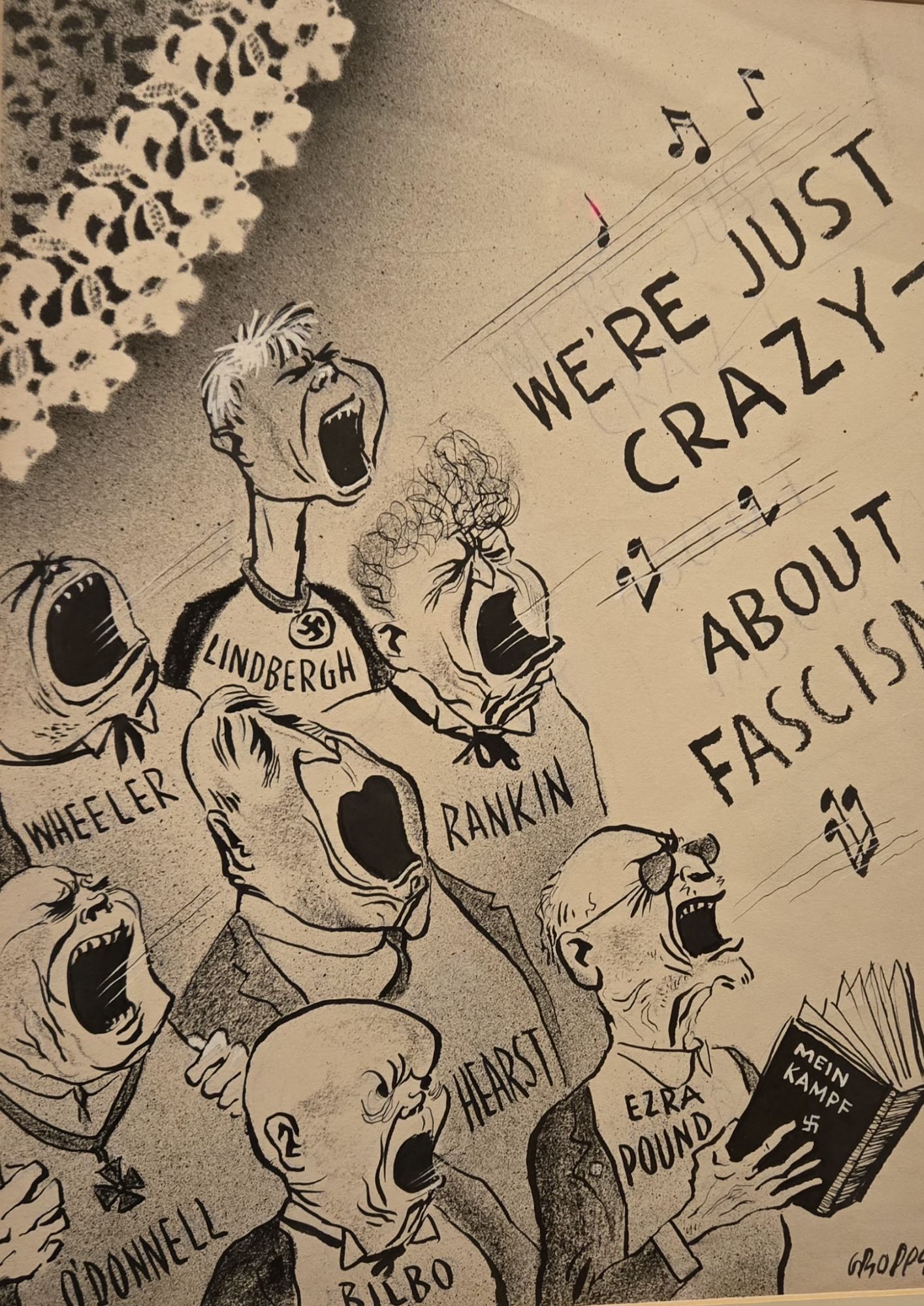
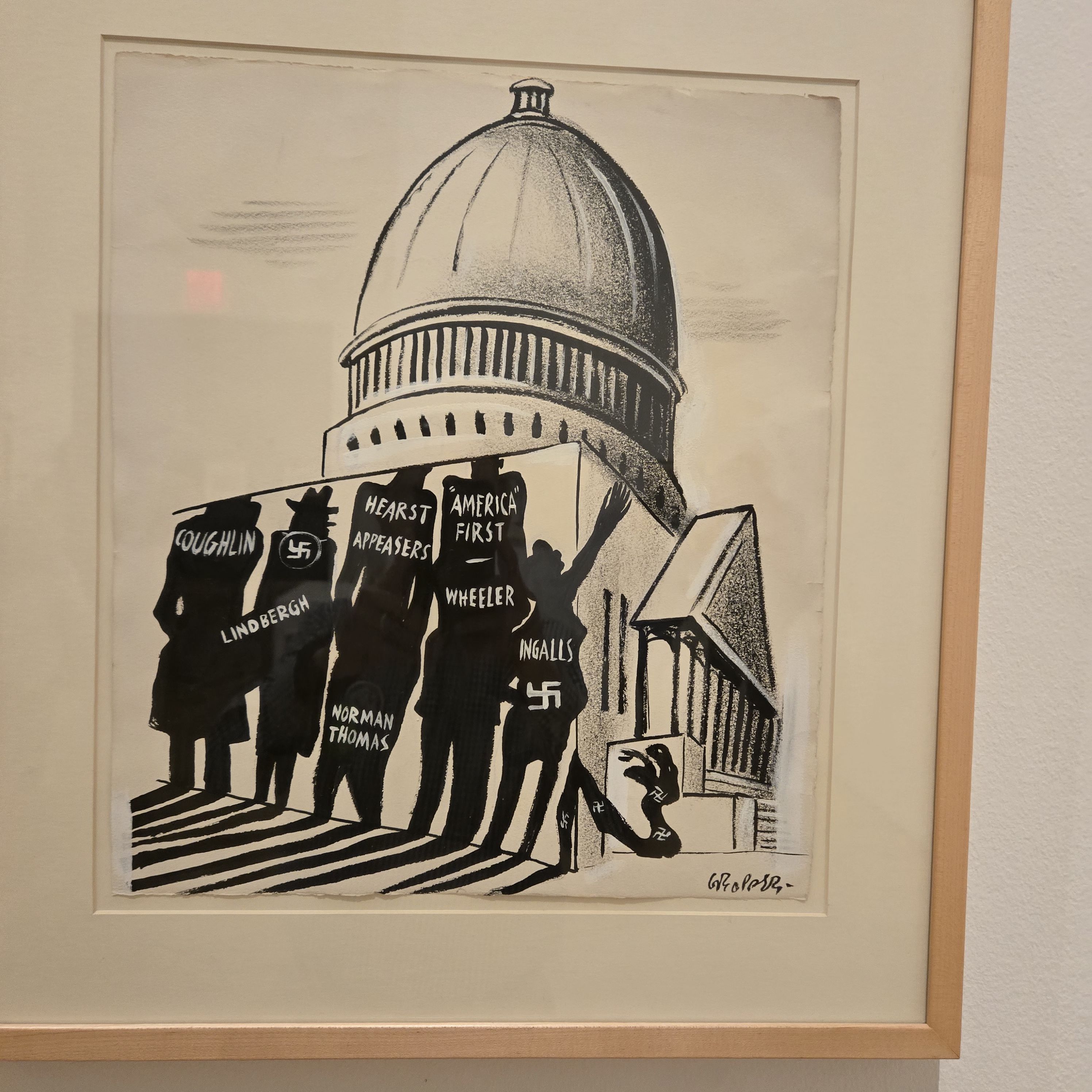
    Last week, the Phillips opened a new exhibit of art work by William Gropper. Everyone should see it. Most interesting are Gropper’s political cartoons, which he made for a number of periodicals in the 1930s and 1940s.

    According to Wikipedia, Gropper became an anti-capitalist socialist for several reasons, including (1) the Triangle Shirtwaist  fire in 1911 where his aunt died, and (2) the failure of his Romanian-born father, university educated and fluent in 8 languages, to find an appropriate job. But, as Jewish American with immigrant parents, he was also very anti-Nazi.

    A number of his cartoons,  like the one above, attacked prominent Americans who had expressed pro-Hitler positions in the lead-up to World War II. These included Charles Lindbergh, poet Ezra Pound, publisher William Randolph Hearst, and those members of the U.S. Congress who were isolationists and America Firsters.

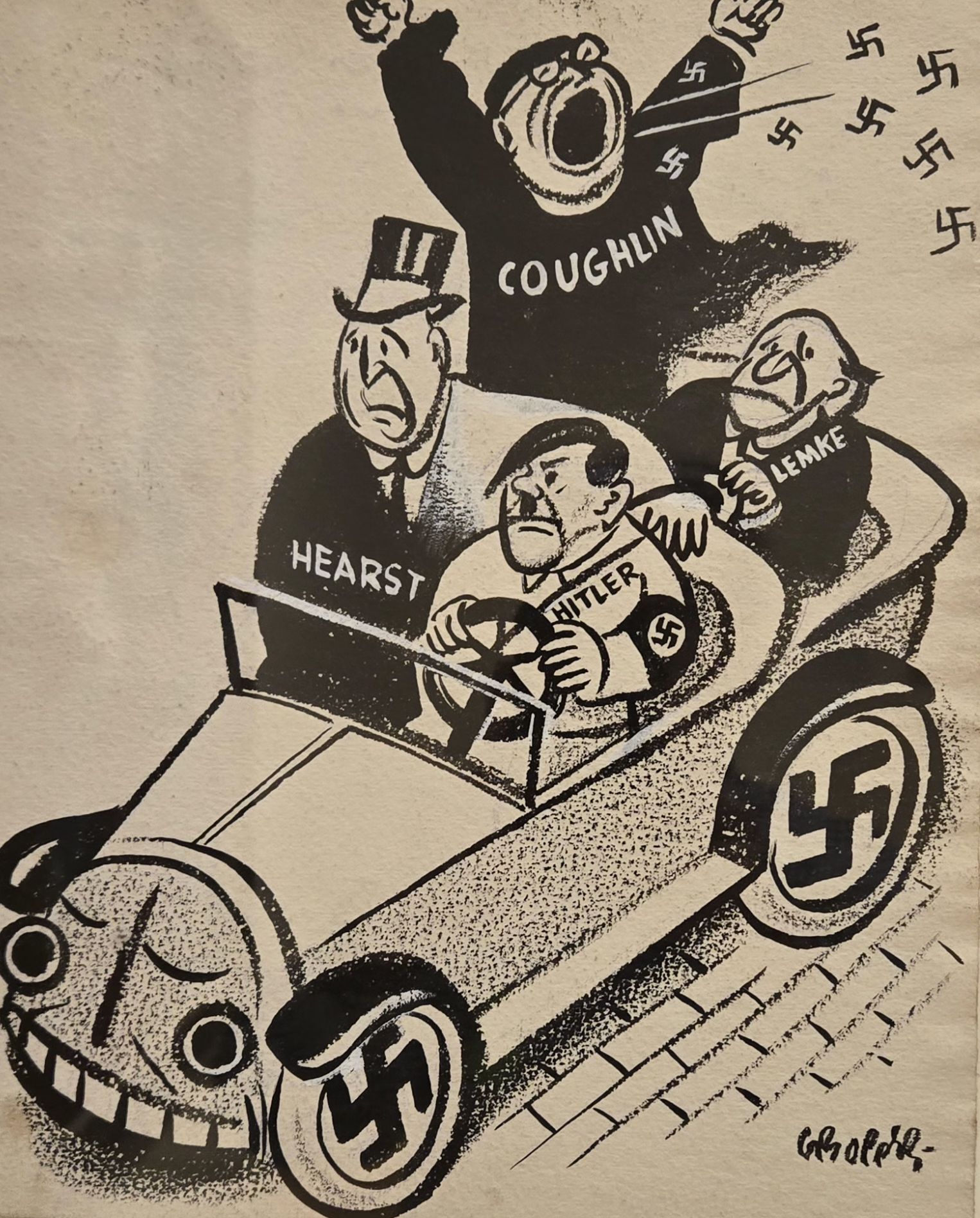
    Here is another:

    On this one, Hitler is joined with Hearst, and with Lemke (I don’t know who this is), with Father Cooughlin spewing out racial hatred for the world to hear.

    Perhaps most surprising to me is this third cartoon:

    It has many of the same characters casting their shadows over the Capitol. But there is one additional name that really took me aback. That of famed American socialist Norman Thomas, who had always been somewhat of an intellectual hero to me, because he was one of the first to argue for social programs like Social Security, which we now take so much for granted.

    Back to Wikipedia. It turns out that Thomas had been very much against American participation in the First World War, and carried that isolationist and pacifist position into the early years of Hitler. In fact, until Pearl Harbor, Thomas thought we should stay out of it and, even after Pearl Harbor, when American socialists were split on the question, he “reluctantly” (so says Wikipedia) supported our war effort. I did not know this.

    (I told you the next few posts would be short. Use your extra time well.)

  • Let’s Hear It for Puerto Rico

    October 29th, 2024

    Although it’s been a while, and it was in fact several hurricanes ago, I have spent a fair amount of time in Puerto Rico, and I didn’t see much more garbage there than anywhere else. It is an absolutely beautiful island, and the many people I knew there were very sophisticated, and able. Yes, it is easy for an island to become overcrowded, and economically an island is just that, an island, far from other lands, with a limited market and a limited workforce. Puerto Rico is over 1000 miles from continental US. And Puerto Rico is in the odd position of being a territory of the United States, whatever that is, neither fish nor foul nor meat nor even tofu. Its economic fortunes depend on changing federal policies. It is unable to chart its own course.

    On the other hand, even though they can not vote in federal elections, Puerto Ricans are American citizens with the right to move anywhere in the US and become voting citizens within a matter of days. But the island itself has no more representation in the US Congress than does the District of Columbia. And of course Puerto Ricans speak Spanish, not English, which adds an extra complication.

    Yet, in addition to a thriving tourist industry, Puerto Rico has a strong and diverse economy, and a strong culture.

    So when a featured speaker at a major Trump rally calls Puerto Rico a floating island of garbage, attention must be paid. And no, an apology from his campaign is insufficient. I must assume that the campaign approved the statement. I am sure that every speech at this culminating rally was approved in advance. You don’t just hire a comedian and say “Do whatever you want” in this type of situation.

    As we come down to the wire, I hope the dark clips from the various speakers at the MSG rally induce some to switch to Harris. Comments reflecting much more than bias against Puerto Rico, but repeating all the nativist things Trump has said throughout the campaign.

    On a more personal note, Edie and I are happy to be hosting my cousin Kiku Day, who is visiting from Denmark, and my posts may be a little abbreviated while she is here. It’s her first visit to DC, and I am going to be showing her around.

  • Let Me Out! Let Me Out!

    October 28th, 2024

    We spent the afternoon at the Studio Theatre, watching the final performance of Exception to the Rule, a new play by Philadelphia playwright Dave Harris. It is a one act, 90 minute show, with a simple premise. The school day is over, but six teenagers have to stay after school in detention. The span of the detention is unclear; they have to stay until teacher Mr. Bernie signs a paper and tells them they can leave. But, unfortunately, Mr. Bernie is a Godot, and never shows up. They may have to stay in detention all weekend – and it’s a three day weekend.

    All the kids in detention are Black. My assumption is, although it is nowhere stated, that all the students in the entire school are Black. Whether Mr. Bernie is Black or White, we don’t know. And we don’t even know if the voice over the intercom (played by veteran Washington actor Craig Wallace, who is definitely Black) is Black or White.

    Five of the teenagers are regulars in detention, although we don’t know if they are the only regulars, because they never mention anyone else. The sixth teenager, Erica, is in detention for her first time. She is a “brain”, a goody-goody, a diligent student (“College Bound Erica” is one of her nicknames). But here she is in detention to everyone’s amazement. Why is she there?

    A number of things don’t make sense. Some are big, like how could there be detention with the teacher in charge just not showing up? Others are small, like how could no one know what time it was, even though at least three of them had cell phones. And why couldn’t they communicate with the outside world, since at least three of them had cell phones. And how could the school be “locked down” after the end of the school day, so no one could get in or get out? Where is the fire marshall?

    Oh, I guess I should say this. I thought this was a terrible play, and I felt like I was the one in forced detention for much of the 90 minutes of the show. I found the dialogue artificial and offensive. (Yes, I understand. I am 80 and these guys are about 17, and they are different than me.) I found the students each a stereotype, and not a very human one. I also thought that some of the actors were considerably better than others.

    The gist of the script is that Erica was going to go on to college, make a big success of herself, and forget about her past and forget about her classmates. Erica on the other hand does not think she is very special, only that she is trying very hard, and she thinks that the other five, if they acted like she could, would be able to go to college and achieve the same degree of success. The ending is ambiguous, leaving this question (a big one, of course) open.

    I guess the play is a comedy. I read a review on DC Theater Arts that berated the audience for not laughing at obviously funny jokes. I have the opposite reaction. The audience laughed a lot this afternoon. But I didn’t find any line funny or clever.

    Dave Harris must have a very low view of most Black high school kids in this country. Or at least he must have this view of a significant portion of them, or he wouldn’t put these characters in his play as representative of Black teenagers, except for Erica, who is clearly the Exception to the Rule. You get the feeling that all they talk about is sex, except when Erica presses them on other subjects.

    And, yes, I am sure that a group of Black kids in detention will speak with many non-PC words. After all, even a presidential candidate does that these days. And I know that certain groups of Blacks do use the word “nigger” without hesitation. And maybe 17 year olds do that in their regular conversation; at least maybe those who wind up in detention on a regular basis do. But in this 90 minute show, I counted the word “nigger” used 32 times. And I would guess that there were some that I missed.

    Is this necessary? Is this appropriate? I understand that many Blacks think that they can call other Blacks niggers, and that there is nothing wrong with that. But Whites, like me, get in trouble even if they use the word in writing. Aren’t there those who want to ban Huckleberry Finn for this reason?

    I submit that this double standard is totally misplaced. If “nigger” is a a word that Whites shouldn’t use, neither should Blacks. And because it is clearly an often-used word in at least part of the Black community, it should not be celebrated, but discouraged. A play like this which uses the word at least 32 times, is part of the problem, not part of the solution.

    Enough said about all of this. Exception to the Rule closed this afternoon. I hope the remainder of the Studio season is better. And I am willing to bet that it will be.

  • See the Leaves Before They Fall This Fall

    October 27th, 2024

    That’s what we decided to do yesterday, and in spite of a general light cloud cover, everything was very pretty. Where did we go? You can trace our steps. We went up Connecticut Avenue, around Chevy Chase Circle, and then went up 185 to 495 to 270 to 70 to Alt 40 to 34 across the Potomac and back again, but rather than coming back on 70, 270, 495 and 185, we picked up 28, 112 and 190.

    The highlights included our lunch at The Main Cup in Middletown, a spot with two large dining rooms and a large outdoors section that, at 12:15 on a Saturday was crowded enough that we had to wait for a table. The food was very good (Edie’s avacado toast with two poached eggs and a side salad for $14 was the best) and we would go back the next time we are in Middletown.

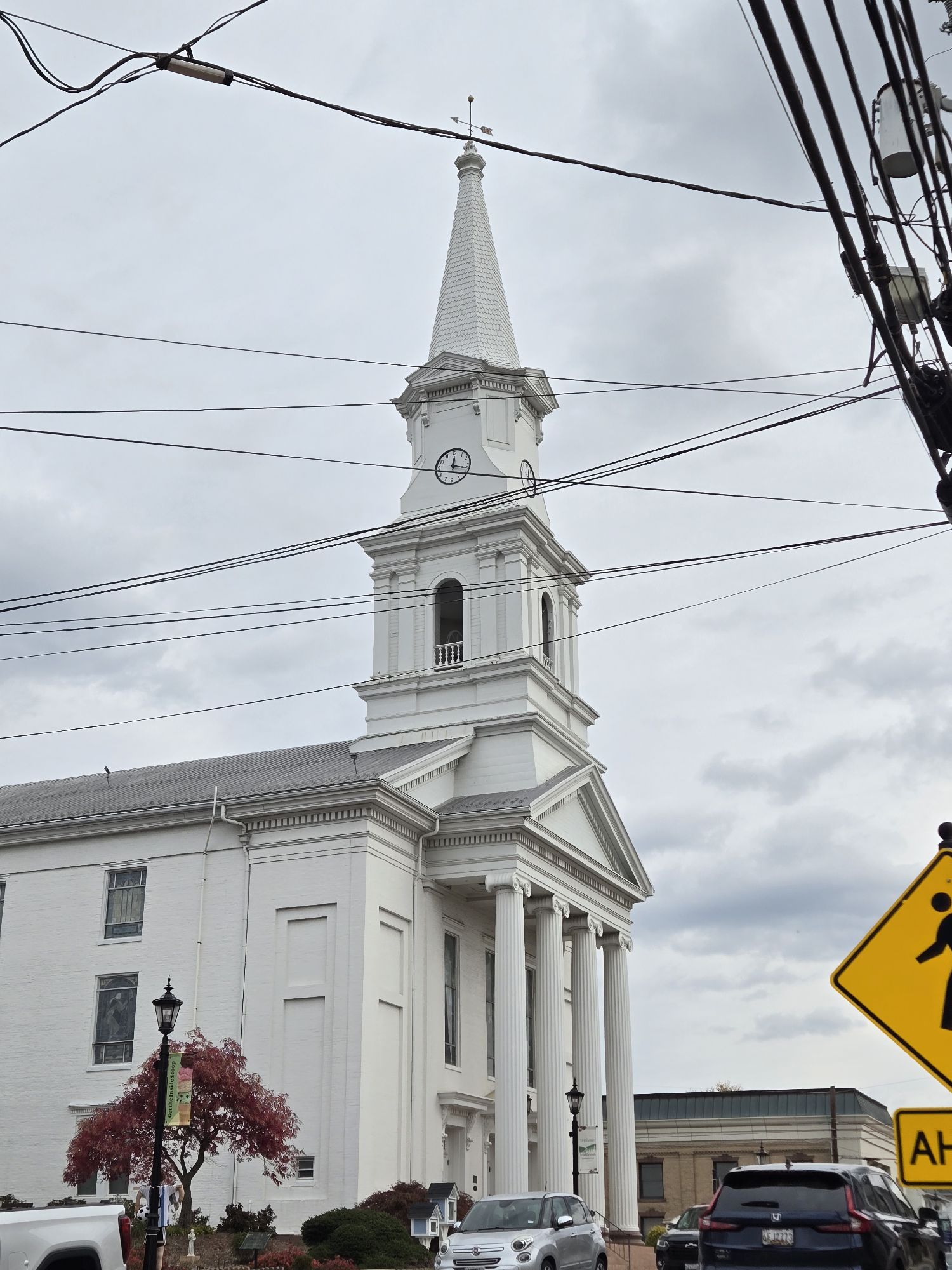
    Middletown is a very interesting old town of about 4,000 that is not on, but not far from, the Interstate, but you won’t get there by accident. Its history is well displayed by signage, and its largest church, Zion Lutheran, built in the 1850s, served as a hospital for Union soldiers wounded at Antietam.

    Zion Lutheran,  Middletown

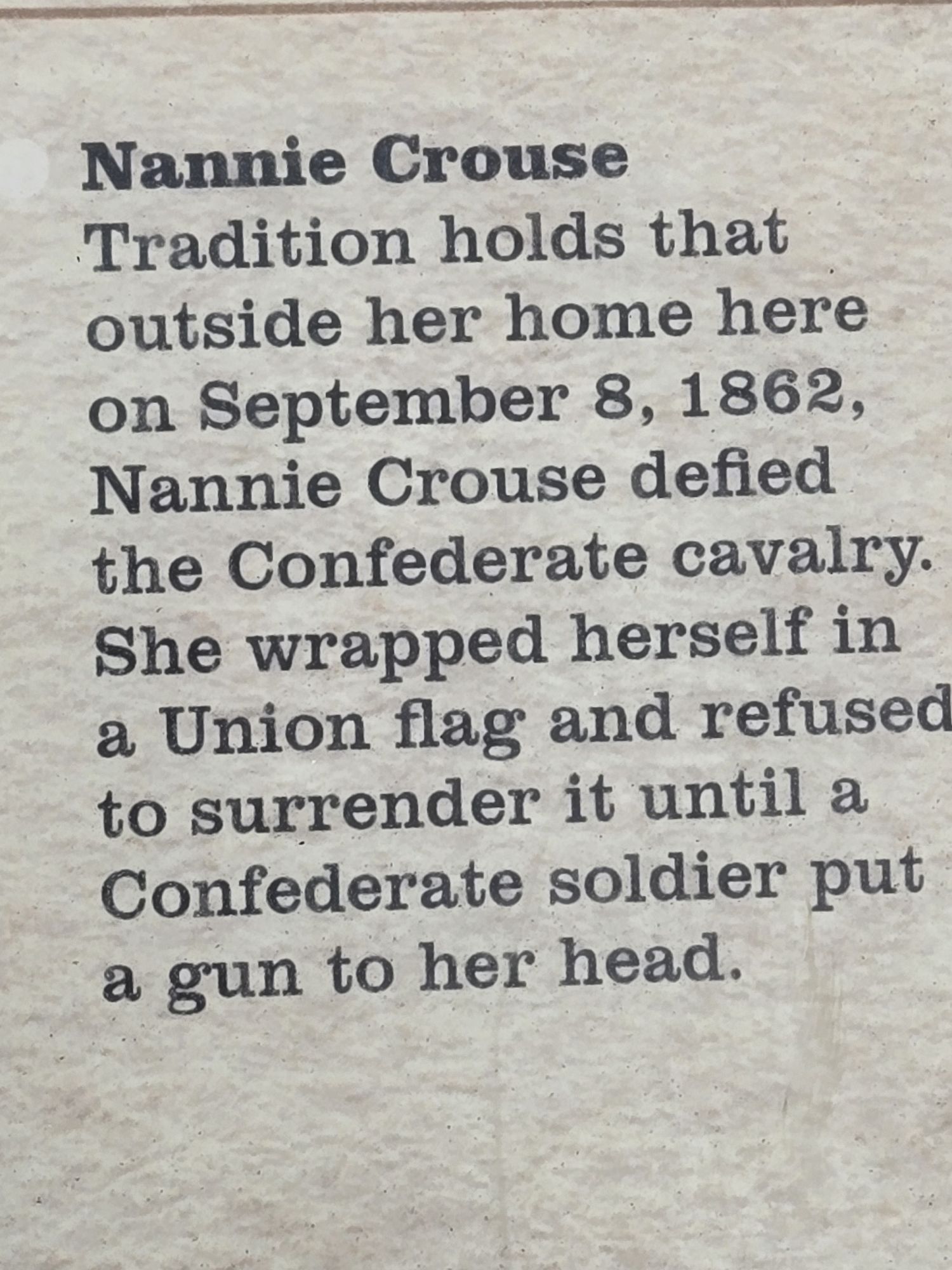
    It was a Union town in the war, but was occupied by Confederate troops for a while during the Gettysburg campaign.

    It had its unsung heroes.

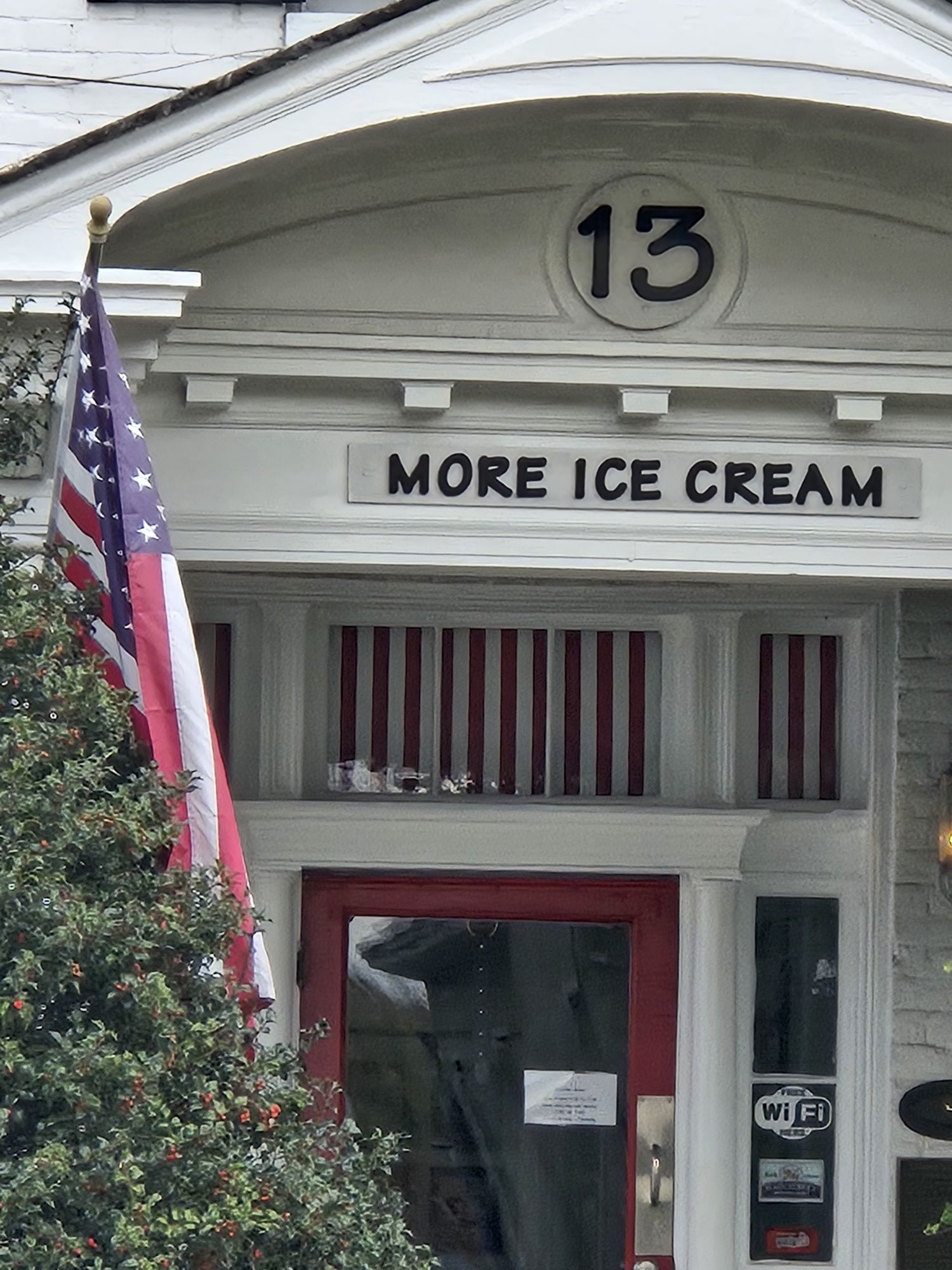
    You can get ice cream there, too.

    And if you don’t like their ice cream, you can just go right across the street.

    We left Middletown, continued on through Boonsboro, another town worth a stop, past Sharpsburg and the Antietam battlefield and historic cemetery, and crossed the Potomac into Shepherdstown WV.

    We have been to Shepherdstown innumerable times. A very pleasant, historic city, up river from Harpers Ferry, with a university and a swath of tourist oriented shops and restaurants.

    This time was different. It was the day (not that we knew) of the annual Fairy Festival. This meant that Shepherdstown was filled with people dressed in fairy costumes. Long skirts, gossamer wings, painted faces, canes that looked more like staffs, glitter and so forth. Yes, mainly groups of women in their 20s, but also groups of women in their 70s, as well as a few men. And craft booths selling things to the fairy market. I couldn’t believe anyone was buying such stuff, or even that anyone made any of it, but there it was.

    I don’t know why, but I didn’t take any fairy pictures, but I did take a photo of a woman wearing a Caps jersey who went to the festival with her pet owl. That seemed a bit weird, too.

    Shepherdstown

    We did notice the political signs in front yards along the way, and found them pretty well evenly divided. Of course, Maryland is blue and West Virginia red, even if the Shepherdstown vote will strongly favor Harris.

    One house outside of Middletown is worth looking at. It was a house festooned with Trump signs and signs warning of open borders and the dangers of socialism. It was also highly decorated for Halloween. But look:

    There is a dartboard of Kamala Harris at the front door, and the window above…….a flag of Israel.  As Cole Porter said, “The world has gone mad today, black’s white today, day’s night today”.

  • The Billionaires and You, or Where is George Soros When We Need Him?

    October 26th, 2024

    I published a piece on Elon Musk on October 7. You may want to refer to it, if you didn’t see it or can’t remember what I said. Or, better, let me remind you. Musk runs Tesla, which will depend a lot on what the government does to restrict foreign vehicles from entering the country. Musk runs X, which gives him the power to decide what types of false information should be allowed to be provided to tens of millions of Americans, and what types should not be allowed, and he hasn’t done a very good sorting this out correctly. Musk runs SpaceX, on which American travel to the International Space Station and perhaps the moon and Mars, as well as putting satellites into orbit, depends, and he runs Starlink which fosters communication between earthlings via his network of satellites (and which he provides gratis to Ukraine).

    Musk has firmly come out for Donald Trump, on the theory (one must presume) that Donald Trump will be better for Elon Musk. This, even though it is Joe Biden who has been touting the future of electric vehicles and Donald Trump, who has been championing the gas engine. Is there a method to his madness? Or is there just madness?

    Since I published the first article, there have been two more bits of Musk news this week alone. First, that he is paying people to register and vote, and that he is holding a weekly $1 million lottery, open to people who will sign a petition saying they support the first two amendments to the U.S. Constitution. Second, there are reports that he has been having weekly (at least?) telephone calls with none other than Vladimir Putin. Both the first and the second of these pieces of news are, it appears, potentially illegal. Elon Musk does not seem to care.

    Now there are several questions raised here. Why doesn’t Musk appear to care if he is breaking the law? Why does Musk support the candidate who is not supportive of electric vehicles? What does Musk talk to Putin about while he is supplying free Starlink services to Ukraine?

    Elon Musk’s net worth, it appears, is about $235 billion.

    Moving on….

    A few days ago, news was released saying that the Los Angeles Times was not going to support a candidate for president this year. This was after the editorial board had drafted an article coming out for Kamala Harris, but the article was blocked by the owner of the newspaper, Patrick Soon-Shiong. Now we don’t know why Patrick Soon-Shiong blocked the editorial endorsement, but there was a statement released today by his daughter, saying (paraphrasing) that endorsing Harris would mean endorsing the Biden-Harris administration which has been supporting Israel in its war against Hamas, and that the Los Angeles Times should not support a candidate who supports a genocide. Whether that is what she really said, or thinks, or whether or not that is why her farther blocked the endorsement we just don’t know.

    There has been at least some fallout at the Times. The editor of the editorial page, Mariel Garza, has resigned from the Times as a result of this blockage by Soon-Shiong. Soon-Shiong, by the way, has a net worth of a measly $6.1 billion, it is said, only slightly higher than the $5.5 billion that Forbes thinks Donald Trump has.

    And then there is the Washington Post, which announced yesterday that for the first time in about 50 years (since 1976), it was not going to come out for a candidate for the presidency. And, it turns out, that once again the editorial board of the Post had an article ready to go endorsing Kamala Harris and that the publication of the article was vetoed by Jeff Bezos, owner of the Post. Reports are that the Post staff is “reeling” from the decision, but I think it’s a little too early to see what actually will result from this decision, although one editor, Robert Kagan has announced his resignation, and another dozen or so seniorvPost reporters have made their position clear.

    Elon Musk, with his $235 billion, is the richest man in the world. Jeff Bezos, with a mere $203 billion, is right behind him.

    My daughter Michelle asks the right questions. She says that the Post this year has endorsed Angela Alsobrooks for the Maryland U.S. Senate seat, and local candidates in other races, meaning that it is only the endorsement of a presidential candidate is being blocked. She also asks why, in this election of all elections, is the Post making this decision. And, by the way, Michelle just canceled her subscription to the Post.

    It seems obvious that Bezos is concerned that a President Trump would cancel Amazon’s many federal contracts. His motivation is the same as Musks’.

    What does this tell us? It tells us that rich people are too rich and have much too much influence over what happens the world in its entirety. And it shows us that promises of editorial independence are not worth the newspaper that they are written in.

    This is a consequential election (in case you did not know) and it is hard to see why newspapers, who have been accused by the Republican candidate of spewing fake news, of hiding opinion as fact, of being enemies of the American people, of being totally dishonest with their readers, are not supporting the candidate who is clearly in favor of free speech. Especially this is true when the investigative reports of these newspaper, and their editorial staffs, have been calling out the dangers of electing the Republican candidate for months, probably for years.

    Of course, each individual is different. While Bezos and Soon-Shiong apparently want to appear neutral (if that is indeed what they want), Musk has no such goal and wants to appear all out MAGA. If Musk owned a newspaper (you know one day he will), there will be false neutrality displayed.

    For years, people have been saying that newspaper endorsements don’t change votes, that they aren’t that important in the manner that they used to be. And perhaps this is true. But that does not mean, in a close election, there might not be anti-MAGA Republicans, or independent voters, who were leaning towards voting for Harris, but now might say: “Gee, if the Post/Times isn’t endorsing her, maybe there is something I don’t know. I think I will just sit it out this year and not vote.” And it may be that you won’t need many who think like this to have a real effect on the outcome.
    I drafted this yesterday to send out this morning. It was fresh news then. Now, I am just repeating what everyone is saying.

    And, by the way, Democracy Dies in Darkness. You know who really knew that? George Soros.

  • AS OPPOSED TO ALL THOSE COWARDLY MEDIA TITANS, ARTIS80 PROUDLY ENDORSES KAMALA HARRIS. SPREAD THE WORD.

    October 25th, 2024
  • Anything to Keep My Mind Off the Election

    October 25th, 2024

    Ladue High School (my alma mater, so they say) had a teacher (I would say his field was “American Studies”, although it wasn’t called that) named McMillan Lewis. He was an older gentleman (maybe 55?) and had served one term as a Missouri state senator, so was known as Senator Lewis. This made him sort of a celebrity. He was a character (in a good sense) and considered a good teacher, but I never took a class from him (I don’t know why; it was perhaps a mistake). He was also known as someone who gave the same exam every year, so a good grade was easy to get if you knew someone who took the class previously.

    McMillan Lewis was a Princeton graduate. And he wrote a short book, titled Woodrow Wilson of Princeton. A personally inscribed copy of that book can be found in our house. In those days, I didn’t know anyone who had written a real book, so this made him a celebrity in another way.

    From these introductory paragraphs, you must think that I am writing a post about Ladue High, or McMillan Lewis, or maybe Woodrow Wilson. But if you thought this, you would be wrong. I am writing this post about the book Babbitt and the stage adaptation that is playing now at the Shakespeare Theatre in Washington. And I starting by referring to the Senator, because he got me inured to thinking, as a teenager, that the last name Lewis should be matched with an unusual first name. And Babbit of course was written by Sinclair Lewis. In the 1950s, to me, Sinclair was a brand of gasoline.
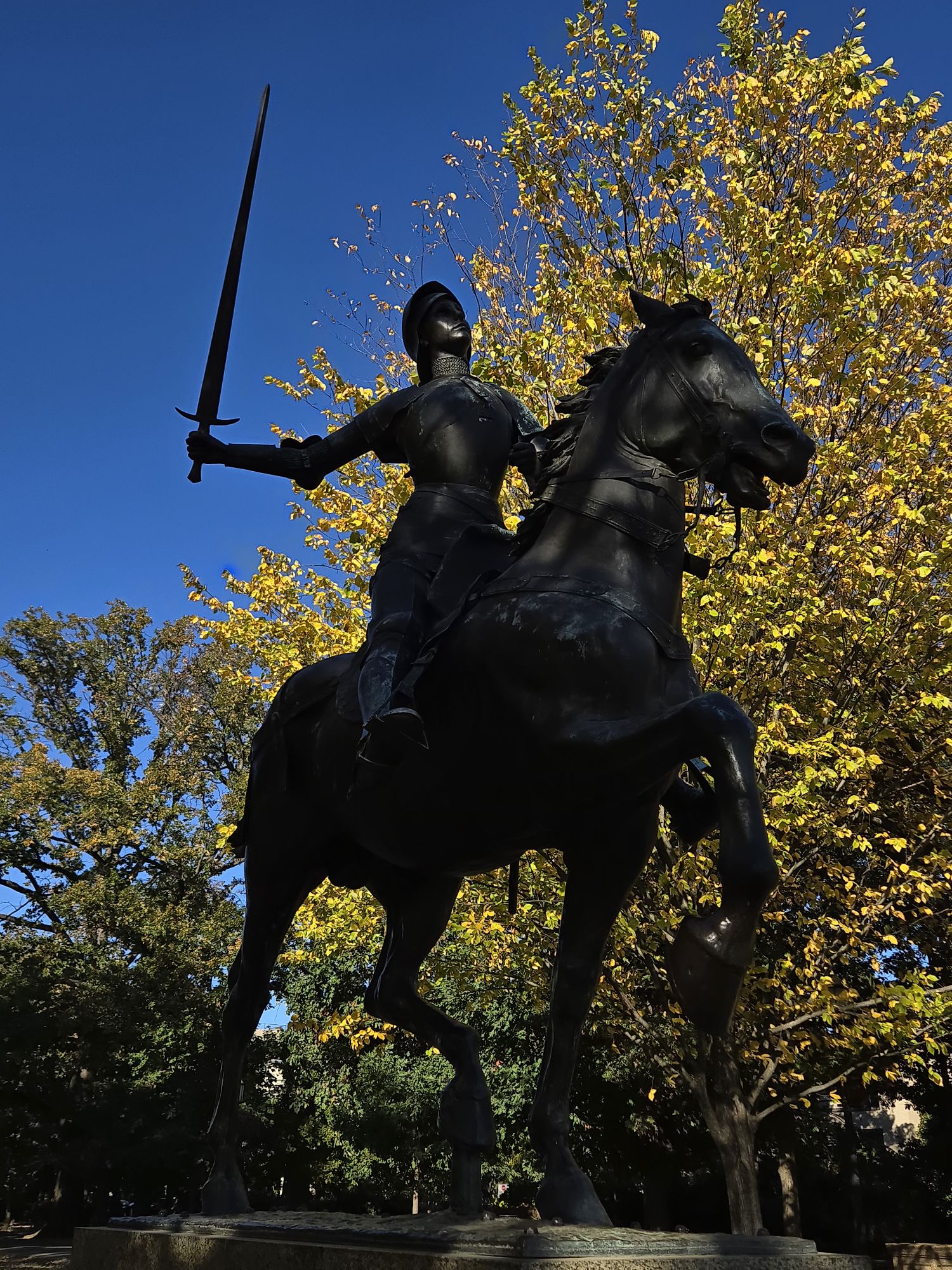
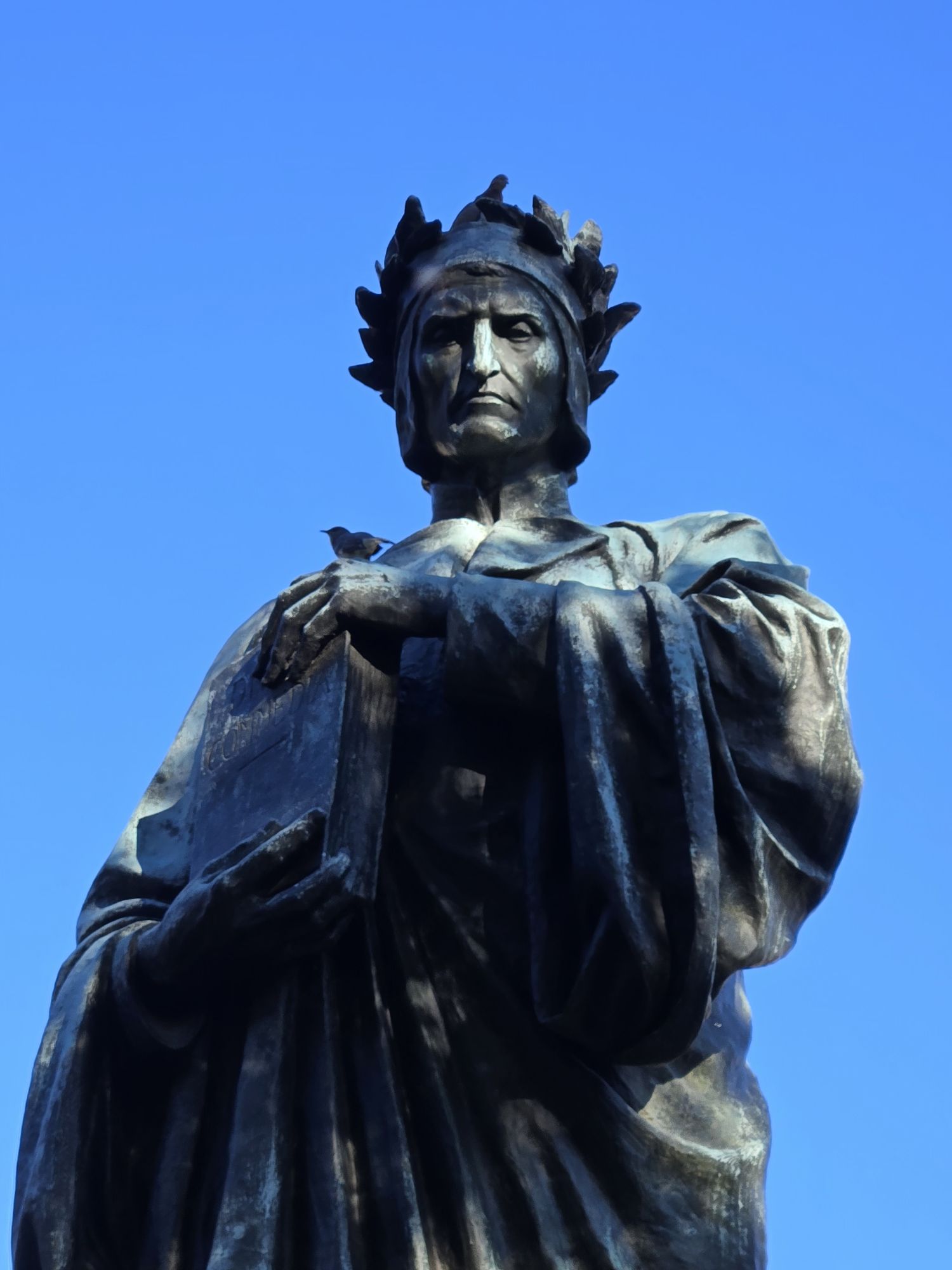
    Now, I guess I know better. John Lewis. Jerry Lee Lewis. Jerry Lewis. Interestingly, if you go on the website ranker.com (and heaven only knows why you ever would), you can see 75 people named Lewis ranked according to how famous they are. Now, here is a good reason why you should not go to ranker.com: the most famous Lewis is actor Damian Lewis, and I don’t know if I ever even heard of Damian Lewis, much less be able to tell you a film or play he acted in. The Lewises making up the rest of the top 5 are Rudy, Denise, Al and Geoffrey. Ever heard of any of them? (By the way, John is 23, Daniel-Day is 28, Jerry Lee is 30, and Jerry is 64.) Ranker.com? Bah.

    Back to Babbitt. I have not read the book, but after seeing the play last weekend, I trekked out to Second Story Books Warehouse in Rockville, knowing that they would have a copy. After all, they have (so they say, and who’s not to believe them?) more than 500,000 books under one roof. I found copies of many Sinclair Lewis books (Main Street, Cass Timberlane, Elmer Gantry, Dodsworth, Arrowsmith) but no Babbitt (and no It Can’t Happen Here).

    George Babbitt (played by Matthew Broderick) is a proud, civic minded Republican real estate agency owner in a small Midwestern town. If he lived today, instead of in 1920, he would be a supporter of Donald Trump, no doubt, mainly because most of the folks in his town would be for Donald Trump, and he was certainly not one to have any original ideas. Babbitt had always lived in that town, had gone to the state university with most of the people of his age who were his neighbors, and – as a student – had shown initiative and promise (he had been a champion orator), all of which had been forgotten as he had struggled to make a living to satisfy his wife and two teenage children. He certainly has not made a name for himself.

    But he is encouraged by an old friend to make a speech at the local Rotary (I think Rotary) Club in support of the Republican candidate for mayor (he is running against a “socialist”, who was also a college classmate and former friend of Babbitt’s) and his old oratorical skills come to the fore. Suddenly, Babbitt is a celebrity, someone to look up to, outshining even the candidate that he is supporting.

    But then, Babbitt needs a political favor (a friend has been jailed for shooting his wife, and Babbitt wants the governor to pardon him, which never happens, by the way), so he goes to the governor’s close ally, Babbitt’s old socialist friend now running for mayor. The candidate agrees to contact the governor (maybe he does, maybe he doesn’t), but only if Babbitt throws him his support, and starts using his speaking prowess to convince the Republicans to vote for a socialist. Babbitt agrees.

    For the first time, Babbitt is acting against the interest of those people whose support and friendship he had always valued most, and he seems to become committed to his new found leftist positions. Yet something happens – his old friends desert him, his wife goes to visit her sister for vacation without end, his family falls apart (and his attempt to strike up a real relationship with a young dance instructor becomes an embarrassment), and not only that, his business – never the strongest – begins to fail.

    To save himself, Babbitt must renounce socialism and the mayoral candidate, join the citizens league, and become a Republican once again. Will he do it? After all, Babbitt has tasted “freedom” and he sorta likes it.

    The story is over 100 years old now, but it probably could be written today (just add cell phones). The play was engaging, funny, and thought provoking. It was also uniquely staged (but you don’t really care about that, do you?).

    Okay. It took me about 20 minutes to write this – 20 minutes that I wasn’t thinking about Trump. Or was I?

  • 16th Street (Part 8). Meridian Hill Park.

    October 24th, 2024

    I knew going up 16th Street would be slow. I have published seven posts, and have traveled only about one and a half miles from our start.

    We are now at the intersection of 16th and W (to the east) and Florida Ave (to the west). We start a fairly steep upward climb. On our right is Meridian Hill Park, which runs one very long block to Euclid on the north and reaches to 15th Street to the east. The park was in part formerly the home of a large home built in the early 1800s and, for a while, the residence of John Quincy Adams after he left the presidency. The house burned down, and in the early 20th century, the land was sold to the federal government for the construction of a 12 acre urban park. More on this later.

    Do you remember why this is called Meridian Hill Park? When Washington was laid out in the 1790s, 16th Street, going straight north from the White House, was proposed to be a prime meridian, the longitudinal line from which all longitudes would be measured.  It never really worked out, and Greenwich became the internationally recognized prime meridian in the 1880s. But the name remained.

    On the west side of 16th Street, in 1889, Mary Foote Henderson, and her husband, former Missouri Senator John Henderson, built a brownstone “castle” with 30 rooms, including a 100 foot ballroom, which became a centerpiece of Washington society. The castle is no longer there, demolished about 1950, and  replaced in the 1970s by about 100 expensive townhouses. But the walls of the estate still exist.

    They lead to Crescent Place and the home of the Meridian International Center, which actively does something (in addition to renting space for weddings and the like), but I really am not sure what. Their expansive facilities include two enormous houses designed by John Russell Pope (we have spoken of him before, architect of the Jefferson Memorial, Archives, National Gallery, the Masonic Temple on 16th and much more). One of these houses, visible from 16th Street, was the home of Eugene Meyer, former Washington Post editor and father of Katharine Graham.

    Home of Eugene Meyer

    Soon, we are beyond the Meridian International Center, about one third of the way up the hill  and onto a block containing four multifamily buildings facing the park.

    The Envoy
    The Diplomat
    The Henderson
    The Park Tower

    The Envoy and the Diplomat are rental properties, with studio and one bedroom apartments. The Envoy, originally Meridian Mansions, was opened in 1918 with large apartments for permanent residents and hotel rooms. Chief Justice Charles Evans Hughes was a resident, as was author Frances Parkinson Keyes. In later years, it became one of the first fully racially integrated residential buildings in the city. In 1979, the building was completely gutted and rebuilt.

    The Henderson was a small apartment house redone and greatly expanded in 2017. The Art Deco Park Tower, built as a rental in 1929, is now a 90 unit condominium.

    The building next to the Park Tower is the most interesting, a mansion built to house an embassy.

    The formerloo French Embassy

    After building the Castle, Mary Foote Henderson bought up almost all the surrounding land. This included the land where the John Russell Pope mansions, the land where the beaux art French Embassy was built, and even the land that is now Meridian Hill Park (where she wanted a replacement White House to be built).

    On the design of the embassy, she worked with long time French ambassador Jean Jules Jusserand. There is, by the way, a monument to him in Rock Creek Park, along Beach Drive.

    Of course, the building is no longer the French Embassy.  It has been several things, including, for a while, the Embassy of Ghana, and has recently been purchased by the Turkish AK Party (that is Erdogen’s party) for its American offices (sounds odd, no?).

    The last building we will look at will be the Dorchester, at the corner of 16th and Euclid. A large apartment house opened in 1941 with almost 400 units, it was once the home of a U.S.Naval Officer named John F. Kennedy. A client of mine wanted to convert the Dorchester to condominiums as one of the first such conversions in Washington.  I told him the building was too complicated and that I didn’t want to be involved. He was surprised at that, I am sure.  That was probably 40 years ago. It is still a rental.

    The Dorchester
    Another view of the Dorchester

    We will save Meridian Hill Park itself for another day. It will be Part 9.

  • Pere Marquette and the Mississippi River: Baby, It’s Cold Outside (or, You Learn Something New Every Day)

    October 22nd, 2024

    When I was young in St. Louis, I would occasionally go with my family to Pere Marquette Park, on the Illinois River about 50 miles from our house. The park is still there, all 8000 acres of it, run by the State of Illinois, complete with a lodge (built by the Civilian Conservation Corps in the early 1930s) in which we never stayed, and a restaurant, where we would have lunch.

    I also remember (perhaps you do, too) learning that Jacques Marquette and Louis Joliet had “discovered” and explored the Mississippi River, although I don’t remember any of the details I learned in fifth (?) grade.

    I hadn’t thought much about Marquette recently, but last weekend Edie and I went to the Georgetown Library annual book sale, and she stumbled on a book titled simply Jacques Marquette, written by and inscribed by one Joseph Donnelly, S.J. and published in 1968. I decided to read the book. Very glad I did.

    I will get right to the bottom line first. In the 1670s, the French who had been settling what was then New France and is now primarily the province of Quebec had been working very hard to do two things: first, make money off trading with the Indians for fur pelts, and second, turn all of the local Indians into good Catholics. I would give Marquette a C+ on his success as a religious converter (I think he would give himself a similar grade), but an A on his ability to communicate with and get along with the native Americans. He learned, they say, six separate native languages. But sadly, I have to report, Marquette died at age only 38 of some sort of infection he picked up and suffered with for perhaps the last six months of his life.

    But what I learned from the book goes beyond those basic facts.

    (1) Seventeenth century French education. Jacques Marquette was born in Laon in northern France into a middle class family (if there was such a thing in the mid 17th century); his father was a lawyer. He was a bright boy, and his parents sent him initially to a local school when he was about 5, and then to a boarding school in Reims when he was only about 9. The book describes all of the schooling Jacques received, over a period of about 20 years. Clearly the French and the Society of Jesus (where Marquette got his later education) were both very serious about quality education. And in their way of thinking, education was more than reading, writing, and arithmetic, but also heavily on classical Greek and Roman learning, which was viewed as essential to training the mind, and on communication skills. There was religious training to be sure but, as I understand it, the training was not by way of the study of religious texts, but by the observance of the religious rituals, all of the religious rituals, including those connected with every single feast day or saint’s day. And school days were long and full, and students were expected to be serious.
    In addition to all of this book learning, the education also involved learning to be a good citizen. How to treat people, how to help people. That sort of thing. The study of classical ethics and philosophy. Something again taken very seriously, and something we could probably use more of today.

    I should add that I am sure that girls’ education was different, but the book did not discuss that at all. But for boys, as they grew and matured, the subject matter of their training increased. They began to study ethics and philosophy, and – for those who were interested in the priesthood, they continued to learn religious practice (actual theological studies to come later, just before ordination).

    Schools training prospective priests also had very strict discipline. Since priests were expected to lead a very disciplined life and hold their place in a very hierarchical institution, the discipline was deemed to be important for training for the future, to make sure that young priests would obey their elders. In addition, future priests were given non-academic training: they were isolated for periods of time so that they could mediate, pray and reflect, they were assigned work at hospitals helping with treatments, cleaning patients and buildings, and helping with the dead, and were sent out into society, usually in pairs, wearing religious garb but with no food and no shelter, learning to live by begging from others, an activity that was to teach them empathy with the poor. And they were expected to learn to teach. In fact they were usually teaching younger students while they were engaged in their own studies.

    (2) Samuel Champlain, a Frenchman, came to Canada first in 1603, 17 years before the Mayflower went ashore in New England. And by the middle of that century, the French had established a number of settlements along the St. Lawrence River (Quebec being the chief settlement) and upper Great Lakes. Most settlements had governmental representatives (military and civilian), clergymen, and independent fur traders and businessmen. And, they these groups did not always see eye to eye on how to run a settlement, or how to deal with neighboring tribes.

    The settlements had to be fortified against potential Indian attacks. Their members had to grow sufficient food (or be able to trade for it) and obtain needed supplies. Contacting the home country was difficult and took a lot of time, so they also had to be pretty well self-sufficient. And it was very, very cold up there in the long winters and life was consequently quite hard.

    As far as the priests were concerned (and there was quite a number of them in New France), their jobs were not easy. They served the French settlers, they often had to build their own settlements as they tried to get closer to Indian villages they were charged with converting Indians (or trying to), and they had to serve and instruct natives whom they had already converted. Many jobs at once, and they were often called to travel from one settlement to another, even though the other might be hundreds of snowy miles away, and the only ways to travel were on foot, or by canoe (with an overabundance of portages). And it was cold – deep snow, frigid temperatures and freezing breezes. (By the way, they had no horses.)

    (3). This was not empty country. There were a lot of Indian villages, although the Indians tended to be semi-nomadic and apparently didn’t expect to stay in one location for too long. Their reason to move was usually because some other Indian tribe was kicking them out, or threatening to. This is because the various tribes did not get along with each other most of the time. There were smaller tribes, like the Hurons and the Ottawas, many of whom stuck with (and were therefore protected by) the French, and then there were much bigger tribes – such as the Iroquois to the east, and the Sioux to the west, who were, by and large, much more aggressive and powerful and, therefore, harder to deal with. It was a complicated and fairly sophisticated society.

    (4) The trip to locate the Mississippi (with Joliet, as leader of the small party; Marquette being the accompanying priest came about because there were stories from Indians of all sorts of the existence of a very big river west of where they were. The French wanted to explore this river. Did it go to the great ocean that would lead them eventually to China? Or did it go, instead, to the gulf of Mexico where the French would come into contact with the Spanish (something they wanted to avoid)? It turned out that river was not hard to find (go west at a certain latitude and you can’t miss it, after all). And it turned out that there were many Indian villages on the way, with residents of each friendly and happy to help with directions. They were told about the Illinois River, which was a shortcut on the way back, and they were intrigued on the Mississippi (where they ran into more Indian villages and saw the first herds of buffalo they had ever seen) when they passed the muddy Missouri (not yet named) and the Ohio, both of which feed the Mississippi.

    As an aside, I must say that I was somewhat appalled at the general gall of the French (that’s a pun) who were convinced they were saving the souls of the natives by converting them, whose own beliefs just didn’t matter at all. And how serious they were doing this, for just that reason.

    Marquette never made it back to his home base in now upper Michigan, but his remains eventually did, and he certainly has not been forgotten. Both Marquette University in Milwaukee, and Marquette the largest city on Michigan’s Upper Peninsula, are named for him

    A fact-filled book, discussing so many things I knew nothing about.

←Previous Page
1 … 29 30 31 32 33 … 62
Next Page→

Blog at WordPress.com.

searching

Loading Comments...
  • Subscribe Subscribed
    Art is 80
    Join 71 other subscribers

    Have a WordPress.com account? Log in now.

  • Art is 80
    View site in Reader
    Manage subscriptionsSign upLog in
    Report this content
    Collapse this bar