Skip to content

Art is 80

  • Chef’s Surprise, Ballet, Korea, and Potter Stewart (Or……Something for Everyone)

    December 29th, 2024

    (1) Chef’s Surprise! We had dinner last night at Aventino, the terrifically, very good Italian restaurant in Bethesda. When it came time for desert, the menu listed several enticing gelati, including a very enticing flavor -“Chef’s Surprise!” -, which I ordered. Our waitress asked me if I wanted to know what it was before it came, and she was very, very pleased that I didn’t. I really didn’t. When it came, Edie and I puzzled over its excellent, but unexpected taste, and couldn’t identify it.

    I asked the waitress to finally let me in on the secret. The flavor was chestnut, and in the gelato were small pieces of candied chestnut. Next time when I see “Chef’s Surprise!” on a desert menu, I will know what to expect.

    Now that that mystery has been solved, does anyone know what soup de jour is? And how all the chefs in the world learn what it is, so that they will know what to serve every day?

    (2) Ballet. One of my final books of the year 2024 was Six Curtains for Stroganova by Caryl Brahms and S.J. Simon. You ask how I chose that book. For one thing, it was staring me in the face on the top of a pile of Penguin paperbacks. For another, it was only 191 pages long. And, finally, I am a sucker for most anything that smacks of Russia.

    The book was written in the 1940s, when the Soviet Union was an Allied partner, and is a very, very clever (sometimes laugh out loud – except I don’t) satire. It takes place around 1900, when Russia is still Russia. Vladimir Stroganov (grandson of Moishe the money-lender, and son of Moishe’s son) is a pampered young man, whose family in Omsk has given him enough money to permit him to create a ballet company. Natasha is a young ballerina, with a very pushy stage mother. Vladimir falls in love with Natasha, Natasha’s mother (known only as “the mamoushka”) falls in love with Vladimir’s family’s money and Natasha goes along for the ride. Vladimir and Natasha marry, and Natasha announces that Omsk is not good enough for her, that she wants to go to St. Petersburg, be the lead ballerina in Vladimir’s company, and be so loved that she gets six curtain calls.

    They all move to the capital. Vladimir rents a theater shared by a circus. And things go wrong from there. Vladimir’s biggest competition is the real Serge Diaghilev. And the competition is cut throat. Equally cut throat is the competition between Natasha and two better known ballerinas for the top roles in the two companies. And then there is the new potential backer, who has a lot of money when Vladimir’s money is running low, but who also has his own “Natasha”, who can do everything but dance. The mamoushka butts in continually. But who turns out to be the most powerful? Perhaps the otherwise unknown woman who is in charge of the curtains.

    It is all great fun. I recommend it. If you can find it.

    (3) Korea. From a satire on ballet, I went to the opposite extreme for my next book, Philip Deane’s Captive in Korea. Deane was a Greek born newspaper reporter, working for an unnamed newspaper (I think it was the London Observer) and sent to Korea in 1950 to cover the war. His description of Korea as a backwater occupied by the poorest of the poor, the hungriest of the hungry, and the most wretched of the wretched, certainly contrasts with the Korea of today. The description of the war conditions he sees in his early days there are hard to comprehend. And then he is captured by the North Koreans.

    He is in their custody for over two years, kept not with the military POWs, but with civilians – journalists, diplomats, clergy, professionals and so forth. Always on the move, never properly clothed, generally freezing (really freezing) or too hot, starving most of the time, wounded, sick with no medical care. Conditions so bad that you would think that most of the prisoners would die. Which they did.

    We fret about the wars going on in Ukraine and the Middle East (and if we are really sensitive, also about those chronically raging in parts of Africa), but they may pale in comparison with Korea. In the three years of the Korean War (a war which ended with an armistice still threatening to explode 75 years later) which accomplished absolutely nothing, Google’s AI tells me that 3,000,000 people (military and civilian) died. Can you even imagine?

    Do I recommend this book (also hard to find, I am sure)? Yes, if you want to read about absolute misery. No, if you would rather read a satire about ballet.

    (4) Potter. I had a hard time sleeping the night before last, and when I actually fell asleep, I had several dreams. The one that stuck in my mind? I was a relatively young man (as I usual am in my dreams), living in a large house with a bunch of others, and I decided I wanted a coca-cola. So I went to the corner store, bought a chilled bottle (the vendor apologized profusely for having to charge me $4) and took it to the park nearby, where I sat on a bench. A couple sat down next to me, and the man held out his hand and said “Hi. I am Potter Stewart”.

    I was shocked that I had met a Justice of the Supreme Court in my neighborhood park, and reported it back to the people with whom I shared the house. One of them said to me: “That’s impossible. He’s dead. ” I said: “Yes, I know he is. But he’s also in the park.” Stewart died in 1985.

    Last night, by the way, I recall an equally strange dream. I was talking to friends, but decided I needed to take a walk to get a little exercise. I told them I was going to go up Connecticut Avenue “to the Circle” and come back. On my walk, I saw a vacant lot on the east side of the street (in real life, there are no vacant lots there), and I was surprised at how empty it was. Next to it was a sign “COMING SOON: 5 NEW SHOPS”. That surprised me, too, but not nearly as much as when I looked back at the vacant lot and discovered that it was no longer vacant, but now held 5 new shops. “SOON” was an understatement.

    That’s it for this morning. Two days left in 2024. I think I will start my yearly recap tomorrow.

  • “So, Art, What Do You Think Will Happen in the Middle East?”

    December 28th, 2024

    I am asked that question quite a bit. Most recently, it was yesterday, when I was having lunch with a good friend. He had told me that he wasn’t sure which way things were tending, and wondered what I thought. I just sat there, maybe I smiled (at least maybe I smiled to myself), and said nothing. And then, finally, I said: “I have nothing to say.” I really have no idea.

    The question from the beginning has been whether Israel’s very tough response to the October 2023 attack by Hamas has been necessary. Has it been necessary for 45,000 or so individuals in Gaza to die as a result of Israeli assaults? That is perhaps the biggest question, as it is in every war, including those instituted and waged by the United States. And there are so many people who can answer that question and be sure that their answer is correct. I am not one of them, on either score.

    Israel has, by and large, been willing to live with the status quo for the past 50+ years, with the hope that sometime, some way, things would get better. The Israelis knew that they had to remain militarily strong to discourage any large scale attacks against its territories or people, and they knew that many of their neighbors thought that their country was an illegitimate outpost of foreigners, supported by American and European money. They knew that some of their neighbors not only wanted their country destroyed, but also thought that the Jewish Israelis should be forced to leave the area, or face a second Holocaust.

    But they thought they were managing things. Even though Iran was talking big and sending a lot of money to several large proxies in the area, they counted on Iran not giving the go-ahead for all out war, knowing what that would mean to the Iranian homeland. Iran, they figured, was in the business of fomenting chronic irritation, but not complete destruction.

    As to Hamas and its control of Gaza, Israel believed that, again in spite of major flare ups from time to time, Hamas was “under control”, through various secret relations and even unknown financial support.

    On October 7, 2023, Israel was proven wrong. Yes, perhaps if Israel had not had some important security lapses, had they believed what they saw about a year of preparation for attack in Gaza, had they not taken troops away from the borders, had they better protected their new and quite expensive security fence and cameras, the attack might not have occurred. But they let these things go because they thought that Gaza would remain relatively quiet for the foreseeable future. Yes, they were wrong.

    As Israel was responding to the situation in Gaza, the country was attacked from the North, by Hezbollah troops in Lebanon, also supported by Iran. The Gaza attack led to over 1,000 Israelis, mostly civilians, killed; the attacks from Lebanon led to the evacuation of a much larger number of Israelis from their homes. Israel responded by invading southern Lebanon, forcing the Hezbollah to retreat to the other side of the Litani River (I think that’s about 20 miles from the border). They then signed a treaty with Lebanon, keeping Hezbollah north of the river, giving the Lebanese Army some additional powers and responsibilities, and allowing Israel to respond to any treaty violations (as defined by Israel).

    Israel has also been the recipient of drone and missile attacks from Yemen, from far away Yemen, and the IDF has now responded by retaliating against that country with some major air attacks and with President Netanyahu saying, in effect, “they aint’ seen nothin’ yet”.

    Israel is clearly going all out. It is responding to what it considers a surprising, but nevertheless, an existential threat. It is now or never. There is no choice in the minds of most Israeli leadership – we kill them or they will kill us. Period.

    When Gazan authorities give the death toll numbers, they say that they don’t distinguish between military and civilian. There is a reason for this. In effect, in their government’s eyes, every Gazan is a fighter for the end of “Israeli occupation”. They don’t distinguish between civilian and military because they don’t recognize the difference. That division is not something that they accept. Consequently, when fighting a land where its government proclaims everyone to be a freedom fighter, or whatever the proper term would be, Israel in response does not recognize these differences.

    The article in yesterday’s New York Times titled “Israel Loosened Limits on Strikes, Multiplying Risks to Gaza Civilians” is a fascinating article (even if the headline writer does not seem to see the melding of military and civilian as I laid out above), demonstrating that the limits that Israel put on its military activities prior to October 2023 have been altered. Now, without approval from above, military officers individually can direct attacks which they know will kill civilians, and with central approval, the number of civilians who can be killed gets increased by a factor of at least five. Thus, 45,000 killed in Gaza, and the number grows. And, as I said above, the reason is clear: this is an existential war brought on by its neighbors.

    Obvious, many think that Israel’s calculations in this respect are wrongheaded, and immoral. Maybe they are, but Israel (now under a determined, militaristic government) doesn’t really care. The fight is an existential fight. Niceties can come later.

    There are those in the West who think that Israel should just give up and that is does not deserve to exist as an independent state and whose residents should just go somewhere else, period. There are those in the West who think that if Israel acted with more restraint, or acted nicer in general, everything would calm down. There are those who even think things would calm down if Israel ended its occupation and ended all limitations it has put on Gaza.

    The Israel government disagrees. They believe that they have tried that in the past and that it won’t work. But they also believe that one day, the active fighting will end, and something will have to be done about its then-defeated neighbors. But it does not appear that they know exactly what will have to be done.

    And of course, surprises occur. No one expected a successful revolt in Syria, cutting off Iranian supply routes. Time will tell if Israel can take advantage of that. No one knows if the Saudis will join Israel in fighting the Houtis. No one knows the future of the Abraham Accords.

    Had the Palestinians recognized Israel in 1948 or any time subsequent to that, the wars wouldn’t occur again and again, and yes, maybe Israel could have ended the occupation and felt secure. But that’s not what the Palestinians wanted. The Palestinians (I speak of their leadership, of course) welcome the fighting, because they think that they so outnumber the Israelis, that they will definitely win. And when they win, many or most of them would like the Jews to vanish from their midst or become the second class citizens they were for so long in most Muslim nations.

    So many Israelis respond: “You can’t kick us out; we will kick you out.” And the International Court of Justice now has to decide if Israel is committing genocide, a word that has many definitions. I don’t think anyone can say that Israel is perpetuating an Arab Holocaust. But there are those who would like to see all or most Arabs leave Gaza and the West Bank for greener pastures (or at least better sand), and that may actually happen, I think.

    Listening to a podcast recently about some historical events, the presenter said: “When historians look at this, they have the benefit of hindsight. They know what will happen next and where this will lead. But when you are living through it, you have no idea what is going to happen.”

    That’s why I remained silent. I am not personally involved. I am not a decision maker with regard to these events. I am given no inside information. And – I am not looking at it as a historian.

    If the Israelis are successful in creating a situation that increases their security, their current leaders, now so often derided, will be viewed as very clever statesmen. If Israel is not successful and is faced with, or creates, some major catastrophe, they will be damned. Future historians will know what happened after the Middle Eastern wars of 2023-2025. We don’t.

    I am silent.

  • Black Doves and Killing Eve

    December 27th, 2024

    Do you know who Adeel Akhtar is? Probably not. He’s a British actor, born in London to parents of South Asian heritage. I like him because he is about my height, he graduated from law school, but he decided to become an actor. He has won a number of awards, according to Professor Wiki, and I have seen him now in at least three TV series, two quite recently. He has a very winning way about him, I think, and a unique way of speaking that sets him off from other cast members, and makes him memorable. He never quite seems like the right actor for the role when you first see him, but he grows on you very quickly.

    I first saw him in a Harlan Coben series, Fool Me Once, where he played a police detective who never quite fit in at the station, who certainly had his own relationship problems, who had a major health scare in the middle of a pursuit, but – if my weak memory serves – was a hero in catching the guy he figured out to be the one who needed to be caught. I saw that series a few years ago, and liked it.

    Recently, I have seen two other series in which Akhtar was in the cast. Because this is not a quiz, I will tell you what they were. First was Killing Eve, where he played a psychiatrist (or maybe a psychologist), who worked for some government spy agency (maybe MI6), but treated both friend and foe. The other one was Black Doves, where he got an unlikely promotion and became Prime Minister of the United Kingdom.

    I don’t know if you have seen either of those series. I thought that, for the most part, Killing Eve was a treat. When I say “for the most part”, I mean the following: for the first three seasons, Killing Eve was very clever, quite confusing, 50% realistic and 50% absurd. It fell apart in its fourth and final season and became 85% absurd and 15% (if that) realistic. And, yes, those percentages have a scientific basis, I am sure. As one critic said of the fourth season: it shows you can indeed get too much of a good thing.

    You know the premise? Eve (Sandra Oh) works for the equivalent of the British Secret Service (the organization that provides protection to government employees and VIP visitors to the UK). She is a bit of a hapless individual, I would say. She is married to a teacher and lives an ordinary life, although her job is a bit out of the ordinary. She fails to protect an important witness which results in several deaths, and is fired. But then she is hired by a very unusual stiff-lipped British woman, Carolyn, (Fiona Shaw) who works for MI6 and runs an operation off-the-books, so to speak, to catch an assassin, who has been murdering people around the world.

    The assassin is quickly identified as a mysterious woman who goes by the name of Villanelle (Jodie Comer), a cold blooded young woman (the actress is only 31) who can murder anyone without any emotional effect, and who is impossible to catch, although she does nothing to hide. She seems to be Russian-born, and she has a handler, Konstantin, played by Kim Bodnia, of whom I had never heard, but who deserves an Emmy or an Oscar or whatever for his acting.

    It turns out that Villanelle and Eve develop a very firm and unshakeable love/hate relationship with each other, as they chase each other around the world. And it turns out, of course, that no one is who they seem, that the world is not what you think it is and is not what any of the characters think it is, and you don’t find out who is who until the very end of the program, where everything is tied together. Or not.

    Trigger warning: a lot of people get killed in ultra-violent manner. If you don’t like to see that, don’t watch it. But it’s all in good fun. And very unusual. And you have to like the characters.

    Black Doves, starring Keira Knightly, is another story. It only has 6 episodes (as opposed to 32, I think, for Eve), but has been renewed for a second year. It has a lot of similarities to Killing Eve, but there are a lot of differences. The similarities: both are British, both involve British security services, both involve mysterious international criminal outfits, both involve mysterious off-the-books operations that you can never quite define.

    In Black Doves, Keira is Helen, the wife of the British Minister of Defence and mother of four year old twins, who is also Daisy (maybe), a “Black Dove”, an assassin and spy recruited by an organization that is out to stop criminal activity, sort of, but more importantly to obtain information that can be sold to the highest bidder. She was Daisy before she was Helen and, in fact, were she not a Black Dove, she never would have married her husband, whom she doesn’t dislike, but clearly is not in love with. She has another lover, but he is killed, and he wasn’t who she thought he was, of course. But she is trapped because of the twins, who were certainly unplanned.

    So Helen leads this double life and, like Eve, cannot be caught, although she does everything out in the open. Her wife-role is very public, but she leaves the kids with the nanny to go out and murder people in her other role, and she has tea with assassins and old friends in the open and the press ignores her, and no one ever sees her.

    As in Killing Eve, there is a lot of brutal murdering, no one is who they seem to be, all events are improbable, and until the end, you have no idea what is going on. In Eve, you understand that you aren’t expected to know what is going on and that the whole thing is some sort of big joke. In Black Doves, the lightness is repressed (although I think it is still somewhat of a comedy) and you feel you should understand what is going on and you have no clue, whatsoever. In fact, we had a hard time remembering anything that happened in the previous episode when we tuned into a subsequent episode.

    In episode six, you are hand-walked through everything you missed and at the end, you know everything, and it all makes sense. Not that it could have happened, but at least the story makes sense. In Eve, even after you are told the full story at the end of the fourth year, you still have questions – nothing at all makes sense, and the whole thing is, as I said, a joke.

    At any rate….does anything I said make sense? Let me end with a very short summary. Watch Killing Eve, unless you don’t want to. Do not watch Black Doves, unless you really want to.

    Now, you understand.

  • It is Hanukkah’s Turn (Spin, Spin, Spin)

    December 26th, 2024

    First, I am going to spell it  Hanukkah because my phone tells me any other spelling is incorrect, and I can not stand the continual criticism.

    Second, and you probably know this, Hanukkah is a post-Biblical holiday commemorating the victory of the Jews of the Holy Land over the Greeks, who had captured and defiled the temple in Jerusalem (that is history) and the miracle of a lamp that had one day of oil but burnt for eight days (that is mythology). The revolt was led by the Macabee family (not their real name), who became tyrants themselves (history). Power always corrupts.

    Perhaps except for the seven years I was away at school, I have been at Hanukkah candle lightings eight days every year. That means I have been present at the lighting of over 3500 candles.  But, as they say, who’s counting? (Yes, it’s me.)

    In religious terms, Hanukkah is a “minor” holiday. Even the most religious Jews work every day of Hanukkah (except for Shabbat, and every Hanukkah has at least one of those), but Hanukkah has become a “major” holiday on the calendar of many Jews, especially those with children and grandchildren. (This is where Art avoids the relationship between Hanukkah and Christmas.)

    My favorite Hanukkah story remains the time an old friend was president of the DC Women’s Bar Association and had to pick an evening for their annual gala, which drew enormous crowds. The only available nights at the preferred hotel were during Hanukkah. My friend did not know if this would be acceptable to the many Jewish lawyers, so she called a mutual friend, the most observant Jew she knew, and asked.

    She was told it was no problem. I paraphrase: “You light the candles and that is it. Then, you go out to the dinner. Or you even light the candles when you get home.”

    Relieved, my friend signed the contract with the hotel, and the invitations went out. You can imagine the firestorm that erupted.

    I, of course, knew nothing of this. But my office phone rang one morning. It was my friend, the WBA president, with a simple question: “Art, is Hanukkah a holiday you celebrate only if you aren’t religious?”

    Years ago, a former rabbi of our congregation said that she thought that, in fact,  Hanukkah was the most important Jewish holiday because had not the Macabees retaken the temple, Judaism would have ceased to exist. I remember this because I had never heard anyone say this before. As I thought about it over time, though, I realized that no one ever said this before because she was wrong. I wonder what she thinks today.

    I don’t want to forget the dreidels, although there were none last night. I will honor them by recalling a cartoon I saw last year. A lady dreidel gets out of the shower. An impatient male dreidel looks at her as she steps out and says: You mean you aren’t dry and ready?

    At any rate, the first candles were lit, and blessings sung with verve last night at Michelle’s,  with first class latkes fried by Josh. I topped mine with feta cheese. Feta cheese, you say? Art, you have played right into the hands of those damn Greeks.

  • Christmas Past and Christmas Presents.

    December 25th, 2024

    Like most Reform Jewish families in St. Louis in the 1940s and 1950s, we celebrated Christmas. It obviously had no religious significance, but it was a holiday celebrated, I thought, by Jews and Christians, with Christians giving it an additional twist by calling it the birth of Jesus. But as a young boy in St. Louis, I didn’t think that Jesus was even real; he was a delusion to my mind. But, of course, Santa Claus was real. And he had nothing to do with Jesus. He brought presents to everyone.

    I don’t remember exactly when I stopped “believing” in Santa Claus. I don’t remember whether it started with mild doubt, or if one day I had an epiphany. But I do remember (how old could I have been – 6? 7?) being ashamed at how gullible I was.

    We did have a chimney and we did put stockings up on the mantelpiece and on Christmas morning the floor was strewn with wrapped presents. We did not have a tree or any other Christmas decorations.

    And of course we celebrated Hanukkah as well with candles and blessings and tiny gifts sometimes, I think. But Christmas was the big gift day.

    Of course, in school, we sang Christmas carols. I still think that the melodies of the most common ones are beautiful. When we sang them, and anything in them mentioned Jesus, I mouthed the words. They weren’t going to make me blaspheme.

    But I have never minded the Christmas season. I like the holiday lights and decorations and the general good cheer. But of course Christmas isn’t what it used to be. Now, I think there are as many or more Halloween decorations on houses as there are at Christmas, and they are often much more clever and artful. There no longer are Christmas windows in shops to look at. In fact, this year, I haven’t even noticed many Christmas trees, or Christmas decorations around town. Or, for that matter, Hanukkah decorations – the menorahs you used to see in shops just don’t seem to be there. And I haven’t heard one carol on the radio and, this morning, the Washington Post and the New York Times barely acknowledge the holiday.

    I have no idea why this is, but maybe, if there was a war against Christmas, it has been won. I just don’t know.

    But back to celebrating Christmas in a Jewish house when I was young. I don’t think many Jewish houses do that today, although now there are so many mixed houses where everything is celebrated. Which is fine with me. But, are there other connections between Jews and Christmas? I can think of two.

    First, there is Jesus himself. Without getting into the religious mythology (and to me all religions are based on one or another mythology), one thing that we know is that Jesus thought himself as Jewish, and that’s good enough for me.

    And then, there are the Christmas songs. Not the “Adeste Fideles” types. But the ones that are basically the product of America. Written for the most part in the 20th century. Do you know how many of them were written by Jewish composers?

    I know you know that Irving Berlin wrote “White Christmas”. I think everyone knows that. But here is a list of some other Christmas songs that were written by Jewish composers (and I am sure it isn’t complete):

    “Chestnuts Roasting on an Open Fire”

    “Winter Wonderland”

    “Let it Snow, Let is Snow, Let it Snow”

    “Santa Claus is Coming to Town”

    “Rudolph the Red Nosed Reindeer”

    “Rockin’ Around the Christmas Tree”

    “A Holly, Jolly Christmas”

    “Sleigh Ride” (lyrics)

    “It’s the Most Wonderful Time of the Year”

    “Silver Bells”

    “Have Yourself a Merry Little Christmas”

    “I’ll Be Home for Christmas”

    “Jingle Bell Rock”

    “Frosty the Snowman”

    “Santa Baby”

    “The Christmas Song”

    So what do I take from this?

    I am not really certain. But I know that, without Jews 2000+ years ago, there would be no Jesus. And without Jews 2000 years later, Christmas would be celebrated very differently in the United States. Which makes me think that the celebration of Christmas (as a time of presents and good cheer and family dinners) in the 1940s and 1950s by Reform Jewish families in St. Louis might just have been OK after all.

    Merry Christmas. (Tomorrow will be Hanukkah’s turn – I have eight days to deal with that one).

  • “Random” Isn’t Even Close to Describing These Thoughts

    December 24th, 2024

    Apparently,  there are about 165 million salmon caught every year (Google AI). Seems like a lot. Makes you question whether it’s even worthwhile to be a salmon.

    But it may be that if Edie and I stopped eating salmon, the catch would be considerably smaller. Consider this weekend. Friday night, Hannah and her family came over, and we had salmon. I either overbought or they underate, so Saturday Edie and I had salmon for lunch. Saturday night, we ate at friends’ house and they served salmon. Sunday, we had lunch at a restaurant with Edie’s cousins, and without considering our recent past, we both ordered salmon.

    Last night, going with friends (2/3 visiting from Seattle), we said, “basta!” and ordered pasta.

    The moral of this story is……non-existant.

    What else? Oh, yes. Winter vacation.  We have nothing planned. But we thought it would be nice to go some place warm and interesting for a week or so during February or early March, and I thought about Panama City. There is an old city, modern high rises,  a beach or two, a canal (yes, my process was indeed “a man, a plan, a canal, Panama” or was it the reverse?), trips to rain forests and more  including – believe it or not – dozens of kosher restaurants. Then, our president-elect says we are (he is) going to take back the Panama Canal (remember when that was called Indian giving? for shame), and we think Americans might be personae non grata.

    So maybe we should just go to Greenland and see the Northern Lights. Whoops. Same problem. But we could also see the Northern Lights from parts of Canada. Whoops, again. Maybe we should just stay where we are.

    Some people living in other countries may wonder if Americans are excited to have a president who wants  to more than double our size. Let me just say this. Manifest Destiny ain’t what it used to be.

    At any rate, and on a very different topic, I have been called to active duty and will soon be leaving for deepest Nebraska to join my NORAD crew mates tracking Santa tonight. It promises to be very exciting. In many households, Santa will be served latkes, not cookies, and we are not sure whether his belly full of jelly will approve or whether he will have to curtail his flight. He has also been warned to stay out of the skies of New Jersey for obvious reasons, but he may not listen to us. The weather report for Trenton, therefore, is “cloudy, with a chance of latkes”.

    And with that, good tidings to all. Etc Etc.

  • The Rest of Box #2. OOPS…..FORGOT TO POST THIS IN NOVEMBER.

    December 23rd, 2024

    What kind of a person would not only throw this stuff in a box and keep it, but then show it to the world with not even a whiff of embarrassment?

    Souvenirs of the USSR.

    I brought back a lot of souvenirs when I visited the Soviet Union in 1974, including toothpaste, a sugar cube, and platic toothpicks. Yes, also some things that were worth more rubles. But they weren’t in the box.

    Clean hands and a clean mind

    Kult Soap from Germany and Patti Soap from Portugal, both from other trips of the 1970s.

    Beware……

    Yesterday, it was letter openers. Today, pocket knives. One is German. The others, probably not.

    The Biograph

    Remember the Biograph on Pennsylvania Avenue,  where you could see all those films they didn’t show elsewhere? It’s a CVS now, but if it ever becomes the Biograph again, I will have deep discount tickets. Even for the midnight shows.

    Bulldogs, Bulldogs

    Another bar of soap and another window sticker. Borrr-ringgg.

    You’re in the army, now

    This is better. My army dog tags. Are they fancier and techier now?

    Pins

    Well, we have Girl Scouts and TWA and turtles from Niagara Falls, and Adlai Stevenson, and more. Even a red star from the USSR.

    Geronimo

    A reproduction belt buckle from the 1904 St. Louis World’s Fair. I also have about 150 real Fair pieces, but they aren’t in a box.

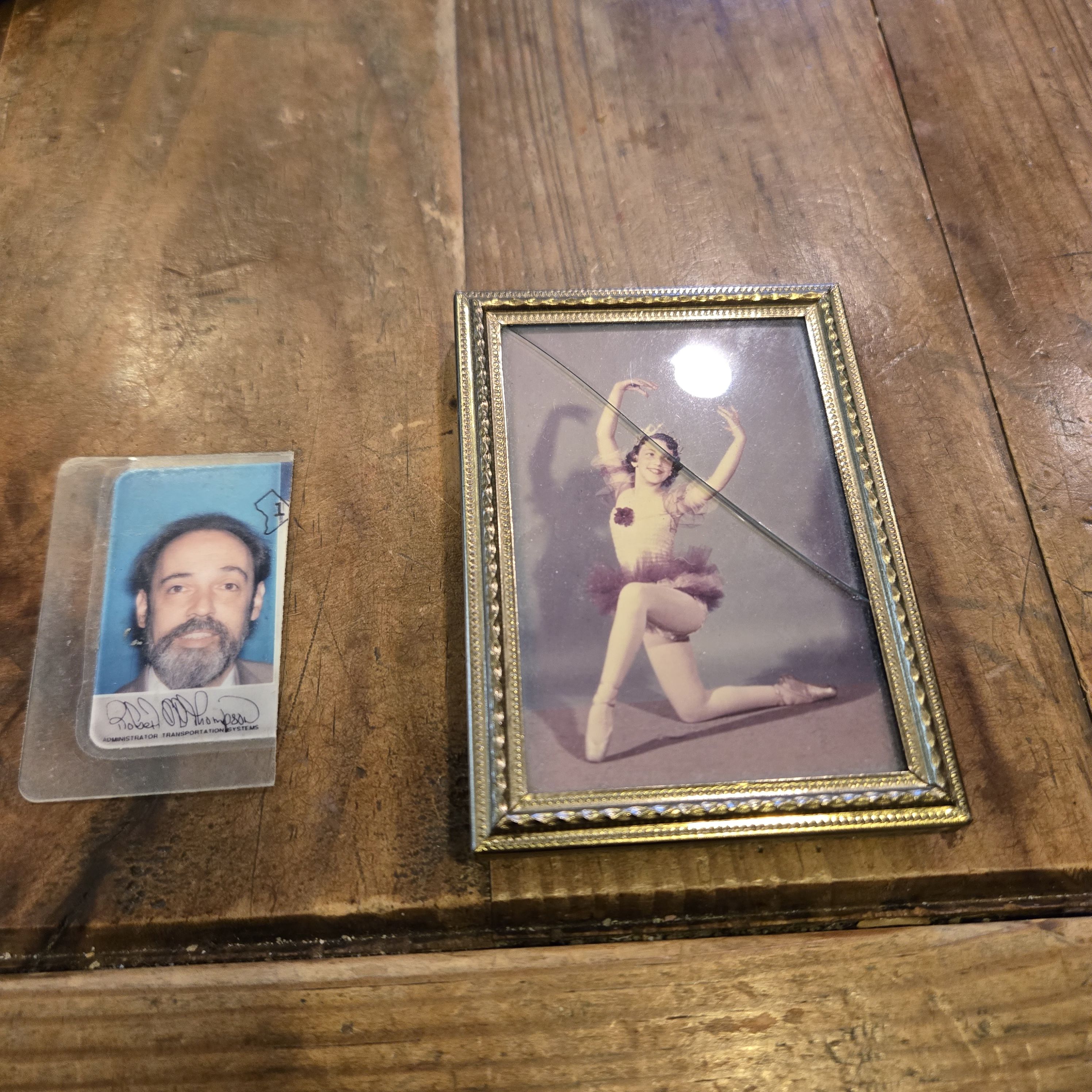
    Getting tired? Here we have an old photo from a DC driving license, a picture of my sister, the ballerina, when she was 10 or so, and a luggage tag of my mother’s.

    Almost done. A Missouri mill, worth 1/10 of a penny. Can’t buy much with that today.

    And finally, very old sunglasses. They don’t fit behind my ears, but I can fit them on my nose.

  • From My Office Shelves: Beyond the Books.

    December 22nd, 2024

    In addition to stashing things in shoe boxes, I have the annoying (to me) habit of putting odds and ends on book shelves in front of the books. Let’s take two shelves as examples.

    Orange-Tip Butterflies

    The beautiful orange-tip butterflies are found in various Asian locations. But these three were found in a shop in San Juan, Puerto Rico. I have had them about 40 years, and they haven’t aged a bit. Mounting a butterfly is probably not a nice thing to do, and these are the only ones I have. But I have long wished I had more than I do.

    Cigarette box inserts

    Cigarette silks were like Crackerjack prizes 100 or more years ago. Here, we have a pre-1917 Russian flag silk (this is the current Russian flag, but was displaced by a Communist flag during the days of the USSR). And we have an early Zionist Hatikvah silk, showing the Zionist flag and  the song’s melody and lyrics. The poem was published in the 1870s and the music around 30 years later, in about 1900, by Naftali Ingber and Shmuel Cohen, respectively. In 1948, Hatikvah became Israel’s national anthem, and the flag, slightly altered, became the flag of the State.

    Paperweight

    This kaleidoscopic paperweight comes from ______, was designed by ________, and can be dated in approximately ________. Where did I get it? Who knows?

    Railroad watch

    This form of pocket watch was known as a railroad march. The brand is Elgin, and this watch was owned by my great grandfather,  Abraham Hessel.  It is the only thing of his that I have. He died in 1939. Before my time.

    Me

    This is me, about 50 years ago. The secretary of a client in Los Angeles made it from a photo. We had never met. She made Christmas tree ornaments for a group that they had close relationships with. For mine, knowing I would have no tree, she left off the hook to hang it with. I was surprised that she gave me so little hair. The beard I had from 1974 (when I got out of the Army Reserves) until 2001. The ornament, like me, now looks its age.

    A mezuzah

    This mezuzah, I think came from Europe with Edie’s father. I have forgotten exactly why I think that, but that is indeed what I think. But it is odd, because it appears to have been carved from one piece of wood, meaning that the Biblical quote required to be inside it is nowhere to be found. I should research this.

    Who is this?

    You have to ask daughter Hannah about this one. In fact, I guess I should. I assume she made it in high school. I am sure it isn’t me.

    My old buddy, Vlad the First

    This is the largest of a series of nesting dolls that goes from Lenin to Stalin to Khrushchev and on. Sadly, I think they have tightened or dried out because I can not open them up. Did I get this on a trip to Russia? Nope. At a street fair in New York.

    There is a bit more on the shelves, but I have shown enough. And, yes, there are many more shelves. Here is a picture of everything in situ.

  • Yale Professor Tim Snyder Wins the Prize

    December 21st, 2024

    You didn’t even know there was a contest, but there was (in my mind). The contest was to come up with the best name for the incoming presidential term. I had suggested that we were going to have three presidents (Trump, Musk and Ramaswamy), so that the administration should be called the TP administration – the country being TP’d, as old Halloween revelers might put it.

    And then I heard Congresswoman Debbie Wasserman Schultz refer to “Trump and President-elect Musk”.

    Tim Snyder had a different idea, as I heard on TV last night. Tim Snyder ignored Ramaswamy and focused on the other two. He determined that Musk appeared to be even more powerful than Trump, so he suggested that the administration was to be the Mump administration. America suffering from a bad case of the Mumps.

    I give Snyder the prize.

    It’s hard to know what is going to happen now. I admit that I did not stay up until 1 a.m. this morning to see the Senate vote on the continuing resolution that will fund the government until sometime in March. But I do know one thing – March is not too far away. And I also know that sometime – and I have no idea when – we are going to be facing the question of approving an increase in the national debt. I don’t really know what position the Mumps will take on the debt question, and I wonder if they do. As I understand it, the Congressional Budget Office (I think that is who) has determined that an extension of the Trump tax cuts by the Mumps administration would require an approved national debt increase. The Mumps wanted that increase to be approved during the Biden (remember him?) administration, so they wouldn’t have to worry about it, but now they do. So will they still want to abolish any debt limits for the four years of the Mumps? No one really knows.

    What we do know is that, while the GOP will control both the House and the Senate, their majorities are so slim that it will matter much more for determining what goes on the floor agendas and who heads the various committees than it does on what legislation will finally be voted on. For example, during the last few days, we have seen that 35-40 Republican members of Congress will vote pretty much against any measures which would increase the financial cost of the government. In other words, unless a spending bill is accompanied by a savings bill, the vote will be “no”. And of course, 35-40 “no” votes is 33-38 more than the Republicans can afford to lose. And then in the Senate, we will have the 60-40 rules, which means that the Republicans can pass nothing (other than through budget reconciliation bills and the like) without winning over 7 or 8 Democrats.

    So, what will happen? All we know is that it will be very chaotic. Very chaotic. And it was fascinating, wasn’t it, the departing Senator Mitt Romney voted against the extension package last night? Why would he do this? It wasn’t because he didn’t favor the bill itself. He did. As a “simple protest of the absurd way this is to run government” (his tweet on X).

    This brings me to the Washington Commanders (nee Redskins), who have played their home games for the last 27 years at a stadium current called Northwest Stadium in Landover, Prince George’s County, Maryland. Prior to that they played at RFK Stadium in the District on the Anacostia River just east of the Capitol Hill neighborhood. That stadium has barely been used for the past decade and it and the surrounding parking area and the building which serves as the armory for the DC National Guard have been very underutilized. One of the reasons for the lack of activity at the site is that it has been federally owned real estate, managed by the National Park Service, which clearly had better things to busy itself with.

    Included in the original extension bill (of 36 hours ago) was a provision to transfer the RFK site from the federal government to the District of Columbia. The District has been having extensive conversations with the new owners of the Commanders about building a new stadium to replace RFK and have the Commanders move back to town. At the same time, the Commanders have been talking to Maryland officials about demolishing Northwest Stadium and rebuilding the site. All seemed cleared for this to take place, but when the second version and third version of the extension bill (24 hours ago, and 12 hours ago) were brought forward, the transfer of RFK was omitted.

    This omission was largely due, as I understand it, to a tween that Elon Musk made stating his opposition to spending U.S. taxpayer money on subsidizing the Commanders or the NFL. A fine thought, perhaps, but the trick was that there was no money to be spent by the federal government at all. In fact, a savings, since once the area was transferred to the District, the federal government would not have to pay for security or upkeep. Total ignorance on the part of Musk, or purposeful misinformation?

    The transfer had already been approved by the House months ago, so the only thing needed was Senate approval, which is why it was added to the extension bill in the first place. Its omission from the legislative language was certainly a sad day for DC and the Commanders.

    But miracles still happen. After the extension bill was approved, at 1:15 a.m., a separate bill was introduced (I am not sure of the exact process) to approve the land transfer and approved unanimously by the Senate by voice vote. This was so far the biggest surprise of the day. Apparently, no one expected that to happen.

    Well, Congress is going home, and the next Congress (assuming there is a Speaker elected) will reconvene on, I think it is, January 3. Then, on January 20, the country will experience the beginning of the Mumps pandemic. We can only hope that Mumps, will the assistance of the RFK who is becoming a part of the federal government rather than leaving its control, will not also bring about a resurgence of Measles, COVID, or Polio.

  • “They Will Not Replace Us”

    December 20th, 2024

    There have been many films, largely bad, where the young family hires a young, attractive woman to be their nanny. Everything starts out all right, but soon, the nanny turns out to attack the children, or to seduce the husband, or to do some other combination of things which create a nightmare.

    The latest of that genre is Subservience, now streaming on Netflix. But there’s a twist. Megan Fox, the nanny, is not human, but rather an AI creation, a SIM or, insultingly, a Spark.

    The time seems to be the present. The houses are contemporary. The cars are certainly not futuristic. The place seems to be Colorado.

    The only unusual aspect is the prevalence of SIMs. The male protagonist is Nick. Nick has a wife, Maggie, who needs a heart transplant and is hospitalized. They gave a daughter, Isla, who is  maybe 6, and a baby son. Nick is a construction foreman working on a new high rise.

    Nick is overwhelmed by his wife’s illness and absence and buys a SIM. He becomes her “principal user”, which means she is programmed to do whatever is necessary to respond to his wishes, to protect him, and to make him happy. She is able to communicate with him, speaking perfect English, and by touching him, she can read his stress level, blood pressure, and so on. She keeps the house looking perfect, cooks the meals and takes care of the children.

    You can see where this is going. She determines, with his wife absent, that he needs some physical intimacy and, although he fights it, she is impossible to discourage, and he eventually gives in.  Not smart, but probably not avoidable.

    In the meantime, the high rise construction is behind schedule and Nick’s boss fires everyone other than Nick, hiring SIMs to replace them. This leads to his former workers concluding that Nick must have conspired with the boss against them, and this leads Nick’s SIM (whom Isla has named Alice) to go into a very aggressive protective mode. Also not good.

    By the way, Maggie’s operation is successful. It appears that the entire surgical crew are SIMs. As are restaurant servers and bartenders, among others.

    I won’t tell you everything that happens, but I will tell that Alice learns to reprogram herself to give her more intuitive power and emotional understanding, and then learns how to upload her newfound attributes into the overall SIM system that should be controlling her, the result being the creation of Alice clones.

    Why do I tell you all of this? Because there are more and more prominent voices calling out the dangers of uncontrolled AI becoming dominant over human society, changing and improving themselves as they go along, with humans becoming more powerless and less important. And Subservience, while not portraying a future exactly as it could possibly be, does show what could happen if humanity loses its autonomy, and AI runs amok.

    Perhaps “They will not replace us” should be reoriented from its current use and become the future motto of the human race in its fight to preserve the species? Danger is lurking.

  • How Can You Buckle Up If They Take Away Your Buckle?

    December 19th, 2024

    It is starting, even before January 20.

    House and Senate leadership negotiated and came up with a Continuing Resolution to keep the government funded through some time in March. Votes were to be taken today and President Biden (remember him?) was to sign it tomorrow, before large parts of the government were to be defunded and shut down on Saturday.

    (Digression: remember when there was a bill negotiated last year by Congress to reform immigration law and it was ready to be passed until then candidate Trump said to the Republicans: “don’t vote for it” and they all said “Yessa”. And remember when Trump told the Congress not to pass a national debt increase bill?)

    Yesterday, as the House and Senate readied to approve the Continuing Resolution and took deep breaths of relief, the Tri-presidents Trump, Musk and Ramaswamy (the TPs) said to the Republicans: “Don’t vote for it”, and apparently  they won’t.

    So, as of now, the government will partially shut down in two days unless something happens to turn it around. Normally, knowing how Congress acts, you would say: “Well, of course they will come up with something before the Saturday deadline.” But this time, and for the next four years – maybe they won’t.

    One of the things that the Tri-presidents want to accomplish, of course, is to cut government spending. So how will they start to go about that? We know that one thing they won’t want to do is increase the national debt, right? Then why are the TPs  By insisting that the debt ceiling be raised now, so far by an unspecified amount. Now, why do they need to increase the debt ceiling now? Answer is simple: they don’t. They want to do it only so they can say – when they will have to increase it later on account of the tax savings extensions they plan on passing to benefit the very wealthy – that “we don’t have to increase the debt ceiling, because Biden already did it.” Pretty dumb, you say? Yup.

    But those who voted for Trump don’t yet know how dumb it is. Or don’t care, because they are in a daze, kowtowing to the Great Leaders as after Trump said that he will arrange for rightwing primary opposition for anyone in Congress who does not do what he demands they do.

    So the government just might shut down this weekend.

    And not only that, as Norm Orenstein said last night on Laurence O’Brien’s show (and I sort of paraphrase): “Mike Johnson is no moderate. He is a Christian nationalist and a very right wing politician. But he isn’t right wing enough for the Republicans in Congress,” and many are saying that they won’t vote for him for Speaker. Will we have another paralytic Speaker battle? Perhaps.

    In the meantime, I heard that there are those who want to request, or may have already requested, the FBI to instigate a criminal investigation against Liz Cheney for the work she did on the committee that investigated the impeachment of Donald Trump. Also on Laurence O’Brien’s show last night, Senator Sheldon Whitehouse of Rhode Island asked how they think this is even possible since sitting members of Congress have immunity just to make sure something like this doesn’t happen? And, he asked, what kind of prosecutor says: “Let’s go get Liz Cheney. Let’s investigate her and figure out what crime we can charge her with?” And, that is just what is happening. And add to it the attack on the First Amendment that Trump has brought bybsuing thecDes Moines Register for publishing a poll showing he was behind in the Iowa presidential race.

    All this before the TPs even take office. Purposeful chaos is on its way.

    We have been advised before that it will be a bumpy road and should just buckle our seat belts. But guess what? I think they took our seat belts away.

  • You’ve Got Mail!!

    December 18th, 2024

    So, Donald JT wants to privatize the Post Office. I wonder what Ben Franklin would think of this idea. What would this even mean? Would we have one post office, or an unlimited group of post offices? What if no private post office could survive financially? What would happen to current post office employees? Who would carry mail from the federal government or state government? Etc. Etc. And there are too many et ceteras to even think about.

    That is “on the one hand”. On the other hand, since most packages now come through pruivate services, and most “mail” comes electronically, do we need a post office.

    Yesterday, I went down the street to our cluster box and picked up four days of mail

    Our box was jammed.

    Here are the groups that are looking for year-end contributions. And remember, this is only four days worth:

    1. Anne’s Place
    2. American Jewish Committee
    3. Camp Ramah of New England
    4. Alzheimer’s Association
    5. So Others Must Eat
    6. Friendship Place (2)
    7. WAMU
    8. World Wildlife Fund
    9. Harvard Alumni for Ashoka
    10. Fresh Air Fund
    11. Compass Hospice
    12. Doctors Without Borders (2)
    13. Magen David Adom
    14. Leukemia and Lymphoma Society
    15. Capital Jewish Museum
    16. Central Scholarship Bureau
    17. HIAS
    18. National Community Church
    19. Alzheimer’s Disease Research
    20. Toys for Children
    21. ADL
    22. JSSA
    23. Food and Friends
    24. USCJ
    25. Habitat for Humanity
    26. Ronald McDonald
    27. Salvation Army
    28. Harvard
    29. Amnesty International
    30. Planned Parenthood
    31. DC Public Library Foundation
    32. Greater Chicago Food Depository?

    In addition, we got about a dozen random advertisements,  three magazines, four catalogs, one new set of credit cards, and one (1!) personal happy holidays card.

    Do all of those things we don’t need waste federal resources, or do they stimulate the economy and allow these charitable organizations to pay their staff and do good work? And because on line book businesses like ours can use media mail and save $10:to $20 per delivery, what will happen to us?

    And by the way……if there is an attempt to privatize the post office, who could afford to run it on that basis? Maybe Jeff Bezos, but more likely Elon Musk, who only real goals, I am sure , are to become the first trillionslaire and to run the world single handedly.

  • My Mind is Reeling…..

    December 17th, 2024

    Let’s start with Facebook. It used to be that I would open up Facebook and see, in rough chronological order, posts from “friends”, of whom I have about 600. I would post something that I thought was interesting or clever, and I would normally get 10 to 30 people who “liked” it or commented on it, and – if it was something personal, like a birthday – I would get over 100 people liking or commenting. That was then; this is now.

    I just looked at Facebook, and scrolled down through the first 50 posts that were on my page. Of the 50, only three (yes, three) were from “friends”. The others were from “The Content Comet”, “LongIsland.com”, “American Red Cross”, “Sir Fur”, “Zillow”, “Humor Side”, “St. Jude’s”, “Punny Pete”, “Laugh Unlimited”, the “Wall Street Journal”, “Visit Washington DC”, “Animania Galleria” and so forth. And, oh, yes, there are “reels”, and “people you may know”. Facebook is no longer a place for communication, it appears, but simply a place where unknown groups post, for reasons that must earn them money although I am not sure how, and which Facebook’s algorithm thinks I’d want to see.

    (Diversion and nod to George Gershwin, who never knew Facebook:

    “Algorithm,

    Algorithm,

    Algorithm,

    Who could ask for anything more?”)

    Okay, the algorithm is not necessarily wrong. I do enjoy about 20% of the posts they show me – generally cartoons I think are clever. Rarely do I look at anything else. Well, that’s not right, either. I like the historical photos I see of various places, and I often get posts that have to do with architecture, and I look at those. But…..for this I need Facebook?

    So, Mark Zuckerberg, a serious question: what has happened to your business model, and why?

    By the way, as to the “people I may know”, I seem to see the same folks over and over, and I know that, even if I “friended” them, they would probably ignore me, thinking I was the product of a hack of some sort.

    And as to the reels (and this is my real focus today), some of them are cute and enticing and addictive, to be sure, but beyond that they are worthless and they can be dangerous, and even they are changing, as reels created by artificial intelligence programs seem to be overtaking those showing real people doing real things.

    Let’s talk about the addiction. The reels are addictive because they are so short that it is easy to say to yourself, “let’s see one more”. And on and on. They tend to be visually of interest; if not, you just stop watching and scroll down to the next one. They often have extraordinarily attractive people – whether it’s a 20 year old woman in a skimpy bikini, a muscular young man with a winning smile, and so forth. And, although you can assume these people are real, maybe they aren’t. These days, you just don’t know.

    But these people do extraordinary things. They jump from the tops of buildings into swimming pools, turning 10 somersaults on the way down; they are so strong that they can carry another 5 people on their backs; their dancing puts Fred Astaire to shame. And then there are the “regulars” – the man who asks the young girl “Tell me your greatest secret”, “Tell me something your parents don’t know”, “What is your body count?”, “Why did you break up with your boyfriend?”, “Tell us one thing about Gabon than n one knows”, and so forth. And there are those that ask questions: “What flag is this? Right….the Seychelles” or “Name six countries in Africa that start with the letter W”. And the stand up comedians who are rarely funny. And I get a lot of Jewish reels – Hasidic weddings, rabbis telling jokes, and so forth. And a lot of boxing or WWE matches, or people slapping each other. Excerpts from Family Feud, and America’s (or Britain or anywhere else) Got Talent, or what have you.

    Of course, Facebook is not the only place you can find “reels”, although I don’t tend to look at them elsewhere. They pop up all over YouTube, but I never open them there, and of course there is Tik-Tok.

    Tik-Tok is all reels, and it’s been a long time since I clicked on the app, and perhaps its reals are more varied than the ones I get on Facebook, although some of them are, I am sure, the of the same type. But you can’t get your “news” from Facebook reels, and I understand you can, and millions or billions of people do, get them from Tik-Tok.

    I totally discount the fear that the Chinese owners of Tik-Tok are using the app to get information about me, and – if I am wrong and they are – I really don’t care about that either. But I do fear that, although for me Tik-Tok and other “reel apps” are just a waste of time, for younger people, they can be dangerous.

    For adolescents, whose bodies are not like those on the reels, or who do not have the worldliness of those who they watch, or whose athletic abilities are more limited, or those who fear heights, or who can’t speak Swahili, or whose body counts are 0 rather than 20 and those who have never broken up with a boyfriend or girlfriend because they have never had a boyfriend or girlfriend. For all of these young folks, these reels can be dangerous (and more dangerous as time goes on), as well as addictive and time wasting.

    In Australia, as I understand it, you now have to be 18 to legally watch any of this type of app. They may be part of the answer. And another part of the answer would be banning cell phones in schools, something that is beginning to catch on here (why that took so long is astounding to me). But still another may be more extreme, like banning Tik-Tok, and similar “reel apps” altogether. I know, “free speech” and all that. But still. You keep hearing that free speech does not allow you to call “Fire” in a crowded theater. That may be a sufficient precedent to say you cannot place Tik-Tok on an adolescent’s phone.

    Let’s leave it there…….

    But one more thing: Trump is suing the Des Moines Register for publishing a poll showing that he was trailing Kamala Harris? I have been very quiet about Trump after the election on the theory that we should give him a chance to see how his policies will really affect the world, on the chance that they will make some things better even we disagree with them strongly. That’s an easy position to take during the transition period, when Trump has no control over anything, and is just talking about who he is appointing to what positions.

    It will be much more difficult to maintain this position after the inauguration, it seems, since the one thing he has actually done since the election – suing the press for an article he doesn’t like – is so abominable.

  • A Day at the Opera (Not)

    December 16th, 2024

    I wish I was a bigger opera fan. But, probably because I don’t see or listen to enough of it, I get easily bored. Operas can be so long, you know.

    I am thinking about this because I am reading about the opening of La Scala’s season, in Milan, on December 7. Apparently,  La Scala always opens on December 7, Pearl Harbor Day be damned.

    …….You know, I think I overstated my case in the opening paragraph. Maybe, in fact, I like opera more than I think I do. The opera opening the season in Milan is Verdi’s La Forza del Destino. This is one of my favorite operas. I hear the name, and its most well-known music rushes through me. And, there are other Verdi operas I like as much. Rigoletto for one. And others.

    This takes me back to the early 1960s, when I probably would have started a blog just like I started this one (the word “blog” was yet to be invented). I had decided, in my college years, that I didn’t like opera enough and that it was probably because I wasn’t familiar enough with it. So, one summer I decided to volunteer with the St. Louis summer opera theater, which was I think then in its second or third year, putting on three operas outdoors on the Washington University campus. I was sort of a gofer and I was there volunteering most days.

    The operas were Rigoletto, Cosi fan Tutte, and the Tales of Hoffmann. By the time the summer was over, I knew those three inside and out. I still enjoy them and know much of the music.

    And there are other operas I am pretty familiar with. The Barber of Seville, Don Giovanni, Aida, etc. The usuals. There are others that I have enjoyed even though I can’t say that I “know” them. For example, Poulenc’s Dialogues of the Carmelites. And I have sat through Wagner’s Ring Cycle, pretending to myself that I was having a good time.

    But the fact is….I do not seek out opera. I do listen to a fair amount of music. But I almost never select opera. Operas are so long, as I have said.

    Yet, I would like to see La Scala.

    La Scala, Milan

    Reading about the opening in todays Times, I learned that the gala opening is accompanied by a lot of outside protests – again, the usual. The Italian government is too supportive of Israel. Russian soprano Anna Netrebko is too close to Putin. And so on.

    But there is one protest subject that was new to me. The fate of Verdi’s home at Sant’agata.

    Verdi’s home

    I don’t know the full story. Verdi lived here much of his adult life. It is located near his place of birth. For years, some Verdi heirs lived in much of the house, but the portions of the first floor where Verdi and his wife lived were open to the public as a museum. Something then happened, arguments between his descendants, etc., and the government is in the process of obtaining possession. In the meantime,  the museum is closed, and the building is disintegrating. When the Italian bureaucracy will allow title to transfer, how repairs will be funded, and when the museum will reopen, no one knows.

  • It Won the Cannes Grand Prix in 2024

    December 15th, 2024

    First, let’s make it clear that, in spite of its name, the Cannes Grand Prix winner at the annual Cannes Film Festival is the film that came in second. The winner gets the Palme D’Or. I don’t know whom to ask about using the term Grand Prix for the second prize, but I am sure that, whomever they are, their answer won’t be acceptable.

    Okay, putting that aside, let it be known that the Cannes Grand Prix winner in 2024 was All We Can Imagine as Light, filmed in India, and given a name with its own problem. It is (I can attest to this) impossible to remember the name of this film more than about fifteen minutes. Maybe ten.

    If you go to Rotten Tomatoes, you will see that this film gets a 100% critics rating, with over 100 reviews posted, and it gets an 82% viewers’ rating, which isn’t too bad, either. Most of the critics raved about both the film and about Payal Kapadia, a young (under 40, that’s young) Indian woman who both wrote the script and directed the film, her first non-documentary feature. We saw the film yesterday at the American Film Institute in Silver Spring.

    It seems to me it is clearly a film for women, which is not surprising, I guess. But it is a unique women’s film (I am not using the word feminist, because I don’t really know what that means today), in that two men in the film, both of whom do have subordinate but important roles, are not bad guys; they are both what they would call in Mumbai (at the Chabad House) mensches.

    The three main characters are women, two nurses and a cook, who work at a hospital in Mumbai. I think that isolation, frustrated aspirations, and the subordination of women in India are the main foci. Two of the women, who are roommates in an apartment you would not want to live in, are nurses. One is a young Hindu woman with a Muslim boy friend. The other is a married Hindu woman, but it was an arranged marriage, her husband almost immediately went to work in Berlin and she has not heard from him in over a year; she has a suitor, a doctor at the hospital, whom she has to reject. The third woman, a little older, is a cook at the hospital. She is a widow and is being evicted from her apartment (the building is to be torn down and a luxuriant skyscraper to be built in its place), and she cannot get any relocation help because she cannot find the necessary “papers” that her husband never told her about.

    9Mumbai is filled with people. It is filled with poor people, with whom the three women seem to have no relationship, and rich people, none of whom you really see, but who are clearly represented by the Mumbai skyline which always seems to loom in the background. Each of the three women are by themselves in a city to which they migrated from their home villages, and where they never quite feel right or at home.

    Towards the end of the film, the cook decides to move back to her home village, and the nurses help her with the move. The young Muslim suitor decides to go as well, and the nurse with the estranged husband resuscitates a drowning man (the village is on the coast), and he turns out to be a good guy, too.

    The film ends in the village. What the future holds for anyone, we don’t know.

    In spite of the Cannes prize, the critics’ ratings, and many other awards that the film has won or been nominated for, I have to wonder. This is a slow, slow, slow film, without a real plot line, and it really doesn’t go anywhere. We were both surprised at the acclaim. But what do we know?

    Oh, by the way, the film is in Hindi and Malayalam and Marathi. The different languages spoken in the film, each with an occasional English word thrown in, adds to the feeling of isolation, as does the quite interesting camera work and lighting.

    One more thing: the film doesn’t make you want to plan your next vacation in Mumbai. That’s for sure.

  • A Museum Story. Sad, But True.

    December 14th, 2024

    I just read this morning’s New York Times’ article “How the Slave Trade Shaped the World”; you should, too. It’s the story of a major exhibit that just opened at the Smithsonian National Museum of African American History and Culture, located on the Mall about four miles from our house. The museum opened the 2016, over eight years ago. No one that I know who has visited the museum has anything negative to say about it (other than it is exhausting because it is so large and comprehensive), and this exhibit, which will be on display for about six months, will only add to its allure.

    Now, let’s try to think of something surprising about this architecturally striking museum, which I probably have driven by several hundred times. What did you come up with? My answer is: Edie and I have never visited the museum. Eight years of talking about how we have to go, and eight years of never doing it. Excuses? I am not sure: well, there were the COVID years, where we really didn’t go anywhere. There were the early years where it was so crowded that you had to get tickets well in advance, or potentially be disappointed that there weren’t enough walk-in tickets available when you showed up. There really isn’t any nearby parking, so you have to either walk a fair way, or take a cab or Uber (or Lyft). But none of these excuses are good excuses, are they? Or are they?

    [There has been an interruption in the creation of this post. Edie and her four year old sous chef were busily baking gingerbread men when they discovered that they were low on molasses. So, I – the designated all time driver – was given the task of buying more of Grandma’s Molasses. A quick trip to the nearby Safeway and I learned that “yes, we have no molasses, we have no molasses today”, so I had to reverse course and go to the neighborhood Giant, where they had three jars of Grandma’s Molasses, and where they now have only two. The Grandma’s label says that they have been making quality molasses since 1890. Assuming that Grandma was 65 years old when they started (yes, that’s just a wild assumption), she would have been born in 1825. In 1825, John Quincy Adams was president, and the United States had 24 states, in 15 of which slavery was legal.]

    At any rate, it is time for us to visit the African American History Museum.

    You know what makes this even stranger? Last April, we drove to Montgomery Alabama just to see the Legacy Museum which documents slavery in America, and the civil rights sculpture museum and even the Rosa Parks Museum. And we had visited the Old Slave Mart Museum in Charleston South Carolina, and more. And other civil rights museums around the country. Go figure.

    But, you know what they say. You don’t go to tourist sites where you live. For example, I have never been either to the top of the Arch in St. Louis, nor to the Jefferson National Expansion Museum below the Arch. And, here in Washington, where I have lived since October 13, 1969 (but who’s counting?), I have only been on a White House tour in the Spring of 1958, when I was here with my junior high school class. Just think how many times the White House has been re-decorated since the days of Mamie Eisenhower.

    Now, it’s also true that I have only been in the Holocaust Memorial Museum twice, and it has been in operation now for a little over 30 years. And, although I have been to Yad Vashem in Jerusalem and the Holocaust Museum in Houston, I have pretty much avoided the others. You can just get too much of a bad thing, you know.

    At any rate, the slavery exhibit, titled “In Slavery’s Wake: Making Black Freedom in the World”, looks like a don’t miss exhibit. Apparently it is ten years in the making and, after leaving Washington next June, it will travel to Amsterdam, Rio de Janeiro, Cape Town, Dakar and other places, so maybe you can catch it somewhere else. We have also never been to sub-Saharan Africa. There are a lot of places there I would like to see, but it is probably too late for something that extensive. After all, didn’t I tell you how hard it is just to travel 20 minutes to the Smithsonian African American museum?

  • A Flea-ting Moment

    December 13th, 2024

    Let’s start with another dream (bear with me). I am attending some sort of conference or retreat. I think I know most of the people, but I can’t give any of them real-life identity. We are staying at some sort of facility, it is early morning, and time for breakfast. I am in the dining room of the facility and, even though I am not with strangers, I am sitting at a table by myself, next to a wall. (By the way, nothing on the menu interests me, the waiter suggests I try the “corn bread” and I agree – when it comes, it looks like one piece of Wonder Bread and I don’t eat it…..but this is irrelevant to my story.)

    One the wall next to the table is a grated duct of some sort. Nothing is blowing out of it, and I am not sure where it leads or what is its purpose. But I hear a constant buzzing from inside the duct and I look and see a small insect flying around, just too large to be able to exit through the holes in the grating. I see that I can pry off the grating, which I do to let the insect out, and after he leaves, I put the grating back.

    The insect, too small and two brownish to be a fly, seems to panic. It flies in circles. It does loops and double loops. It swoops down on me. Its speed doubles, triples. It is clearly having a panic attack.

    I reopen the duct. The insect flies back into the duct. I put the grating back on. The insect seems pleased. Its panic subsides.

    (The dream goes on with the story of my insect going viral within my group. Everyone tries to open duct gratings to allow insects to fly in. None do. Some even capture flying bugs and put them in ducts. The insects’ reactions are far from positive. But again….that isn’t part of my story.)

    The dream made me think about a flea circus. What is a flea circus anyway? Were they real? Can you train fleas? It seems that the flea circuses were very real and were popular from about 1830 to the mid twentieth century. And, no, it does not look like you can train fleas. What you can do, if you are a crafty miniaturist, is make items that are almost as small as fleas – little carts or wagons or whatever. And then you can take thin threads and tie one end of them to the leg of a flea (don’t ask me how; I just read Flea Circus 101) and the other end to your little wagon. The flea will fly and by flying, since fleas are apparently quite strong, will pull the wagon. You have sufficient numbers of fleas doing a variety of things and, lo, you have a flea circus.

    Apparently, we don’t have flea circuses today. How can they compete with video games? But, in thinking about flea circuses, I thought about other types of animal life – animals that were not always thinking the best, but had no problem pulling things that others attach to them, believing that they had no choice and that it was a matter of self-preservation. These animals are known as Republicans.

    Republicans now seem to be flying everywhere. They are increasing in number and visibility and, yes, certainly in annoyance. If only we could find a grated duct that we could put them behind for a while. Things would be better.

    But, no, that won’t happen. In fact, it is the Republicans who seem to be in control of the grated ducts these days and, if we are not careful (and we so often are not), we will be sitting behind those gratings, waiting for the day when we can free ourselves.

    End of story.

  • Off I Go……

    December 12th, 2024

    I just got out of my Thursday morning breakfast group meeting, and have an eye doctor appointment for which I have to leave in less than thirty minutes. My eyes will be dilated after that, and I probably won’t be in position to stare at a computer screen for a while, so I am going to write something now. It will be short, if not sweet (of course, it may be sweet, as well).

    I am trying to hold myself back when I look at the Trump transition and see what might be expected over the next few years, and I am not going to let myself go and, instead, wait to see how things will turn out.

    I do think that we are in for some big changes, and then some more big changes after that. I agree with the incoming administration that there is a lot wrong with the country; I am only afraid that they will make it worse, and not better.

    For example, I agree that government payrolls are probably larger than they need be. But will cutting government employment help or hurt? Will the savings be offset by losses occasioned by so many families losing so much income? And will government job cutting mean that government will be doing less, or does it simply mean that more government work will be farmed out to the private sector, helping people like Musk and “neutral” Jeff Bezos?

    We now have a pretty good number of billionaires, and a very large number of millionaires, in this country, and as you drive around and look at all the big houses and all of the big second and third homes in resort areas, you see that. And that is fine for the 10% of Americans that fall into this category. But the other 90%, yes 90%, fall into very different categories, and the wealth differential here is expanding exponentially. That is fine if you want to replicate Southern plantation society – without legal slavery of course, but with the majority of people being, in effect, economically enslaved to the top 10%. But is that what we want.

    One of the effects of this, in addition to homelessness and the like, is that differentials in health outcomes, which show the vastly different lifespans of wealthy Americans and those with fewer resources. Is this what we want? If Bobby K, Jr. is our new HHS Secretary, he will be pushing for a large number of initiatives (some good, others awful)k, but equality of treatment and outcome does not appear to be one of his priorities.

    I had been saying for three years or so that the Democrats were setting themselves up to lose the 2024 election by their handling of the border and immigration, and I have been proven correct. But splitting up families (ones with a citizen or legal spouse and one who is not in the country legally) can’t be the answer we want, and certainly using the American military (or the state National Guards) to knock on doors and arrest people can’t be what we want either. But I don’t hear any alternative being proposed.

    Regardless of whether his goals are laudatory or condemnatory, the goal seems to be the implement a form of federal bullying, to cow people to submit to the whim of the new president, or face dire consequences. And the dire consequences will come through the full politicization of the Justice Department, which will be going after those who fail to comply with legal or questionable orders from the top. We don’t know how the courts will respond to all of these challenges, but what we do know is that those who are targeted will lose not only their equanimity, but also much of their financial resources, in defending claims, whether or not the claims are valid. Once again, the lawyers (many of whom are of course already in that top 10%) will be the winners.

    And – though there is much to write about – let me end with pardons. Biden is criticized (unjustly in my opinion, as you may know) for pardoning his son, but Trump will undoubtedly pardon the hundreds in jail for Jan 6 related convictions. Using his immense power, Biden has been said to be considering broad pardons for those whom Trump has announced he is going to target, something never done before (on either side); I hope these pardons don’t happen, and I hope the targeting threats don’t materialize, but one or the other, or even both (leaving it to the courts to sort out) might.

    Okay, off to the eye doctor. I believe my eyes may be beginning to catch up with the age of the rest of me. We will see. (But will we see clearly?)

  • War

    December 11th, 2024

    When I was a Harvard Undergraduate,  there were two young (in their 30s) professors in the Government Department who were very popular. Both were Europe-born, Jewish, and spoke with heavy accents. One was Henry Kissinger, the other Stanley Hoffman. I never took a Kissinger class, but I took two from Hoffman. He was the most remarkable lecturer I ever heard. Every lecture was perfect in style and form. As to substance? I don’t remember a thing.

    The second class I took from Hoffman was simply titled “War”. There have been many wars since I graduated, starting with Vietnam, and each with its own characteristics. But none have been as unique as the war(s) Israel is now waging.

    To be accurate,  Israel has always, every day of its existence been at war. From the day the British abandoned its Palestine mandate, from the day Israel declared its independence, from the days when the existence of the State was blessed by the United Nations and it was welcomed as a member, when it was recognized by the US and the USSR, Israel has been at war. The immediate invasion by all of its neighbors plus Iraq was ended by an armistice, not a treaty, with no mutual recognition and no formally agreed upon borders. Except for later treaties with Jordan and Egypt, a condition of war, usually cold but sometimes hot, has continued to exist with everyone else.

    Today, Israel’s wars are quite hot. But none of them are like any of the wars (whatever they were) that Stanley Hoffman taught about in the early 1960s.

    A quick look:

    The war in Gaza has resulted in what has been said to be 40,000 Palestinian deaths and several times that number of casualties. Gaza has been physically destroyed. What other land has suffered such overall destruction? Yet the war continues because the ruling power in Gaza, Hamas, refuses to hand over the hostages that are being held, and refuses to surrender or even discuss seriously the end of the war. Hamas appears to care not for its citizens or its territory. How do you end such a war? It is unique.

    Lebanon is another story. Israel is conducting a war in Lebanon, but not against Lebanon. Israel’s war in Lebanon is with Hezbollah, an Iranian proxy that participates as a political party in Lebanon,  and controls its south but does not rule the country. Its fighters are separate from the Lebanese army, as are its arms and military bases. But Israeli troops are in Lebanon, and have pushed Hezbollah north of the Litani River. Israel is now temporarily occupying land of a country against whom it is not fighting an active war. Unique.

    Then, there is Syria. Syria under the Assad regime acted as a conduit of war materiel to Hamas in Lebanon. But Syria under Assad was not actively at war with Israel, and at least temporarily allowed Israel to annex the Golan Heights (taken from Syria in 1967) without active military opposition.

    But today, and suddenly, Assad is exiled in Moscow and Syria has a new (still unstable and largely unknown) political leadership. Israel has responded by going to war in Syria, with more than 400 aerial strikes against what had been the Assad military structure. It has destroyed Syria’s military bases, arms depots, military factories, naval equipment, air force, and more. This is not a war against Syria, or against the new government,  per se, according to Israel, but it is a war nevertheless. Again, unique.

    And then there is the West Bank (and East Jerusalem), taken from Jordan in 1967 and “occupied” by Israel since. This area, which before the  1967 War had virtually no Jews, now has 600,000 or so. Most of these Israelis live in large settlements near the border of Israel proper (the “Green Line”) or near Jerusalem and, unless you know exactly where the unmarked Green Line is, seem part of Israel itself.  But the remainder of the West Bank houses between one and two million Palestinian Arabs, and only tens of thousands of Israeli Jews in settlements, some “recognized” by Israel, some not. Many or most of these settlers want the Arabs to leave (or at least leave the rural parts of) the West Bank, and conduct a low level war against them, a war which is at least tacitly condoned by the current Israeli government. Again….the U word.

    Finally, in addition to all of this, Israel carries out sporatic military attacks on facilities in Iran, and although it has been a while, Iraq, another kind of now and then, but chronic, war, and there are sporatic attacks, as well from as far away as Yemen.

    No one knows where this will end up. Will Israel exhaust itself, or face from one or more of these sources an attack that will destroy it the way Gaza has been destroyed? Or will Israel’s military might outlast all of its current enemies, and will the current show of strength wind up creating a situation where Israel can finally live in peace?

    It may be hard to conceive of peace as a result of all of this current tumult, but Israel’s brash, right wing government may think it’s been long enough that the country has lived under threat, and, considering the current states of disarray surrounding it, now is the time. Now or never. I for one, profess to know nothing. I am stumped.

    But Stanley Hoffman might  have had definitive thoughts about all of this. And whatever his thoughts might have been, there is one thing you can be sure. He would have expressed them perfectly.

  • A Random Pile From a Random Shelf

    December 10th, 2024

    I didn’t want to write about Syria (I wish them luck) or us (I wish us luck) or Juan Soto (always been a bit greedy) or Elon Musk (obviously, him, too), so I went to a random shelf in a closet (just a box missing the box) and will report on this particular pile. The pile itself had about twice the number of items I will mention today, but relax: I promise there will be no Part 2.

    The end of Rasputin

    You remember Grigori Rasputin, the fanatic religious favorite of the last tsar and tsarina of Russia, who supposedly cured their son of genetic hemophilia. He was murdered by a group of young Russian nobles (to eliminate his influence on the royal family) in 1916 at the St. Petersburg mansion of the Yusupov family.

    When it is safe again to travel to St. Petersburg, you will be able to visit this remarkable “palace” and see how the nobility lived, even visiting the room that housed their elegant private theater. And you can go to the basement level, where mannequins have been set up to reenact the murder.

    After the revolution, the majority of Yusupovs, like much of the Russian nobility, wound up in Paris. And Felix Felixovich Yusupov, the leader of the gang, wrote and published this book in 1927.

    Yusupov lived another 40 years and I was surprised to find a rather detailed description of F.F. in actress Kitty Carlyle’s memoir. She and Yusupov’s daughter went to school together in Paris and Yusupov, who often picked his daughter up from school, was quite the character.

    It’s the Jews, of course

    I have quite a bit of antisemitic literature hidden away in my collection, including brief book, written by someone I know nothing about.

    The book was published in 1947, shortly after the end of World War II. It doesn’t really mention, as far as I can see, the Holocaust itself, but it casts the blame for American involvement in this war and in the first World War on three interrelated factors: British pressure to keep their empire, world financial interests who want to increase their wealth, and “Organized World Jewry, their constant companion”.

    The frightening thing about this book is that although it was written over 75 years ago, you can buy new reprints being churned out today.

    Grieb has written two other similar books, one with a title that seems especially ominous today: “The Balfour Declaration: Recipe for Genocide”.

    “Presented by …..”

    This is a cute book which has information about the White House itself, as well as a full page engraving of each president, up to the then current president, Theodore Roosevelt. Each president also gets a full page narrative, which gives (a) basic biographical information, and (b) more importantly, what New York Life Insrance Company was doing during their presidency. For example, you might think that the drift towards secession and civil war were the most important aspects of James Buchanon’s one term. But no! You only think that because you didn’t know that NY Life opened its first San Francisco office while he was president. And their first in the State of Tennessee.

    And, although Wm. Henry Harrison was only president for one month before he died in 1841, it was quite a month. New York Life was founded in that month.

    Not in St. Louis

    Moving forward in time, this brochure shows Milles’ work in Stockholm at his home Millesgarden, now a museum. The black and white photography in the 75 page or so  booklet is excellent.

    Of course, Milles is interesting to me because he sculpted “The Meeting of the Waters” in front of Union Station, St. Louis.

    St. Louis (not from brochure)

    I was going to talk about a book accompanying a Cocteau film, a guide to Ephasus, then Greek, now Turkish and a few more things.

    But…..you get the picture, and time is short.

  • Off the Beaten Path……

    December 9th, 2024

    As many of you know, the American Film Institute has a three screen theater in Silver Spring. It is on the site of the old Silver Spring Theater, which Edie tells me she went to religiously every Shabbat afternoon growing up. It is a great resource for the area, showing a wide variety of films, some of which (yes) you can also see on your home screens, but others that show up nowhere else.

    Right now, the AFI is in the middle of a December film festival, sponsored by the European Union and many of the European embassies in Washington. If I remember my numbers correctly, there are 27 countries with entries, and over 50 films, most being shown only two times.

    We decided to see some of these new films, and set about to first determine which films we thought we wanted to see, and then to coordinate them with times when we would be available. We wound up with tickets for three films. The first was yesterday, and the others the next two Sundays.

    Last evening we saw The Hungarian Dressmaker, which I guess is a Slovakian film, although its crews come from a number of central European countries. It was perhaps the darkest and heaviest film I have ever seen. Which is not to say it was a bad film; it isn’t at all. But – let’s put it this way. The movie was filmed in very bright colors, but in my mind, it was all done in black and white, or perhaps even black and gray.

    It is 1942 in the city of Brataslava, the capital of the Slovak Republic, a government allied with Nazi Germany, created out of a part of what had been the Republic of Czechoslovakia in 1939. The Slovak Republic was to last only until 1945, when the war ended and Czechoslovakia recreated. It was a brutal regime.

    This area of the world, before World War I, was of course part of the Austro-Hungarian Empire, and there were many ethnic Hungarians living in this part of the empire, along with Czechs and Slovaks. One of these Hungarians (in the film) was a young woman named Marika, a dressmaker who worked at a Jewish owned tailor shop in Brataslava.

    Her husband had been forced into the Slovak Republic’s army and was somewhere fighting the Allies (he was later reported dead). As you might expect, the Jews were rounded up and sent north to Poland, and the shop was closed. Marika had no work and went to live on an impoverished farm that belonged to her husband’s family. She soon found that she was not alone – the young (10 year old? 12 year old?) son of her Jewish former employer was hiding in her barn. What should she do?

    Life was awful for everyone. It was particularly terrible for Hungarians living in Slovakia, and there were continual calls to expel them. And of course, it was impossible for Jews, most of whom had already been expelled and worse. Hiding a Jewish child would put Marika at even greater risk and it was the last thing she expected to have to do, or wanted to do. But what choice did she have? (Her neighbors who had a similar choice, decided to turn the Jews in to the authorities.)

    It is unclear that she even liked Simon, but she kept him alive, not in her house, but in the barn, where he slept with the pigs and milked the goat, and was sworn to silence (remarkably, he was able to stay quiet) when anyone else was near. And for Simon, of course, things got even worse in the winter.

    But this is just part of the story. The central character is not Simon, but Marika, subject to terrible treatment at the hands of the authorities (who confiscate everything she has of value, making her farm work that much more difficult), terrible treatment at the hands of her husbands’ Slovak parents who accuse her of trying to sell their family land, terrible treatment at the hands of a German general, who engages her to make some dresses for his wife but has other thoughts about her usefulness as well, and terrible treatment at the hands of a Slovak army officer, who covets her land and her body.

    Yes, this is one heavy movie that is one more thing. It is very, very ambitious in that it attempts, pretty successfully, to show all of the difficulties of life in the middle of World War II in Slovakia for everyone, and how so many different hard to reconcile conflicts arise: Jews against everyone, Slovaks against Hungarian ethnics, anti-Nazi Slovaks against the government of the Slovak Republic, the Slovakian army against their allies the Germans, internal church divisions (Hungarian versus Slovakian mass, for example) and so on.

    This is quite a film. So many awful topics brought up. Each worth thinking about. But I doubt you will see this film. It is really off the beaten path.

  • There is Antisemitism, and There is ANTISEMITISM!

    December 8th, 2024

    Any time that someone says something bad about Jews as a group, or sometimes even about one Jew, they are accused of being antisemitic. I can say something bad about an Italian without being accused of hating the entire race, and the same is true if I say something about a Catholic, for example. One bad Catholic does not condemn the entire religion. But it is different if you say something bad about a Jew. At least, to a Jew, it is different.

    Perhaps that is held over from the Holocaust, or perhaps it is held over from a millennium of Christian persecution. I am not sure. But it is an unfortunate fact.

    Clearly, there has always been antisemitism (you know what I mean by “always”). As I heard Rabbi Yossy Goldman, a Chabad rabbi in Johannesburg, once say (and I am paraphrasing him to the extent that he probably doesn’t believe this is what he really said): one of the eternal facets of being Jewish is having to face antisemitism; don’t let it get you down. And if this isn’t what he said, he probably should have. There will always be people who don’t like Jews or who don’t like a particular Jew. So what?

    Now, of course it’s a bit different if people really DON’T LIKE! Jews; if they, in effect, hate them and want to get rid of them one way or another. But the two types of antisemitism should not be confused.

    And when you look at today’s United States, although it is admittedly in some sort of flux, you don’t see (on any scale worth existential worrying) the type of ANTISEMITISM! that would result in expulsion or containment or death. When you compare the life of American Jews today with the lives of Jews in past times and other societies, where ANTISEMITISM! had really taken root, we come out on top. Still.

    Now, that does not mean that there aren’t concerns – the biggest concern is the amount of anti-Israel feeling that the current war in Gaza (or is it a “special military operation” like the Russians in Ukraine?) has stirred up. There are those who are appalled by the amount of death and destruction there on its own, and others who are in the “I told you so” mode, having harped at Israel’s now 57 year old occupation (actual or virtual) of adjoining territories. Of course, many of these people think that if Israel just pulls out, the territories will be able to organize themselves, with workable self-government, sufficient propserity, and a willingness to live in peace with their Israeli neighbors. If only this were the case.

    And that of course brings up the question: can you be ANTI-ISRAEL! without being antisemitic? To me, the answer is “of course”, and that is obvious. But everyone does not think that way. There are those who believe that Israel’s actions reflect the positions of all Israelis (they aren’t), and that because most (they make think it is all) Israeli’s are Jewish, they reflect the positions of all Jews, everywhere across the world. And this view is made more pronounced because most Jews do identify with Israel (whether or not they support individual Israeli policies or leaders), and because Israel works hard to make sure this is the case, in part by recent law changes to clarify that Israel is a “Jewish State”.

    People now comment that there is antisemitism (and ANTISEMITISM!) both on the right and on the left of the American political spectrum. But this is too broad of a statement. On the right, there are the ANTISEMITES! who would like to eliminate the Jews; this group has always been there, and always will be there, but it has long been minimal and there is no reason to think it will grow. On the left, the positions is largely ANTI-ISRAEL, and not antisemitic. And the ANTI-ISRAEL left generally does not harbor antisemitic feelings, and welcomes Jews who share their ANTI-ISRAEL! views. This is why they talk about being ANTI-ZIONIST!, which of course is what seeps into the general issue mentioned above: Jews who support the State of Israel, but not the current Israeli government nor Israeli military actions.
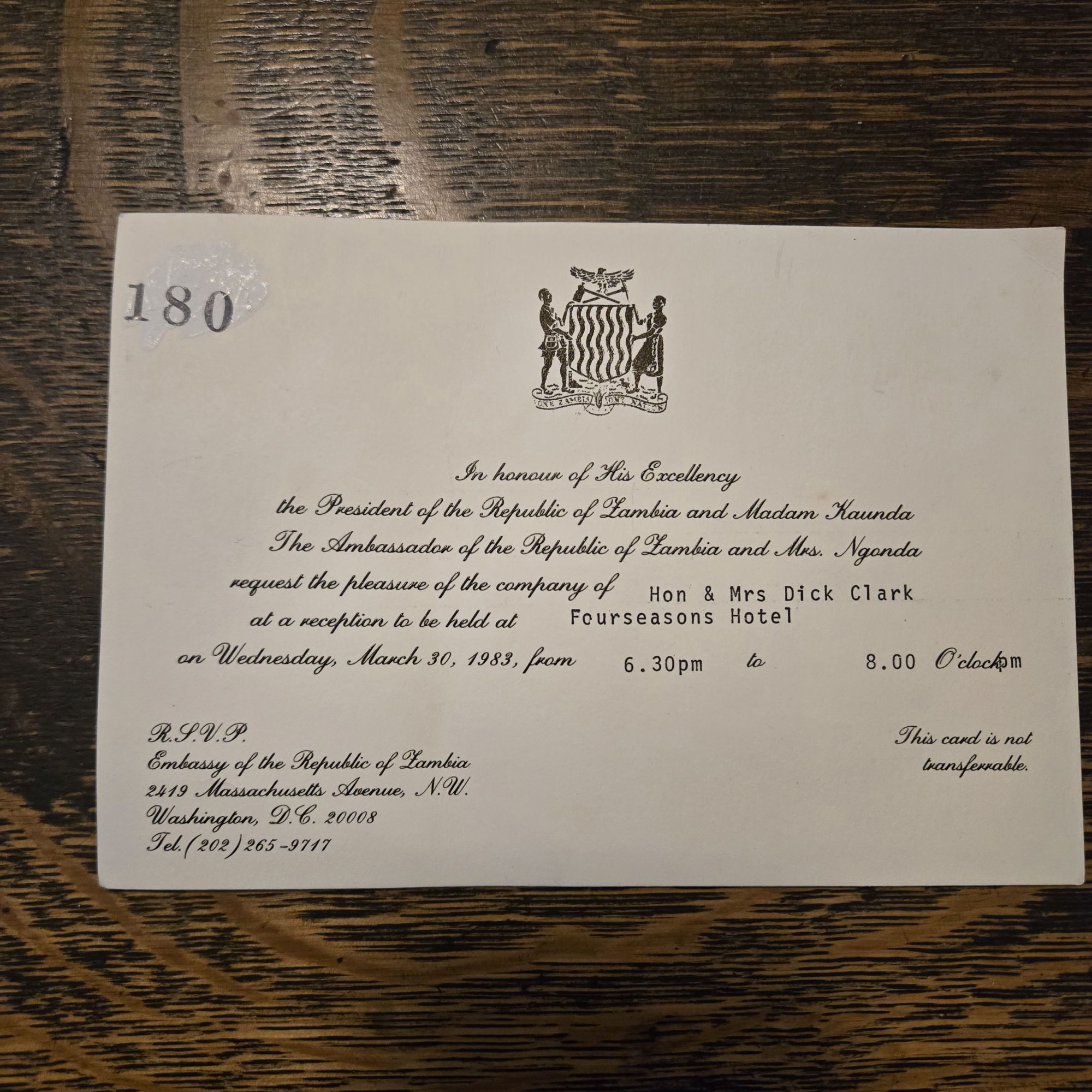
    Now, two more things must added. First, Arabs (and maybe Muslims in general) in this country and elsewhere feel about the Muslim middle east the same way Jews in this country feel about Israel, whether or not they support the policies of one or another government in the region. So it isn’t surprising to find that Arabs (and maybe Muslims) are more anti-Israel than most others. That is just a fact of life and will never change.

    Second, there are two forms of being anti-Israel. There are those who would like Israel to stop aggressing against its neighbors and support some form of two state, or an overarching one state, solution. Then there are those for whom that is not an answer, but whose answer involves the elimination of the State of Israel. Within that group, there are those who would let Jews stay as some form of second class citizen of an Arab nation, those who would like to see the Jews all move to Florida, and those who would just as soon produce Part II of the Holocaust. But this entire group, in this country, and outside certain Muslim groups, again is very limited.

    There are two areas, and important areas, in the United States where anti-Israel, and therefore to an extent, antisemitic feelings are manifest. The first is American universities (and perhaps even some American high schools), where a number of trends have come together. First, a teaching trend where today’s teachers of the social sciences concentrate on the ills of 19th and 20th century colonialism and its demise, and include Israel as a colonial experiment bound to fail. (This is a major topic, not to be discussed today, and as an academic position, one that was both begun and largely propagated by intellectuals from the Middle East who started out with a position to support.) Second, an era when, in many schools, diversity programs have brought more students from Arab and other middle eastern ethnicities into the student body at the same time when some well funded ANTI-ISRAEL! groups have worked hard to support organizations to attract anti-Israel students and to give them a common set of principles to espouse.

    Combining these two factors, along with the existence of what is happening in Gaza, has led to student demonstrations, students trying to push Jews (especially those who generally support Israel) out of student organizations, who attempt to get the universities to take certain political positions and to divest from Israel related investments. And, for reasons stated above, these things often have some faculty support.

    The second area in which these forms of antisemitism have shown up in this country is within the arts community. Here there have been boycotts or attempted boycotts of Israeli artists and musicians. The arts communities are generally politically left wing, not right wing, and – even more than in the case of universities – the protests tend to be anti-Israel and not antisemitic.

    I have read through what I have written so far and must say that, although I think I have put the elements of my thinking in this post, I can’t be proud of the way I organized it, nor do I think it will sway many readers. Of course, I don’t know. But it is very complicated when we are dealing with three interrelated definitions: antisemitic, anti- Zionist and anti-Israel, and we really don’t know what any of those terms means in given situations, whether they are weak or strong, situational or more general, conflated or separate, and so on.

    The other night, at the suggestion of two friends, I watched (you can, too) a program sponsored by the Streicker Center at Temple Emanu-el in New York, whether Anti-Defamation League president Jonathan Greenblatt and New York Times columnist Bret Stephens spoke about antisemitism. They both thought the program (and particularly Stephens) were wonderful. I disagreed completely. I thought it was a program completely lacking in necessary nuance. It was all: we (Israel) are right, and no one understands us they way we understand ourselves, and woe are us, but we know we are right and (left unspoken) God is with us. You should listen to the program (on the Streicker website) and see what you think.

    In my role as vice president of the Haberman Institute for Jewish Studies, the DC version of the Streicker Center more or less, I get involved in a lot of discussion about the types of programs we should put on, and now of course, how we should be dealing with antisemitism. The Stephens/Greenblatt program was a “preaching to the choir” program – a large Jewish audience hearing what they expected to hear and what they always do hear, without much of a challenge to their own thought process. I think we should be broader in our programming, more educational than partisan, and that perhaps our programming on this subject should not be directed to predominantly Jewish audiences (as all of our programs really are) but to a broader non-Jewish audience. This may be harder for us to arrange, but I think it may be the way to go.

  • I Beg Your Pardon……

    December 7th, 2024

    Again, I wanted to write about antisemitism this morning, but that will have to wait until tomorrow, because I am short on time, having spent too much effort on the New York Times crossword puzzle.

    So, let’s do a quickie on presidential pardons. As I said a week or so ago, I think that Joe Biden deserves a break about pardoning Hunter. I am not going to repeat all of that again.

    I am surprised at the outrage on the Democratic side. There have been several polls, which have shown that more (but not many, many more) Americans disagree with the pardon than support it, and that many are undecided. Obviously, there is a strong partisan divide.

    There has also been a lot of publicity about the pardons that Trump issued (including donors, and people like Stone and Manafort, his political allies), and the polls show about the same amount of approval and disapproval.

    The Constitution seems pretty clear, I guess. The president has the ability to pardon or commute sentences in regard to any federal crimes, except for those relating to impeachment. I don’t know that the Supreme Court has even had to rule on this topic. The Constitutional language (I do not know the history of this language) is very broad — it doesn’t specify whether you can pardon a crime that has yet to be committed, or yet to be charged. This does give the courts some grounds to rule upon, I guess.

    As to pardons for future charges, I think that the pardon of Nixon dealt with that, and I think (I am rushing here) the Hunter Biden pardon does. Maybe this is fairly standard language.

    Whether a president can pardon someone for crimes not yet charged or committed is, I hope, an open question, and I hope it will never have to be decided by the courts, since any judicial decision would threaten the independence of the executive branch as set forth in the Constitution.

    But I also hope that Biden does not follow through on the possibility of pardoning people like Liz Cheney and others, those on the Trump or the Patel “enemies list”. These pardons would obviously set up the challenge as to their validity and spur Trump on, and would set the stage where a president (think Trump for the moment) could say: “I hereby pardon anyone who has committed or will commit a federal crime, provided that they are registered Republicans” or something to that effect.

    Our federal criminal system would be in chaos. Politics and the imperial presidency would rule. The Supreme Court (who knows?) may even allow it, or determine that this was not a subject on which they had jurisdiction, or it was not a subject on which anyone would have standing to sue.

    Obviously, I have just slapped this together (under 10 minutes), but I hope there is a real discussion before the President lets this ball begin to roll down the hill.

  • Closet Box #2: the Finale.

    December 6th, 2024

    I intended to write about antisemitism this morning, but I need to give it more thought, so I will put it off until tomorrow or Sunday. Today, it’s back to the box and, although this post won’t show you all of the remaining random material, it will show you enough. Here goes:

    We can start with two Russian calendars for 1964 and 1992. Both wallet size. Why do I have these? No idea. I doubt that I got the 1964 calendar in 1964, but maybe I did.

    Christmas card

    I remember being surprised that I was on George Bush’s list for a holiday card one year. Never happened before. Hasn’t happened since. I remember picking up a date in the late 1950s in St. Louis around Christmas time, and seeing that they had a Christmas card from Dwight Eisenhower on their mantel. I was impressed.

    Boo!

    The man who made George W. our president. The year Nader led to our nadir. Of course, back then, we had no idea of how bad things could become. Of course, this was 2004, when Bush was running for his second term. In both years, Nader received about 100,000 votes in Florida as the Green Party candidate. Assuming that most of these votes came from voters who otherwise would have voted Democratic, glGeorge Bush owes his presidency to Ralph Nader.

    Maria Callas

    A Maria Callas book mark. I haven’t seen the new biopic with Angelina Jolie as Callas. Will wait until it streams. I hear she is excellent in the role, and actually does some singing?

    Senator Clark of Iowa and his wife were invited to greet the President of Zambia almost 42 years ago at the Four Seasons in Georgetown.  I hope they went and had a wonderful time. Kaunda was a strict vegetarian who was close to Maharishi Mahesh Yogi of transcendental meditation fame. What did that get him? He lived to be 97. Senator Clark was probably not a vegetarian, but he lived to be 95. And Maharishi International University is in Iowa. You connect the dots.

    My passport

    An old passport, back in the days (not long ago) when admittance stamping was the norm. Now, you look at your passport and it looks like you just stayed home.

    My grandfather

    Want me to write you a prescription? I don’t have a pad, just one sheet. Back when doctors put their home addresses on their prescription sheets. This is from 1951 to 1953, when my grandparents lived on Gannon.

    Last one. It’s Jewish Book Month. And it’s 1949. What Jewish books were published in 1949? 75 years ago.

←Previous Page
1 … 27 28 29 30 31 … 62
Next Page→

Blog at WordPress.com.

searching

Loading Comments...
  • Subscribe Subscribed
    Art is 80
    Join 71 other subscribers

    Have a WordPress.com account? Log in now.

  • Art is 80
    View site in Reader
    Manage subscriptionsSign upLog in
    Report this content
    Collapse this bar