Skip to content

Art is 80

  • Simplicity Does Not Have To Be Complicated.

    February 12th, 2024


    There are two reasons to keep supporting Ukraine in staving off the Russian invasion. First, it is important for the security of Europe, and of our country. For a second, we made a commitment.

    It used to be that everyone performed in accordance with their contract obligations. And people who wanted to stand out, performed in accordance with their handshakes, or their word alone. Now, none of this seems to matter.

    Putin, now claiming that Ukraine is in fact part of Russia, ignores the contractual obligations his country made when it took possession of the nuclear weaponry in Ukraine in return for a guarantee of Ukraine’s borders. Trump, claiming to want to make America great again, wants to ignore the various commitments the United States made to Ukraine once it was invaded by Russia, putting to waste all the money and effort we have so far committed to the task of repelling the Russians, and putting at risk the lives of so many Ukrainians as the Russian invasion will continue to wreak havoc on the country.

    At the same time, Trump wants it to be known that, if he is again elected president, the United States cannot be counted on to fight against Russia if certain NATO countries are invaded, in spite of the contractual obligation (and moral obligation) we have to defend them if attacked.

    Yet no Trump supporters, as far as I can see, are doing anything but continuing to support Trump and to agree with his statements.

    Why is this? 

    I am reading an interesting book titled In America: Tales from Trump Country by Caitriona Perry, an Irish journalist based in Washington. She wrote the book in 2017, during the Trump administration and before the 2018 midterms. The book was published in Dublin to an Irish, not an American, audience, which makes it all that more interesting.

    Perry is doing two things in this book. She is trying to explain the American political system and how it works, at least regarding presidential elections. We know our system is idiosyncratic, but perhaps we don’t recognize how unusual it is. Although this is not what she does, when you read Perry’s explanations as to how America works, you can just see the silent clause that could start every sentence. It would be something like: ”You probably won’t believe this, but ……”.

    Then, she is trying to explain Trump’s popularity.

    She does this by visiting about a dozen states, and going particularly to poorer, white areas. Places like McKeesport PA, or Portsmouth OH, or McAllen TX. Mainly areas that are much less prosperous than they once were. Where steel mills, or other industries, have closed and moved out. Where some people are barely hanging on, and see their children have to move away to get any sort of worthwhile employment. These are generally people whose families have been in this country for several generations, who typically hold some form of religious faith and are skeptical at best with regard to social changes such as same sex marriage. Many of these people (I’d say even most of them) have voted for Democrats most of their lives, but are making a change now.

    What is going on? For one thing, they believe that the “system” has not served them well, that they always get the short stick, and that – if the same group of people continue to run the country – they will always be forgotten. For another (and these are all related), they think that the Democrats have been very good at making promises, but that their promises are empty promises, that they cannot see that the current Obama administration is doing anything for them or far their communities, at all.

    The result of this is that they wanted someone different. They wanted someone who could really shake things up. And things now are bad enough that they really weren’t terribly concerned about the type of shake up. Anything would be better than this.

    At the same time, they felt that Donald Trump, a man with a very different background than the ones they have, knows how to talk to them, understands what they are saying, knows what they want, and is making the types of promises they want to hear. will he fulfill those promises? They seem to trust his sincerity, and certainly willing to give him a chance.

    They also like his personality. His feisty nature. His saying what he thinks. His sense of humor. They like the idea of making America great again (that’s part of the shake up) and putting America first. Yes, he can be gross and embarrassing at times, but they will over look all of that because they think he will get the job done.

    I can extrapolate a bit. They had four years of Trump, interrupted by a pandemic, and were told that it would take eight years. But the rest of the country didn’t give Trump eight years, or so they said. Because they were convinced that those in power were self-seeking, worthless and corrupt, they probably believed that election cheating is their norm. And the result of that cheating – the Biden years – have not brought them any visible improvement, and they aren’t going to fall for people telling them that things are better, when they clearly are not. So, they say, let’s get Trump back, without COVID, and see what he can do.

    It’s as simple as that.

  • Father William The Original

    February 11th, 2024

    You are old, Father William, the young man said,

    And your hair has become very white;

    And yet you incessantly stand on your head –

    Do you think at your age it is right?

    In my youth, Father William replied to his son,

    I feared it might injure the brain,

    But now I am perfectly sure I have none,

    Why I do it again and again.

    • – – – – – – –

    You are old, said the youth, and your jaws are too weak

    For anything tougher than suet

    Yet you finished the goose, with the bones and the beak –

    Pray how did you manage to do it?

    In my youth, said his father, I took to the law

    And argued each case with my wife

    And the muscular strength, which it gave to my jaw

    Has lasted the rest of my life.

    A coda:

    You are old, Mr. Biden, you’re 80 and 1

    You should really go home and write blogs

    Yet you want to keep at it, in spite of your age,

    It’s time to spend time with your dogs.


  • You’re Old, Father William (Speaking Of Great Poetry)

    February 11th, 2024

    One day last week, I shared some of my cabinet choices if I become the next president of the United States. While I didn’t get any criticism of my choices, I did hear from a number of people who thought that I was too old to be president and to lead the country through the year 2028 (and if I run for a second term, 2032, the year I turn 90). 

    I must disagree with them. I looked up my most likely opponents on Wikipedia and guess what I saw. Dwight Eisenhower is already 133 years old, and Donald Trump almost the same age as Ike. And, I remind you voters that maturity is important – you need a president with sufficient perspective to understand the dangers that Mao Tse Tung poses to the free world. Okay, maybe I am a little off my game. I went back on Wikipedia and saw that Mao Tse Tung has been replaced by Mao Zedong. I will have to learn a little about him. I look forward to meeting him.

    But seriously folks, if we could only look back to the good old days when Hitler and Stalin ruled 90% of Europe, and Mao and Stalin ruled 90% of Asia, and when only Japan had to worry about an atomic bomb falling on their heads.

    So, our friend Donald has done two things, and none of his supporters seem to care. He has accused Nikki Haley’s husband of abandoning her as he is deployed overseas as a member of the North Carolina National Guard, and he has told the members of NATO that, if they don’t provide sufficient funds for their defense (as defined by Don Donald), that he hopes Russia comes in and makes them part of the new Russian empire. And Marco Rubio goes on CNN and praises Trump saying (a) that you say all sorts of things in a campaign, and (b) he doesn’t really mean what he says about NATO but it will encourage NATO countries to increase their contributions – after all, why should we defend them if they don’t up their contributions. By the way, as to his first point, when asked by Jake Tapper how he (Rubio) justifies things he said when he was running for president that he seems to completely deny now, he said (and I paraphrase only slightly), “I was running for president then. It was a campaign.” Let that sink in.

    In the meantime, I saw a movie and read a book. The film, which we watched on Netflix last night, is “Rustin”, the story of a part of the life of civil rights activist Bayard Rustin. As we turned the film on, I read the Netflix descriptive blurb and read that Rustin is an “unknown” “icon” of the movement. Is that even possible?

    Rustin had a long career supporting civil rights, labor rights, pacifism, and even freedom for Soviet Jewry. He suffered, considering when he lived and was a visible person, as a gay man, and the film concentrates on his sexual orientation.

    I highly recommend watching the film – not only for Colman Domingo’s stellar performance as Rustin, but really all of the performances.

    The historical importance of the film shows Rustin, the primary force behind the March on Washington in 1963 where Martin Luther King gave his famous speech, and how he organized the rally over a period of about seven weeks, dealing with a hesitant Martin Luther King, an opposing Roy Wilkins of the NAACP, and an even more virulent opponent in Adam Clayton Powell. How he overcame all of this as well as a worried Kennedy administration, eventually (if that’s a term that can be used to describe a period of under 2 months) getting the support of not only all of the opposing groups, as well as the city government of New York (which allowed over 1000 off duty Black policeman to come to Washington to serve as unarmed crowd control aides) and many major labor unions. And how he did it in spite of continual threats to “out” him and to share false information (ever hear of false information being shared?) to threaten other well known Black leaders (including King) as being sexual partners of Rustin.

    On the other hand, as I said, a good deal of the film showcased Rustin’s “hidden” homosexuality and his relationship with a young White man, Tom, and a young, married Black preacher, Elias. Not that there was anything wrong with this part of the film per se, except for the fact that neither of these people ever existed. They were made up characters, and I guess cover for the fact that the identities of Rustin’s sexual partners are largely unknown, the 1960s being the 1960s. And, by being so important to the story line of the film, they totally ruin the otherwise quite good historicity of the film.

    As to the book, it’s a little read book by local author Herman Taube (he wrote over 20 books during his life), titled Surviving Despair, the true story of a Holocaust survivor who lost the first love of his life after both had escaped Poland into the Soviet Union and been separated by the Russians, lost his second love (his first wife) when she and their twin children were killed in a fire after the war in Lodz, and lost his second wife and third love, who died of illness in Florida. His story was not one of a survivor coming to the United States and becoming a billionaire. Rather it was a survivor who came to the United States and suffered from his memories his entire life, and who found meaning only after the death of his wife, when he moved to the Washington area and became an important translator for the United States Holocaust Memorial Museum.

    What he didn’t know is that the first of these three women, who was sent by the Soviets abruptly to a far flung collective farm, also survived. But one day – there she was, telling her story to an audience at the Holocaust Museum where he was volunteering. B’shert, perhaps, as they say.

    The book itself does not contain the best prose, and there are so many similar Holocaust stories, but…….I really liked reading it.

  • George Washington, My Father, and Puerto Rico (Where He Had Never Been)

    February 10th, 2024

    For no reason at all, I thought about George Washington this morning. Not the things one might normally think about George Washington, but about the oft-stated fact that George Washington never heard of dinosaurs. Washington died in 1798, before the first dinosaur fossils were found (the word “dinosaur” was first used in the 1840s). So there was no way that George Washington ever heard of, or even could have really contemplated, dinosaurs.

    Then, I thought about my father, who passed away in 1979. I went to Wikipedia to look at inventions of the 1980s, to see what my father had no knowledge of, and probably never really contemplated. The Space Shuttle and the International Space Station, CDs and DVDs, the World Wide Web, personal computers, individual cell phones, and even, yes, Wikipedia. And, of course, also everything that has been invented in the last 30+ years, from 1990 until the present.

    That got me thinking about the late 1970s, when I was involved in the development of a large, two building subsidized apartment project in Guaynabo, Puerto Rico, a suburb of San Juan. You will see the connection in a minute.

    In the 1970s, before the age of electronic communication, business travel was much more common for lawyers than now. I did a fair amount of travel in those days, including making numerous trips to Puerto Rico, where I eventually developed a number of clients. The Guaynabo project (I will call it “Guaynabo Towers”) was the first project I had been involved with in Puerto Rico and, for this development alone, I think I made four or five trips.

    The reason that all that travel was necessary and why it took so long to finish, had to do with all the characters involved in this project. And, boy, were they characters.

    I represented the only party which was headquartered in the 50 states – the company providing the construction equity. Everyone else was from somewhere else. I can’t say I remember all of them, but I certainly remember some of them. The lawyer who represented the ownership entity was a frenetic San Juan lawyer, whose frenetic energy sometimes helped move things along, and sometimes did the opposite. Efficiency was not his strong suit, and I wondered then what would happen to him as he career went forward – I assumed he would wind up in some sort of trouble. He didn’t – he became the Commonwealth’s Secretary of State, the Deputy Mayor of San Juan and the head of the largest electric utility on the island. I remember his wife, who wasn’t directly involved in Guaynabo Towers, but – since there was a fair amount of socializing surrounding this deal – I met her several times; I remember she didn’t like me at all – probably because my ways and her ways had little in common. 

    I remember one of the other lawyers involved, a much less frenetic fellow, with whom I wound up working quite a bit over the next 30 years or so. He seemed to be able to switch between Puerto Rican and stateside rhythm with little problem – I marveled at that until I learned that his Puerto Rican father was married to his Ukrainian-born mother. Then all was clear.

    Then, there was the Lebanese gentleman who owned the land on which the project was to be built. He was a businessman, the owner of a number of large furniture stores across Puerto Rico. He was anxious for the deal to close, of course. I never met him in person, but he somehow thought that I was the representative of the Federal government (the project’s mortgage was insured by FHA, and its rents subsidized by a HUD problem) and that I was therefore the problem, the reason the project had not proceeded to closing. One day, at a meeting where he was being represented (not in a legal sense) by his attractive young daughter, she handed me the phone and told me, after taking a deep breath, that her father wanted to speak to me. Speaking in very poor English, he said to me (I am obviously paraphrasing here): ”I am from Lebanon. I hear you are Jewish, right? You know my daughter there with you? Do you know her husband is Jewish? I really like Jewish people. Can you approve this project so we can move on?”. I gave the phone back to his daughter and gave her a “what am I to do with this?” look. She just rolled her eyes, and the meeting continued.

    The head of the construction company was French, but had been living in Colombia, in Bogota, for most of his adult life. He was a Hemingway-like figure, always dressed casually, and looking like he was ready for his next big adventure. He was also very casual about the construction. Everything for him was easy – there would be no problems. He was super-contractor. He was very bright, very personable, and very trendy. One day – a day I won’t forget – he brought a new device to a meeting. It was a Texas Instruments hand held calculator. It could add, subtract, multiply, and divide (and probably do more) just by pushing buttons. It was small. And you didn’t have to plug it in. We all stood at his desk marveling at this wonderful new invention. We (none of us) had ever seen anything like it. 

    Because I didn’t live on Puerto Rico, I was always in a somewhat different position than everyone else. I had planes to catch. I think I always made it, but never with more than 5 seconds to spare. After all, it was necessary for everyone else to see how long they could delay my departure to the airport. For me, it was a challenge, not a problem. All in good sport.

    After months of wrangling, back and forth, the transaction closed, the land owner got his money, HUD gave its approval, and construction began on what became a successful project. After the official closing, held at the San Juan District HUD office, I was ecstatic and anxious to get home. 

    No one else seemed as happy as I was, and that confused me. Until I realized what I think is a great truth. The difference between life in Puerto Rico and life in Washington. My goal, in connection with any transaction, was to make it as good as I could for my client and then wrap it up and get on to something else.

    Not so for everyone else. Their goal was to play a part in the transaction and have a good time doing it – a good time with friends and a good time giving your friends new challenges; it was a great game. And when the game was over, and the closing completed, there would be no more socializing with this group of friends. It was done. It was not a time for celebration, but for a bit of sorrow. The fun was over. Would we find another way to have as good of a time as we had developing Guaynabo Towers?

    I can’t tell you which approach is the better. But I can tell you it was a learning experience and helped me in my future work in Puerto Rico. And, whenever anyone complained about their frustrations dealing in PR or similar places, I could give them a little perspective. We like “done”. They like “doing”.

    I really liked working in Puerto Rico. And I did work with some of these same people again and again. Sadly, most of them are no longer around.

    And speaking of “no longer around”, I just realized that today is February 10, the 71st anniversary of my grandfather’s death. Boy, does time march on.

  • Where Should I Even Start?

    February 9th, 2024

    There are many things I don’t know. For example, when a Special Counsel is ready to issue a report, who reviews it before it is released? Anyone?

    I ask this because, as I remember it, when Robert Mueller’s report on Donald Trump was issued, there had been reviews in the Justice Department and then Attorney General Barr was involved in writing a misleading press release, etc. In the case of Robert Hur, I don’t know if there was any review at all. I have not seen anything that makes it look like anyone above him was involved. Both Mueller and Hur were “Special Counsel”, so I assume that their authority was equal.

    I also know that there was something issued by the Justice Department near the end of last month, saying that Attorney General Garland was having back surgery the weekend of January 3, and that he would be back at work sometime this week. Whether he had the surgery, whether he was back at work, whether the Hur report was issued while Garland was on medical leave, I don’t know. (You get my drift.)

    But I am curious. Because the remarks of Republican Hur, who is reputed to be a very intelligent fellow, regarding his impression of Joe Biden’s mental competence seems so out in left field, that I can’t imagine it would pass any general Departmental review, irrespective of whether the Departmental review thought it accurate or inaccurate. I also don’t know if the 5 hour interview (or was it interviews) with the President have been recorded, or transcribed. It would be nice to see what exactly was asked and answered during that session (those sessions?)

    What we do know is that, during the Mueller report, Donald Trump did not give similar impressions of senility, not because he might not be senile (after all, he is just 3 years younger than Biden), but because he refused to sit and answer any questions. So the Mueller report was issued without the benefit of any responses from Trump which, to me, along with certain other things in that report made it much less useful than it could have been. And, I think Mueller’s final report was as problematic as Hur’s, just in different ways. As to Biden? No good deed goes unpunished.

    But – and I will say it again – even assuming that Biden’s memory is as good as it has ever been – I don’t think an 81 year old should be running for president. And I would like to see him bow out and the Democrats agreeing on someone else to run against Trump, or whomever.

    And it looks like Trump will run, because of what happened yesterday at the Supreme Court. As I have said before, if the Court decided that Colorado could leave Trump off the ballot, chaos would result (I am thinking legal chaos, not physical chaos, although there would be a good chance for that as well.). And I don’t want to repeat what I said within the last week or so, since I know most of you remember everything I say.

    But I have been thinking about other things related to presidential election ballots. And, although as usual I have to admit my lack of precise knowledge on the subject – or any other subject -, it seems to me that our election laws are rather vague and incomplete and it’s probably only by luck that we have been as successful as we have been for as long as we have been.

    One big example, of course, is that in voting for the President, we are voting for electors to cast their ballots when the Electoral College meets. And we know that states choose their electors in varying ways: most give the popular winner all the state’s electoral college votes; two divide the electors in the same proportion as the popular vote is split among the candidates running; and several have agreed to an interstate compact (not now operating) where they would cast their electoral votes to the candidate who wins the national popular vote. We also know that there was confusion during the 2020 elections as to whether states could select electors in other ways, and what the Congress would do with those electors when the count is held.

    But states can keep would-be candidates off the ballots in other ways. For example, if I called the Colorado Secretary of State and told her that I have decided to run for president, and would she please put my name on the ballots, she would laugh in my face. States seem to have their own ways of deciding who can go on a ballot. I don’t know what all of them do, but one common way is to require a certain number of citizens of the state to sign a petition. Or to file their intention to run by a certain date. This doesn’t seem to be a requirement of nominated candidates of the Republican or Democratic parties, although I am not sure why. But whenever there is an independent candidate running, there is always a question as to how many states that candidate will be on the ballot in. And as to the No-Labels movement, if they nominate a candidate, it is unclear to me how that candidate will be required to proceed to get on the ballots.

    Now, some things are, I guess, clear. A state cannot set unconstitutional requirements for candidates to get on a ballot. For example, a state can’t say only men can run, or only Whites. They also probably cannot be arbitrary or capricious in deciding who can, and who cannot, be on a ballot.

    But can they make other distinctions? Can a state say that no one ever convicted of a misdemeanor or felony can run? Can say they no one who has never served in the military can run? Or no one who holds dual citizenship? You get the idea.

    And of course, paragraph 3 of the 14th Amendment doesn’t talk at all about running for office. It doesn’t say that someone who has been involved in insurrection or rebellion can’t run. It just says that they cannot hold office. Does that mean that they can run, but not be inaugurated (without a 2/3 Congressional vote)? And if it does mean that, could a state pass a law (or even adopt a regulation, pursuant to a general law) that states that no one involved in a rebellion or insurrection can run because they can’t be inaugurated?

    All of this goes back to our concept of federalism – or rather our lack of a general concept. Does it make sense that state laws at all apply to federal elections? Does it make sense that states run federal elections?

    Does anything make sense?

  • “The Future’s Not Ours To See – Que Sera, Sera….” (A Post About Israel/Palestine)

    February 8th, 2024

    Someone recently asked me: ”so what do you think is going to happen with Israel and Gaza?” Usually, I have an answer to any question like this, even if my answer is “I don’t know”. ”I don’t know” is of course an answer. But with regard to this question, “I don’t know” seems like a cop-out. Since I don’t have any other answer, but I don’t want to be accused of avoiding a substantive answer to an extraordinarily important question, I just become flummoxed (I should keep a record of each time I use a new word on this blog – I know I have never used flummoxed before).

    What does seem clear is that, at least over the next several millennia, the Arabs won’t kick out all the Jews, and the Jews won’t kick out all the Arabs. What does not seem clear is whether or not these two important groups will ever stop distrusting each other, or killing each other. But between these extremes, there is a lot of gray, and what is normally a possibility – let’s just keep the status quo – is not possible here. Nor is the status quo ante.

    Let’s look at some of the possibilities (I erased a word that I had originally typed in: “likely”). Israel destroys Hamas and determines the fate of Gaza. Hamas outlasts Israel and retains control of Gaza. An outside country, or a combine of outside countries, take control of the situation and tell both parties what to do, and the parties comply. Etc. etc. etc.

    But perhaps there are other possibilities, possibilities that can only be identified by “thinking outside the box”. If you allow your imagination free reign (or something approaching it), what could you come up with? 

    With this in mind, we attended a presentation by a mixed Israeli-Palestinian group called A Land For All (or ALFA), a relatively new organization which has an “out of the box” vision for the future of Israel and Palestine, even if they have note quite figured out how to get there. Actually, I think I should have omitted the word “quite” from the last sentence. And, I should add, if they have truly envisioned what their vision would actually look like, I missed that in their explanation. The evening was sponsored by the New Israel Fund and held at Adas Israel.

    What I understand ALFA to be suggesting is a different sort of two state solution. Yes, there would be Israel and there would be Palestine, and their borders would be based on the June 1967 borders, but that would be unimportant, because the citizens of each could live anywhere in the two states, and be subject to the local laws of wherever they live, but vote in the national elections of whichever of the two countries with which they identify.

    Okay, take a deep breath.

    This is a great idea, I guess, if it promotes peace, but does it even do that? And how do you even know what it does, if you don’t know much more than what I have told you?

    I should say that there were at least 200 people in attendance and that Aaron David Miller moderated. He is a former US official, now with the Carnegie Endowment for Peace, a CNN pundit, and a NIF board member.

    There are so many questions. For example, does this mean that the population of Gaza City can decide to move to Kfar Saba, or to West Jerusalem? Or a current resident of Tel Aviv could buy beachfront property in Gaza. Does this mean the 600,00 Israel Jews who live beyond the Green Line would live in Palestine but vote for the Knesset? And what about non-Arab non-Jews? To which country do they owe national allegiance? And children of mixed parentage?

    I must admit that once again, I was flummoxed when I tried to understand what they thought was possible.

    But bad times gives rise to desperate proposals. Years ago, we heard a presentation by Martine Rothblatt, well respected CEO of United Therapeutics, on her book “Two Stars”, where she proposed her way to achieve peace in the Middle East – make Israel and Palestine the 51st and 52nd US states. She was serious, too, and the setting for her speech was Ben Gurion University in Israel.

    You’ve heard of one step forward and two steps back, right? How about zero steps forward and zero steps back?

  • Better Late Than Never? Or Better Late Than Never Today……

    February 7th, 2024

    So the DC Circuit doesn’t think that a United States President has the right to kill a political opponent and his/her family on a whim and get away with it because of a concept of total presidential immunity. And it seems clear as can be that the Circuit, voting en banc, will not decide otherwise. So, then the question would be whether the Supreme Court would take the case and, if so, what would they decide? Most pundits (including those who went to law school, which is about all of them) think that the Supreme Court will not take the case at all.

    This would mean that the insurrection lawsuit in DC could go forward. Let’s put aside the question of what punishment would be appropriate if DJT is convicted. Let’s look at the question of how this would affect the 2024 presidential race.

    As I understand it, as this is a criminal trial, the procedures are very different from the E. Jean case, or tomorrow’s argument in the Supreme Court as to whether or not Trump can/has to appear on the ballot in Colorado. In those cases, Trump can come to the proceedings or he can ignore them. I don’t think that’s the case in the criminal trial. In the criminal trial, Trump has to be in the courtroom. So, if this trial starts in, say, May and lasts 4-6 weeks as anticipated by many, Trump would be limited from campaigning in daylight hours. How would this work out?

    I understand that the Supreme Court argument about whether Trump will or will not appear on the Colorado ballot will be broadcast live tomorrow (but of course not televised), and it will be interesting to be sure. I have certainly heard a lot about the issues (is the president an “officer” of the United States, who decides if he was engaged in “insurrection”, what is an “insurrection”, what does “engaged” mean, etc.), and I have no idea what the Court will decide, or when it will decide it.

    But there are some things I have been thinking about, which I am sure others have as well, but which I have not heard about or read about. For one example – if the Court decides (for whatever reason) that Trump cannot be on the ballot in Colorado, does that automatically exclude him from all states, or can one state decide he was engaged in insurrection, and others say differently. In other words, if one states says that someone is not eligible, can he still become the president of a country in which that state is a state? And, can the Supreme Court leave it to the decision of/whim of a state supreme court (in this case the Colorado Supreme Court), even though the conduct has taken place outside of the state?

    Another question is whether someone has to be actually convicted of an insurrection-like crime before they can be kept out of office. If Trump is convicted of insurrection in the DC case, a week before the election, will votes for him be nullified? Or better yet, if he wins the election and is inaugurated, and then is found guilty of insurrection, is he automatically out of a job?

    These are all questions that I can’t answer because they are above my pay grade. But in truth, are they within anyone’s pay grade?

    This would all be so interesting if it were part of a Netflix series, wouldn’t it? Okay, maybe it wouldn’t be. 

    So, let’s call it a day, since it’s almost evening here. We will skip the strange goings on with the GOP failure to impeach the Homeland Security Secretary, and with the GOP’s failure (House and Senate) to get behind immigration reform. Now, let’s see what the Senate does on the Democrat’s Ukraine/Israel without the Border bill. I assume it won’t get 60 votes, so it will just be business as normal.

    So long for today. Until we meet again. Happy Trails. That’s all, folks.

  • Everything’s Up-to-date In……..Cincinnati?

    February 6th, 2024

    As you may know, one of my retirement activities has been my activity with the Haberman Institute for Jewish Studies, which I serve as vice president. The Haberman Institute is named after its founder, Rabbi Joshua O. Haberman, who created the institute under the name Foundation for Jewish Studies 40 years ago. This year we have devoted a number of programs to the memory of Rabbi Haberman.

    Joshua Haberman was born in Vienna and was in rabbinical school there when the Nazis moved into and merged Austria with Germany. Luckily (to put it mildly), he received a tuition free scholarship to complete his studies at the Hebrew Union College in Cincinnati, and came to Cincinnati in the fall of 1938.

    We had already done a program on the Jews of Vienna, and last night was our program on Rabbi Haberman’s time in Cincinnati. Our presenter was University of Michigan professor Karla Goldman, who formerly taught at Hebrew Union.

    Her talk was fascinating. It was not a chronological history of the Cincinnati Jewish community, and it was not solely the story of Rabbi Haberman’s experiences when he was there at school. Goldman took a much more interesting and unique approach.

    HUC had given scholarships to eight young rabbis or rabbinical students – seven from Germany, and Josh Haberman from Austria. Karla Goldman told the story of all eight of these rabbis, who had just escaped Nazi Germany and wound up in the heart of 1930s classical American Reform Judaism, something to them completely foreign.

    There was so much that surprised them. They were met at Cincinnati Union Station by Prof. Nelson Glueck of HUC and his wife, and brought to their house for an American breakfast. These eight kosher-keeping rabbis were served bacon and eggs. You can imagine their shock.

    Then, on the first Shabbat, they were told that a car was going to pick them up and take them to services. Sure, some German Jews must have driven on Saturdays, but the idea that a rabbinical school would pick them up to drive them to services? You can imagine their shock.

    When they got to the synagogue, they were given prayer books unlike any they had seen before, mainly in English. In fact, virtually the entire service was in English – almost no Hebrew. And of course, their English was still very weak. They understood little.

    Finally, at the end of service, they met the rabbi, David Philipson, one of the most prominent Classical Reform rabbis in the country. Philipson was not too happy to meet them, it appears. In fact, he was apoplectic – how dare these young men come into his temple with their heads covered. If that happened again, he would kick them out.

    Karla Goldman told these stories and much more, leading to how all of these rabbis became rabbinic leaders, and how almost all of them stayed in the Reform movement, helping to reset the Reform movement and push it back to many traditional practices.

    Her talk showed she did quite a bit of research – looking at such things as memoirs and letters written by the eight foreign born rabbis, Jewish newspapers and newsletters of the time and more, as well as from the writings and sermons of Rabbi Haberman.

    When I introduced her, this type of a talk was not what I expected. I thought she was going to talk more about the general history of the Cincinnati Jewish community, which would have been interesting, but not as interesting. I mentioned that I expected to hear about Jewish celebrities born in Cincinnati – director Steven Spielberg, actress Theda Bara, scientist Albert Sabin, mayor/tv host Jerry Springer, actress Sarah Jessica Parker, or activist Jerry Rubin. Or how about square matzos, first produced by Cincinnati’s Manischewitz family?

  • If I Ran The Zoo…..

    February 5th, 2024

    If I were elected president, I think I would ask Gen. Wesley Clark to be my Secretary of State, and Nikki Haley to be my National Security Advisor. Anthony Blinken would also play a major role in my administration, but before I tell you what it would be, he and I would have to talk.

    I say this because I am now in the process of lining up my cabinet…….just in case. When Biden drops out and the party realizes that Harris would not be a winning candidate, let’s be honest. To whom else would they turn? (Don’t feel too sorry for Kamala Harris – she really doesn’t want to be president. She will be content to eliminate some of the pressure, spending four, or eight, years as the wife of Attorney General Emhoff.)

    But my biggest concern is foreign policy. I spent an inordinate amount of time reading the NYT this morning and I was convinced that attention must be paid. I quote: “But now, with an undependable America, an aggressive Russia and a striving China, as well as a seemingly stalemated war in Ukraine and a deeply unpopular conflict in Gaza…..”. That about says it all, right?

    I am reading a very interesting book, and although I am only about halfway through it, I will tell you about it. It’s almost ten years old and a lot has changed in ten years, but it brings up so many points in such a clear manner. Whether I agree with it or not, I am not sure. I will wait until the end. It’s NYT reporter Bret Stephens’ book America in Retreat: the New Isolationism and the Coming Global Disorder.

    I have written about isolationism as a major and recurrent part of American international thinking already. (Well, gee, with 450 or more posts, what have I not written about already?) But Stephens did it so much better (he probably spent more time on his book than I did on my post). He describes American isolationist tendencies not as being a characteristic of only the right, or only the left, but of both. He has a fascinating section describing left wing Henry Wallace’s isolationism and right wing’s Robert Taft’s isolationism as being more closely related and more similar than one would expect. We know about World War I and Wilson’s second term campaign motto “He kept us out of war”, and we know that Roosevelt and Churchill had to keep America’s plans to help arm Britain during World War II a secret. But, after the war, there were again strong isolationist tendencies in this country, personified by Wallace and Taft. I had never focused on that

    Stephens is not an isolationist. Of course, I am speaking of Stephens in 2014. I must admit that his many entries, often in dialogues, in the current Times have not captured my fancy, so I don’t really know how he feels today. Perhaps you do.

    But the thesis of his book is that, during the Obama years, the United States is once again heading towards pulling back its activities in foreign affairs, and that this is dangerous. And he does give examples. Until very recently, he would probably have said the same things about both Trump and Biden.

    No president comes out particularly well. He talks extensively about the George W. Bush years – saying that Bush had two foreign policies, and that they were contradictory. One was to maintain global order, which Stephens seems to feel that only the United States would be able to do, but also to support freedom and democracy everywhere, which Stephens says is idealistic, and totally impossible. He may be right.

    When America in Retreat was written, we were of course still in Afghanistan, following what Stephens described as an indecisive course of action which would, he believed, lead to a withdrawal without leaving behind an Afghanistan able to maintain order. As to Iraq, Stephens believes that removing Sadam Hussein was the correct thing to do (WMD or not), and he lists a large number of ways that Sadam was harming global order.

    Where the second half of the book will take me, I am not sure.

    But today, with a possible Trump second term looming over us, we do need to be worried about all of the things that Stephens was talking about ten years ago. Trump was, after all, the architect of pulling us out of Afghanistan, which Biden completed after minimal delays, and we see that as a disaster, particularly for Afghans, but maybe as time goes on for neighboring Pakistan as well. Trump says that he will end the Russia-Ukraine war in 24 hours, which means that he will lead Putin to believe that he can do anything without fearing American reprisal. Trump will again pull us out of the Paris accords and other international agreements, we can be sure. He will once again weaken our position with NATO. He will try to isolate us from China, by imposing dangerously high tariffs on Chinese manufactured goods. And who knows what he will try to do to isolate us from our other strong trading partner Mexico as he clamps down on the border between the two countries. The only place where isolationism may not be part of the Trump doctrine would be Israel – we really don’t know what he would do there other than I am sure he would try to expand the Abraham Accord countries.

    Stephens seems to feel that anything that isolates us threatens global security and therefore threatens us, and the this is the only country who can – and should – play world policeman. Not doing this would of course put Europe at risk. If Putin “wins” the war in Ukraine, will he feel emboldened to go after the former SSRs, now independent European countries, most of whom are scared to death at the present time? If a NATO country is attacked, what would Trump do? In fact, what would NATO do – there’s an interesting article in today’s Times about Germany, where it is reported that 62% of Germans did not want Germany to become more involved in international affairs, and 71% were against Germany having a leading military role in Europe. (At one point, a German military role would have been anathema to most of the world; today – not so much.) And right wing victories in other European nations – most recently the Netherlands – might also not bode well for the entire continent standing up to an “aggressive” Russia.

    I am pretty convinced that isolation will make this country more vulnerable. But I am also convinced that we don’t want to bite off more than we can chew. Whether we should maintain our military presence in so many places across the world is one example of a question that I would want my advisors to address.

    This is why I will rely on the advice of Haley and Clark. I’d also like to bring General Milley back in some capacity, and maybe McChrystal.

    As to the rest of my cabinet? I might hang on to Buttigieg, if only I could remember how to spell his name. Mayorkas would be out……completely out. He may, or may not, have done a good job – but I am not going to keep any obvious targets. 

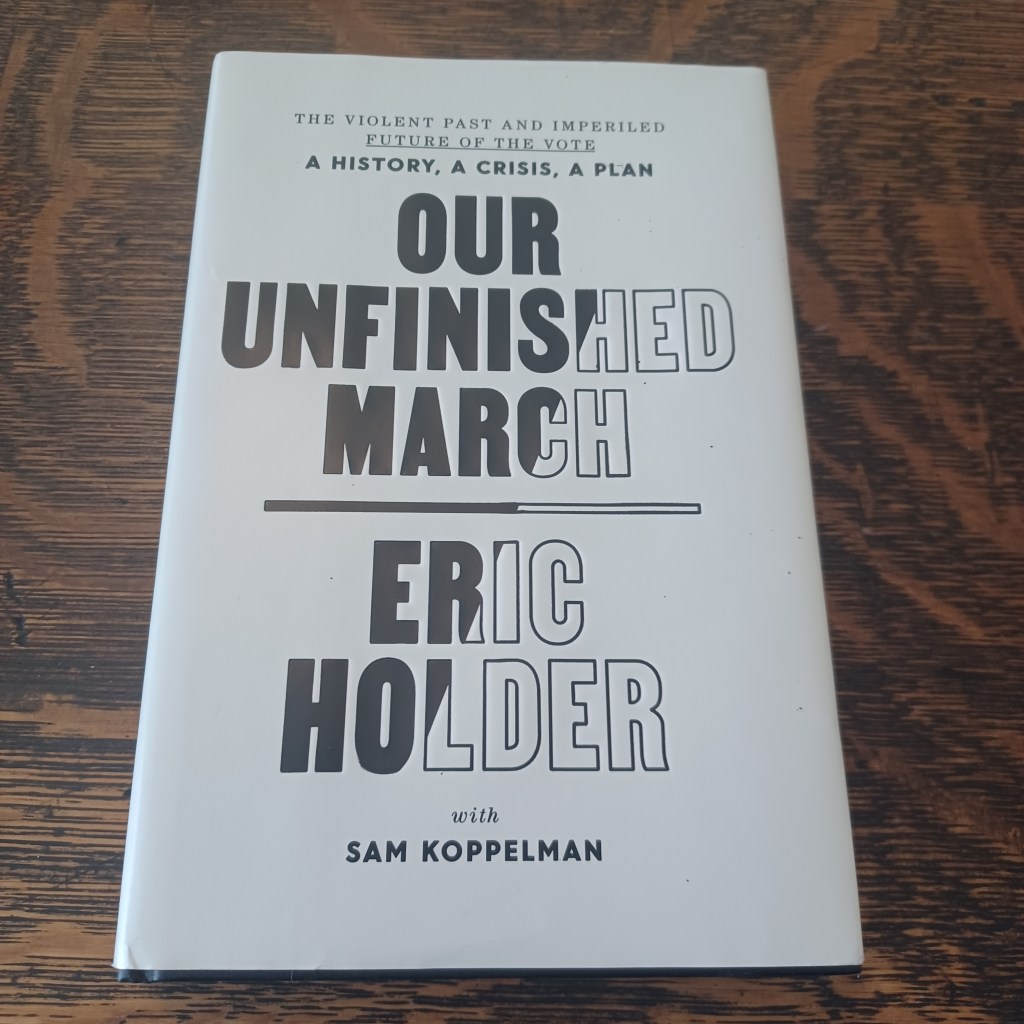
    Anyone else? One more. I think I would like to appoint Eric Holder as Secretary of DEI and Woke Affairs. Any objections?

  • The Roach And The Mustang….

    February 4th, 2024

    I saw this licence plate while taking a walk this morning. I wondered what prompted someone to put ROACH on their car. Then, I saw that next to the plate was a sticker that says Rescue Mom. So, I thought “Gee. The woman who owns this car rescues roaches! I wonder how she does that”. But then, I thought further. What if the woman who owns this car has been attacked by roaches. What if they have taken control of the car? What if her children have tried to free her in every way they could think of, but all they could accomplish was to send the youngest sibling to the car to quickly put the sticker with the hope that someone would rescue their mom?

    I have been told that God puts each of us on this earth to fullfil a particular purpose. What if my purpose was to rescue this Mom from the roaches? If so, I failed. And I know what that means. No heaven for me. Eternity in hell beset by roaches.

    When I was in high school, we had a Spanish teacher named Reuben Rochin. (I think we did). I never took Spanish and had nothing to do with him. But I remember that his home room class was known as the Roaches. I wondered if he picked that title, or if his class did, perhaps as an insult. I don’t know the answer to that.

    My home room teach was Kenneth Mustain. We were the Mustangs.

    Having said that, I wonder why our home rooms had names at all. Or maybe they didn’t and I made them up back then. Maybe the teachers didn’t know we had names, but all the kids did. The names clearly served no purpose.

    And, thinking back, I have no idea why we had home rooms. How often did they meet? What did we do there? Did we have them all through high school? I have no idea.

    But then I wondered if the Roach car might belong to a relative of Reuben Rochin? Or maybe to the child of one of his homeroom Roaches for whom this identification wa much more important than my identification as a Mustang.

    Is that possible? “Neigh!!”

  • Getting My Mind Off 85 U.S. Air Strikes Or…….Back to Aksyonov.

    February 3rd, 2024

    I finished reading all 586 pages of Vassily Aksyonov’s Generations of Winter. You may (but probably don’t) remember that I read another of Askyonov’s novels last month, The Island of Crimea. Crimea is a very novel novel, set in the 1970s (written in the 80s) on the “island” (not the peninsula) of Crimea, which had pulled away from the U.S.S.R. after the Bolshevik revolution of 1917, and remained independent and strongly capitalist, the last outpost of the “White” army. As time went by, and as there was a modicum of liberality in the USSR after the death of Stalin, a number of intellectuals created the “One Path” (I think that was the name) movement to incorporate Crimea into the USSR but with its own, separate economic system (a la say, Hong Kong). Fighting with the old guard of Crimea, who wanted nothing to do with the U.S.S.R., they won their battle only to be deceived by the Communists, who had no intention of making Crimea anything other than one more Soviet republic. (Of course, mixed with this was the family drama and love life of the leader of One Path and the novel’s protagonist.)

    Generations is a very different sort of novel, meant to be an epic family drama, sort of like, say, War and Peace, or the several generational novels of Thomas Mann. Written more than a decade after Crimea, it was to tell the story of the Russian revolution and life under Communism (by then a thing of the past). 

    Did it succeed? I am not sure. Probably not, but it has to be noted that both books were written in Russian, and that I read what is probably the only English translations. Had I read it Russian (had I been able to read it in Russian, had I been Russian, etc.), I don’t know what I would have concluded. And, even if it failed in being the War and Peace of the 20th century, it succeeded in being a highly enjoyable novel, focusing on a very dark period of time.

    The book follows the story of prominent Moscow surgeon, Boris Gradov, who lives with his wife and three children in a villa outside of Moscow, far from the general tumult of the city. Gradov, who is himself relatively apolitical, keeps his job and his home throughout the changes in Russian society because of his surgical skill, which is of such repute that he is even called in to tend to Stalin, when Stalin has a digestive problem that he thinks might end his life.

    While the Gradovs are able to keep up their pre-war lives, the children face different circumstances. Their oldest son, clearly a talented and charming fellow, enters the U.S.S.R.’s army, and his on his way to a stellar career when he is arrested for (presumably false) accusations of anti-Soviet behavior and sentenced to the Gulag, where he lives for several years under horrific conditions before being released and restored not only to his former rank, but to an exalted army rank during the depths of World War II. His beautiful wife, who was also arrested (because she was his wife) and sent to a different prison camp, is also released, although they found that the spark was gone. They both found substitutes, but neither substitute was appropriate in Soviet society (her new man was an American, his a prison camp nurse).

    The middle Gradov son was a by the book Marxist, who was drafted into the army and, for a long time, feared lost. His wife, a Jewish woman who became more and more disturbed as time went on, and their adopted son – who was drafted never to return – also figure in the saga.

    The youngest Gradov, their daughter Nina, was a free spirit, an intellectual, a poet, with the knack of survival, who hobnobbed with the most prominent intellectuals of 20th century Russia, married a young doctor, who was her father’s protege, but who didn’t survive World War II. She found a substitute, as well, an old friend she ran into at an intellectual gathering.

    There were others, particularly relatives of Boris Gradov’s wife, who – like Stalin – was Georgian by birth, and who had some prominent family members with Trotskyite tendencies, and one family member who became a close underling of NKVD chief Lavrenty Beria.

    So, you see, this is quite a complex story. And it flows right along. I could almost remember who was who most of the time. But it did lack something that great sagas do have. Aksyonov is a spare writer. He tells you what is going on, but it is all pretty matter of fact. That’s fine, probably very good, for the story, but it leaves out the scenery. What did the Gradov villa, where so much time was spent, look like. How cold was it during the winters of the war? What was the atmosphere in all of these places on the western front, where Marshall Gradov was leading his troops? The full picture just isn’t there. 

    Of course, I shouldn’t complain (and, really, I am not), but otherwise this book would have been 986 pages, not 586. And then I probably never would have picked it up. And picking it up was a good idea. Reading it was far from a waste of time. This is a good book.

  • Nothing Has Changed: From My Blog Of January 6, 2009 – When Another Gaza War Was Being Fought

    February 2nd, 2024

    “When the U.S. attacked Afghanistan, the casualties were terrible. When the U.S. attacked Iraq, the casualties were terrible. When Russia moved into Georgia, the casualties were terrible. In the Balkans, the casualties were terrible. In Lebanon, the casualties were terrible. In the Sudan, the casualties were terrible. Etc. Etc. In war, the casualties are terrible.

    So it is in Gaza. But what if Israel can destroy the Hamas infrastructure? What if the result of all of this is the ability of Gazans and Israelis to live in peace, side by side and even cooperate economically and perhaps culturally?

    Is that impossibly wishful thinking? I believe that from the perspective of Israel, it would be possible (once large segments of Israeli society were able to put behind them the fear of possible duplicity on the Arab side), and I think from the perspective of Gazans, it should be possible (perhaps for now only because they would have no choice).

    But what about Hamas? Hamas, as long is it is in charge of Gaza, will obstruct that process, namely because it is part of their core position that they will never live with Israel in peace, and that their entire movement is based on the destruction of the state of Israel, and that they will continue to provoke towards that end.

    For that reason, the destruction of Hamas is a necessity. Is it possible? That is another question, and it is a question because of the nature of Hamas itself. Hamas does not appear to act like a normal governing organization – it has been able to accomplish virtually nothing for its population, in part because of its refusal to deal with Israel. It would appear that Hamas would want the Gazans to suffer to increase their hatred of Israel, blaming all of their suffering on Israel’s economic blockade, while doing nothing at all about it. And it is easy for Hamas leadership to take this position, because Hamas leadership is not in Gaza, but in Syria. Safe and secure and able to concentrate on increasing its economic strength with the help of its Iranian friends. What kind of state leadership is this? One thing is clear, though. It does not put any pressure on Hamas to say: Enough, we’ll stop the rockets, let’s talk about a solution. The Hamas leadership is unaffected by any of the fighting and may assume that the longer it goes on, the more allies it will gain.

    In the meantime, in Gaza, as in much of that part of the world, the education of children with regard to Jews and Christians is abhorrent. And of course, this education is no more than a very successful political tool of the ruling groups and their allies in the religious establishment. Shame on all of them.

    Now, I don’t know what reports are accurate, and what reports are propaganda. I have heard that 35 Palestinian Authority supporters have been killed by Hamas in Gaza and dozens of others have been wounded or disabled. I have heard that supplies coming into Gaza (I understand 80 trucks went into Gaza through the Israeli checkpoints yesterday) have been waylaid by Hamas and did not get to where they were supposed to go, and that international groups working in Gaza are almost as frustrated by these events as by the war itself. I have heard, of course, that Hamas continues to put weapons caches and rocket launchers in residential areas and schools. I have heard that Hamas does not want people to leave their residences for safety.

    Is all or most of this true? I don’t know, but I do know (look at the intra-Muslim fighting that has taken place or is taking place in various places in the Middle East, including Iraq and Lebanon, that competing Muslim/Arab groups don’t hesitate in targeting each other, at least to date, Jews have not done.

    So, the fighting continues. The terrible videos are shown over the world. The Gazans look like innocent victims, which they may be for the most part as individuals, but it is clear that have been victimized as badly by Hamas as they have by Israel.

    But this is the Palestinian lot. While 800,000 Jews were kicked out of Arab countries after the formation of Israel and have been taken in and welcomed by Israel, those Arabs who left (involuntarily or not) in 1948 have been purposely marginalized by Jordan and Lebanon and Syria and Egypt and left for generations to boil over in anger, with their anger at least partially misplaced. If the Arab community had the positive solidarity of the Jewish community, what a better world this would be.

    This is not to excuse everything that goes on in Israel, of course. It has a very unstable political system, it has too many overly religious citizens with their own weird and uncompromising sense of right and wrong, it has its own problems of poverty amidst plenty. But, perhaps these problems would become less pervasive if the security of the country were more certain.

    Israel is used to being a pariah in the eyes of many. In this instance, it appears that they are ready to accept this perspective for the time being while they try their best to eradicate one source of Middle East terrorism, at a great cost to all involved.

  • The Good Old Days (Better Than Now?)

    February 1st, 2024

    This is not my first blog. I wrote one from about 2005-2010. For some reason, I stopped. Don’t remember why. When I wrote the old one (“Arthur Thinks”), I was still working. That meant a number of things. For one thing, it meant I could go into my firm’s work room and print out anything I wanted quickly, and so I did with all those blogs. I haven’t been printing out my 2022-  blog, but…..that’s for another time.

    Yesterday, I pulled 2009, down from the shelf. That’s 15 years ago, so Art was 66. The one thing I notice is that, although I did write about Israel and Gaza several times even then, I wrote more about personal activities – where I went, who I saw and so forth. This is probably because I went to more places: I was out at least 5 days a week going to my office, I was 15 years younger, and three COVID had not given us all shell-shock. Or maybe, it was because, during those days, the world was in a better place. And we weren’t so concerned about domestic and foreign and planetary problems.

    Today is Feb 1. I decided to see what I had done (or written about) in January 2009 (the numbers below correspond to the date):

    1. We actually went out New Year’s Eve. We went to a special performance at Theater J of a group (which may have been a group only for that night) called the Serendipity 4, composed of Theodore Bikel (who was performing at Theater J at that time) on guitar and vocals, his wife Tamara Brooks at the piano, Shura Lipovsky doing vocals and Marima Kljuco, whom I referred to as “an extraordinary Bosnian accordianist”. Eastern European/Jewish folk music for the most part. Followed by a party.
    2. A tree fell across the street, closing Davenport St all day; I mused about Israel and what can they do if Hamas does not want peace (Nothing new under the sun?)
    3. I bought reading glasses in Turkey a few years before – the frame snapped.
    4. Mini-reviews of two Christopher Isherwood books – Goodbye to Berlin and Mr. Norris Changes Trains. (I re-read Mr. Norris last year).
    5. There was another Gaza war raging (not as serious as today’s, but no one foresaw what his happening today). My words, though, could have been written in 2024: ”Where is the promise that Gaza will be rebuilt? That there will be compensation to the Gazans for their suffering? Why are food and medical supplies not being let in by either Israel or Egypt?…..”
    6. A much longer post about Gaza. I should really copy it and put it in this 2024 blog. You will see how little has, in fact, changed. Maybe I will do this tomorrow.
    7. More about Theodore Bikel, and how he can do his 90 minute, one man show, getting up and down, singing, playing multiple characters every day but Monday (but twice on Sunday) at Theater J at the age of 84. I end the blog by telling my readers to be sure not to tell Bikel how old he is.
    8. I wrote something that I repeated last year in the current blog. A listing of deaths caused by other wars – 18 wars that each led to over 1 million deaths, including World War II, where 40,000,000 is a conservative number.
    9. I wrote about Christopher Hitchens’ article in a recent Vanity Fair, talking about Salmon Rushdie’s The Satanic Verses, the resulting Iranian fatwa, the Japanese translator and the Italian translator both being stabbed to death in their respective countries, and the Norwegian publisher being shot three times in his apartment in Oslo.
    10. I listed all of the things I did during the first 10 days of 2009 – seems extraordinary now. First, I went to two programs at Politics and Prose – author Steven Johnson talking about the scientific discoveries of Joseph Priestly, and diplomat Martin Indyk talking about his memoir of his activities during the Clinton years. Talking about the Middle East, Indyk said that “there is light at the end of the tunnel. The problem is that we haven’t located the tunnel”. I ate very well at the Iron Gate Inn, and not so well at the DCJCC. I read both Manischewitz: the Matzo Family (Edie’s first cousin has been a Manischewitz for the past 50 years), and then Martin Gilbert’s book about Kristallnacht. I saw a whale exhibit at the National Geographic Society Museum (now closed for renovations), which didn’t impress me much. And – back when my office had tickets – we attended two Caps games that week.
    11. I loved the Jan Lievens exhibit at the National Gallery and told those who missed it that they could catch the exhibit in Milwaukee. (I think it has left there by now.) And I bought a yearbook from Soldan High School in St. Louis (my father’s high school) for the year 1925 – my father graduated in 1920, but I thought, as a matter of loyalty (I think it is sitting on a shelf in a closet now. I don’t think much about it. I do think about a St. Louis University yearbook from, I think, 1923, which has a picture of my father as a graduating law student and my maternal grandfather, then on the medical school faculty. It is also somewhere on shelf.)
    12. A long review of Diane Middlebrooks’ book, Her Husband: Hughes and Plath. I liked the book, and was fascinated by the story which I outlined on the blog.
    13. It looks like I took the day off.
    14. I had read a paper from Johns Hopkins University about looming water problems, and outlined what they said, concluding that – although many, many people are working on these problems – they may be beyond resolution.

    It’s clear I can’t do the entire month in one post, so I will stop here. But you get the idea. It’s a great way to go back in time. Who says that you live only once?

  • Will The Victory Belong To The (Taylor) Swift? [And More]

    January 31st, 2024

    So much I can say today. But don’t worry. I do know how to control myself. Let’s get started.

    Have you ever wondered what is going on in Russia? I listened to two very recent (very, very recent) podcasts today, both featuring Russians now living in exile. The first spoke about political unrest in Russia. He claimed that Putin is in fact very unpopular, and that he expects one day soon he will no longer be running the country. His claim is that there are groups everywhere just looking for a way to combine and remove him from office. He didn’t convince me, and I admit that I don’t remember his name. It started with a P.

    The second podcast featured a man named Ilya Samoilov, who apparently at one time served in the Duma and had been involved in the construction of power plants. He was fascinating. Here goes:

    First, he said that Russian life had been improving until the war began. Then, he said everything has been going downhill. The majority of the Russian budget is now devoted to military manufacturing and that fewer consumer goods have been made and fewer are available. This means that prices for consumer goods have gone through the roof, inflation is very high and to control inflation that central bank has now increased the borrowing rate to 16%. He also said that there has been an enormous problem this winter with the failure of heating systems (all, but the newest of Russian apartments buildings are heated through regional or city-wide central heating plants), for which he gives several causes. First, a large number of workers have been conscripted into the army, so that there are insufficient employees to maintain and repair systems when they fail. Second, there is a shortage of replacement parts, which normally are manufactured by Siemens and General Electric, and neither company is now supplying them into Russia. Third, in order to make repairs to these old Soviet-era systems, you need to have experts who have experience with the systems, or the international companies send their own experts in to supervise major repairs, and this just isn’t happening. Fourth, the systems are simply aging. And fifth, although new buildings are supposed to have their own heating systems, there can be exceptions if local authorities grant you an exception and local authorities are more than happy to do this if you pay a sufficient bribe. The bribes, he said, are enormous and London, Miami and Dubai are filled with former local Russian officials who have taken their bribes and left the country. How can the bribes be that large? Because building a new power plant is even more expensive. If you are granted an exception, you hook your new developments to existing power supplies, stressing the old power plants beyond capacity.

    What else? 

    Well, I looked at the Times of Israel website yesterday and saw the following three headlines, one after another. I paraphrase: (1) Netanyahu says he is not going to pull out troops just to get the hostages back, (2) Hamas says that they are not going to release hostages unless Israel pulls all troops out, and (3) Blinken says that he is optimistic that a deal for the hostages will be announced soon. So, there you have it.

    I also listened to an interview with Gen. Petraeus. Can’t say I agreed with everything, but he did say that we should not have left Afghanistan (he blamed both administrations equally) and that leaving Afghanistan was bad enough, and now it looks like we are going to leave Ukraine, so our influence will vanish as we will be seen as completely unreliable.

    He also said that he was completely apolitical and will stay that way. So unpolitical, that does not even register to vote. What?

    And what is Biden going to do about Greg Abbott ignoring a ruling of the Supreme Court? This is no different from George Wallace standing in the school house door.

    One more thing. Have you heard that the Super Bowl has been fixed, and that Kansas City will win (place your bets now), giving Taylor Swift the ability to become even more famous and throw her fame behind Joe Biden? Yes, apparently it’s a done deal. And it seems that this arrangement is even going to outclass the goings on at Comet Pizza (just up the street), where Hillary Clinton and her cronies kept kidnapped children in the basement before they sex-traded them to the third world. I think there will be a new pizza on the menu at Comet called the Taylor Swift featuring Kansas City BBQ. Not a bad idea.

  • Ever Think About What A Good Painter Gauguin Was? (Plus A Question)

    January 30th, 2024
    http://art-gauguin.com

    Just saying.

    And now the question. The question is: What if?

    I know that’s a broad question, so I will narrow it down a bit and put it in context.

    The International Court of Justice issued preliminary orders regarding the claim that Israel is committing genocide in Gaza. The preliminary orders including requiring Israel to avoid committing genocide, which includes issuing threats against Palestinians in Gaza. Virtually immediately after the preliminary orders were issued, there was a conference in Israel on the future (or the “resettlement”) of Gaza, organized by right wing Israelis, and attended by fifteen members of the Knesset and eleven cabinet members in the Netanyahu government, at which the main issue was the future of Gaza without Palestinians and with new and increased Jewish settlement. In other words, exactly what the ICJ told the Israeli government not to do. Clearly, outrageous.

    But here is my question: What if those who organized and spoke at this conference are correct? What if Hamas cannot be eliminated as long as there are Palestinians in Gaza? What if Israel cannot be secure as long as there are Palestinians in Gaza who have political autonomy, or weaponry (or the ability to create weaponry)? That thought may be well outside the box, but….what if it is true?

    You might wonder what this question has to do with Gauguin. Did Gauguin ever even travel to Gaza? Not as far as I know. He was one of those Europeans who thought that Tahiti might be a better choice.

  • The Most Surprising/The Least Surprising

    January 29th, 2024

    The most surprising thing to me today is the pole reversal that has taken place in national politics around immigration. For three years, the Republicans have been yelling at Joe Biden for having an “open border”, and the Democrats have been saying that they are doing all they can considering the laws with which they have to comply. Then, all of a sudden, the Biden Democrats are saying they want to have a “closed border” and the Trump Republicans are saying to leave the border as it is until Trump is re-elected president. Trump says the bill, which is basically what he has been asking for, is too weak. What does he want to add to it? He won’t say, probably because he’s afraid someone would take him seriously and actually amend the draft bill. It’s politics, of course, but it also is tremendous hypocrisy that is surprising to a lot of people, including me.

    The least surprising thing is that 12 employees of the United Nations Relief and Works Agency for Palestinian Refugees in the Near East have been accused of conspiring with Hamas. UNRWA was created as soon as the 1948 Arab Israeli war ended, and ever since has served Palestinian refugees. No other group of refugees have their own agency; all other refugee issues are handled by the UN’s High Commissioner for Refugees. But Palestinians have been treated very differently – and IMHO – very unfortunately. Why?

    Because they have been defined as permanent refugees, people without a country of their own, but destined, as the Jews had been for 2000 years, to return to their home country – now occupied by Israel. In the meantime, as the Palestinians settled in other Middle Eastern countries, like Jordan, Syria and, yes, the West Bank and Gaza, they were placed into squalid refugee camps, which still exist, although they no longer have tents, but now look much more like permanent cities. And UNRWA for 75 years has been providing them with social services at the expense of the UN members, including the US. Treating them this way has made them dependent upon “welfare” and guaranteed them permanent refugee status with a “right to return”. They are not citizens of the countries in which they live. And – the refugees are not only those who were displaced (voluntarily or not) during the 1948 fighting, but their children, grand children and now great grandchildren.

    UNRWA should be abolished, its social service responsibilities given to other organizations, and the United Nations sponsored special right of return should be heard of no more.

    So UNRWA employees start by being biased towards the Palestinians by the nature of their jobs and sponsoring organization. But more than that, the vast majority of UNRWA employees are Palestinian. And not just a small number of Palestinians, but 13,000 in the Gaza Strip alone, making them one of the biggest employers in Gaza, second only to Hamas (and maybe behind the health ministry). You think there are only 12 conspirators? Ha! Undoubtedly hundreds, perhaps thousands. No surprise here.

    Edie has told me that my blog has become too heavy. That it needs to be lighter. Following her wishes, the rest of this blog will be light. Here goes:

    blank

    blank

    blank

    blank

    blank

    How much lighter can I get?

  • Today? Israel, Hamas, The Great Plains And The Mississippi

    January 28th, 2024

    (1) Yesterday, my post was on the interim decision by the International Court of Justice in the matter brought by South Africa against Israel, accusing Israel of violating the Genocide Convention through its actions in the Gaza Slip. If you have not read it, I suggest that you do. This morning, we heard a presentation by University of Baltimore Law Professor Nienke Grossman on the ICJ decision. Grossman is a member of our synagogue, although I have never met her, and a wonderful presenter, exceptionally clear.

    I am not going to repeat here what I said yesterday, because Grossman basically told the same story (a little fuller, a little better), and she confirmed everything that I said with one exception, and she let me conclude that I only left out one material item. The correction: I said that the ICJ was ignoring a number of disputes around the world where genocide could certainly be argued, and one of the places I mentioned was Myanmar and the fate of the Rohingyas. It turned out that there is a case pending against Myanmar, brought in 2019 by The Gambia, and presumably a ways off from the release of a final decision.

    The matter that I ignored was what could transpire at the International Criminal Court, the court that presumably has authority over war crimes, as well as genocide, and can find individuals (and not just member states) guilty of such crimes. There is a fascinating article that I have skimmed, and now will read more carefully at jurist.com, by Professor Leila Sadat of the Washington University Law School on the International Criminal Court and its authority with regard to the Hamas-Israel battle. There is pressure to have actions against both sides of the war, and this is the place that Israeli government officials may find themselves defendants personally, although Sadat says that there are jurisdictional issues. What I got from skimming this article is that, compared to the limited and definable jurisdiction of the International Court of Justice, the authority of the International Criminal Court is, in all ways, much more difficult to pinpoint.

    There have also been two updates today from what I reported yesterday in my discussion of the ICJ’s ruling. One of the things that I wondered is why additional cases against other countries are not brought more often, since any member country has the standing to bring a case against any other member country. This morning, I read in the Times of Israel, that Knesset member Gideon Sa’ar has stated that he is beginning the preparation of a genocide case against Iran to be filed in the ICJ. In addition, and I did not mention this, the only one of the 17 judges to vote against South Africa on all counts, was Julia Sebutinde of Uganda, who argued that this was a political, and not a legal, case. This morning, the government of Uganda stated that her opinion was not to be considered to be the opinion of the Uganda government.

    More to come on this one.

    (2) We spent yesterday afternoon at the National Gallery of Art, which shows films on weekends, films that you don’t normally see elsewhere, either connected to current exhibits, or important to the history of film in general. This week they presented, and we saw, four such films, each about a half hour in length. Two were to accompany the current exhibit (which I discussed a month or so ago) of photographs by Dorothea Lange. The two films (or perhaps it would be better to say it was one film, divided into two sections) showed interviews with Lange, shortly before she passed away and when she was suffering from cancer, as she was helping prepare for a large retrospective exhibition of her work at the MOMA in New York. I must say that I didn’t find the interviews very enlightening, and didn’t understand everything she said about what she wanted her legacy to be – but generally it was to display segments of society without concentrating on the exceptional, but on the more mundane, with the thought that combinations of the proper mundane would make a series of photographs historically important. At least that is what I think she was trying to say.

    The other two films were, I thought, more special. They were government sponsored films from the mid-1930s, directed by Pare Lorentz. One was concerned with the Great Plains and the second with the Mississippi River.

    The film about the Great Plains, “The Plow That Broke the Plains” was I think the better, and it was a very good accompaniment to the Lange exhibit, because it also showed very evocative photography of a historical movement, this time film photography, not still or portrait photography. The film opened with scenes of waving wheat and scenes of large herds of free range cattle, all on what seemed to be endless plains. Once you got behind the opening language which seemed to congratulate ourselves for “eliminating the Indians and the buffalo”, you saw America eliminating 90% of the forest land and creating enormous areas for cattle raising in the late 19th century, and then you saw the cattle dying out because land was being overgrazed, and then wheat was planted. The wheat “won the war” (World War I) by providing food domestically, to our armies overseas, and to Europeans being starved by the fighting. But then, the land was worn out and, at the same time, an extraordinary drought hit the plains. Vegetation died, wheat would not grow, farms fell into ruin, families were devastated, and people began moving west. Only then was attention paid to the need to rebuild the soil, practice responsible agriculture (helped by new equipment and new irrigation techniques, give families a chance to homestead, create towns and villages and so forth.

    Each of these stages was demonstrated with remarkable film shot over, I expect, a 40 year period. The narration (while at times over the top) contained just the right amount of statistics to give you a good sense of what was going on. I had never seen this important part of American history told so succinctly and, I think, memorably. I thought that this 90 year old film could be shown to high school (maybe even middle school) students all over the country. It puts an entirely different perspective on the history of what the narrator calls 400 million acres of agricultural land from Texas and New Mexico up to North Dakota and Montana.

    The other film, called simply “The River”, talks about the Mississippi, and its importance to the country, historically and at the then present, again the 1930s. It told the story of the regular flooding of the river, and how the flooding affected the river valley everywhere south of where the Ohio enters the Mississippi, again with evocative pictures of the flooding of farms and homes and towns. It then goes into the creation of the Tennessee Valley Authority, and the channeling of the river to prevent its recurrent overflowing of its banks.

    As Edie said, we just saw two films about the 1930s – one had not enough water, one had too much water. That’s about it.

  • Hague, Schmague?

    January 27th, 2024

    Two preliminaries: First, I know virtually nothing about either the Court of International Justice, or about the Genocide Convention. Secondly, I know that I said something of this yesterday on a Facebook post, but…..so be it.

    In its preliminary decision yesterday, the Court said the following: ”The court ……. is gravely concerned about the fate of the hostages abducted during the attack in Israel on October 7, 2023 and held since then by Hamas and other armed groups, and calls for their immediate and unconditional release.”

    Why isn’t anyone talking about this as the one clear, precise act that the Court is ordering in its ruling. Other than that, it simply tells Israel that it is a party to the Genocide Convention and therefore has to abide by it. Sure, it didn’t dismiss the case outright, and didn’t tell South Africa that it had no standing, but that wasn’t surprising to me for any number of reasons. And it said that it would have to undertake a much more definitive study of the matter before concluding that Israel was in violation of the treaty, but on a preliminary basis said that the allegations made by South Africa, and the facts as they are known today, make it possible that the treaty is being violated, and that is why further study is being undertaken.

    And it made some preliminary orders. First, that Israel not violate the treaty (duh). Second, that Israel report to the Court if the government concludes that the treaty has been violated. Three, that Israeli officials not issue statements calling for violating the treaty. Presumably these orders (not very burdensome) are “binding” on Israel, since it is a party both to the Court and the Genocide Convention, although there is no way for the Court to enforce its ruling.

    But what about the “call” for the immediate release of the hostages? Is that also an “order” of the Court, or is a “call” something different? And if it is something deemed less serious, is that because Hamas and the “other armed groups” are not party to the case, or that they have not ratified the Treaty or placed themselves under the jurisdiction of the Court, or because they don’t even constitute a “government” and Gaza does not even constitute a “state”? I have no idea.

    So, to me, either side can declare a moderate victory here. Neither side was asked to stop fighting, Israel was not declared in violation of the Genocide convention, but Israel was put on notice as to what types of actions could lead to a treaty violation.

    But that is not what is happening. Hamas and all of its allies are declaring victory, saying in effect that Israel has been found guilty, and that the only way Israel can avoid treaty violations it to stop fighting. This of course (I think, of course) is faulty logic, because the items that constitute genocide must be put together as a whole to determine if genocide is being committed. Each of the individual items is something that takes place in every war.

    On the other hand, Israel is not declaring any sort of victory (although they could have been determined to be in treaty violation and could have been ordered to stop fighting immediately), but it outraged that the case hasn’t been immediately dropped. And for some reason, Israel and its allies are not focusing on the “call” to release the hostages.

    One other matter: South Africa is obviously not a party to the war. So how can they bring this case, and why (it appears) did Israel not raise the question of standing? It’s because the Court concludes that it is in the interest of every party to the treaty to make sure that genocide doesn’t occur, and therefore any state would have standing to sue. I don’t think this is a new interpretation, but it does lead to the question of why state after state does not bring case after case to countries which could equally be accused of genocide (Myanmar and the Rohingyas, for example, or China and the Uyghurs, not to mention all of the Islamist attacks around the world). Seems like something that should be done, no?

    The next question is: what will this mean on the ground. Will it be Hague, Schmague, as one Knesset member put it, or will there be any changes? Will right wing Israelis tone down their rhetoric? Will a reasonable post-war plan for Gaza be developed? And how does the turmoil within UNRWA (12 now fired staffers accused of collaborating with Hamas) fit into the picture? It has long been time that UNRWA should disappear. But now maybe some new rebuilding organization will need to step in.

    It’s Holocaust Remembrance Day today. What is the opposite of serendipity?

  • Gutting the Voting Rights Act? “Like Throwing Out Your Umbrella In A Rain Storm Because You Are Not Getting Wet”.

    January 26th, 2024

    Who said that? Ruth Bader Ginsburg…..

    A friend shared a Facebook post this morning that reads:

    “We can fix all this cheating with a revote with ID and in person. Who’s not scared to report this?” 

    So it goes.

    The response to the millions of people who somehow still believe that the last presidential election was wrongly decided because of mass cheating and fraud (and that is a lot of people – perhaps more than half of those voting Republican and a majority of those who support Trump), and who believe that the way to “fix” this is to require voter IDs and end absentee and mail voting, is simple: They should read Our Unfinished March: The Violent Past and Imperiled Future of the Vote – a History, a Crisis, a Plan by Former Attorney General Eric Holder (with Sam Koppelman), published in 2022. It’s a remarkable book.

    Now, I am sure, many Republican leaning voters will say: well, it’s Eric Holder; who could believe him? I can’t help them from thinking this, but suggest that – nevertheless – they read this book, and see if their thinking on the topic is at all changed. And, by the way, the book is short (224 pages before you get to the “notes”), and extremely readable and easy to absorb.

    The book is divided into three sections, each equally compelling. The first section deals with voting history in the country from the time of the founding fathers (should “founding fathers” be capitalized? And, if so, why?).

    In this section, Holder looks at voting restrictions in the various “states” before they became states and then after the creation of the United States. Not only at the exclusion of slaves, but the exclusion of women, and of white men without a certain amount of property or assets (and in certain places, the exclusion of those who were not of specific religions). Different in each colony, and compromised when the U.S. Constitution was adopted.

    Then comes the Civil War, and the 14th Amendment (which did not mention voting rights and was therefore insufficient to guarantee all men – women still excluded – a right to vote), and then the 15th Amendment, which stated that voting could not be denied on the basis of “race, color, or previous condition of servitude”, but still did not deal with gender.

    Blacks were allowed to vote after the passage of the 15th Amendment throughout the country, but then the Jim Crow laws began to take effect and states in the south found ways to exclude blacks (not by requiring IDs – that would come much later), but by having poll taxes or literacy tests which were not fairly administered (at all) and so forth.

    A chapter on voting rights for women, the suffrage movement, and the conflict that sometimes was raised between Black voting advocates and women voting advocates, followed by a discussion of implementing Brown v. Board and integrating schools, the civil rights movements, the death of John F. Kennedy and the passage of the Civil Rights Act and Voting Rights Act during the administration of Lyndon Johnson. 

    The second section of the book starts with the Obama years, and the perception (I think quite accurate) of the backlash to having a Black president, from the birther controversy stoked by Donald Trump, the immediate statement by Mitch McConnell that the primary goal of the Republicans was to make sure Obama was a one term president and so forth.

    And then the gutting of the Voting Rights Act by the Supreme Court (no longer would the voting laws of targeted states be subject to federal review), after Congress had extended it not only on a bipartisan basis, but on an overwhelmingly bipartisan basis. And then, on the day the Court decision was announced, first Texas and then virtually every other previously targeted state, began to pass laws to make it harder to vote – cutting polling hours, eliminating polling places in minority areas, requiring IDs (one state said university ID’s were not sufficient, but gun permits were), etc.

    The final portion of the book gives Holder’s suggestions for how to get beyond the sorry state we now find ourselves in. I should add that, in doing this, he does contrast the US to other democracies – we are clearly the outlier in trying to make it more difficult to vote; everyone else has been making it easier. (No surprise here, of course.)

    Here are some of his suggestions (because he gives many and knows that some will not be implemented, his suggestions sometimes overlap):

    1. Automatic voter registration when a citizen turns 18
    2. Same day registration for those not automatically registered
    3. Allowing 16 and 17 year old to pre-register
    4. Allowing registration on-line
    5. Allowing felons to register after they have served their sentence
    6. Polling places should be geographically accessible
    7. Election Day should be a work holiday
    8. Expanding the use of mail in and absentee voting.
    9. Voter IDs for everyone, and free Voter IDs (theory is that making someone have, say, a driver’s license in places where a driver’s license has a fee attached, is equivalent of a poll tax)
    10. Making sure that voter roll purges are accurately implemented

    After he gives his thoughts on voting rights, Holder deals with three other related topics – the Senate filibuster, House gerrymandering, and the Electoral college, and how all of these are being used to help suppress the vote.

    I could not recommend this book more highly.

    I should say that I picked up Holder’s book after reading another books related to Black America and the civil rights movement, John Meacham’s relatively new book on John Lewis, His Truth is Marching On: John Lewis and the Power of Hope. I enjoyed this book as well. It is a bit hagiographic , but perhaps Lewis deserves that. Meacham does not deal with Lewis’ years in Congress – this is a book about John Lewis during the years of the civil rights movement – his intensity and stubbornness, his unwavering loyalty to nonviolence, his suffering, his success. Well worth reading, if only to remind you how central Lewis was to the entire movement.

    That’s it for today. Over 70 degrees in DC. Have to get outside.

  • Yes, I Have A Point (Thanks For Asking). Just Read On.

    January 25th, 2024

    Sometimes it’s the little things in life that are baffling. I take 2000 mgs of Vitamin D every day. I keep the jar on a shelf with other pills I take daily or now and then. Yesterday morning, when I took my Vitamin D, my jar was about half full. This morning, when I went to get my Vitamin D, the container was empty. Not only that, it was a brand and shape I had never seen before. I have no explanation.

    I went to CVS to buy another jar/bottle/container of Vitamin D. That led to another mystery, one that seems l recur every time I go to CVS. I go to checkout and am asked if I want to apply my 20% off coupon. Where that came from, I have no idea.

    The subject of my Thursday morning breakfast group today was Socrates. I believe I a correct when I say that Socrates would have no explanation for these mysteries.

    Of course , he’s not around to ask. That’s because he was convicted of a crime. And he was forced to ingest some hemlock. If I were convicted of a capital crime and could choose my last meal, it might be hemlock. I like the name. And maybe it would be painless and save me the shock of being electrocuted.

    Let’s stay with this thought. Even most people who believe in capital punishment (same crowd as wear MAGA hats) think that people should be put to death humanely, right? But not so humanely that you can just call the prison anesthesiologist. That would take away the drama, and what would murder be without a little drama?

    Or by calling me in to sing a song? Ever hear me sing? The answer is “no”, because you wouldn’t live through it. But it is humane. “And for your last song, we present Art singing …. “Killing you softly with his song”.

    I see Alabama is trying out a new method of murdering with nitrates. I admit I didn’t read the article, but I congratulate them on finding a new way to end a life.

    Going back, for a moment to the last meal. Did you read that in, maybe Oklahoma, they offered a guy his last meal, and they blew it? He didn’t ask for grilled piranha or anything that exotic. He asked for KFC, but they brought him white meat rather than dark meat. “OK, prisoner, what would you like your last disappointment to be?”

    Going back to Socrates, what again was his crime? It was corrupting the youth. And how was he doing that? He was teaching them how to think, not what to think.

    Look at today’s social studies curricula at most universities today. If Socrates got a university appointment, how long would he last?

  • Reflections on New Hampshire – 1960 and 2024.

    January 24th, 2024

    First, a personal reflection. I first went to New Hampshire in the winter of 1960-1961. I went with some of my college freshman friends to spend the weekend in the vacation cottage of the family of one of my friends in Derry. The ground was snow covered – the temperature was frigid. It was not a good weekend. We didn’t know it, but the cottage was not winterized. There was no heat. There was no water. The bathroom was the back yard. Obviously, no one slept. I forget how what or how we ate. We only stayed the one night. How in hell did I stay friends with that guy?

    Okay, that was then, and this is now:

    I watched Donald Trump give his New Hampshire victory speech this evening. It was short, but not sweet, and it provided a fair amount of false information. Trump said that he won the last three presidential primaries and the last two general elections in New Hampshire. That is what he said – but in fact he lost New Hampshire both to Clinton and to Biden.

    He also said that, as of the time he was giving his speech, he was ahead of Haley in the primary by 14 points. In fact, he was less than 12 points ahead and, as I write this, with 50% of the votes in, his lead is now about 11 points.

    He also said that South Carolina allowed Democrats to vote in the Republican primary, and they were voting for Haley. This was another distortion, because Democrats cannot vote in the New Hampshire Republican primary. Only registered Republicans and Independents can vote, and the deadline for changing party registration was some time in October. He also said that Democrats can vote in the Republican primary because the current Republican governor (who supports Haley) is a terrible governor and he lets the Democrats vote. Obviously wrong.

    And finally, in talking about immigration, he said that the southern border was being inundated by people coming out of jails and mental institutions, and that they were drug dealers – again this is nothing that he can give any evidence of.

    What does that show? Just more lying? Or, since these were not lies that really mattered, does it show mental deterioration?

    But it got me thinking. If I lived in New Hampshire, and if I was a registered Independent, but thought as I think today (and how could I think otherwise?), who would I vote for? Would I vote for Haley because she is obviously a better alternative than Trump (although I wouldn’t likely vote for her in the general election), or would I vote for Trump? Why would I vote for Trump? I would do that on the gamble that, no matter how old Joe Biden may be, no matter how many people cross the southern border, and no matter how many wars are raging around the world, the majority of Americans won’t vote for Trump, and won’t sway the Electoral College in his direction. A gamble to be sure, but maybe one worth taking.

    CNN’s exit poll said that the issue most concerning Republicans was the southern border. I have long said that the two issues that are the worst for the Democrats are Biden’s age and the perception that the border is completely open. It looks like I may be right. And one of these problems can’t be changed, and it may be too late to change the other.

    The Republicans also point to the Trump four years as being years without any wars. This isn’t exactly correct, because there were hostilities here and there now and then. But it is true that the years 2016-2020 were calmer that, say, 2024. To say this is Biden’s fault is more than a stretch, although you can argue that the Biden response has not been the best.

    But what about those peaceful Trump years? I would say that the following countries came out of the Trump years much stronger and more directed than they were before Trump took office: China, Russia, North Korea and Iran. And that they were held in check in part because everyone in the world was responding to the COVID pandemic during 2020. You can say the problems of the world today germinated under Trump, not Biden

    Republicans obviously won’t change their mind on this, but I wonder if some independent voters will agree with them. And I think that the same is true regarding our economy and the status of inflation. The first is growing and the second is not – but do facts matter?

    My conclusion ? I will spend 2024 worried about our politics. My college friend Peter Coppelman (who was not in New Hampshire), formerly a lawyer, now a poet, wrote a poem titled “Worry……after Mary Oliver”, which starts:

    “I am a worrier

    Like Mary Oliver.

    Even worse.

    I am a catastrophizer

    It’s like worrying

    On Speed

    Magnified

    Blown up

    To the nth degree…..”

    And look what I found yesterday :

  • Another Recurrent Nightmare…….

    January 23rd, 2024

    I woke up this morning to hear the results, so far, for the New Hampshire Republican Party primary. Thanks to the six Republicans in Dixville Notch, the totals so far are: Haley 6, Trump 0. Looks like it will be a rout.

    Just for the record, I think American politics (by that I mean most American politicians) are sick, sick, sick. The mantra (if that’s the right word) seems to be: I hate all my opponents and I will tell you why, until they beat me, and then I think they are, and always have been, wonderful. That is just sick.

    I would like politicians to say about their opponents one of the following two things: (1) ”___________ would make a good president, but we disagree on the following two points.”, or “__________ is dangerous and incompetent, and I am not going to change my mind if they become the nominee.” But they won’t.

    We have now seen every Republican who started out as a candidate for the presidency and who has now dropped out change from telling us that Donald Trump is over the hill to telling us that Donald Trump is the best hope for America’s future. It is simply sick.

    I had a law school professor (a very imposing fellow whom we will call Leon Lipson), who first told the story (at least first to me) of the beautiful clock in the town center tower that amazed you as you listened to it striking one, two, three, four, five, six, seven, eight, nine, ten, eleven, twelve, thirteen. What? It just struck thirteen? Obviously, I can’t believe that that is correct. In fact, because of that, how can I even trust the first twelve?

    By doing a 180 degree turn on their seemingly sincerely stated opinions, I not only can’t trust these politicians today, but I can’t take seriously anything they said earlier in their campaign and – in most cases – any time before. It is just sick.

    “Well”, you say, “that’s just politics.” Right. And it is 100% wrong.

    Not that I care, but what does Ron DeSantis think about Trump? No one (probably not even Ron DeSantis) has a clue.

    I have been clear about Trump from the beginning. You have probably as we. But we aren’t politicians.

    A few things are clear to me. First, barring personal disaster, Trump will be the Republican nominee, and most Americans will not vote for him. Unfortunately, Biden will be the Democratic nominee, and many Americans will not vote for him. The Trump base and the Democratic base will stay loyal, but what will the others do? Will they hold their noses and vote for one or the other – doing their civic duty and choosing, in their mind, the better of two bad choices? Will they stay home? Or will they vote for a third party candidate? And if it’s a third party candidate, who will it be? RFK, Jr., Joe Manchin, Jill Stein? Will the third party candidate tilt the race? It certainly is possible.

    One other thing. When it is certain that the next president, which ever candidate it is, will be in his 80s at or about at the start of his term, the identity of the vice president becomes that much more important. I don’t think most Democrats want Kamala Harris in the White House. But look at the possible vice presidential selections that Trump is toying with: How does it sound to you? President Elise Stefanik. President Sarah Huckabee? President Matt Gaetz?

    Just think about it.

  • “I Want To Be …… Alone”

    January 22nd, 2024

    So said Greta Garbo. Greta Garbo said something else. She said: ”I never said I want to be alone.”

    And there you have it.

    Donald Trump’s “America First” campaign, like “America First” campaigns in past years, contains a lot of Greta Garbo’s sentiments. ”Let my country alone; we can do it by ourselves. We don’t want to be mixed up in your troubles.” In many ways, it’s a refreshing thought. In others, of course, it will never be the case.

    I think back to the First World War (metaphorically, thinking back). The vast majority of the country did not want us involved. Woodrow Wilson ran for his second term with the slogan “He kept us out of war”. Within the country, there were support for both sides. But then why did we get into the war? We got into the war because Germany didn’t respect our neutrality and started going after our ships, both our commercial and our passenger shipping. There you have it. We wanted to be isolated, but we wanted our ships to travel the world. Among other things, our economy depended upon it. So we entered the war and, because we entered the war with force and gusto, the Allied forces won the war and defeated Germany and its allies.

    Hooray!! Victory? Maybe. Maybe not. We might have won the war, but we lost the peace conference, which set reparations against Germany so high that Germany’s implosion was almost inevitable. We lobbied for a worldwide League of Nations, and then Congress refused to let the United States join it, so that its implosion was equally inevitable. So Germany imploded, the League of Nations became powerless, a depression enveloped the world, Hitler came to power, another World War ensued, and six million Jews were killed, leading – among other things – to the establishment of the State of Israel, and look where Israel is today.

    Had we not entered World War I, had we simply pared back and watched from afar, would any of those things have happened? It’s that old “joke” – “He asked the ancient Chinese philosopher what the effect of Napoleon’s victories in Europe really were. The philosopher raised his eyes, looked him in the face and said……..”Too early to tell”.

    Why did we go into Korea? Korea was not bothering us. Its recovery from World War II and its future were uncertain. The USA and the USSR had decided to divide the country into two, one under the general protection pr influence of each. What if this hadn’t been done, if the United States had not encouraged the separation of the South from the North. What if, when the North attacked the South, we had just stood by and watched? Certainly American lives would have been saved. And there undoubtedly would not have been the vibrant South Korea we see today (undoubtedly, I assume). But would we have a nuclear-saber rattling North Korea, looking more dangerous every day?

    And what if we just let Putin’s Russia have its way with Ukraine? How many lives would be saved? How much destruction would have been avoided? And, in particular, what good did we do supporting Ukraine’s defense if our next Congress or next President just says “We’re out of there. America First”?

    We may, of course, have a repeat of Ukraine on Taiwan. If China decides to move in and take over, what will we do? Will we sit by and watch, or will we go to battle for the sake of democracy? And if we do the latter, will we do harm or good?

    Frankly, I have never thought much (“much” meaning “positively”, not “a lot”) about New Hampshire’s motto: ”Live free or die”. I have always thought that if you die, you are dead. If you live less than free, there is always a chance that freedom is around the corner. But our foreign policy is there to support our idea of freedom, everywhere. Maybe that is a mistake.

    Everyone is quoting Ben Franklin: ”a republic, if you can keep it”. This is true not only for our country, but for every country, but it is rarely quoted in a universal sense. Some countries cannot or will not keep the freedom they have earned – but they feel they can look to the United States to help them. Until they can’t any longer. We are, sad to say, not reliable.

    And then there’s Israel. The Jews seem always to be an exception. Out of sync with the rest of the world. Throwing cogs into what might otherwise be a well oiled machine. This was Hitler’s problems with them. And now we see, after 75 years, that the establishment of their own State, which was meant to make them a people like all other peoples, has not seemed to do the trick. They are still unique. Israel is still unique. How does Israel fit in with America First, or American isolationism? I asked the Chinese philosopher – you know what he said.

    No answers even being suggested in this post today. Just one more thing (or two) to ponder.

  • “The Boys On The Boat”, Or “Merrily, Merrily, Merrily, Merrily (Not)”

    January 21st, 2024

    One of the best things about writing about George Clooney’s film (he directed it) “The Boys in the Boat” is that you never have to say “SPOILER ALERT!!!”. That’s because you know the ending before you walk into the theater. The film is about the 8 man crew team from the University of Washington that won a rowing Gold Medal at the 1936 Olympics on the Langer See, outside of Berlin. At the start of the film, you know they are going to win that medal, and that does take away some of the suspense, to be sure. But…..

    During the movie, you see races near Seattle and outside of Poughkeepsie, as well as at the Langer See, and the filming of the races themselves are so exciting that, even though you know who is going to win and – besides that – even though you probably don’t care about University of Washington sports team, much less their crew, you are glued to the race and, when UW wins, you swell with pride, and breathe a sigh of relief. What more can you ask?

    The general story line is that the University of Washington was certainly not known as a rowing powerhouse, and – in the midst of the Depression – its team members were by and large impoverished, young men, trying to find their way in a very difficult world. The comparison is continually made to the Ivy League teams, as well as the English university teams, which are generally manned by wealthy, self-entitled boys, whose families have rowed for generations.

    So it’s an underdog, sports story, and you know exactly how it is going to come out. But the races do seem to stand on their own two feet (mixing a metaphor or two).

    The story line – not so much. It is pretty trite, concentrating on a tall, handsome blond teenager (who else would you want to outdo the Germans?), with a beyond hardscrabble past, who makes his way onto a team through a very competitive process, who meets the love of his life at school, who has some emotional problems to overcome, and who becomes the leader/a leader/an important member of the crew that wins the Gold in Berlin.

    Rotten Tomatoes shows 163 critic’s reviews of the film. The positive reviews constitute only 57% of the reviews. For those who have seen the film, this must be a surprise. Rotten Tomatoes reports that the 2000+ audience reviews give the film a 97% positive edge.

    The critics don’t like the fact that this is a straightforward film without twists and turns. The audience likes that. The critics don’t like that you know the end before the film starts. The audience likes that. The critics find this just another sports film. The audience likes that. The critics find this just another underdog film. The audience likes that. The critics find this just another happy ending film. The audience…….

    You get the picture? To the extent that this is an old fashioned type of film – one that avoids the more sophisticated plots and techniques of most current films is something that the audience is yearning for. And, with this film, they get it. In a world falling apart (just look outside your window), what could be better than a feel good, rags to riches, all-American story? It’s just what everyone is searching for.

    I am not sure how much of the film is fictionalized – although I have read a number of reviews and descriptions of the film. I do know that, when told that they have to raise their own funds for the trip to Europe, the frenetic fund raising activities did occur, but that check to provide the last $300 was a fictionalized dramatic feature. I also don’t think that Joe (the central character) lived in a hobo camp (from what I read, he lived with an older brother and his family; his brother was a high school teacher). And there was no “photo finish” in the Olympic race – just a very tight finish. So I am sure that much was drama, not factual recitation. 

    The film is based on a best selling book – I think a lot of the dramatization was based on the book, that the film tracked the book better than the real life events. But – for this film – I don’t know that it makes much of a difference.

    I read a couple of other things. You think you see racing taking place in Washington State, Poughkeepsie and Berlin? Nope – all of the races were filmed in England. In fact, the film was completely filmed in England. And almost all those Americans, with their American accents, were either British or Australian. And the rowers for the University of California, or Syracuse, or Cornell, or those European countries in Berlin? Everyone was, apparently, British.

    And finally, do I recommend the film to you? Yes, I do. And the critics? The critics understand the film well; their descriptions, by and large, are accurate. But they don’t understand the audience. Maybe they spend too much time watching movies.

←Previous Page
1 … 41 42 43 44 45 … 62
Next Page→

Blog at WordPress.com.

searching

Loading Comments...
  • Subscribe Subscribed
    Art is 80
    Join 71 other subscribers

    Have a WordPress.com account? Log in now.

  • Art is 80
    View site in Reader
    Manage subscriptionsSign upLog in
    Report this content
    Collapse this bar