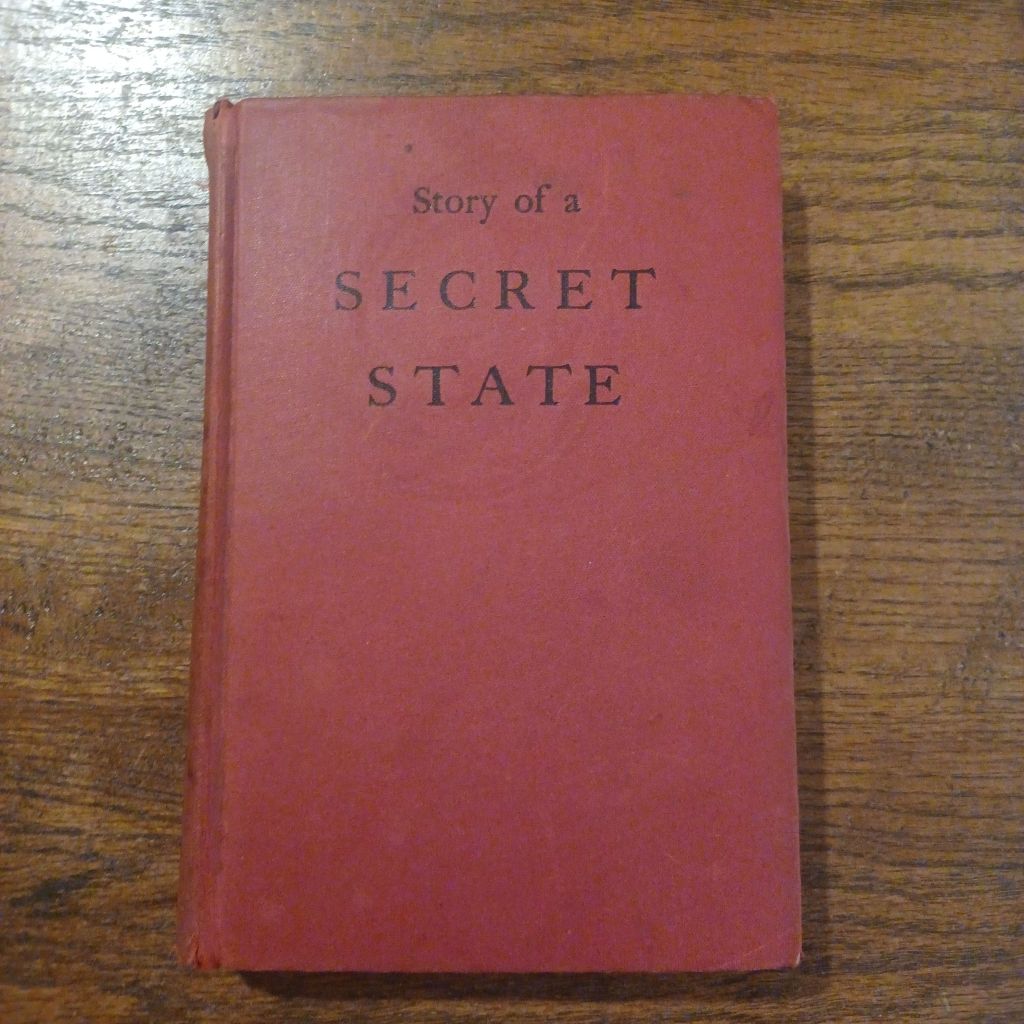
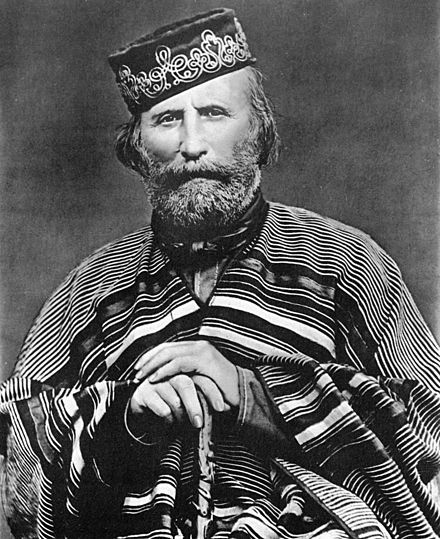
Art is 80

  • Help! I Think My Identity Has Been Stolen.

    March 21st, 2024

    Not really.

    I have printouts of a blog that I have always assumed that I wrote for the year 2005, and then for the years 2009 and 2010, and finally for the first few months of 2011, when they seem to have stopped. Sometime last week, when I finished the book I was reading, I decided my next book would be my 2009 blog. I have now read through about half of it.

    But guess what? I don’t think I wrote it!! Who did?

    It’s true that it was written by someone with my name, by someone who lived (and worked) in Washington DC, by someone whose wife had the same name as mine has. But it’s also true that it was written by a very busy person, who went to the theater a lot, saw many films, read books, went to museums, at out at restaurants. Did all sorts of things. The kind of things that I do now, and probably did much more of in 2009.

    But I don’t remember most of the things or places he was writing about. For this reason, I must conclude that he is not me. But he is someone who shares some of my interests and, not surprisingly, now and then he does write about something that I remember. So, once in a while, we must have been in the same places at the same time.

    Yesterday, for example, I read that he had watched a film called The Diving Bell and the Butterfly, which won the Golden Globe best foreign film award, about a young man who was totally paralyzed by a stroke, except that he could blink one of his eyelids, and that his mind was unaffected by his stroke. It was a unique and frightening story. If I had watched that film, I am sure I would have remembered it.
    He also listed ten restaurants he had recently eaten in, and he rated them. I guess because we live in the same city, I have eaten in most of them, but he ate at a few that I have never set foot in. For example, he ate at Shangri La in Bethesda (he liked it a lot), and he ate at Baldwin Station in Sykesville MD (I am sure that I have never eaten there, and I don’t know that I have ever been in Sykesville MD) where he had fish and chips. Does that sound like me?

    And can you imagine me sitting on the lawn at Strathmore Hall listening to a jazz concert by a Latin group called Calle Sur? I can’t.

    But in fact it’s worse. Some of his entries don’t talk about things he did in 2009, but about memories from his past, when he was much younger. I remember virtually everything he says in these posts. This means, I think, that not only has he stolen my name and so forth to report on his current 2009 escapades, but that he has actually stolen my earlier life. Or to put it another way, I guess, he has stolen my earlier memories.

    I wish I had known about this guy earlier. I would have sent him a Cease and Desist letter, to force him to stop publishing all of this false information about the 2009 me, and to stop publishing true information about my deep past, without first getting my permission.

    It’s all rather disturbing, don’t you think??

  • Coming Apart at the Edges……

    March 20th, 2024

    As they say, we are a country of laws. And Congress creates those laws, the President administers them, and the Supreme Court determines if the Constitution permits them. This puts the Court at the top – the other two branches decide what we as a country will do, but at any time, for any reason they deem appropriate, the Supreme Court can say “no”. Or the converse. The Supreme Court can take something that seems clearly improper and say “yes”.

    And, as we know, our Supreme Court is a big disappointment, but we can’t really do anything about it, because we are a country of laws. And what the Supreme Court says – that is the law.

    As we also know, the Supreme Court is run by a group of individuals who claim to be “originalists”, jurists who look to the Constitution not as a living document to be molded to meet the times, but as a more static document, and their goal is to find and use the “original meaning” of a constitutional provision to determine “yes” or “no” today.

    Now, we know that they may be a bit hypocritical in employing this doctrine. They might use it when it suits their purpose, and not use it when it does not. But that’s for a different day.

    For today, I want to talk a little about how “originalism” and “common sense” have so little in common. If you are a pure originalist, you pay no attention to common sense. You don’t care what the effect of your ruling might be. If your pure originalist analysis tells you that the answer to a question should be “yes”, you go with “yes”, even if you know that the repercussions might be terrible.

    For example, if you believe that the Constitution leaves the question of abortions to the states, the fact that a previous Court has ruled differently is irrelevant, and the fact that you undoubtedly know that reversing that decision will create utter havoc is irrelevant. You can’t use your common sense; that is not your department. In fact, it is no one’s department.

    This then goes to the question of states’ rights versus federal rights – an argument that has been going on since before the Constitution was written and which is evidenced by much that appears purposely unclear within the wording of the Constitution. Over the almost 250 years that this country has been in existence, the pendulum has swung in the favor of federal supremacy. But now, with the Dobbs case (the abortion case) being one example, it is going the other way, and individual states are being given more rights to determine how various matters will be handled within those states, without regard to the rest of the country. Of course, we are one country, with people living in one state and working in another, having a home in one state and perhaps a second home in another, and so forth. Having states decide policies such as reproductive rights on a state by state basis violates common sense. But the originalists don’t care.

    (There are always exceptions – the most obvious being the Court’s ruling against Colorado which will require Colorado to allow Donald Trump’s name to be on its presidential ballot. The Court’s rationale here was not originalism, as much as it was common sense (they said). How can you run a national election and let each state do whatever it wants to do? Of course, states do do what they want to do in virtually all areas involving national elections. Except now in this one area. Why the exception? Could it simply be politics?)

    Yesterday the Court, on a temporary basis it appears, said that Texas can implement it new states-rights immigration law. As I understand it, Texas state and local law enforcement officials can now arrest anyone they deem came into the state from Mexico illegally, hold them in prison pending trial, charge them with a misdemeanor (or if it’s a repeat violation, a felony) and fine or sentence them or return them to Mexico. What the standards will be for determining who to arrest, we don’t know. Whether Mexico will agree to take the immigrants back, is a big question; Mexico says it won’t take them. Whether or not an entrant will have the right to even claim asylum under federal law, we don’t know.

    If Texas is allowed to continue enforcement of this new law, other states will follow and each law will be written and enforced differently. So, the rights of people entering the country will differ depending on where they enter. And we don’t have any real idea as to how this will relate to the rights of federal officials from HHS who, up until now, have enforced our border laws.

    But we do see the precedent that is being created. States having their own immigration and reproductive rights laws will lead to more areas in which the states will declare that they have rights to replace federal laws with their own, or if not replace them, certainly to enforce their own laws alongside the federal officials who are enforcing the country’s own laws. A slippery slope indeed. And soon we will have a 21st century John Calhoun arguing that states have the right to nullify the enforcement of federal laws within their borders, and a Supreme Court who will take its originalist thinking and look at the compromise that we call our Constitution and see it from the eyes of those who believe that we are a nation where the states control, and only call on the feds when they want to.

    As someone on TV says…..”stay tuned”. These are very important issues and you need to stay alert. That’s only common sense.

  • Nadine Gordimer and Her South Africa

    March 19th, 2024

    Nadine Gordimer won the Nobel Prize for Literature in 1991. She was born in and lived in South Africa her entire life. She was Jewish (her father from Lithuania; her mother from London), but apparently not religious. She was actively anti-Apartheid, and a member of the African National Congress. During the Apartheid era, some of her books were banned in South Africa. She was a friend of Nelson Mandela, both before and after his long imprisonment. She died, at age 90, in 2014.

    I have read, I believe, three of her novels. I find them appealing. Clear and to the point. Not fancy. And dealing with important moral and ethical issues. Yes, Apartheid South Africa was very different from segregated America, but they were not unrelated. In both cases, a White political and financial elite were by and large believers in the superiority of their racial makeup, and had no problem putting limits on what non-Whites and especially Blacks in their countries might be able to do. In America, it was a White majority, and in South Africa a White minority. In both America and South Africa, the settlement of the lands involved power and violence. In America, we tended to kid ourselves and not even understand the depth of our segregation policies; in South Africa, everything was right out there in the open. In America, dissent from our racial strictures was permitted; in South Africa, it tended to be shut down. But the basic understandings were often pretty much the same.

    The first of the Gordimer books that I read, some years ago now, is called The Lying Days. It was, I think, her first novel, written when she was about 30. It was the story of a young White girl (a coming of age story) living in a rural town somewhere not far from Johannesburg. She lives in a segregated White society, of course, but as she grows, she begins to meet some other people, not White, and she sees the existence of conditions she hadn’t known about before, she sees the frustration of her non-White friends, and she sees the dangers of coming to their defense. I don’t really remember the story line. I don’t remember if the book had a happy or a sad ending. But I remember the emotions it evoked in me as I read it, for after all, I was someone who also grew up in a totally segregated society and who, until I was about the age of Gordimer’s protagonist, did not even realize it.

    The second novel I read is The House Gun, was published in 1998, when Gordimer was in her 70s. The House Gun is a crime novel, set in South Africa, to be sure, but not dealing with Black/White relations in the post-Apartheid era, but set in a society that is still subject to outbreaks of violence, perhaps left over from that earlier time. The main characters in the book are a long married couple, living a relatively placid existence, who learn one evening as they are watching the TV news, that that there has been a murder. When the phone rings a little later, they learn that their son – a promising young architect – has been arrested for the murder and, a little later, they learn he has confessed.

    They learn their son is bisexual and that before he developed a relationship with his current girlfriend, he had a male lover. And that it was that former male lover whom his son murdered, when he caught him making love on a couch with his current girlfriend. The parents cannot understand how their son could have done this and, to be clear, neither can their son. There will be some sort of trial, and there is the potential for the death penalty.

    Much of the book concerns the trial, and the unraveling of the lives of everyone involved. The reviews were mixed. I remember being engrossed in the story to the very end.

    I have just finished reading my third Gordimer novel, None to Accompany Me, published before The House Gun, in 1994. This book does deal with the politics of South Africa. Mandela has been released from prison, and it is transition time in the country. A constitution is being written. Members of “the Movement” are organizing themselves and trying to figure out what the future South Africa should be.

    The lead character is a lawyer who gave up the private practice of law some time ago and turned to working for a Foundation looking for justice for the country’s Black citizens – land claims, employment issues…..the usual. She is on her second marriage; her first was short lived, this one much longer. But her husband, an artist whose art was not successful and a man who has never quite found his occupational calling, and she are drifting apart, it appears. She is active; he is passive. And then things happen.

    She takes a lover, a sometime lover, a Black man who works also for the Foundation. She works on cases that turn out badly, or at least that become such a confusing web that they will probably never turn out well, she is attacked with a co-worker whom she has been mentoring and he dies of injuries suffered in the attack. Her son (and she does not really know which of her husbands fathered her son) lives in London, is having his own domestic problems and returns to Johannesburg, adding even more complexity to his parents’ relationship.

    In the meantime, there is another couple with whom she has been close. A Black couple. The man has been imprisoned on Robben Island, and expects to be a part of the new South Africa, but he is passed over and it is his wife who is selected to be a leader of the new South Africa. Another complication in a very complex country during a very uncertain time.

    It is all too much for our lawyer – being pulled in too many directions. Her son goes back to London; her husband decides to go with him. She stays, continues her work at the Foundation, sells the house she has lived in for forty (maybe) years, and moves into a small apartment adjoining the house of Black lover, who has not been her lover for sometime. But she has hopes, perhaps, until she realizes that he has moved on with someone else – someone much, much younger than she.

    I don’t think that the three books I have read are among those which are Gordimer’s best known works. I should probably try them. The Guardian listed the five Nadine Gordimer books that you must read. I have read none of them.

  • Three F’s: Film, Food and Food

    March 18th, 2024

    I have never been a fan of violence in film. I try to avoid war films for that reason – there are many that I haven’t seen that you might expect I would have. But some time ago (I actually remember when), I realized that I only disliked watching realistic violence. Give me surrealistic or over-the-top violence and I was fine with it. I realized that watching a Sam Peckinpah film “Straw Dogs”, with Dustin Hoffman, which came out back in 1971, and which I probably watched that long ago. Protecting his sanctuary house from invaders, as I recall, Hoffman was a one man army who destroyed anyone who dared to advance towards his property. Clearly surrealistic. Clearly over the top. I thought it was fun.

    Saturday night, after attending a cousin’s Zoom birthday party, we decided to watch a film. We had cut out a newspaper article a few days before which (like so many we cut out and then ignore) listed the 5 little known films on Netflix that must be streamed. We decided to go with no. 1, titled “I Don’t Feel at Home in This World Anymore” from 2017. The description was a bit intriguing.

    It started off as a film about a young woman whose house was robbed, the article said, and when she found out that the police would do nothing, she decided to track down the thieves herself. Then, the reviewer noted, this simple film turned into a complex thriller. That sounded OK, so we searched it and turned it on.

    Our hero, or anti-hero, was a young nursing assistant who lived by herself in a rented house. She came home one evening to find her house ransacked and her laptop and her grandmother’s silver missing. The police came, took notes, and said “we’ll call you if anything shows up.” Realizing that reliance on the police was useless, she scoured the neighborhood, found an odd loner who was willing to help her (“help” being a relative term), took a plaster cast of a shoe print she found in her back yard, and wondered what to do next.

    She had a tracking device on her phone to tell her where her laptop was, but only when the laptop was turned on. And within a day or so it was. So she and her new accomplice friend tracked the laptop to a house filled with stoners – after the first hint of violence, she learned they were not the burglars, but had bought the laptop at a massively large junk store. They went to the store, found the silver chest and took it, but not without a little more violence.

    While at the store, she recognized the shoe of someone pawning some jewelry as her thief. This started a series of chases and unlikely adventures that ended with five dead people, and her good friend seriously wounded (i.e., seriously enough wounded that he could have only survived in the film). And the event leading to their death was worthy of the late Peckinpah.

    It’s not a great film by any means. And the “thriller” film, turned out to be a “slasher” film. But – as I said – it was so over the top that it was fun.

    And I also have to thank the film for introducing me to my new favorite song. Here is one rendition:

    I did have some more to say today, but I will make it brief. We went to two Asian restaurants last week. One gets and A, and one gets a C.

    The A restaurant, in Adams Morgan, is Izumi, on Columbia Road, a new Japanese restaurant. I had stepped in for a quick sushi lunch about two weeks ago. I think it had just opened then. And we went back for dinner – I had a salmon poke bowl (I know, Hawaiian), and Edie had a delicious (her word) avocado, shredded cabbage and sesame sauce dish and a raw flounder dish that had a strange name. We have decided it is our official Japanese restaurant in Adams Morgan and think everyone should try it. As of this morning, on Google, it has 16 reviews. Its average review: 5.0.

    The other restaurant is Malaysian and is in Columbia Heights on 11th Street NW. It’s called Makan and has been there for a while and received good reviews. We went for brunch (having seen it was good for brunch), but the menu looked like it was the same menu they use for lunch and for dinner. We had kare dalca and nasi ganja.

    Makan is on a three block part of 11th street that is filled with restaurants. Most, on a beautiful weekend day, were doing a thriving business. There were only two other tables filled at Makan when we arrived, and it was empty when we left. The food was all right, not exceptional, but the atmosphere was pretty depressing. Not only because of the sparse crowd, but because their large staff was so sullen. I looked carefully. During the hour we were there, I saw no one smile or laugh. At all. I’d stay away from Makan, even if you are attempted to try an unusual (for here) cuisine.

    Now, time to start my day

  • Remembrances of Things Past

    March 17th, 2024

    2009 is now 15 years ago. (I know you already knew that.) And I had another blog in 2009. I thought I would look at the week starting March 16, 2009, and see what I was thinking about, or what was going on in my life. Here goes:

    (1) “The Civil War: A Musical Tribute” was the name of a show playing at Ford’s Theater. My reaction was “Am I the only one who thinks this name is both weird and offensive?” [March 16]

    (2) I finished reading a 2003 book The Flying Camel, featuring the stories of 18 Jewish women who grew up in Muslim countries (Iran, Iraq, Libya, Tunisia and Morocco), and who told of their experiences growing up in these countries and then how their families were treated if they moved to Israel. I found the stories hair-raising and credible. And I thought everyone should find and read the book. [March 18]

    (3) This one I have to quote in full: “My passwords and my user ids for my office email account, my two gmail accounts, my yahoo account, my bank accounts, my two blog accounts, my facebook account, my twitter account, my Delicious account [what was that?], my Ebay account, my PayPal account, my Smithsonian account, my Dinnerbroker account [huh?], my National Law Journal account, My Washington Post account, my New York Times account, My Ancestry account, my Flickr account, my Snapfish account, my NAHMA account, my NLHA account, my Pacer account [huh?], my Hilton account, my Mariott account, my American Airlines account, my Delta account, my Southwest account, my AARP account, my HDR account, my Postini account [huh], my Kodak account, my Ritzpix account, my Best Western account, my Lexis account, Allregs account, my Orbitz account, my Expedia account, my Travelocity account, my Hotels.com account, my Hertz account, my Amtrak account, my Northwest Airlines account, my Hotwire account, my Consumer Reports account, my Comsumer Checklist account, my Amazon account, my Borders Books account, as well as the many other accounts that I don’t even remember I have.” [March 19]

    (4) I seem to have been very offended that companies were entering bankruptcy, and paying executives to remain with the company during the bankruptcy process by paying them excessive amounts of compensation, which I thought ridiculous and unfair to creditors. I was especially perturbed about the AIG bankruptcy, where apparently some executives were paid in excess of a million dollars. I have not thought about this outrage in the last 15 years. My guess is it remains a problem. Or not. [March 22]

    (5) A summation post, talking about what happened the preceding week. First, our cat was diagnosed with an overactive thyroid, which required liquid medicines twice a day, something our cat didn’t seem to appreciate. Second, dinner at Cafe Deluxe in Bethesda [now gone] which was very good, Saigon Bistro on P Street [now gone] which was not very good, and Grenville Moore’s on H Street NE [still there] which was “as always, excellent”. Third, theater: at the Forum in Silver Spring [now gone] I saw an end of civilization play called “Marisol” [don’t remember it at all]. I appreciated the acting, but not so much the plot, which I describe on the blog, and compare it unfavorably with Thornton Wilder’s By the Skin of Our Teeth. By the way, I thought the world, in 2009, was barely hanging on. Didn’t even imagine what 2024 would feel like. Fourth, three weekend lectures at Adas Israel by Rabbi/Professor Max Tiktin [may his memory be for a blessing], on (a) Hebrew poetry, and especially the poetry of Yehuda Amachai , (b) Hebrew literature and its role in Israeli society, and (c) Yiddish literature in Warsaw between the wars. Sorry that I remember so little of it.

    (6) Books. Reading the volume of Viktor Klemperer’s diary covering the years 1942-1945 in Dresden, a few short stories, and made an attempt (not successful) to read Nechama Tec’s Defiance, about the Bielski resistance.

    (7) Cousins. I had pizza at Pete’s in Columbia Heights with my newly found second cousin. [Now this is a mystery – who could that have even been?]

    That’s it. What lessons do I draw from that? First, I was more active at 66 than I am at 81, it appears. And second, memory can only take you so far. A blog is important. Next life, I am going to start blogging as soon as I can write and operate a computer, and I am going to use it not for those who will read it next week, but for myself to read when I am old and doddering.

  • Haiti Today and in 1977

    March 16th, 2024

    So what could be worse than Gaza in 2024? Maybe Haiti. And Haiti, for reasons too complicated to discuss here, has never been in great shape. But I will say this – Haiti in 1977 and Haiti in 2024 were much different places.
    Haiti today is apparently controlled by rival gangs and has a non-functional government. It is overcrowded and food supplies are limited. Tires burn in the center of streets. Hospitals have been bombed or attacked. No place is safe.

    Haiti in 1977 were calm, calm, calm. It was under the dictatorship of the man known as Baby Doc Duvalier (the son, not surprisingly of another man known as Papa Doc), and it was one of the safest places in the world. It was said that a traveler could leave his suitcase on a busy street corner and come back a week later and it would still be there, untouched. In part this was because Baby Doc ran, as they say, a very tight ship, as did his father, so that the population was terrorized by the Ton Ton Macoute, a large group of thugs who kept order for the Duvaliers. (I read that Ton Ton Macoute was a figure from Haitian mythology, who kidnapped young children, carried them away in a gunny sack, killed them, and at them for breakfast.)

    Baby Doc took over from his father in 1971 and remained in power for 15 years. Like his father, he not only kept Haiti’s population terrorized, but he also robbed the country blind. When he was overthrown in 1986, who moved to Miami, with almost a billion dollars, and lived almost another 30 years. A billion dollars in 1986 would be almost three billion today.

    The reason I compare today’s Haiti with Haiti in 1977 is that in February 1977, we went to Haiti for our honeymoon. It was a compromise location – Edie wanted to go somewhere warm with a beach, and I wanted to go somewhere interesting. It was a good compromise. (By the way, Bill and Hillary Clinton went to Haiti for their honeymoon the year before.)

    We flew from Miami to Port-au-Prince. It was a sprawling, poor city, with a lot of people, all dressed in bright colors. Again, it felt very safe. And it certainly was not overrun with tourists. We stayed in the Hotel Oloffson, in the center of the city, a 19th century wooden mansion that had been built as as the home of a former president of the country and turned into a hotel in the 1930s. It is still operating (as much as anything is operating) today. It was very atmospheric, had a good restaurant, is centrally located. It was known to readers of Graham Greene as the site of his novel, The Comedians, and it was clearly the place to stay. As I recall, the only downside was that our room looked over a patio that adjoined a ball room, or party room, and that one night we were entertained by a wedding band, entertained until after 3 a.m.

    I don’t remember all the sights we saw in Port-au-Prince. I remember Baby Doc’s palace, I remember the market (many items sculpted out of rare mahogany), and I remember traveling to the suburb of Petionville, where the Haitian elite lived. And I remember that the Haitian elite lived very well, as compared to the Haitian masses, and that Petionville, located in the mountains east of the city, also had a temperature which was much, much cooler and more pleasant than the hot, crowded city.

    One of the characteristics of being White travelers in Port-au-Prince in 1977, is that you were hounded by young boys, probably 10-12, who wanted to sell you things, or wanted candy or cigarettes. We met one charming young fella, who clearly looked upon us as susceptible prey and offered to show us around. We let him do that, although I don’t remember anything about the day. But the next day he reappeared with a gift for us (a small painting that he said his brother had done, and which we still have, although we don’t have it hanging up – the quality was not the best), and was ready (to our surprise) to stay with us the next day. (By the way, I am not sure how we communicated with him – pigeon English, I expect.)

    He was not at all concerned when we told him that we weren’t going to wander around the city that day, but planned to take a bus to the town of Jacmel, south of Port-au-Prince, which we had been told was worth visiting. No problem, our young friend said, he knew Jacmel backwards and forwards and would be our guide. OK, why not?

    We went to the bus depot and got on a colorfully painted bus, with luggage on the roof, along with animals, and overfilled with people, for what I recall was about an hour or two trip south. When we got to Jacmel, we learned, again not surprisingly, that our friend had never been there before, and that he knew less about Jacmel than we did. Jacmel was the home of an American expert on Haitian art, Seldon Rodman, and we decided to find him. We found his house, but no one was at home. What we couldn’t find was a place to get lunch. We took the bus back – I remember it being less colorful and less crowded.

    From Port-au-Price, we flew north to Cap Haitien, the original capital of the country, and where we could visit the palace of Henri Christophe, one of the first kings of Haiti. The palace called Sans Souci, is located outside of the town, and I remember we took a bus to the entrance of the grounds, where you had the option of walking to the palace, or riding on a donkey. We did one or other.

    Getting to Cap Haitien was an experience. We flew, and the plane seated eight passengers and had room for a pilot and copilot. There was no copilot, however, and there were eight passengers. The pilot was a young, blond, very White man; maybe he was 20. I am sure the FAA had not inspected the plane or certified him. He told Edie that she could be his copilot, so she got a front row seat. The flight was fascinating. We flew very low, so we could see the topography (largely mountainous) and the large number of rural Haitians (could almost see their faces) as we took the relatively short flight.

    We stayed in a hotel that overlooked Cap Haitien and had an absolutely first class restaurant, and a nice swimming pool. I am sure the hotel (it was a small hotel) is no longer there. The restaurant had one dish that was so good that Edie made it again and again after we got home. Neither of us now has any idea what it was.

    From Cap Haitien we stayed at a small beach resort on the west coast that was simple, simple, simple. I remember sand, pine trees, and picnic tables and that was it. It was fine for us – but nothing to recommend.

    Of course, in 1977, you traveled differently from today. You took American Express Travelers checks with you, and when you needed to buy something, you used credit cards. But there weren’t ATMs – you couldn’t go to the bank and get cash.

    This led to two problems. One – we found a painting we really liked – but we couldn’t buy it and bring it home, because credit cards were no use in Haiti, you needed cash. Who knew? We certainly didn’t. Two – we had one travelers check left, and I went to a bank to cash it. The bank refused to cash it, saying that they didn’t think my signature matched the signature on the check. We spent the last cash we had on a taxi to the airport – we didn’t have money for the “exit fee”. It looked like we were going to live the rest of our lives in Haiti, until another American, a man from Lubbock Texas who ran a television repair shop there, took pity on us and gave me $25 in exchange for the remaining travelers check. That’s the only reason we live in the United States today.

    While we couldn’t bring back the painting we wanted, we have acquired a few Haitian paintings over the years.

  • Thing One and Thing Two.

    March 15th, 2024

    Our neighborhood community-owned theater, the Avalon, has a special showing virtually every Wednesday evening of a foreign film not normally available for view in the United States at the time. This Wednesday night we went to see a Czech (and Slovak and German and Ukrainian) film entitled “Victim”, a 2022 film which may start to receive wider distribution. So far, it has been shown in film festivals, where it has been nominated for, and won, a number of prizes. I thought it worth mentioning for reasons that I hope will become apparent.

    The victim of “Victim” is a 13 year old boy, a talented gymnast, who lives with his single mother (the father has long abandoned the family) in the equivalence of public housing in a mid-sized town in the Czech Republic. But they are Ukrainian, not Czech, and the mother (whose name is Irina) is in the arduous process of trying to get Czech citizenship (which, I assume, her minor son would also get if she does).

    Irina has to return to Ukraine to gather some material she needs for her citizenship application and leaves her son alone, with a friend assuring her that she would check in on him to make sure his is all right. Sadly, she learns that, late at night, her son has been seriously beaten up in the hallway of their apartment building, and has been taken to the local hospital where he injuries require immediate surgery. She leaves Ukraine and gets back to the Czech Republic as quickly as she can.

    There seem to be a large number of Ukrainian immigrants around the town, and – except that they are all struggling to restart their lives – there does not appear to be any major prejudice against them. But there is tremendous prejudice against another prevalent group – the Roma, the gypsies. And as there are many Roma families in the complex in which Irina and her son (Igor) live, it seems to be, in everyone’s mind, clear that the attack on Igor could only have been done by wild, uncontrollable Roma teenagers, including one who lives in the apartment directly above Irina. And, I should add, that the anti-Roma prejudice seems to be as strong among the Ukrainian immigrants as among the ethnic Czechs.

    Igor himself says he cannot identify the boys who beat him up. He only knows that there were three of them. He also says (although he seems not to be believed) that his upstairs neighbor was not one of them. The authorities reach their own conclusions and arrest and detained the Roma neighbor, and will presumably be charging him with participating in the crime.

    The local, and maybe national, press pick up the story and deepen the feelings against the Roma in the town. A young man, probably in his 20s, also a gymnast, decides there should be a rally and a march to support Igor and his mother, to criticize the local government for failing to act against the Roma. The mayor, afraid of the rally, shows her own support for Irina and Igor, giving them an opportunity to move to a newly constructed building in a different neighborhood and bestowing a cash award on them.

    Then, one day, Igor, still recuperating in the hospital, tells his mother that he wasn’t beaten up at all, that he was showing off for a girl in his class, climbing on the upstairs railing, and that he slipped and fell. No Roma were involved. No one else was involved.

    His mother is beyond shocked. Here she had been so public with her innocent son’s predicament, she had spoken out not so much against the Roma, but for the police to find the three boys who assaulted her son. She had accepted money from the city and the mayor, she had been meeting with the young man organizing the rally (although she was ambiguous about it). She came across as a perfect mother. And what should she do now?

    The Czech actress who plays the mother (Vita Smachelyuk) does a wonderful job in an emotionally complicated role. The film deals with a number of subjects: the strains on immigrants, the prejudice against certain groups of community members, how to deal with a major and unexpected family tragedy, and how to deal with a lie that has taken on a life of its own.

    It’s well worth watching. You just have to find it.

    Let’s change the subject.

    This is a painting by Jean Pierre Cassigneul, a living French artist in his late eighties. We have a poster with another of his paintings in our guest room bath. I find this painting very appealing.

    But why? It is totally flat and two dimensional. The woman, the water, the far shore. More like a collage than like a painting with depth. And look at the sail boat. It’s much too small. The woman’s hat – what are those blurry things on top of it? And why is the rim color the same as that of the background hill? And look at her nose. Does anyone have a nose that long and thin? And look at that left arm – the bend is not at the wrist, but somewhere on her forearm.

    These are all flaws, aren’t they? Flaws that I identify.

    So why do I like it? What makes art art anyway?

  • It Was A Beautiful Day in the Neighborhood….

    March 14th, 2024

    I really haven’t ridden the Washington Metro very much since the end of the COVID pandemic. Maybe once a month or so, no more. I used to ride it considerably more often.

    But yesterday, I decided to take the Metro somewhere. I am not being more specific than that because, when I got on the Metro at Van Ness, I didn’t know where I was going to take it. It was a beautiful day, and I was out for a walk, and decided to walk in someone else’s neighborhood rather than my own for a change.

    So I walked to the Van Ness station (about 2/3 of a mile from the house, maybe a little closer), and was very excited to see a Red Line train entering the station just about the same time that I was entering, and I got onto the train. And I decided to go all the way Union Station.

    Then it hit me. This looked like old times. Over the past year or so, I have always felt a bit lonely on the Metro. The cars are fairly large (depending on the vintage of the car, they are built to hold 110-130 people each), and I have found myself more likely with only 5 or 6 others, nowhere near capacity. But yesterday…..wow! The car was, if not full, filled with people. Most seats taken, several people standing. Just like old times.

    The car added and lost riders as it went station to station. Cleveland Park, Woodley-Zoo, Dupont Circle, Farragut North, Metro Center, Gallery Place, Judiciary Square. Only one more stop to go. But at Judiciary, the doors stayed open for what was clearly too long of a time. And then the voice of the driver came over the loudspeaker. “This car is out of service. This car is out of service. All passengers disembark.”

    Yes, it was exactly like old times.

    After I finished roaming the streets a few hours later, I got on a bus to come up Connecticut Avenue, the L2 bus. I got on at Connecticut and M, took out my Senior SmarTrip card, and touched it to the sensor, expecting the normal “buzzzzz”. No sound. I tried it again, but the bus driver said to me: “It’s not working. Just get on.” Ah, technology.

    This reminded me of old times, too, but different old times. There I was in 1970-something in Naples, planning to take a short train ride and spend the day in Pompeii. Going to the station, I learned that all the ticket takers were on strike. What to do? I asked someone at the station if they knew how I could get to Pompeii. “Take the train”, he said, and pointed me to a particular track. “But I can’t get a ticket; they’re on strike”, I said. He looked at me like I was a little confused. “Only the ticket sellers are on strike”, he said, “the trains are running. No one else is on strike”. And so I went to Pompeii.

    Oh, well for those of you wondering what I did yesterday when the train was evacuated at Judiciary Square. I left the Metro, rather than wait for the next one, and wandered on foot to Union Station – a moderately interesting walk in an area I don’t normally wander through – and had a Harvest Salad at the Franklin Grill, a carryout with outside tables in the office building where both NBC and CNN have their Washington offices. (You know, where the CNN anchors sit with windows overlooking the Capitol.)

    The salad was fine and I realized how very American these various salads with chicken are. Are they served anywhere else? Can I get a Cobb Salad in Naples? I was excited to be at the Franklin Grill, because I expected that any minute Wolf Blitzer or Lester Holt or, yes, Kaitlan Collins would walk in, but – alas – there must be an executive dining room.

    From there, I stopped in the United States Postal Museum, a Smithsonian Museum right next to Union Station. I hadn’t been there in a while – no big changes. A number of visitors.

    I like to learn things at museums. So I looked at the exhibit on how stamps are printed. One of the examples (they displayed a full page block) was described as follows: “The vignette was printed by offset and the frame by intaglio. In offset printing, an aluminum plate is photographically treated so that the positive image retains ink. The plate transfers the image to a rubber blanket roll, which in turn transfers the design to paper for the finished product. Four colors (plus beige) were printed individually to achieve the final vignette image.”

    One of the few times I have read an explanation and felt both dumber and humbled when I was done.

  • Oh, My……

    March 13th, 2024

    It would seem that yesterday was not a good day for the Trump campaign. But time will tell.

    The general story is that Republicans just can’t keep to the truth.

    (1) Take Special Counsel Robert Hur’s testimony, and the discrepancies between the full transcript of his interview with Joe Biden and his report of his findings. Hur testified that he saw Biden as an elderly man with a faulty memory, and in his report gave as his major example the fact that Biden couldn’t remember when his son Beau died. This created, as Eric Swalwell said, a “firestorm”, leading to Republicans claiming again and again that Joe Biden was mentally unequipped to be President and that his mind would weaken further over the years of his second term. It led to denials, of course, from the Democrats, who tried to explain that Biden was very distracted by the Hamas attack on Israel, which had taken place a day or so before.

    But it turns out that this denial rationale was unnecessary. It turns out that Hur reported something that never happened. The transcipt (as opposed to the official report) showed that Hur asked Biden if he remembered the month that Beau died, and Biden responded immediately “Oh, God. May 30.”

    This important Special Counsel report was just wrong on this very important fact. Period. Well, maybe not Period. How could this have happened? How/why did Hur make this mistake? And, once he did, knowing how it would end up being the focus of the report, how could the Department of Justice simply released the entire report without, apparently, doing any checking?

    And, just to add to this, in the transcript, when talking about where various files were stored, Hur told Biden that he had a photographic memory of his house. This mental complement, of course, did not make it into the report.

    Robert Hur is a registered Republican, and former Trump appointee. Although he swore again and again that politics played no role in his investigation or report, was he being deceptive to the public or to himself?

    (2) And this came less than a week after Alabama Senator Katie Britt, in her response to President Biden’s State of the Union Address, attacked the Biden immigration policy by giving the example of a 12 year old girl, who was raped and sold for sex on the American side of the Mexican border by someone connected to a Mexican drug cartel, and, by implication during the Biden administration.

    The problem with this is that this event happened during the administration of George W. Bush, that it occurred in Mexico far from the American border and having nothing to do with this country, and that it had absolutely nothing to do with a Mexican cartel, but was rather the action of an apparently independent pimp.

    Now, I don’t know who prepared Britt’s speech, whether she did it or someone else. But again, minimal fact checking would have helped. Or – if it wasn’t a question of simple carelessness – are we looking at a second attempt to deceive the public.

    As Joy Reid said last night – the Democrats play by the Marquis of Queensbury rules, and the Republicans don’t.

    Now, when I Googled the Marquis of Queensbury, this painting appeared. I could have simply added it to this post and told you this was the Marquis of Queensbury. But, no, I am not a Republican, so I looked further and discovered, lo and behold, that this is a painting of the first Marquis of Montrose. Well, Bob’s my uncle.

    Google apparently made this “error” because both the Marquis of Montrose and the commoner who developed the Marquis of Queensbury rules (first published by Queensbury) were James Grahams. And there you have it.

    So, Republicans, take note. It’s not that hard.

  • Philip Graham, Kaitlan Collins, Impeachment, and a Cup of Coffee

    March 12th, 2024

    The number of readers of this blog each day varies. I don’t usually focus on the differences, but I was surprised that there were relatively few readers yesterday when I wrote about Alan Dershowitz and impeachment. I thought it very interesting. Maybe you want to look at it today.

    I started today with a longish walk to the bank and the post office and am now having a cup of coffee near Chevy Chase Circle, about 3000 steps from my house.

    And I am thinking about Kaitlin Collins. In case you don’t know who she is, she’s a TV journalist, who anchors the 9 p.m. news show on CNN (Eastern Time), and does a remarkably good job at it. Why I am thinking about her is that she has a major position with a major cable news outlet, interviewing some of the world’s most newsworthy individuals, including former President Trump and his long time aide, Brian Butler, and she is only 31 years old.

    She has been with CNN since 2021, as their White House correspondent and co-anchor of their morning show. How do you get in that position at such a young age? She comes from a small town in Alabama and has only an undergraduate degree from the University of Alabama. I find it remarkable that she was promoted so quickly. There must be a lesson here that others can learn from.

    At any rate, she does a very good job, and this was proven last night through her “exclusive” interview with Brian Butler, Trump Employee #5, who has apparently given extraordinary testimony about (1) removing classified documents from Mar-a-Lago the day the FBI was coming to town, and (2) making sure that surveillance cameras were turned off in the rooms where the boxes were stored. Damning testimony, it seems. One more nail in what will be hopefully Trump’s political coffin.

    But let’s get back to my cup of coffee this morning. The cafe is not crowded, and an elderly man, who looks like he may be sleeping on the street (of course, I may have looked that way, too) steps in, walks up to the counter, orders a ham and cheese something and a bottle of water and sits down near me. As he bit into the sandwich, I heard him mutter to himself: “This bread is hard. It’s not American bread. It’s French bread. I’m not French.”

    There was another friend in the cafe, and he and I had been talking from our two tables. The man eating ham and cheese had overheard a little of that and, after my friend left, began talking to me.

    “Here we go”, I said to myself. Little did I know that I was about to enter a lengthy conversation about the history of the Washington Post. And a fascinating conversation it was with an individual who worked as a Post reporter for about 5 years during the 1970s, and who has apparently had a rough time after that time. But his knowledge of Post history was remarkable. We spoke about Eugene Meyer and Katharine and Philip Graham and Ben Bradlee and William Raspberry, and others. It was an interesting conversation, filled (on his part) with details, and dates, and connections, including thoughtful points on the role of Black reporters during the time after the death of Martin Luther King, Jr and the riots in DC, and the Watergate scandal and the Nixon resignation.

    And then we got into conspiracy theory. It is my friend’s belief that it is possible that Philip Graham didn’t commit suicide, but that his wife Katharine Graham murdered him. Whoa!!

    Here is his theory. Eugene Meyer gave control of the Post to his son-in-law Philip Graham, with whom he was very close, in part because if he had given control to Katharine, it would have meant that Philip would have been working for Katharine, and he had a strong feeling that a husband should never work for a wife. Then, after Eugene Meyer left the Post and died, the marital relationship between Katharine and Philip became very strained. Philip then found a new love (my friend named her, but I don’t remember what he said her name was) and decided to leave Katharine. As this was going on, Philip was having mental or emotional problems and entered a mental health facility known as Chestnut Lodge in Rockville, Maryland. At some point, Katharine took Philip out of Chestnut Lodge and drove him to one of their homes. That is where Philip “committed suicide”.

    I am not commenting on the accuracy of this theory. I would assume it is wrong. But the conversation I had this morning? That was fascinating.

  • Peach Mint – More Than A Possible Baskin-Robbins Flavor

    March 11th, 2024

    When did people start talking about an ice cream flavor called Peach Mint? It was either the first Trump impeachment, or maybe it was the Clinton peach mint. I am not sure. In any event……

    As I said yesterday, I unexpectedly picked up and read a 2018 book by retired Harvard Law Professor Alan Dershowitz, titled The Case Against Impeaching Trump. As you can tell from the publication date (if you are smarter than I was), when the book was published, the first impeachment of Trump was under discussion, but had not yet been accomplished, so this is not an analysis of “what happened”, but a warning of what should not be happening. And, by the way, I decided to read this book not to learn more about the Trump impeachment, but about the impeachment of Alejandro Mayorkas, Biden’s Homeland Security Secretary, and the potential impeachment of Biden himself.

    Dershowtiz describes himself as follows: a civil libertarian, a liberal, one who does not like Donald Trump, one who thinks that constitutional questions should not be decided on a partisan basis, one who was a strong supporter of both Barack Obama and Hillary Clinton. He prides himself on his consistency (over a 50 year period) looking at the question of impeachment. He is a former Board member of the ACLU, and believes that the ACLU has changed from an organization dedicated to civil liberties, to one knee-jerk supporting Democratic candidates, and he abhors the change. He is also saddened, he says, that so many friends have turned against him because of his nonpartisan views on impeachment and other constitutional issues, and time and again he contrasts his views with those of his fellow faculty friend, Lawrence Tribe (whom you can see often on MSNBC).

    Dershowitz’s views are straightforward. The Constitution gives the House the right to impeach someone who has committed high crimes and misdemeanors, and the only high crimes mentioned are treason and bribery. He says that these are limitations written into the constitution and cannot be expanded, and although what specific crimes may be high or may be misdemeanors, you can’t turn actions that are not crimes into crimes for the purpose of impeachment. He says that those legal scholars who think that you can, who take a more expansionist view of impeachment, are wrong, even though he concedes they may be in the majority.

    Specifically, he says that you cannot impeach a federal officer (President or otherwise) for making bad policy decisions, or for performing their job poorly. And he says you cannot impeach someone for acting within their constitutional authority, no matter how dumb an act they may undertake, or how harmful.

    For example, he says that there is no crime in a presidential campaign colluding with a foreign government, as dangerous and unpatriotic as it may be. There is a crime, he says, in a foreign government making financial contributions to a campaign, but not to a campaign simply working with a foreign government, or even pressuring a foreign government, to dig up dirt on an opponent (as Trump did with Ukraine).

    Taking the opposite position is, in his view, simply putting politics over the Constitution. And he cites various authorities who say exactly this – that impeachment is a political action, and whatever the politicians in the House decide to use as the basis for impeachment is all right. Dershowitz argues strongly against this.

    Therefore, I am sure he would conclude that the impeachment of Mayorkas was totally improper, and he would say that he would reach this conclusion not because of political considerations, but because of constitutional considerations. Now, I have not heard Dershowitz say anything about Mayorkas (although I bet he has), but I have wondered about the Mayorkas impeachemnt, and about what the Senate is going to do about an impeachment trial. My thought was that the House impeached Mayorkas strictly on a partisan basis, not alleging any crime that Mayorkas committed (much less one that might reach constitutional levels). I think that the Senate can just ignore the impeachment, and not hold any trial whatsoever. Why have a trial on an impeachment if you believe the impeachment is not a valid impeachment? By the way, I haven’t heard anyone suggest this, although clearly the Senate is not moving ahead very quickly (or at all?).

    Finally, I must say that this book (which I am sure was rushed to print) is a bit deceptive. The entire book is only 146 pages long, and the essay on impeachment (in spite of the book’s title) is only 28 pages long. The remainder of the book is filled with short essays that Dershowitz has had published in various places over several years, dealing with other constitutional/political questions.

    These include (1) the impossibility of judging a president’s “corrupt intentions”, (2) the built-in conflict of interest having an Attorney General whose tasks include both being the head of federal criminal prosecutions and the administration’s top lawyer (he says that in most countries, the prosecution job is a separate one, totally independent of politics), (3) the phenomena of jury shopping (the example being Robert Mueller’s decision to impanel a grand jury in DC, in addition to the one already impaneled in Virginia), (4) the dangers of raiding lawyers’ offices (thinking specifically of Michael Cohen, who had not yet “flipped”) and the potential withering of the attorney-client privilege, which Dershowitz believes should be strengthened), and (5) the unknown question of whether a president can pardon himself. He condemns Trump for his comments after the Charlottesville riots, and he believes that the appointment of a Special Counsel to look at the Trump/Russia connection was incorrect and that it would have been more properly the job of an independent investigatory commission, not a prosecutor.

    And as to Trump’s claim of complete presidential immunity (obviously not made at the time the book was written), I believe he would laugh it off completely, and would look at the issue the same way he looks at impeachment. If the President is acting within his capacity as president, he is immune from prosecution in spite of making outrageous or dangerous decisions or having “corrupt intent”. On the other hand, if the President is breaking the law with regard to an action not part of his presidential duties, he is – like anyone else – subject to the law. I don’t think the issue of whether a President could be prosecuted while in office was covered in the book, and I’d be interested in how Dershowitz would respond to that possibility.

    So this little book turned out to be a gold mine of thoughts on the Constitution and the Presidency. And – as I said – all in 144 pages.

  • Where Has The Time Gone?

    March 10th, 2024

    Yesterday, I started looking at a book I never thought I would ever even think of reading. It’s Alan Dershowitz’s The Case Against Impeaching Trump. Why, you ask, would I read a book about impeaching Trump who, at least for now, is not someone in public office? And, besides that, Trump has already been impeached twice and it hasn’t seemed to make a difference. And even beside that, Alan Dershowitz has sure said some weird things over the past few years, hasn’t he?

    But I picked it up not so much to read about Trump, but rather to think about the recent impeachments of Homeland Security Secretary Alejandro Mayorkas, and the possible impeachment of Joe Biden. I thought I should know what Dershowitz thought about those (I haven’t heard him speak to the matters), and to figure out what I think about them. (Well, I guess I already know that.)

    But, even though it’s a very short book, and I wasn’t going to read it word for word (at least I didn’t think I would), I didn’t finish it yesterday. Yes, where has the time gone? I feel like I lost…….at least an hour or so.

    So…..tomorrow (I hope) the subject will be impeachment. Today, the subject will be…….the Donald Trump rally in Rome Georgia. We actually watched it on Newsmax.

    The rally was packed, he said, overfilling the biggest room available in Rome, and there are thousands, yes thousands, of people waiting outside. And the fifteen minute ride from the airport? More people than I have ever seen en route to anywhere before. (But the fake media won’t print that.)

    I looked up Rome, a city of about 38,000 and the county seat of Floyd County, Georgia, just about an hour or so northwest of Atlanta. Floyd County voted 70% for Trump in the 2020 election, so it is surely friendly country. It is also Marjorie Taylor Greene country – the heart of Georgia’s 14th Congressional District. So, it’s a good place to start your “official” as they call it presidential campaign.

    There didn’t seem to be a lot of hoopla. Trump was, as usual, quite late in taking the stage, but once he took it, he surely was not going to give it up prematurely – he spoke for about two hours, maybe a little less, maybe a little more and, no surprise, he really didn’t say anything new. Part of his speech was scripted (he had two teleprompters), and part was ad lib. You can guess what parts.

    The main points of the speech were clear. Joe Biden (he used his full name “Crooked Joe Biden”) is incompetent, cognitively impaired, dumb, a criminal, and by far the worst president the United States has ever had. The crowd seemed to agree.

    And to prove it, just look at all the troubles we have in this world – and there are many. Each and every one of them turns out to be Crooked Joe’s fault. I hadn’t quite understood that, but now that it has been explained (well, not really explained), it is clear to me. Had Donald J. been reelected three years ago, the world would be in a different position. Putin would not have attacked Ukraine (he wouldn’t have dared), and Hamas would not have even thought about attacking Israel (who put that thought into their heads? obviously Crooked Joe). And clearly no one would mess with us…..because they know what Trump would do to them. They know it so well that they couldn’t even imagine it, in fact.

    And what about these criminal and civil cases he is involved with? They are, each and everyone of them not only criminal in and of themselves, but they are each directed by and coordinated by the White House. Did you know that? And the judges and the opposing lawyers – corrupt is too mild a word for reach and every one of them. And you know how you can prove this? It’s easy. Just remember that “I have not done one thing wrong. Everything I have done is perfect”. See? Easy. And, by the way, he still has no idea who E. Jean Carroll even is.

    And the border? Well, we have gone from the absolutely safest more secure border in world history to the most open and dangerous border that humanity has ever seen. Trump, if elected, is going to shut down the border and to go after everyone illegal in the United States and send them on their way. And, yes, they are “illegal” – just because they have been allowed to stay in the country pending proceedings doesn’t make them just “undocumented”; they are and always will be illegal.

    And why did Crooked Joe let in that guy who killed that Georgia student whose name Biden cannot even pronounce? Yes, that too, seems to have been a personal decision of our terribly bad (worst in the world) so-called president.

    A digression: This guy and his two brothers really are bad news, and were allowed to stay only because, it seems, the border officials are so overworked, or because mistakes were made. Can’t deny that. They should not be here.

    But you see where I am going with this. It was an awful speech and the crowd seemed to eat it up. Yes, we have trouble. Right here in River City.

    Another digression: Rome GA is in fact on three rivers – the Coosa, the Etowah and the Oostanaula. How would you do if that were the Final Jeopardy question?

    Last thing: at the end of the speech, Trump, who had been in deep ad-lib mode, went back to the teleprompter and rapidly read off everything wrong with Biden. It was a very impressive and long list. I would like to have a transcript, because – if you are directing the Biden campaign – in fact you need an answer for each and everything on the list.

    OK, and remember: Tomorrow impeachment.

  • And Then There Were Ten (A Saturday Digression)

    March 9th, 2024

    Last night we decided to watch a film, but didn’t have any idea what we wanted to watch. (Yes, of course we have a list; and, no, we never consult it.)

    Knowing that looking either on On Demand or on Netflix randomly turns out to be frustrating at best, I went to YouTube, which of course has more movies available than have ever been made. But YouTube being YouTube, it gives you random recommendations, and we took the first one on my YouTube home page – “The Tenth Man”.

    It turns out that “The Tenth Man” is the title of at least three films and a play and a novel. All proved relatively successful and convinced me that if I ever write a novel, write or produce a play, or write or direct a film, I am going to call my creation “The Tenth Man”. It can’t fail.

    Last night’s “The Tenth Man” was a film produced for British TV in 1988 based on Graham Greene’s novel of the same name, published three years earlier. I haven’t read the book, but guess (based on the mini-reviews on Goodreads) that it’s a pretty good book. And of course, I don’t know how close the film came to the book, but my guess is that was pretty close. And we enjoyed the film, even though we thought the ending could have been better. (I am not going to tell you about the ending.)

    So what is this film about? It’s 1941 or so in German occupied Paris, and a number of men are randomly swept off the street and herded into a large prison cell, one of whom being a totally non-political and seemingly harmless lawyer, who turns out to be Sir Anthony Hopkins (who knew?). An officious young, tall and thin German officer walks in and states that one of every ten men in the cell (there are about 30 who have been arrested) is going to be killed to show the Parisians something or other, or to keep them from doing something or other. And, the prisoners themselves have to choose who the three will be. “We don’t care who you choose”, say the German.

    They draw lots, and Anthony Hopkins is picked to be one of the three to be killed, but because he is both wealthy (he inherited his money – his law practice is not much to speak about) and a coward, he asks for someone to change places with him in return for all his worldly possessions, including money and a fancy estate outside of Paris. A young and presumably consumptive man who wishes to provide financial security for his mother and his sister, agrees. The young man is executed. Sir Anthony lives.

    Move forward three years. The Nazis are gone. Anthony Hopkins is now a penniless beggar who doesn’t know where to turn, and who decides to swallow his pride and return to his former home, now occupied by the dead man’s mother and sister (it’s quite a coincidence, by the way, that the dead man’s sister is none other than Kristin Scott Thomas). He shows up at his former estate, introduces himself with a new name and says that he was a cellmate of the original owner of the house (in fact, he is of course he) and Kristin’s late brother. He is also hungry.

    Meanwhile, the house itself is in shambles, and it turns out that Kristin and her mother hate living there, and they curse and despise the man who purchased his own life and the expense of their son/brother. Hopkins realizes he has to keep his identity well hidden. He has aged a bit in the Nazi prison, he has grown a long shaggy beard, and he never circulated much in the nearby town anyway, so (perhaps a bit unbelievably) no one recognizes him. He stays at the house at the request of Kristin Scott Thomas to help keep the place in order and replant the formerly extensive garden.

    All is well. Perhaps there is a budding romance. But then one day, the door bell rings, another man appears (damn if he doesn’t look just like Sir Derek Jacobi) who introduces himself as the man who owned the house (much to Sir Anthony’s surprise and distress and utter confusion) and who informs them that he once again owns the house because of some new French law that voids all transactions done under duress during the Nazi occupation.

    I’m not going to tell you what happens, but I will just leave you with the following thoughts: Sir Derek (the fake owner) is swarmy, Sir Anthony (the real former owner) is scared to death, and Kristin (who I don’t think has either been sir-ed or dame-ed) is totally at sea (although she is saved by her fabulous facial expressions, where she shows so much confusion and surprise that you would swear she had never read the script).

    But…..there’s more

    First, did you know that W. Somerset Maugham wrote a play called “The Tenth Man”. This play is apparently about an unscrupulous business man, who tells his long suffering wife that 9 out of 10 men are worthless and easy to bamboozle (I am not sure if WSM used the word “bamboozle”, but we can pretend, can’t we?) He goes about proving to her the is a master bamboozler (much to her dismay), but then he meets “the tenth” man, and the jig is up. It was made into a film in 1936.

    Now comes the surprising news. Someone wrote a review of the film in The Spectator in 1936 and praised the plot and the direction. Who was that reviewer who was so pleased with “The Tenth Man”? It was 32 year old Graham Greene, who when he was 81 wrote his own “The Tenth Man” (see above, if you have short term memory problems). How ’bout that??

    But wait…..there’s more. In 2016, there was another film called “The Tenth Man”. And this one we actually saw. It is focused on a rundown neighborhood, formerly a center of the Jewish community of Buenos Aires, and a charity run (not well) by the father of our anti-hero, Ariel, who returns from New York for a visit. He and his father see the world very differently (neither see it as I do, by the way) and it will take an attractive, if mysterious, woman who sees it still differently to try to help resolve their issues. We saw the Tenth Man sometime during the pandemic (or maybe even before) and found it enjoyable and interesting, if not Oscar-worthy. Although it turned out that lead actor Alan Sabbagh did win a Best Actor award in the 2016 Tribeca Film Festival, and in the Lleida Latin-American Film Festival.

    And then there was Paddy Chayevsky, who wrote a play “The Tenth Man” in 1959, which ran on Broadway for a year and a half (over 600 performances). And, no, Derek Jacobi was not in it – but…… Lou Jacobi was. Does that count? (And I don’t think they are related, but maybe Henry Louis Gates, Jr. knows something I don’t.)

    Paddy’s “The Tenth Man” was based on Ansky’s play, “The Dybbuk”, but wasn’t set in the old country, but in Mineola, New York (I have no idea where Mineoli, even though I did have a Great Aunt Minnie). There in deepest Mineola, a number of old Russian Jewish men live and spend all their times doing the things that old Russian Jewish men do, until something unusual happens. The granddaughter of one them seems to become possessed by a dybbuk. What to do?

    That’s it for The Tenth Men. But if you want something close, how about Agatha Christie? Remember, she had ten, then there were nine, then there were eight, then there were seven, and so on until “And Then There Were None.”

  • Be My Guest ……

    March 8th, 2024

    There are 13 works of art hanging on the walls of our guest room. Most are prints of various sorts, two are original oils, and three are posters. We moved into our house in 1981, and two of our posters are from National Gallery shows of 1980. This one is from a showing of the collection of Martin Neuman. I have no idea who that is.

    But……this 1938 painting by Paul Klee, titled Capriccio in February, has to be one of the cleverest and most appeal work of art since those cave dwellers painted those animals in the south of France.

    So if you come to visit us, and just don’t feel like getting out of bed or socializing, you can stare at it all day. Just saying.

    Before I forget, I want to congratulate Rupert Murdoch on his engagement. It’s his second engagement since he turned 90, and if this one goes through, he will have married his fifth wife. I wish him well. Maybe this is the relationship that will last the rest of his life.

    I saw this morning a poll that said that 60% of those who watched thought that Biden gave a first class State of the Union address last night. And I saw that Marjorie Taylor Greene was not in the 60%. She seems to think that Biden should be arrested for the tragic murder of that University of Georgia student, who was killed presumably by an illegal immigrant from Venezuela. If Trump had been president, she is sure that this guy would be killing people in Caracas, not Athens. Of course, his clone might be coming in right now, since the Republicans won’t bring the border bill that their Senate negotiators designed and approved. Shame on them.

    And then there was Mike Johnson, smirking behind the President after having admonished the GOP to behave. Watch what I say, not what I do? (I know, he didn’t physically rip the speech up as Nancy Pelosi did in her worst moment)

    And then there was expelled ex-Congressman George Santos, who watched the speech from the floor of the House (that’s his privilege I am told) and then announced that he is going to run for Congress again!!

    Let’s see. What else? The Republican response, delivered by Alabama Senator Britt. I don’t know anything about her, but I have to say that she sounded like she was trying to sell me her favorite brand of dishwasher soap, not GOP policy. Speaking of that, did she mention even one GOP policy? I don’t think so. And that’s in part because they have none.

    Besides his age, which he can do nothing about, Biden has two problems. One is obviously the border as I have repeatedly told him to no avail. It’s too late to do anything about that. The other is inflation and interest rates. I think the Dems can have a message here,a threefold message. One, a comparison of inflation here and in the rest of the world. Two, the independence of the Federal Reserve, led by Republican Jerome Powell, appointed by one Donald J. Trump. Three, the rate of inflation today, compared to when it was at its highest. Are you listening to me, Joe?

    As to the overall speech,I thought it was OK. I liked last year’s better, as I remember. But I do think the Biden campaign can use some clips to their advantage.

    Now what do we have to worry about? Jill Stein, Cornell West, Robert F. Kennedy Jr., No Labels, and all those Democratic voters who have to be convinced not to stay home and not to throw away their votes.

  • Sorry, I Have To Write This. And I Have To Be Sorry That I Have To Write This. And This Title Was Not Really My Choice.

    March 7th, 2024

    Well, it’s Thursday, and that means I just got out of my Thursday morning breakfast meeting, and the topic of the presentation and discussion today was “free will”.

    Diversion: Already a diversion. I just remembered the film, which I never saw, “Free Willy”. Do you think that was somehow a pun on the concept of free will? I must look deeper.

    Diversion 2: Am I writing about free will this morning because I want to, or because I have no choice? Read on.

    The gist of the presentation, which was excellent, is that scientists have concluded more and more that free will is an illusion and that we have no choice as to what we do, or what we think. That our thinking is always a physical process, governed by the neurons in our brains (and we have millions of them), and the challenge is to determine how those neurons direct us, not whether they direct us. To what extent our genetic history controls, and to what extent those neurons are governed by our experiences. And of course, to what extent can we (the societal we) control how the neurons of particular individuals work, whether by drugs, or therapies, or whatever.

    And then comes the questions of good or bad. Does the knowledge that we are not making our own choices out of a floating free will make us more understanding of the behavior of others, or more impatient? How does it make us look at ourselves?

    What does it mean to think that maybe we can change others’ (or our own) behaviors and behavior patterns by using drugs or other stimuli that change the way our brains work, and that we will get better at this as time goes on? What does it say about our criminal justice system? Should we be more tolerant of aberrant behavior, even when it adversely affects society? Should “punishment” not be for the sake of punishment, but for the sake of rehabilitation (which could be done by brain manipulation) or the sake of eliminating societal dangers, even if it means punishing someone who has no control over his/her activities and therefore isn’t really deserving of punishment?

    If we give drugs (either recreational mind-altering drugs, or medicinal drugs) that have the effect of changing personalities to make the world (macro or micro) run more smoothly, are we tampering with something we would be better off letting alone, or are we showing progress in social engineering? Like everything else, we know that brains could be altered for the better, but also for the worse – and it depends on who is doing the altering.

    And of course that brings us to Artificial Intelligence and to the question of consciousness. If we can influence thinking, are we creating a form of AI in the human brains we are altering? If we can create a machine that can “think”, are we creating a sort of consciousness in that machine?

    It was pointed out that, even if one believes intellectually that free will does not exist, one can still believe emotionally that it does. Also, that it is possible that free will exists, but in a limited way. Most studies point to decision making being the result of biological or chemical necessities, not free choice. But proof, proof with a capital P, is hard to come by. And maybe the illusion of free will is a necessity – and also a result of biology and chemistry.

    And then someone brought up the question of memory. If our neurons are to some extent controlled by our experiences (“I broke my foot jumping off a roof; I won’t jump off a roof again.”), how does memory fit in? What if I don’t remember something (maybe it happened to me when I was a baby; maybe I just have trouble remembering things), will the event itself still affect me, just unconsciously? So many questions.

    As one of my Thursday cohorts pointed out, if I forget to do something, and my wife calls me out for it, it is not a satisfactory answer to say “It wasn’t me, it was my neurons that I can’t control.”

    All of these questions (and there are so many) may be both extremely important and totally irrelevant. As our diagnostic science, our ability to alter our brains, and the complexity of the world all increase, how does this overall question of free will fit in?

    Back to diversion: I did find an article on someone else’s blog from 2014 called “Free Will or Free Willy?” I read through it very quickly, and can’t say that I understand it, but it – from a religious (specifically Catholic) point of view – concludes that indeed God gave us free will, and advising us that we can use our free will for good if we choose, and that we should so choose. No science in that blog post, just religious belief. Should the writer be castigated for his lack of scientific reference? Or praised because he didn’t let science get in the way of his theoretical exercise of what may in fact be (in some form, under some definition) God-given free will?

  • It’s Late. It’s Late. It’s Late.

    March 6th, 2024

    As you may know, I have published a blog post every single day starting on November 15, 2022. Usually, they are posted by 9 a.m., sometimes later. But today may be the latest one of all. It is now 4.20 p.m. as I start to write this. No real excuse, except I had a hard time sleeping last night, had to leave the house for a couple of meetings this morning before 9, and didn’t get home until 2:30, when I lay down on the family room couch, closed my eyes, and opened them and saw almost an hour and a half had passed. Whew. My guess is I will never really wake up today.

    Now that might rarely happen, but occasionally it does, perhaps more so at age 81, than at age 18. You say “well, it does to all of us regardless of our age”. I guess that’s right, but don’t you think it happens more when you are older?

    That, of course, takes me back to our two presidential candidates, Mr. 81 and Mr. 77. Don’t they ever get so tired that they just close their eyes on their couch and 90 minutes pass? Don’t they ever have nights when they just can’t sleep? I will tell you that last night I had absolutely nothing on my mind. It was blank. I was calm. I was awake. There is no way I could be president.

    My mind is pretty blank now. But there are things I could tell you. Like my last two meals, one carry-out and today’s lunch at a far away Asian restaurant. The carry-out was from our neighborhood Italian restaurant – I’m Eddie Cano. “What kind of a name is that?”, you ask. Just take a deep breath, and say it quickly. Usually, when we carry out, we have their delicious melanzana parmigiano. Last night, I tried their swordfish, which was really good, served with a perfect sauce (who knows what they put in it?), and diced zucchini and eggplant.

    Two diversions:

    1. Did you note my parenthetical “who knows what they put in it”? This is a very unusual English phrase, because – even if you think you might – you have no way to know whether it is written in the present tense or the past tense. When you think about it, that’s pretty weird. Any language should make a distinction between present and past, no? Isn’t that a basic requirement?
    2. Let’s see if I can write this in a way that makes sense: Back in the late 1970s, the mayor of St. Louis (I will not call him out by name because he is still alive and some of you may even know him) came to DC, and a friend of mine worked for him as an aide, and came with him. The mayor (about whom even today I know less than very little) seemed a bit country-boy, odd for a big city mayor. We all had dinner at, I think, Duke Ziebert’s, and the mayor placed his order (I don’t remember what he got for a main course), and had his choice of sides. He looked at the menu and then said to the waiter, “I think I’ll have the zoo-chai-nai”.

    Now, the distant Asian restaurant, with the very Asian name, Gourmet Asian Bistro, located (for those of you who want precision) at the corner of Muncaster Road and Muncaster Mill Road, somewhere in distant Montgomery Country, close to 15 miles from here. A nice looking restaurant in a typical suburban corner strip shopping center. I had the Thai Combination Fried Rice, a just the right amount of spicy dish with perfect taste. Now, I had never been to this restaurant before, so after I got home (and post-couch), I looked it up on Yelp or Trip Advisor or somewhere else, and discovered it had a rating of 4.6, which the vast majority of its customers giving it a 5. I will have to remember this – because I have the option of eating there twice a year. Our accountant is close by, and today is the day that I brought her all of our tax information for 2023. In a few weeks, I will go back to pick it up.

    Let’s go back to I’m Eddie Cano – it is about three blocks from our house, on Connecticut Avenue, north of Fessenden and south of Nebraska. An easy walk. But what if we want something other than Italian food? Anything else nearby? On that block alone, in addition to Eddie Cano, is Rosemary (which is sort of French), Call Your Mother (which is self-proclaimed Jewishy), The Den, which is a coffee house which serves salads and sandwiches, Muchas Gracias (Mexican, of course), Buck’s Camping and Fishing (don’t ask me why – it’s just a nice upscale restaurant), Comet Pizza (yep, the one where the chop up children in the basement), and the Italian Bar (where they sell alcohol, pastries, all sorts of coffee and gelato, plus a few snacks). And, less than a half mile in the other direction on Connecticut, you will find a fancy bakery, another Italian restaurant, a Pizza house, a Turkish carryout (with a few tables for an outside lunch) and a Thai restaurant. We do not live in a food desert.

    Time to go back to the couch.

  • Life in the Big City and the Big Country

    March 5th, 2024

    The city:

    We picked up our 3 year old grandson at his pre-school to drive him home, as we do every Monday (and Thursday). It’s about a 30 minute drive from his pre-school (near our house) to his home. For those of you who know Washington, you might know that most major street spike out from the business and government center, so that traveling cross-town can be a challenge. Most of our drive is normally on Irving Street NW, which we pick up just east of Rock Creek Park. With the exception of the block approaching 14th Street, where the traffic is always tied up, we can usually move right along, stopping only for red lights. But today, for some reason, east of Georgia Avenue, Irving Street looked like a parking lot (I still don’t know why), so I immediately decided to divert while I had a chance and to cut across the first alley and proceed on a parallel street.

    Now comes the interesting part. The alley goes between Irving Street and Columbia Road. I immediately wondered if I had made a mistake diverting because there was car at the other end of the alley pointed at me…..and not moving. Would we be trapped in the alley?

    I drive slowly on. There is a large black mass in front of me in the street. Edie says: “IS THAT A PERSON?” I have to divert not to run over him. It becomes clear that the car at the other end of the alley must be stopped there to keep other cars from coming into the alley and endangering the person lying in the middle of the alley. He’s a man – that’s all we can see. I have to move to the right to avoid hitting him. We call 911. We tell the operator where we are. She asks “is it a man in a black coat?” We say “yes, you already know?” She tells us a car is on the way.

    The car facing us backs out of the alley, and we are able to get to the street. That’s all I know. Drunk? Drugged? Sick? Dead? No idea.

    One more thing. As we are waiting to pull onto the street, I see through the mirror a man walking by the person on the ground. He just walks by him. Doesn’t seem perturbed at all.

    Life in the big city.

    The country:

    Happy to say that the rest of the day was better. For those of you on Facebook, you may have already seen my question regarding the unanimous Supreme Court decision telling states they can’t remove Trump from the ballot based on the 14th Amendment. I understand the Court’s constitutional argument on whether Congress has to implement provisions of the 14th Amendment and it’s probably right. But it was a bit hypocritical for the Court to give as an additional reason that chaos may result if states reached different conclusions about the acceptability of a candidate, since this Court with decisions like Dobbs has itself created chaos, since “originalism” (which I think is a disingenuous way of looking at the constitution anyway) would tell the Court to ignore practical considerations, and since one of the cornerstones of conservative thinking is states’ rights.

    Further, the Court said that states could control state election qualifications, but not federal. OK, but what does that mean for minor party or no party candidates? Kennedy is now striving to meet the ballot qualifications of various states? Doesn’t that mean states do control candidates for federal elections? Why do major party candidates get to be treated differently? And what about voter qualifications and other election day rules involving ballot access? Maybe the Court hasn’t avoided chaos, but once again fomented it.

    And then there was Trump himself , lauding the Court and saying at the vase itself was just political and the creation of the Biden White House. Well, Trump, listen. Yes, any case which seeks to disqualify a candidate is by its nature political. So what? And, as to the origin of the case, the plaintiffs include no Democrats, only Republicans and independents.

    By the way, Joy Reid started her show tonight with a series of recent verbal gaffes by Trump. What if he is elected and becomes a new Mad King George III?

  • Once a Collector…….

    March 4th, 2024

    No, this is not the most beautiful map in the world. But yesterday I bought it at the Little Flea Market on the corner of 19th and Q, near Dupont Circle. Why would I do such a thing?

    This map dates from 1814 or 1815, according to a pencilled reference. It shows a small portion of the Missouri River not far from St. Louis, near Bon Homme Island. It is from a book (as many old maps are).

    You see Bon Homme Island in the upper right. Today, this fertile “island” is I believe no longer an island. The upper part of Bonhomme (now one word) Island is connected to mainland St. Charles County. I am not sure, but I think this land is now fertile farmland still prone to flooding. Someone can correct me. And, if you cross the river and head a tiny bit south, today you would find yourself in the heart of Chesterfield, in St. Louis County.

    Back to the map. What else is interesting about it. For one thing, the date. Missouri became a state in 1820, five years after this map was published. For another, the only geographic name (other than the river itself) is French. Not surprising in that this land was part of the Louisiana Purchase, bought by the United States in 1803, twelve years before the map was published.

    You may have figured it out. This is one of the maps made on the Lewis and Clark expedition of 1803. It was published in a book titled “Travels to the Source of the Missouri River”, published in 1814 and 1815 in London and the United States by Lewis, Clark and several others.

    There are still copies of the publication available in the $15,000 range. I thought this map was worth the $10 that I spent.

    What called my attention to the vendor selling maps was this one. This map of the western hemisphere hangs in my home office now, but hung behind my desk in my various law offices for 40 years. I bought it in 1972 in Marbella, Spain.

    It’s an Italian map, made by a cartographer named Bodiga and published in Milan in 1820. It does not yet show Missouri as a part of the United States, but rather as a part of a large territory called Luigiana. (By the way, this was the first time I connected Louis and Luigi.)

    Yesterdsy, the vendor had a copy of this map posted on the wall of his cart. Not in perfect shape and not colored, but there it was. It obviously caught my attention.

    That’s it for today. Tomorrow, maybe back to the 21st century.

  • Conflation and the War in Gaza

    March 3rd, 2024

    You just can’t stop thinking about the war in Gaza. I gave my latest thoughts just a few days ago, and they haven’t changed. But there are always more ways to look at it. Today, I am thinking about conflation.

    Israel is a country. Jews are not a country. (The question of what Jews are – a religious group, an ethnicity, a state of mind, etc. is for another day.) Yet so many people, including Jews, conflate the two. This is one of the reasons that Jewish kids on campuses across the country are coming in the crosshairs of those who are against Israeli policies and presence in Gaza. This is one of the reasons that antisemitic statistics have increased across the country and across much of the world since October 7.

    Now, it seems clear that Israel’s official position would support conflation. Many pure Zionists would of course maintain that all Jews should live in Israel, and that that is the only way you can be truly Jewish. Several years ago, Israel’s Knesset passed a law that maintains that Israel is Jewish state, in effect belittling the 20+% of its population that is not Jewish at all, and it delisted Arabic as an official language, a status Arabic had held since 1948.

    And groups such as the Anti-Defamation League conflate the two when adding up antisemitic incidents. If there is an pro-Palestinian demonstration on a campus which includes anti-Israel sloganeering, it is my understanding that this goes on the ADL’s list of antisemitic incidents, and that no separate list of anti-Israel incidents is kept.

    The vast majority of American Jews are very much in opposition to the current Israeli government, but they are still identified with Israel (that is understandable in many ways) and therefore with Israeli policies that they may detest and therefore become fair game.

    It is conflation. It is not accidental conflation. It is strategic conflation.

    On the other side, there is another type of conflation. Those who are strongly against what Israel is doing in Gaza (and here I am not thinking primarily of Jews) have varying opinions about Israel. Some may be supportive of Israel generally and just want it to stay within its green-line borders. Some may think that Israel and the Palestinian territories should eventually become one multi-religious country. Some may want Israel, and all Jewish Israelis, expelled from the land they occupy, and either be driven to America (or its equivalent) or into the sea. But in the eyes of supporters of Israel, all of these people become conflated into a group which is out to destroy Israel and murder its citizens. And it is true that a surprisingly small number of strong Hamas supporters seem to even remember the October 7 attack, much less condemn it.

    None of this helps, of course. It makes dialogue impossible. It makes it extremely hard to move to the next step. Especially when the leaders of Israel, and the leaders of Hamas and their supporters, are almost all conflaters.

    As the song says, it is beyond time to “accentuate the positive”. But it can’t happen now because Israel’s leaders won’t stop until there is no Hamas, and Hamas leaders say “hit me again and again, and you still won’t hurt me”. They seem to be safe in their tunnels, and they don’t seem to care at all about what is going on at ground level.

    So it’s a tangled web, as all wars are, but this one is more tangled than others. There are now ceasefire negotiations going on in Cairo – well, one day they are going on, and the next day, they aren’t. The international forces want the ceasefire to get food and aid to the Gazans. Israel is afraid that any ceasefire is just an opportunity for Hamas rearmament, and will take away pressure on Hamas to release the remaining 100 or so hostages. But Hamas doesn’t seem to feel that pressure. It won’t even give Israel a list of the living hostages it is now holding, much less talk about releasing them. Or talk about releasing them except for the return of much larger numbers of Israeli prisoners, most of whom are undoubtedly ready to join Hamas in destroying Israel is freed.

    Hamas is afraid that any ceasefire will diminish anti-Israel protests; it seems to want the attacks to continue in a bizarre way, because Hamas leadership cares nothing for the people of Gaza today, but is thinking about a “river to see” Palestine tomorrow. Any number of martyrs seems acceptable as a means to that goal.

    Of course, poor Joe Biden is caught in the middle, as he is in some many other places. He strongly supports Israel in defending itself against attacks by its neighbors, gaining the support of Jewish voters. He proposes millions of dollars of increased financial military support to Israel, losing the support of Arab (and many younger) voters, yet he condemns current Israel actions and future plans, which doesn’t seem to be getting anyone’s support, although he is correct in doing so.

    And Donald Trump is the ReTrumpican Party? Trump will stop the war in Ukraine 24 hours after his inauguration, but what about in Gaza. I don’t think he has spoken about that, has he? And it was the ReTrumpicans who wanted a stand alone Israeli financial support bill. Do they still want that? I don’t know that, either. Maybe both Trump and his followers have pronounced on this – frankly, I have been ignoring a lot this week.

    It’s almost 60 degrees outside and I am writing a blog? No longer. Time for a long walk. I will re-read this post later and see if I made any sense at all. Let me know what you think, if you got this far and would like to. Or, just go outside and take a walk.

  • What Do Marilynne Robinson, Bruce Boudreau, Jose Andres and Arkady Ostrovsky Have In Common?

    March 2nd, 2024

    I don’t think of myself as having an addictive personality. But I think I delude myself. I don’t smoke, and have never done drugs, so those things aren’t my addictions. But I clearly have a dangerous, and not very understandable, addiction to books. Why, I don’t know. But (and you might already know that) I think we have about 10,000 in our house. When you think about it, that’s ridiculous.

    Now, of course, some of those books are Edie’s, not mine. I would guess fewer than 10%. And at one time, my books probably didn’t exceed hers by many. But then, something happened.

    I think it’s probably been about 30 years, maybe more, that I started to buy books in quantity. Not necessarily hundreds at once. But one or two a day, and every now and then a couple of bags full at book sales. By the time I retired from law practice in 2012, I had about as many as I have now. And, what’s more important, I couldn’t help myself.

    A few years before that, I decided I needed to fight the addiction. I didn’t think I could do it by stopping my purchasing, but I thought I could do it by selling the books that I had. So Edie and I started an on-line business, A. Richard Books and More, and began to sell through Abebooks (then known as the American Book Exchange). We have done this since, and we sell between 250 and 300 books a year, consistently. But since I buy about the same number of books as we sell, I haven’t seen much progress.

    When I first thought about selling books, I thought that the income could be used to fund our travel. But maybe that felt too indulgent, so I thought instead we should take the proceeds and help fund our grandchildren’s education, and that’s why we are doing.

    Now, I should also say that, over this time, I have given away hundreds of books, maybe over 1,000, so it’s not that I am simply hoarding them, irrespective of what they are. And, we have sold – over the time we have doing this – close to 3,000 books.

    At first, I bought books I liked. And most of the books were not new, but used, so the prices I have paid have always been low. But at some point, maybe 20 years ago, I began to buy books signed by the author. Which makes me wonder whether I have a book collection, or an inefficient autograph collection.

    How did that start? It started at Second Story Books, near Dupont Circle in Washington. They have always had outside displays of used books for sale, and walking there when I went out for lunch became a regular kind of thing. I used to look carefully at the mostly (but not all) worthless books, and I noticed one day a book that was signed by the author. I knew that these cheap books ($2 to $4 each) would be recycled if they weren’t purchased for the week or so they would sit outside of the shop, and I thought that a book signed by its author should not be destroyed. That it would be an insult to the author. So I bought the book. And this continued on and on.

    At first, I’d buy everything that was signed. Then I realized this was crazy, and I began to be a little (just a little) selective. I have never been as interested in fiction as in non-fiction, so my fiction books have been limited to books in very good condition, while the non-fiction includes books that are far from pristine. And there were some areas – Judaism and Jews, history and politics – that I am most interested in, so sometimes these were the only sections of books for sale that I looked at.

    And, I should add that although most of the books I buy are signed, if I find something else that is both unusual and interesting, I will take that, too.

    There’s a lot (really a lot) I could say about my book adventures, and I raise the subject on this rainy Saturday because I spent the morning at the annual used book sale at Walter Johnson High School in Bethesda. Now, next week is the annual book sale at Bethesda-Chevy Chase High School, which is really a production. I don’t know if Walter Johnson has a sale every year; this is the first time I have noticed it. Last night, I said to myself “Well, I don’t need more; I’m not going.” But this morning, my addiction took over, and I went.

    It was a fairly dull sale, I thought. A fair number of books, a lot of people, but not much of interest to me. I bought 4 books (paid a total of $12).

    The most interesting book that I took home was a very nice copy of We Fed an Island by Washington chef Jose Andres, his story of bringing meals to Puerto Rico after the island was devastated by a hurricane. It is signed (no inscription) by Andres, and there are no signed copies for sale on the Abebooks web site. Then a nice, signed first edition of Jack by Marilynne Robinson, a book of fiction by a Pulitzer Prize winning novelist. Third, because I like books about Russia, I bought an inscribed copy of Arkay Ostrovsky’s The Invention of Russia: from Gorbachev’s Freedom to Putin’s War. The book was published in 2015, and the war is the 2014 invasion of Ukraine, not the 2022 invasion. My guess is that this book is prescient. Finally, to prove that I buy a variety of books, I bought an inscribed copy of Bruce Boudreau’s Gabby. Gabby is not about Gabby Gifford, but about Boudreau himself, who has been the coach of the Washington Capitals, as well as several other NHL teams. He coached the Caps from 2007-2011 – this books was written in 2009.

    I should write more about my books. Think I will. But no more today.

  • All Tuckered Out….

    March 1st, 2024

    I know nothing about Lex Fridman. Wikipedia tells me he is a computer scientist, with a particular interest and expertise in artificial intelligence, and that he also hosts a podcasts where he interviews famous people. He is 40 years old, Russian born, American educated and a resident of Austin, Texas. That is all I know. And, frankly, I really don’t have any “opinion” about him. Good guy, bad guy? I don’t know. Leftist, rightist? I don’t know. Smart, not so smart? I have no idea.

    Having said that, I recently came across a very recent interview he did with Tucker Carlson. The interview was done shortly after Carlson’s interview with Vladimir Putin and after Andrei Navalny’s death. It is apparently over three hours long. I have listened to the first hour plus, which my phone calls Track 1. Because I have never really watched anything that Tucker Carlson has done, but have come to dislike him intensely for all sorts of reasons having to do both with public policy and honesty (as reported), I thought it would be interesting to hear Carlson as an interviewee, rather than an interviewer. It was.

    Now, Tucker has been, as we know, highly successful, as it were, earning $45 million a year when he was finally fired by Fox. Not that he needs the money – his mother (his adoptive mother – his birth mother ran away when he was a child to live, in his words, a “bohemian life”) is an (the?) heiress (still using sex-driven word here) to the Swanson TV Dinner (and real estate) fortune. He met his wife in middle school (naturally, she was the principal’s daughter), he is now 54, and he says “I have been with the same girl for 40 years”.

    How did he come across? I guess in judging how he came across, I have to answer another question. Do I think he came across as he is, or do I think he came across as he wanted to come across? And I don’t really have an answer to that question.

    But he really didn’t come across the way I thought he would. He came across as sort of a normal guy (not normal in a good sense), a little aw-shucksy, with an odd high pitch giggly laugh that I would think would turn most people away by itself. He has limited loves – his wife, his four children (now adult), his country (which he belittles like Trump does) and his God (about whom he didn’t say very much). And he takes his success as a given – just a normal guy asking questions of world leaders, who are also normal guys (and, I guess, girls).

    He loves (emphasis on all five letters) America – but he finds a lot of things wrong with it. No, he seems to find everything wrong with it. Certainly its political leadership about whom he has nothing good to say. Not our government about which he has little to say good. Not about our cities, which he despises. Not at all the media. And so forth.

    Why? We don’t put American first in our foreign policy. Why are supporting Ukraine? They will lose the war. Everyone but us knows that (“When I told Orban in Hungary that Ukraine might win the war, he looked at me as if I were deranged.”) but us. Russia has more people, a better industrial base (Ukraine has no industrial base), a better economy (Ukraine has no economy), and Russia makes more artillery ammunition than all the NATO countries combined. Whether all of this, or any of it, is true, I don’t know.

    He feels sorry for Zelenskyy (who is not Jesus, by the way, and Putin is not Satan), who has been put in an unwinnable position by the American government. And he hates NATO, which does not serve American interests. If he were president, he would pull us out of NATO on Day 1. And why do we even need missiles on the border with Russia.

    The United States was in its best shape in 1985, when its cities were up to date, and clean and safe. And look at us now. Moscow is beautiful – no graffiti, it’s clean, it’s safe, He drove all around it. Absolutely beautiful, no sign of drugs, no people sleeping on the street. Compare it to American cities, which are filthy, and where you are afraid to go to the grocery store. In 1985, this wasn’t the case. Then, here everything was wonderful.

    He doesn’t believe Biden is the legitimate president – but he is considered the president, so you have to respect that. Putin didn’t badmouth Biden, and that surprised him. It also surprised him that Putin seemed nervous and over prepared. He doesn’t understand at all why Putin said that he didn’t ask him any difficult question and that the interview was disappointing.

    He was not afraid to go to Russia to interview Putin. It was his first time in Russia and he was really surprised. It is thriving. Why are we putting sanctions on the country, since they obviously do no good?

    Is Putin a good guy? No, but he runs a safe country for everyone, as long as they stay away from politics. And you can stay away from politics. Look at the beautiful subways in Moscow; then look at New York. The most important thing for a leader is to be measured by the success of the people he leads – are they living longer, are they safer?

    The human cost of war is terrible. This is true of the Russia-Ukraine war, so Ukraine should end it, and would if the West wasn’t requiring Zelenskyy to keep it going. There should be an end. It doesn’t really matter who gets what as long as the killing stopped. Yet he didn’t blame Putin for the 300,000+ Russians who have lost their lives in the war.

    But he is not Putin’s puppet (I am an American), and he didn’t like Bush’s Iraq War (I am a bipartisan American).

    At any rate, he sounds like a normal guy, who keeps himself informed, and who takes the information he is given and reaches conclusions that no logical person could come up with. Although he is 54, his mind seems to work like an adolescent. At least that is how he sounded to me. Like a young kid with views on everything, and nothing to back up his views. That’s the way he sounded.

    I should one more thing. Tucker Carlson hates a lot of things, because they are terrible, and a lot of people, because they are stupid. And if you listen to him, you will here about his hatred over and over. And what does he like? His concept of America. Oh, yeah, and the city of Moscow.

    I have at least another 90 minutes to go on this interview podcast. You may hear more about it later.

  • From The Horrendous To The Ridiculous

    February 29th, 2024

    The Horrendous: Yesterday, I wrote about my current feelings on the war going on in Gaza, expressing my “enough is more than enough” philosophy, and showing how I felt that Israeli actions now were making things worse for themselves, not better. Today, we wake up to news that over 100 died and hundreds more were injured when IDF troops apparently opened fire on civilians in a food line. I don’t know all of the details, and that may not be important. But my opinions, expressed yesterday, are that much stronger today.

    I started off today with a talk (at my Thursday morning breakfast group) about Free Will – does it exist, or are our actions all a product of our neurons and our previous experiences? A very provocative talk, extremely interesting. But, whichever it is, can not anyone’s free will determination, or neurological makeup and experience, find a way out of the mess in Gaza? The Israelis can’t? The Americans can’t? And clearly Hamas, which does have the ability to take actions to stop the Israeli incursion and end the fighting, can’t. Is this the fault of the parties involved? Or is everyone doing just what their unconscious brain is requiring them to do? This is an important question.

    The Ridiculous: I am not sure what to call the series of articles that Google sends me continually on my smartphone. I call it my Google-feed, but I have no idea if I made that up, or if I am calling it by its proper name. In any event…….

    As you know, the Google algorithm sends you articles based on what you look for and open up. If I look at an article about Taylor Swift (for example), I will be inundated with other articles about Taylor Swift. I have never looked up anything about Taylor Swift, as you might guess, but I do look up a lot of things about St. Louis, my home town. And consequently, I received a lot of articles about goings-on there.

    Last evening I received an article that someone wrote about where to get the best St. Paul sandwich in St. Louis. Now, I have never heard of a St. Paul sandwich, although the article made it sound like it’s as popular in St. Louis as St. Louis ribs, gooey butter cake or Imo’s pizza with processed provel cheese.

    So I looked it up. Here’s a picture.

    Yes, it’s an egg foo yung (with onion and mung bean sprouts) sandwich with bacon, lettuce, tomato, pickle and mayonnaise on white bread. It’s for those folks who go to a Chinese restaurant and want a sandwich.

    And it isn’t new. It was created by the owner of a Chinese restaurant in the Lafayette Square neighborhood of St. Louis about 75 years ago. According to Wikipedia (yes, it has a Wikipedia page), it is only found in the St. Louis Metro area and in a few other Chinese restaurants in Missouri whose owners come from St. Louis. It was named for the creator’s home town of St. Paul, but apparently never served there.

    I certainly don’t remember ever seeing it on a menu, but maybe I have just been blind to it. They best place to get it today, according to the article Google thought important enough to share with me is Stukey’s Chinese Restaurant in Wood River IL. Have never been to Wood River either.

  • My Thoughts Today On Israel/Gaza.

    February 28th, 2024

    It’s hard to talk about Israel and Gaza without also talking about the war in Ukraine and the American southern border, isn’t it? Because of America’s contorted political situation, they are all mixed up with each other. But let’s focus on them one at a time: today – Israel and Gaza.

    Most people I know are generally very supportive of Israel whenever it faces a challenge from its neighbors. And the October 7 attack was certainly a challenge, and Israel’s security is paramount. But there is something about this challenge that we have not been talking about. Perhaps we have already forgotten.

    I am talking about Israel’s momentous security failure. To refresh our memories, we now know that Hamas, committed from its earliest days to destroy Israel, had been planning the October attack for a number of years in a thorough and comprehensive manner. We have also learned that Israeli intelligence had picked up on Hamas’ plans over a year before the attack.

    But, for reasons totally unclear, the intelligence about Hamas’ preparations were ignored, or minimized, and not acted upon as they were sent up the intelligence hierarchy. At some point, we will probably know why this occurred, but at this point, what we cannot forget is that: had these intelligence findings, which had been put into a written report, been taken seriously and investigated further, the attack might have never taken place.

    We also have heard about the billion dollar border defense system that had been recently installed by Israel along the entire Gaza border. But this defense system was not autonomous – it required the presence of Israeli personnel to follow up on any perceived potential attacks. I don’t know the details, but I have heard that the Israeli personnel who should have been watching the border on October 7 were not there. They had been pulled off to protect the right wing settlers in the West Bank, who were having trouble with local Palestinians. Or rather who were making trouble with local Palestinians. The West Bank issues raise totally different, but very important, questions, that we should hold for another day. What is important to know here is that, had these personnel not been pulled away from the Gaza border, the October 7 attack either would not have occurred or would most likely would have been successfully blunted.

    Finally, we know that there was a large music festival being held not too far from the Gaza line in very open country, and that hundreds of young Israelis would be in attendance, with very limited security. Why the festival security was so lax is another question that must be asked.

    We don’t know why Hamas picked October 7 as the day to attack. We can speculate, but we really don’t know. Was it a coincidence that the attack occurred when the Israeli defenses were down? Did Hamas know that they would have an open road on October 7? Was it because it was the 50th anniversary of the 1973 War (and if this was the case, shouldn’t Israel have been more alert, rather than less alert)? By the way, it must also be remembered that an intelligence failure was involved in that war, too. (If you have seen the recent film, Golda, you know what I am referring to.)

    In any event, while we know that the attack was not the fault of Israel, the Israeli errors were certainly responsible for the extent and success of the rampage. Yet, so far, Netanyahu, Ben Gvir and Smotrich et al have been successful in deflecting any blame, at least for now, postponing any investigation until after the fighting has stopped.

    Instead, Netanyahu said that Israel was going to completely wipe out Hamas – we don’t know what this means, but we believe this is not really possible. Hamas members cannot be easily identified (the same being true of supporters of Islamic Jihad and other groups in Gaza), and Hamas leadership is in Qatar. In addition, as long as over 100 hostages are being held by Hamas, any action by Israel is fraught. But by attacking Gaza, Israeli action has killed about 30,000 residents of Gaza and led to the death of a few hundred Israeli soldiers. And a conflict that has apparently displaced 80% of Gazans, and shut down its health system and its food distribution system.

    The majority of the Gaza population has migrated to the south of the Strip, at the instructions of the Israelis, and now are massed in that area where Netanyahu says he is about to order a major attack. The world (including many in Israel, and many, many in the United States) is lining up strongly against this proposed attack and, to the extent that American financial support is needed by Israel, the world is lining up strongly against that financial support without very strong conditions on its use. As to American politics, in addition to those “Israel right or wrong” supporters, those who are in favor of providing funds to Israel without strings are largely Republicans who support Trump. Democratic supporters – especially minorities such as Muslims and Blacks, and young voters – are by and large criticizing Biden, who himself has been strongly in favor of funding Israel, even as he expresses disapproval over some of Netanayu’s remarks.

    Added to the border, Ukraine, inflation, his age and perceived frailty and more, this is one more problem for Biden, whose major political asset at this point is the identity of his likely opponent.

    What do I think at this time? I think that strings should be placed on further military support for Israel for the present. I think it is time for the United States to withhold funds that would support an unlimited Israeli incursion into South Gaza. We should concentrate on freeing the hostages (with the help of those Arab nations willing to help, of course), on supporting the goal of establishing a new moderate government in Gaza, on participating in the Gazan rebuilding process, on working towards the reopening of the hospitals and the creation of a consistent food delivery system, and showing Gazans that they are being treated as human beings. And, although it won’t be easy, we should be leaders in trying to reconcile the Gaza population with the existence of Israel, rather than promoting the more venomous relationship that this war has obviously brought about, particularly with respect to younger Arabs.

    Going back to the beginning, we must remember that the October 7 attack wound up as tragic as it has in part because of Israeli intelligence failures, and over Israeli government support for extremist West Bank settlers. If Israel, under responsible leadership, strengthens its intelligence and defense systems to where all of us thought they were before this attack, attacks like this will remain very unlikely.

    On the other hand, if Israel keeps up the pressure of this war, Hamas will not be neutralized, the population of Gaza will be further radicalized, thousands more will die (and recall, those dying are mainly women and children), and the moderate Arab states, one by one will lose interest, the influence of the United States will be diminished, and even the US will find it difficult to support Israel as fully as it now does.

    Blanket support for further death and devastation in Gaza will do no good for anyone.

  • To Be Rich As Rockefeller? No….To Be Rich As Rothschild.

    February 27th, 2024

    This is Waddeson Manor, located in Buckinghamshire, England. It has been owned by the National Trust since 1957, but before that was the home to members of the English branch of the Rothschild family, having been built in the 19th century by Baron Ferdinand de Rothschild. It is the home of 15,000 pieces of art owned by the Rothschilds (I think still owned by the family) and the wine collection of the late Jacob Rothschild, whose obituary is in today’s New York Times.

    The Rothschild family, descendants of Meir Amschel Rothschild, who was a money lender in early 19th century Frankfurt, may be the world’s most financially successful family ever, antisemitism be damned. I would like to know more about them than I do. Years ago,I read a book called The Rothschilds by, I think, Frederic Morton, a well known book that I recall concentrated on the early years of the family. I am more interested in the present.

    There were things in the Times obituary that fascinated me. Jacob (For some reason, I want to call him Jack) “played an energetic but some what secretive role, in Israel, where he led the Yad Handicap Foundation (don’t know what that is) and “sponsored” the “construction of Israel’s Parliament, Supreme Court and National Library.” Well, that is something, isn’t it? And….who knew?

    Remember, this is just the English branch of the family. Other than Waddeson Manor, where else did Rothschilds live in England? Here are some of their homes:

    But Jack (my new, but deceased friend) had different tastes. Here is the environmentally friendly house, Flint House, he built in 2015:

    How times and tastes change.

    Other things about the Rothschild family that I would like to know include information about gender and religion.

    The Times article said that the Rothschild business were passed on to male family members only, that daughters and their husbands were not involved. But I am sure the daughters were not put out onto the street. What are their stories?

    And what about religion? Jack’s wife was Serena Dunn, certainly not Jewish, but a member of an established British upper class family and well known thoroughbred breeder. They have four children. Are the children Jewish? How do they view themselves? What does/would the Chief Rabbi of the United Kingdom conclude?

    For that matter, Jack’s mother wasn’t Jewish either. And she and Jack’s father Victor divorced, and I think his mother had two very non-Jewish husbands after the divorce.

    Now, I understand there may have been conversions. Maybe that was a requirement of becoming a Rothschild. I don’t know. But the idea of a Rothschild as a stalwart of the Church of England doesn’t quite make sense.

    So there is a lot to learn, isn’t there?

    You may be wondering “How long has he been interested in the Rothschilds?” Let’s see. It’s 9:50 a.m. now. I’d say…..since about 8:45.

←Previous Page
1 … 27 28 29 30 31 … 49
Next Page→

Blog at WordPress.com.

searching


Loading Comments...
 

    • Subscribe Subscribed
      • Art is 80
      • Join 68 other subscribers
      • Already have a WordPress.com account? Log in now.
      • Art is 80
      • Subscribe Subscribed
      • Sign up
      • Log in
      • Report this content
      • View site in Reader
      • Manage subscriptions
      • Collapse this bar