As was the case last year, I post on Yom Kippur only to keep the consecutive streat alive. For those who fast today, may your fast be easy.
-
I have been saying it over and over, and as far as I know, I have been the only one. Until last night. Last night, someone else said what I have been saying. And I must admit he said it better than I did, and certainly said it to more people. The speaker was Barack Obama, talking last night in Pittsburgh. I am not going to get the words exactly as he said it, but basically it was: “Donald Trump boasts of his great economy in the first years of his presidency. He did have a good economy in those years. But the economy that he had was MY ECONOMY!”
Yes, the second Obama term is the basis of the early Trump economy, just as Donald Trump’s governing was the basis of whatever problems the economy had under the early years of Joe Biden. Why, I keep asking, don’t all the Democrats keep saying this?
It reminds me of the other thing the Democrats should be saying, but aren’t. Knowing that Joe Biden’s oft perceived shortcomings (accurate or not) are giving some nominally independent voters a push to vote for Trump, why don’t they push back when the Republicans call the current administration the Harris administration, and not the Biden administration? They hint that a vice president can tell a president what to do, or at least veto a president’s decision that could have been better. Or they hint that Joe Biden, from the day he was inaugurated, has been mentally unable to lead his administration and that he, internally and somewhat secretly, told Kamala to take charge. But the Democrats do not push back on this, either.
Just yesterday, Tim Walz had to take back his very reasonable opinion that the Electoral College should be abolished because it is not “the opinion of the campaign”.
For a minute, I want to get back to Liz Cheney’s book Oath and Honor, which I finished and really appreciate. I wrote a few days ago about her discussion of the events of January 6 and their buildup, and how I felt every Republican voter and independent voter in the country should be given a copy of at least that part of the book to read. The remainder of the book was about the reaction of members of the House and Senate after January 6 (and particularly the dishonesty and hypocrisy of the Republicans, and about the House investigatory committee on which she and Adam Kitzinger were the only Republican members.
After doing its preliminary work, the committee held seven public sessions, as you may remember. One interesting point she made is how the focus of the sessions were established, how each was made to focus on one topic and each differed from the one before. What I did not know and now do, if I read everything (somewhat quickly, I admit) accurately, is that Liz Cheney and her husband Paul Powell, both lawyers, developed the outline of the seven sessions, which the committee adopted.
And, while the first part of the book made Trump and his GOP crew appear dangerous, this second part added to the first and made them appear downright villainous. Because now, in addition to the events as they appeared leading up to and on January 6, we had sworn testimony of many involved on the inside.
An abbreviated description of the seven sessions:
- How Trump tried to persuade the public that the election had been stolen and that he was still the president.
- How Trump tried to persuade state officials to “flip official certified electoral votes to Trump”.
- How Trump created fraudulent elector slates
- How Trump tried to politicize the Department of Justice to force states to flip votes or certify votes of fake electors.
- How all of this was done to permit Vice President Pence to count the false Trump electors, rather than the official Biden electors, on January 6.
- How Trump promoted a massive turnout of his supporters in Washington on January 6 to further apply pressure on Pence.
- How, when it became clear that Pence was not going to cooperate, Trump instructed his supporters to break into the Capitol, disrupt the proceedings and stop the count, keeping quiet even after the invasion of the Capitol when he was begged to call his rioters off and to tell them to go home.
Obama, in his typically excellent speech in Pittsburgh last night, said that he understood that there were a lot of people in the country who are hurting, and would like to see some change in the direction of the country, in the hope that the change would help them overcome their current problems. But, he said, that he could not understand how anyone can think that Donald Trump is the vehicle that could bring about that type of change.
Clearly, anyone who has the opportunity to, and who takes the time to, read Liz Cheney’s book would agree with him.
-
Today, the DC public schools have a parent conference day, so there is no school, and we have the grandchildren. This means that I have less free time than usual to write a post.
So what could be interesting and quick? Let’s try this….
Of my 700+ Penguin paperbacks, only a small number are of primarily Jewish interest. I have read these six. Each is of interest.


The Allegro book is a classic, Parkes was a philo-Jewish English writer, and the Epstein book is a really good one volume synopsis of Jewish history.
Now, to grandchildren…….
Three year old Izzy is interested in baseball. Here is what he brought out.

-
Between weather and holidays, there has been a gap since the first three 16th Street posts, on September 23, 25, and 27. We had started at the White House, and moved first through Lafayette Square, and four blocks up 16th Street to Scott Circle. In those short four blocks, we saw four or five hotels, three small museums, the headquarters of the AFL-CIO, the NEA, and the American Chemical Society, the home of the Russian ambassador, two churches and more.
Now, we continue up the next two “only in Washington” blocks. We can’t look at everything, but we can see and learn a lot.
For example, there are four embassies on these two blocks, our first of many. Right on Scott Circle, we see the new Australian embassy, first occupied about three years ago. I find it quite undistinguished on the exterior, but the interior tells another story.


Australian embassy Then, we see the Serbian embassy, located in a 110 year old commercial building, bought by Serbia only two years ago.

Serbian embassy Up the street from Serbia, we run into Kazakhstan’s embassy, in an 1888 house which had been home to a Vice-President, a Senator, and a publisher, among others. In front of the embassy, you see a replica of the Golden Warrior Monument, the larger original of which stands in Republic Square, Almaty. Its story is interesting. You may want to look it up. Or not.


The Kazakhstan embasssy and the Golden Warrior. The fourth embassy is that of the El Salvador. It is different from most because it is not located in its own building, but is in rented space in a new office building located at 1400 16th Street NW.
This building houses more than this embassy. Among its many tenants are CTIA (the powerful, if little known, trade and lobbying association for the wireless communications industry), the Washington affairs office of the University of Notre Dame, and the Avesta Ketamine Clinic, among other tenants. The ketamine clinic interests me most. I really only know about ketamine through Matthew Perry’s tragic death, but apparently, it can be quite useful in treating depression and anxiety if controlled. This clinic seems to know what it is doing.

1400 16th Street – El Salvador’s embassy and more. Of course, we don’t want to forget the churches. There are two on these two blocks. The First Baptist Church is located just up from the Australian embassy. The building was completed in 1955 on the site of the congregation’s 1890 church structure. The previous church was apparently architecturally important, with a 140 foot high tower, and controversial when proposed for demolition. But even this building was not the congregation’s original. Established way back in 1802, First Baptist has had several locations, including one on 13th Street which it sold to one John Ford, who converted it into Ford’s Theater.
One trivia point about First Baptist, and one question. Trivia: during the two years that the present building was under construction, the church conducted services a few blocks up the street at the Jewish Community Center (we aren’t there yet). The question: what 100 year old former U.S. President worshipped at First Baptist?

First Baptist Church The other church is the Founding Church of Scientology of D.C. its building is unchurchlike and I don’t know if there are other tenants as well. It was originally built as an apartment house, with one luxurious apartment on each floor. But that was long ago. It has been many things since. Just have not checked today’s uses out.

The Church of Scientology Ine final point for the day. There is a nice upscale hotel, with a very appealing restaurant and outdoor cafe, on 16th Street at Scott Circle, just across from the Australian embassy. I did not get a good photo.
It is the Banneker Hotel, named after the same Benjamin Banneker that DC named its academic magnet high school after. The hotel is called the Banneker, because he was the surveyor who first laid out 16th Street moving north from the then proposed White House in the late 18th century. And 16th Street was laid out as a meridian. I don’t really understand what that means, but we will learn more when we get further up 16th Street to Meridian Hill Park.
Moving on to my next scheduled activity. Will proofread later. But I did try to be careful.
-
I have an important suggestion to make. Read on …….
Last night, I read the first third (100+ pages) of Liz Cheney’s recently released memoir, Oath and Honor. I call it a memoir, and in a way it is, but this book does not tell you the story of Liz Cheney’s life. In fact, so far (and I would guess this is true for the rest of the book, as well) I have learned virtually nothing about Cheney, except that she has a strong moral compass and the strength and willingness to act in accordance with it. There is nothing in this book about growing up in Wyoming (after being born in Wisconsin, as I heard her say last week), about being the daughter of a vice-president, of marriage and children, running for Congress, or any other such thing. There is also nothing in this book whatsoever about policy.
This book is about honesty, and loyalty to the concept of the United States as a country of laws, under a constitution. It is not about which laws are good laws, or about whether the Constitution is perfect or flawed. She is not arguing for any sort of revolution. She is arguing against all revolutionary concepts that require the breaching of that Constitution. I don’t think this is a conservative trait. It’s a moral stance.
Following a prologue, the book is divided into five parts. I have read the first two, titled “The Plot Against America” (homage to Philip Roth?) and “The Attack”. Still to be read are “A Plague of Cowardice”, “No Half Measures” and “The Relentless March of Evidence”. This book is about Donald Trump and his attempt to remain the President, irrespective of the results of the 2020 election, his failure to succeed and the impeachment that followed.
I read the first two sections of the book with my mouth open. It didn’t even occur to me to close it. The story Cheney tells is (a) very readable and intelligible, (b) remarkably concise, and (c) puts all those things that you have heard a thousand times and have become numb to in once place, so you can see them as a whole, and shudder at their implications.
The book, so far, is not only damning of Trump, and of some of his White House staffers. It is damning of his personal attorneys, from Rudy Giuliani, Sydney Powell, and John Eastman on down. And it is particularly damning of virtually all Republican members of the House and Senate of whom she speaks. So far the only House exceptions seem to be Illinois’ Adam Kinzinger and Texas’ Chip Roy. On the Senate side, so far (I expect this might change), Mitch McConnell is given, I would say, a grade of C-/D+, much higher than the grades she would give to most of her Republican colleagues.
The problem, as I glean from her writing, is simple. Trump, to stay in office, was making outrageous claims, even after 60 judges had rules against them. And, she says, most (virtually all?) of her colleagues either knew that his claims were bogus the day he made them, or that they had been unanimously show to be wrong by the courts and that once the legal challenges had been played out, they should be dropped. Yet, she said, virtually every Republican, irrespective of what they thought or even of what they were willing to say to her privately, publicly continued to give Trump’s false claims support and credence. This, she found surprising, disappointing and outrageous.
While she paints with a broad brush, she does single out three of her fellow members of Congress as being perhaps a step worse than the others. One is Kevin McCarthy, who she describes (my words) as a liar, a hypocrite, and as someone who knows right from wrong, but is too much afraid to act upon what he knows. The second is Mike Johnson, now the Speaker of the House, and the third is Jim Jordan, whom she seems to believe is completely worthless. Perhaps I should add Marjorie Taylor Greene, whom she paints (my words, again), as a clown.
I am looking forward to the remaining three parts of the book, to be sure. But having said that, the first two parts, one of which deals with the planned and executed attacks against the November 4 voting and the naming of alternative electors and presenting them for approval, and the other of which deals with what happened on January 6, both the rioting, and the actions of House members to certify, or fail to certify, the electoral college votes that had been presented to the House by the various states. And it should be remembered that 139 Republicans, and a half dozen or so Senators, voted against the certification of the constitutionally valid electors.
So, and although this is at the end of my post, this is what is important, and I am going to write part of it in capital letters because of its importance, just to make sure you look at it.
I understand that Cheney must have had a number of reasons to write this memoir. One is to preserve what she experienced for history, another is to get it off her chest, perhaps a third is to extract a little revenge against the villains of the piece, and fourth is to make some money. Whatever the reasons, the publication of the book took guts, just as her actions supporting the investigation and then impeachment of the President took guts.
But I think the first two parts of this book are so important that, money and copyright and all those good things have to be sublimated to making the text available to everyone. And, in this day and age, when you don’t have to pay to bind and distribute hard copies of material, when you can just push a button and circulate material to millions of people, I think that is what should be done now.
I THINK THAT THIS MATERIAL SHOULD BE CIRCULATED TO EVERYONE ON ANY LIST OF REPUBLICAN DONORS, OFFICIALS, AND PROSPECTIVE VOTERS, YOUNG AND OLD, THROUGHOUT THE COUNTRY. AND I GUESS TO DEMOCRATS AND INDEPENDENTS, TOO, TO ENCOURAGE THEM TO COME OUT AND VOTE.
Of course, most won’t read it (even if it comes with an introductory paragraph or two showing why they should read it), but we don’t need big numbers. If 5% of those who receive a link to this by email read it and if it changes the vote of even a portion of those people, it could sway the election. And if it circulated widely, its circulation will be reported widely, and it will become news in itself, perhaps leading others to give it a look.
Now – how do we go about this? We don’t have a lot of time.
-
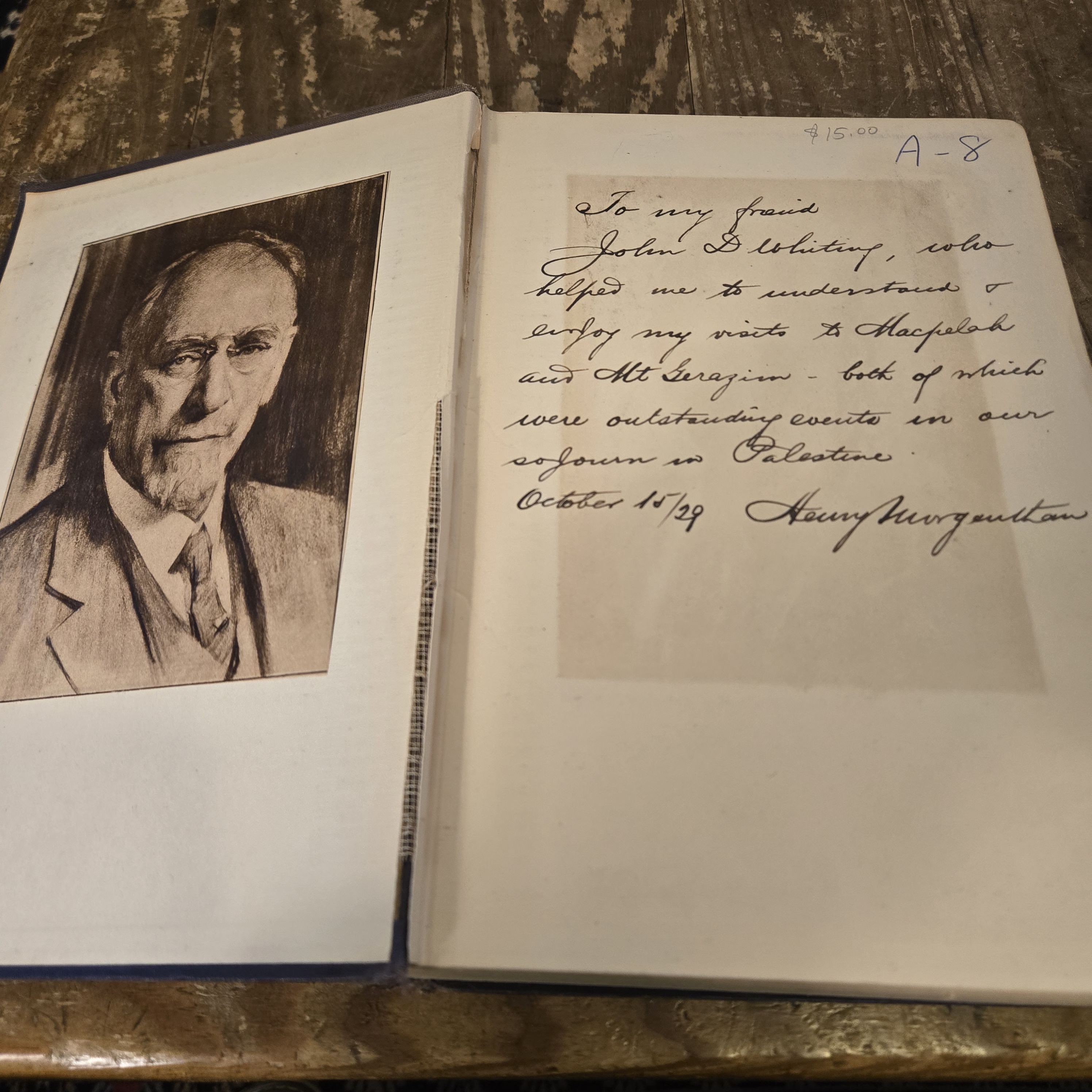
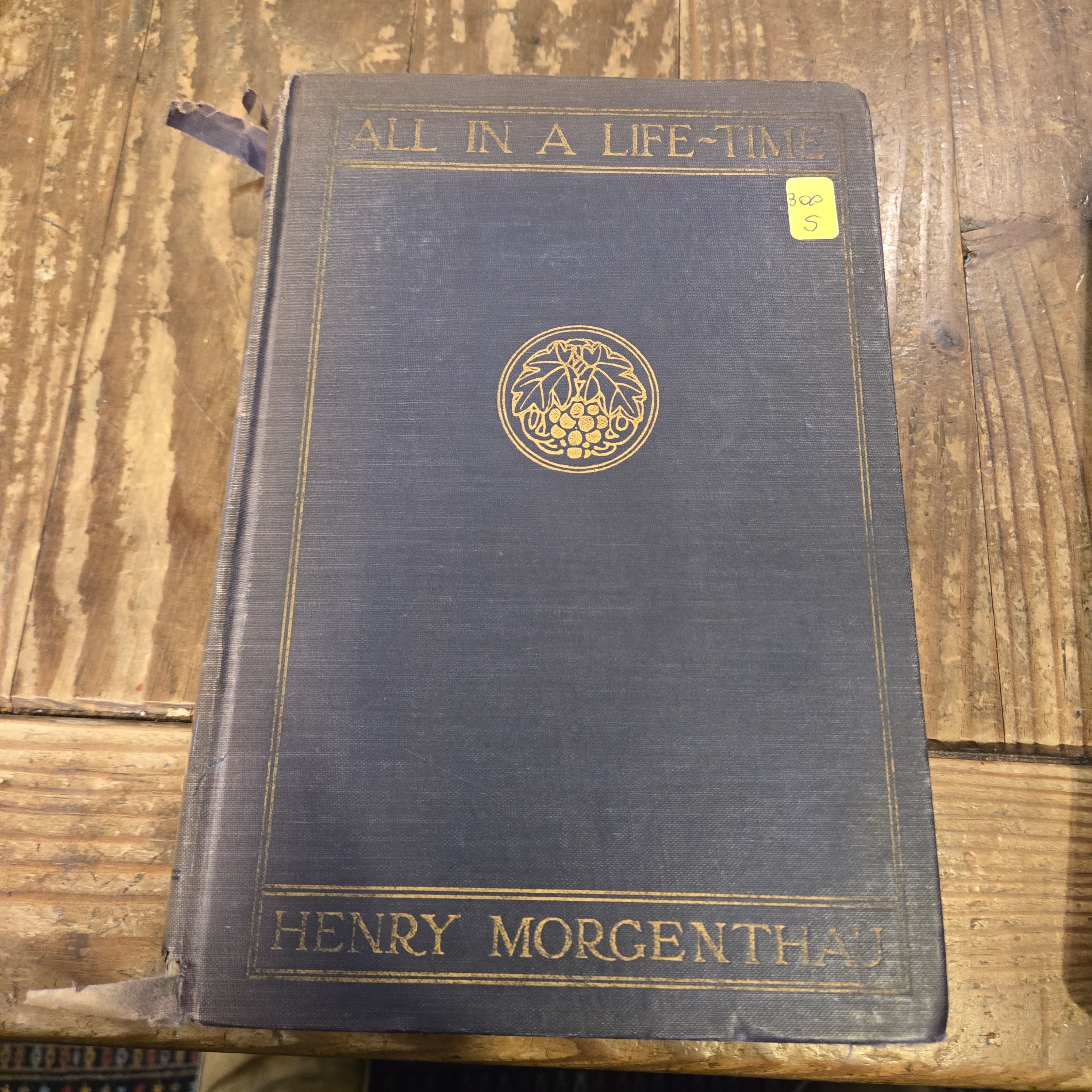
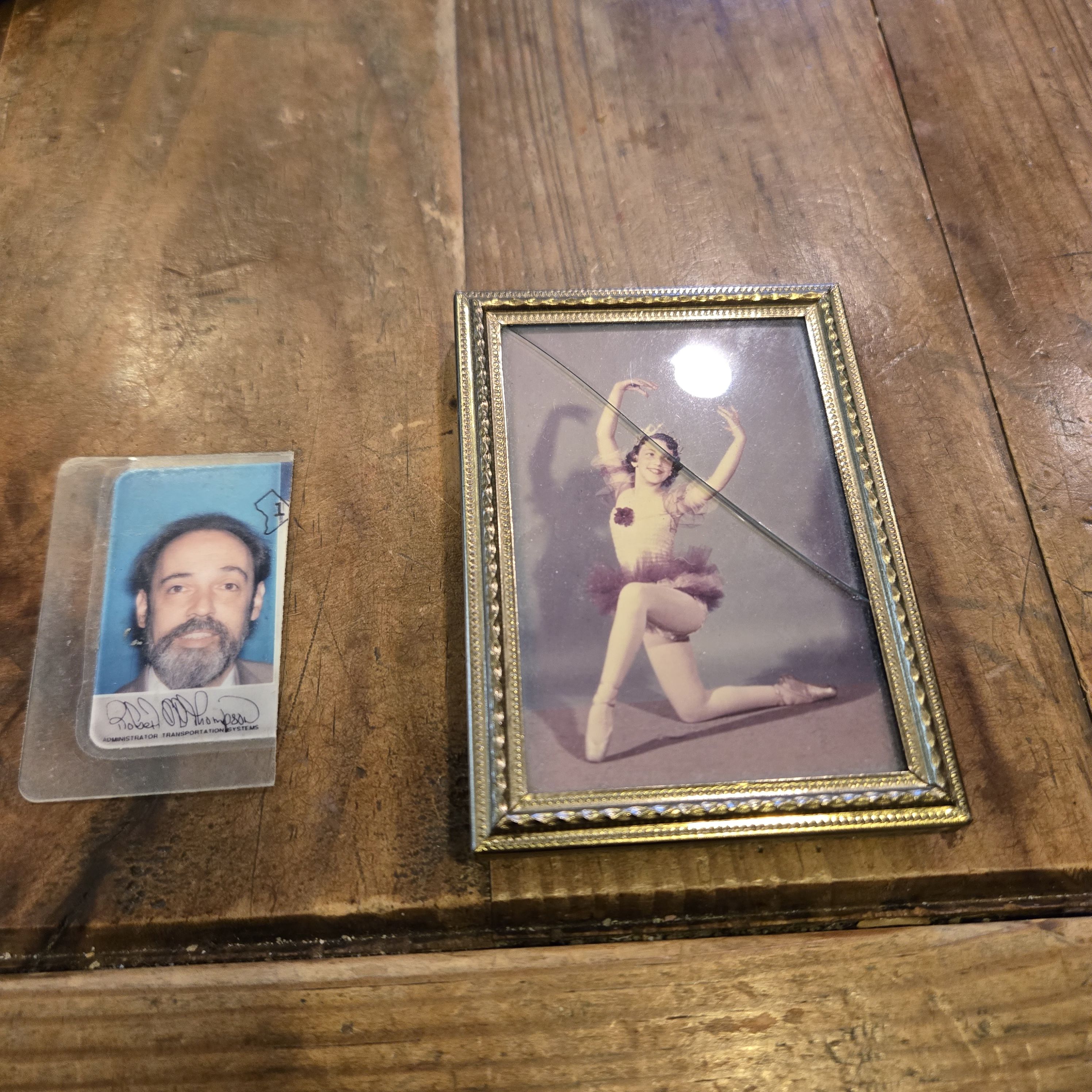
I must have pushed the wrong button. The photos did not get published. Here they are, if you are interested.


-
Many (read: most) of you know that one of our activities (not quite a business, not quite a hobby) is selling used books on line. We sell about 250 a year, averaging about $30 a book (except for those which sell for many times that). We pay an average of $4 or $5 for each book, and we have about 7,000 on line for sale. We are very lazy about this non-business/non-hobby. We have our inventory listed in one place only, and we sure don’t try to promote. Maybe someday all that will change.
The books are all second hand. The majority are signed or inscribed by the author. Many relate to politics. Many relate to Jewish subjects. The others relate to about everything you can imagine. We have learned that the signed books that sell, sell because it is hard to find signed copies. In other words, although many people would like to own a book signed by Tom Clancy, there are so many available that someone is bound to undercut your price and the chance that someone would select the copy you have as opposed to copies held by 50 or more other booksellers is not very likely. On the other hand, if you have one of the only copies of a book signed Author ben Author, even if the demand is not very wide spread, it is more likely that yours will be acquired.
How do I price the books? Not very scientifically, I am afraid. I go to the Abebooks website (www.abebooks.com) and look to see how others have priced the book, comparing condition, edition and so forth. It gets tough when you can’t find out how others have valued the same book, or when there is something that makes your books stand out from others that are being sold.
Let’s take some examples. Nathan Glazer was an American sociologist who passed away at 95 in 2019. He taught at U Cal Berkeley and at Harvard. His best known book, among many, was Beyond the Melting Pot: the Negroes, Puerto Ricans, Jews, Italians and Irish of New York City, which was published in 1963. There are two signed copies of this book for sale on Abebooks, one offered at $350 and one at $950. Sure, these prices seem high, but it seems that Nathan Glazer did not autograph many books over his long career.
Nathan Glazer had friends named Joe and Millie. That’s all I know about them, except they were friends over many years, and Glazer inscribed at least four books to them over those years. The books are Beyond the Melting Pot, Remembering the Answers: Essays on the American Student Revolt, Ethnic Dilemmas, 1964-1982, and The Limits of Social Policy.
Either Joe and Millie, or their children, decided it was time to depart with their books, and they were donated to the Montgomery County library, and put up for sale at $5 for three of the books and $10 for the Melting Pot. (Remember, we are not “profiting” by the sale of the books, which go into an account for grandchildren education)
When I said that Glazer didn’t appear to sign books, I meant it. The two Melting Pots on sale are the only ones listed on the website. So the question is: how should I price these books? The answer is: I have no idea. So, they will just sit here a while longer.
A few other examples. I have a copy of a book titled Years of Content, 1858-1886, written by Sir George Leveson Gower, K.B.E., and published in London in 1940. I know you have never heard of Gower. Gower was born in 1858, and at the age of 22 became the private secretary to British prime minister William Gladstone, a job which he held until 1885, ending when the period covered by this book ended. He later entered Parliament as a Liberal, ending his career as Commissioner of Woods and Forests (I don’t know what that entailed, but I bet it was fun).
This book is not signed by Gower, but that is okay, because accompanying it is a six page letter written by Gower (I have not had the energy to read the entire thing) in 1940 to his friend “Florence”. (I assume Florence was a friend; maybe a relative.) And I have a copy of another, somewhat shorter letter, written to Florence by Cicely Gower, his wife, in 1951, shortly after Gower died, giving Florence the news.
I don’t know if Gower himself was “important” as far as British history goes, but the fact that he spent five years as Gladstone’s secretary is quite important, and it is this period that the book discusses. And clearly these letters, being originals and one of a kind, add to value to historians and perhaps others. There are only three copies of this book available on the Abebooks site, and one of them is signed. You can have it sent from England for about $45. But how do I price the book with these letters included?
Do you know Benedict Sarnov? He was a very prominent Soviet (and later Russian) literary critic and intellectual who died in 2014. I have a copy of his books Perestante Udivliatcia (yes, it’s in Russian), which he inscribed and signed (also in Russian). The title means something like “Don’t be Surprised” and the subtitle is “unpublished history”. Nobody has anything signed by Benedict Sarnov for sale. And not that many Americans read Russian. How do you price something like this?
One more example (out of hundreds). Speaking of the High Holy Days, I have the first volume of a Machzor (the liturgy for Rosh Hashanah and Yom Kippur), covering the first of the two holidays. Hard copy. Very nice condition. I don’t have a date. It was published in Warsaw. The editor was named A. Kahan and the publisher G. Piment. It contains not only the full liturgy, but much commentary, with each level of commentary written in a different font.
There are many liturgical books from pre-war Poland available, so most are not priced too high. And while there are experts on pre-war Jewish books, I am not one of them. I would guess that this book was published between 1920 and 1938, but I can’t get more specific than that. I have no idea how to price it, even if I wanted to sell it.
-
Let’s see if I can do this quickly. Before I have to leave for a memorial service for a friend who passed away last year. Actually, last night I put together a post about certain of the books we have in the house, but I am going to let that go for another day.
This morning, I am concerned about a few things. Okay, about a lot of things. Prime Minister Netanyahu, according to CNN, gave a speech saying “Israel faces war on 7 fronts”, and it seemed to me that he said it with a degree of pride. War against “Iran, Hezbollah, Hamas, the Houthis, West Bank terrrorists, and Shiite militias in Iraq and Syria”.
As I have recently said, it is getting harder for me to judge Israel’s actions, because I just don’t know what is right anymore. Yes, this may be the “time” to try to change the paradigm once and for all. Tomorrow may be too late. And, yes, maybe a war on seven fronts is just one war, not seven and if you don’t do it all at once, it is bound to fail. And perhaps doing it now and doing it all at once is so essential that the extraordinary collateral damages that results from the military action (death, injury, property disruption, economic dislocation, etc.) is a cost that must be paid and, if that cost is not paid today, it will be paid with even greater numbers tomorrow.
But can Israel do this alone? Can it do it with help from the United States, but not elsewhere? At what point does Israel run out of bombs, or drones, or ammunition, or even personnel? At one point does the war(s) come back so strongly to Israel that Tel Aviv’s high rise luxury office and residences wind up like the Twin Towers?
And what is the plan after the war is over? Are there back room conversations that we just don’t know anything about? Are the moderate Arab states, the members of the EU, the United States, involved in coming up with plans for modifications of foreign policies for Israel’s neighbors, and the rebuilding of their countries? Or are there not?
The threat to Israel is enormous, of course, and Netanyahu’s policies real show what happens when you have a gambler in charge. This is an enormous gamble.
And – yes, it may be secondary, but it is real nonetheless – what is its effect here in the United States? How does it affect antisemitism? How does it affect American Arabs? How does it affect the teachings at American universities? And how does it affect politics.
The Trump side, so far, has it pretty simple. They support Israel. Period. Full stop.
The Harris side, not so simple. Harris has so much to worry about. First, can she take a position that is different from Biden? Second, how can she keep the overwhelming majority of the Jewish vote? Third, how can she keep the majority of the Arab vote, so important in Michigan and, I think, in Pennsylvania as well. What should she say? What should she not say?
Let me segue a bit here. The problem Harris has is not limited to the Middle East. She has to become Mike Pence, and not remain Hubert Humphrey? Know what I mean? The Democrats celebrate Vice President Mike Pence, who broke with Donald Trump to certify the 2020 presidential election. They mourn the fact that Vice President Hubert Humphrey did not win the 1968 election, but lost to Richard Nixon, in large part because Humphrey did not separate his position on the Vietnam War from that of President Lyndon Johnson’s.
Harris has to separate herself from Joe Biden, and state her own positions, whatever they may be, clearly, even when they differ from her current boss. That reminds me of another question. Are Marcus Johnson and I the only Americans who understand that a Vice President has limited power?
In his comments after the Walz/Vance debate, university student Johnson made it clear that the vice president’s job is to do what the president asks them to do, not to set their own policies or priorities. This should be obvious. But the Trump/Vance campaign wants us to overlook this distinction. They want us to assume that the current administration is as much Harris’ as it is Biden’s. In fact, because they want us to think that Biden is non compos mentis, they portray the Biden administration as the Harris administration or at best the Harris/Biden administration.
Okay, that may be good politics on their side. But why didn’t Walz, for example, counter this in the debate by saying: “Hey, this isn’t the Harris administration you are talking about. This is the Biden administration. Was the 2016-2020 administration the Pence administration?” But he didn’t, and the campaign doesn’t. They let the current administration be named the Harris administration without complaint, falling into the hands of Trump, just to be loyal to the president. Big mistake.

I gotta go. I wanted to say something about Elon (“I am dark MAGA”) Musk. What happens when a billionaire who is more than a billionaire, but someone whose business are are REALLY IMPORTANT, goes completely nuts. But no time now. No time to proofread. Happy Sunday.
-
We watched the first five episodes of “Nobody Wants This” last night. There are ten altogether, so one more night should do it. Don’t congratulate us for watching 5 episodes; they are each only about 25 minutes long.
You may have read about the show. Adam Brody is a rabbi and, by the way, is Jewish. He has to be Jewish – for one thing, he’s a rabbi (one day, there will be gentile rabbis, I am sure, but not yet – as far as I know). For another, his mother is Tovah Feldshuh. She could not have gentile kids if she tried (and who knows? perhaps she has tried).
He falls in love with Kristen Bell. Now, I don’t know Kristen Bell (never met her), and I don’t know Adam Brody (never met him), but they make a cute couple, so I wish them luck. The problem is that Kristen Bell is not only not Jewish (this gives Tovah Feldshuh enormous problems, as you might imagine), but she is a sex podcaster. What is a sex podcaster, you ask? A sex podcaster is a podcast host who talks about her personal sexual and dating experiences (the worse, the better for the podcast) and interviews experts in the subject. Kristen’s character’s name, by the way, is Joanne, but Kristen fits a sex podcaster better, I think, so I will stick with it. Adam’s character’s name is Noah. I see little difference between those two names.
Adam is the associate rabbi at Temple Chai. It is somewhere in southern California. The senior rabbi, of course, is Rabbi Cohen. Adam is in line for a promotion (if we know what that promotion is, I missed it, and he didn’t tell that to Kristen, who found it out by accident and didn’t seem to care one way or another). But, truth be known, at 44, Adam is a bit old to be an associate rabbi under Rabbi Cohen. Although his congregation seems to like him, he seems to lack ambition. Kristen at 41 is a bit old to be a sex podcaster, too, but they both looks ten years younger than they really are, so we can get beyond this.
In case you are wondering, it seems that Adam is concerned that his congregation might not accept a rabbi with a shiksa girlfriend, much less wife. He knows that his mother Tovah won’t and he knows that his father will never say anything to make it seem that he has an independent mind. If you are married to Tovah, you tow the line. Clearly.
But Adam promises he will never hide Kristen and he spends half of the first five episodes hiding her in plain sight. At his temple, at the Jewish camp where he gives a class, in a very public restaurant with the Grand Poobah of the podcast world. You get the picture.
Oh, yes. Adam has a brother. Now they are nothing like each other, so one of them must be adopted. I vote for the older brother. His name is Sasha since Tovah and Adam’s dad are Soviet refugees. He is the “loser sibling”, and Kristen has a “loser sibling”, too, who shares her podcasts. The difference is that Sasha is really a loser and whats-her-name (she made a great impression on me) is not. But that’s a detail. Don’t worry about it.
And, oh, yes, there is another complication. For three years, Adam has been with Esther, who is as Jewish as Kristen is not, but he breaks up with her, shocking the entire Jewish world. Especially shocking Esther, her parents (also Sovietniks) and his parents and, probably, even Rabbi Cohen (although he doesn’t show it).
It’s a cute show (with some of the situations purely ridiculous, like when Adam brings Kristen to the camp in Ojai and then tries to hide her in their cabin, but has to deal with her escape and her joining a candle making class and confiding in a bunch of 13 year old girls), and we will watch the other five episodes, I am (somewhat) certain.
Rabbis with unusual girl friends must be the thing in show biz, these days. You might (I know you don’t, but you might) remember the film we saw live at the JCC several months ago, called “The Two Temples”. That was another rabbi, also an overage associate rabbi, but a guy with some emotional issues, who worked at a different temple in a different time zone, and who fell in love with his old music teacher from high school. I don’t remember the names exactly, but she was something like Mrs. O’Connell, and after some emotional get-togethers, she decided she wanted to have a bat mitzvah.
He, too, was supposed to marry a Jewish girl, the daughter of the senior rabbi, who had been living in “the city”, but was willing to return to this upstate town to be a rebbetzin, and they had a ten minute affair, but his heart was with O’Connell (probably 20 years older than he), and everyone – including of course his parents (not from the USSR) – were shocked.
Then, it turned out that O’Connell was her married name and she was really Susie Schwartz (or some such thing) and that might have helped for twenty minutes of the film or so, until it turned out that her father might have been Sidney Schwartz, but her mother had been Angelina Santa Maria, or some such thing, and everything was off.
While “Nobody Wants This” has ten episodes, and makes you make a minyan of choices, “The Two Temples” hit you all at once as a 90 minute film. Which is better is hard to say.
For centuries or millennia, perhaps, rabbis have had to marry Jews. But inspired by media such as this (or perhaps the other way round), in June of this year the Reform Movement announced that it is acceptable for rabbis to be “in relationships” with non-Jews. So, when I say that one day there will be gentile rabbis, who can say I am wrong?
-
This is part of the Rosh Hashanah liturgy (and the Leonard Cohen songbook), and it is true, of course. We know nothing about the future.
I was listening to a podcast the other day (just a part of it, although I would like to finish it). Anne Applebaum was interviewing Yuval Harari, the Hebrew University professor who seems to have invented himself as an expert on virtually everything and, although I am suspicious of people who are treated with such great respect, including Harari, I did think he had some useful things to say. The podcast was filmed about two weeks ago.
Don’t take what I say as literally what Harari said (after all, it has been about three days since I listened to it), but basically he said that we have been living through extraordinary times, we of the “west”. Things have by and large been peaceful, and things have by and large been prosperous. And to think that this will continue this way throughout the measurable future is probably pie in the sky (not his term).
There are some things that seem certain from a study of human history, and one of those is that things change, that good times do not last. And he thinks that one of the reasons that the current “good times” won’t last is that we think that they will probably go on forever.
He talks about time he recently spent in Toronto, which he describes (not his words) as perhaps the most successful city in the most successful country of recent times. What interested him (at least for the purpose of this interview) was not so much the success of Toronto per se, but the fact that everyone who lives there just takes Toronto’s success for granted. Like it was always this way and always will be. To him (and I think he said it; if not, he could have), this may be a recipe for future unrest and disaster. And Canada is at this time having its share of internal disputes, and concerns about its short term future direction, as I understand it.
In addition to talking about how change (and negative change) is inevitable, Harari talks about how it can come about. Sure, it can come about slowly, and you can be the toad in the pot with the water slowly coming to a boil, so slowly that at first you don’t notice it. But change can also come with remarkable abruptness. Can take you by surprise and totally upend your life.
This session was obviously before Hurricane Helene tore the idyllic community of Asheville to pieces, but after – say – so much of Ukraine, or Gaza were hit with unscheduled (and to an extent unmerciful) warfare. Or even when Springfield Ohio was so strongly affected by allegations that Haitians were eating their neighbors pets. Who expected that to happen? For Springfield schools to have to close, for death threats to come in from all quarters to many segments of society? And who expected, 30 or so days before our presidential election, for all the east and southern coast longshoremen to go on strike, threatening both supply chain shortages and more price increases? And, for that matter, who expected that strike to end two days after it began?
Yes, the Unetannah Tokef prayer of Rosh Hashana (“who shall live and who shall die?”) makes it appear that all of this is in God’s hands. I must admit to not understanding the entire prayer. Things are in God’s hands, but yet humans can repent and do good deeds and that will help, even if it doesn’t change things, etc., etc. I see the spiritual strength of the prayer (just like Leonard Cohen obviously did), but I don’t see it as anything more. Other than, perhaps, that as bad things happen to you, it can give you some perspective that you might otherwise not have and, with this additional perspective, allow you to accept what happens with more equanimity than would otherwise be the case. And that is something.
But it does ignore one important thing: change can also be the result of human action. If I kill you, you die. Presumably, nothing to do with a God.
They say it was Heraclitus (yes, I looked it up) who said that the only constant in life is change. And those of us who do not like change that much have to get used to the idea.
Which takes me back to Yuval Harari and the attitude he found in Toronto about taking current peace and prosperity for granted. And that, of course, takes me to how easy it is to think that, no matter how much mischief you may seek to bring about, the world around you really won’t change that much. And that brings me to Donald Trump and to today’s Republican Party, which believes that the circulation of lies and untruths for the benefit of exalting your own position is simply a game you can play, with the hope that you will be the winner, and that the negative effects on the greater world will be minimal.
If those with influence continue to believe that their actions do not have the ability to bring about not only change, but sudden change, and destroy what we have been so lucky to experience, Yuval Harari will be proven correct. And, although I don’t accept him as a source of knowledge on all subjects, on this one, he will be proven to be spot-on.
-
Spoiler alert. This will be depressing. I suggest you don’t read it and come back tomorrow.
Today is the first day of Rosh Hashanah, and this post will be shorter than usual. There is a lot going on in the world, and I feel much more like observing Yom Kippur than celebrating Rosh Hashanah. I have a lot on my mind, services seem remote and limited in importance, and do I really need another sermon.
The situation in Israel and the Middle East is so fragile, and it is getting harder and harder to tell Israel to restrain itself. Its power seems strong at the beginning of 5758. It may be less strong in the future, and this may really be the time for a “let’s end this once and for all” solution.
Here, we face a very dangerous election in just over a month. It may be hard for those of us with common sense to understand it, but the majority of electoral votes could easily bring Trump back into power. That could cause untold harm to pregnant women, lead to deportation disruption throughout the country, see Ukraine defeated, and Europe placed in very volatile circumstances and see the United States in trade wars around the world and facing new inflation pressures. Natural disasters are increasing in severity, large due to climate change, and a new administration may accelerate climate change. We don’t need any of that, but American voters are both so easily misled and so lazy. And faced with potential economic problems as a result of the potential bombing of Iranian oil facilities and potential supply disruptions caused by the dockworker strike, I am afraid that the Trump vote might grow.
None of these worries should be on one’s mind as we enter a new year. We should look forward to only good things and be thankful for what we have. And we have so much. We have lived through rare times.
No God will straighten all of this out. It is up to us. And we may not be up to it.
-
Van Jones, J.D. Vance and I are all graduates of the Yale Law School. Jones was one of the pundits on CNN last night after the Walz-Vance debate. He commented on Vance’s performance in the debate, basically saying that Vance did a great job as a debater, if you assume that it makes no difference whether you are giving factual or misleading answers. Okay. I think that is right. But then Jones went on, and said that he and Vance were trained at Yale to debate just the way Vance debated.
Say, what? Now, I went to Yale about 25 years before Jones, and Jones went to Yale about 15 years before Vance. Different teachers, and different teaching, I am sure. But when I went to Yale Law, I don’t remember any training whatsoever on how to debate. In fact, the training that I received was virtually all academic training. You know, a course on torts, a course on contracts, and so forth. I did participate in one appellate moot court (I actually reached the finals), and one mock trial. But both of those exercises, as I remember, were voluntary, not required.
Now, every lawyer is bound to defend his/her client. I did that through my career. But I never stood up in any trial or administrative proceeding and lied. I never presented false facts, or – as far as I know – facts so far out of context that they were misleading.
I have said this before about the first time I was ever in an actual court room. It was when I was doing post-graduate work at Washington University. I was already a member of the Missouri bar, and one of its requirements (I think it was a state requirement; maybe a St. Louis bar requirement) was that a new lawyer had to participate as a co-counsel in a criminal proceeding. The reason that this requirement existed is that there was a practice, in the 1960s and in St. Louis or the entire state, that lawyers could be called upon, I think once a year, to represent an indigent criminal defendant.
I was working with an experienced lawyer. A government lawyer was prosecuting. The defendant was a young man accused of going to a high school dance while armed with a rifle. In fact, he had hidden under his overcoat part of a rifle. He came with a friend who hid the other half under his own overcoat. The friend had the barrel and trigger mechanism. Our client had the stock. Our client did not have a firing weapon; his friend did. Our client could only have hurt someone with the stock if he bopped him on his head. The facts were clear. There was no argument as to the facts. The question was: under Missouri law, was carrying the stock of a rifle considered carrying a weapon (or whatever the precise term used in the law was). There was no precedent in Missouri on this question. There were precedents in some other states. I had done a fair amount of research on the precise facts and the applicable law.
I was sitting at the counsel table, when the prosecutor was presenting his case. He cited something from Corpus Juris Secundum , a multi-volume compilation of legal principles, that I had just read a day or two before, during my preparation.
The prosecutor quoted CJS with great confidence. Like he had found the key to why this defendant should be found guilty. But I immediately realized that he had left something out. The citation he read had an introductory clause that he had left out. The sentence started with the words: “The minority opinion is……”
Our client was found not-guilty.
In quoting CJS, there was nothing in the confident tone of the prosecutor to let you know he was trying to trick the court. He sounded like he knew exactly what he was talking about.
Why did I think of him while I was watching J.D. Vance yesterday? It should be clear. We saw a very smooth J.D. Vance telling things that were wrong, misleading, needed context, and exaggerated.
If you look at the media fact checking today in the New York Times, Washington Post and the various TV networks, you will see how much of Vance’s performance fit into these various dangerous categories. Of course, most people watching the debate are not fact checkers, and do not look at the fact checkers after the debate, dismissing them (if they pay any attention at all) as biased.
So, back to my take on the debate, for a minute. J.D. Vance was smooth, confident, and deceptive. He did not look “weird” and, with one major exception (having to do with whether Trump lost the 2020 election), Walz did not effectively call him out for his misstatements.
Most pundits seem to feel that, if anyone won the debate, it was Vance. For sure, his debating skill is stronger than Walz’s. But that’s only if you ignore facts, and you can’t blame that on Yale Law School.
It was, by and large, a very civil debate, and this is something that is probably welcome by many voters. But you can remain civil in a debate while, at the same time, calling out your opponents effectively when they veer away from the truth. This is something that Tim Walz was not able to do.
-
Let’s see how much sense this makes to you.
I was listening to a Haberman Institute program yesterday. The presenter was the Haberman Executive Director Matt Silverman, and he gave a class centered on different approaches taken to matters of Jewish rabbinic law by varying individuals, including Jesus, during the latter Second Temple days.
Part of his discussion involved strictness and leniency in breaking the laws of the Sabbath. As you probably know, today traditional Judaism prohibits working on the Sabbath and has a complex set of standards as to what constitutes work and what does not. To someone who is not familiar with these varying rules, some may seem counterintuitive.
But throughout history, they have been most often taken quite seriously. I was listening to a lecture yesterday on the history of the Jews in Ukraine, giving by Fairfield University Professor Glenn Dynner, and he showed an old drawing of a Jew who was imprisoned by a chain around his neck, and connected to a building (presumably a synagogue) as punishment for violating the Sabbath. Dynner said that, in most instances, payment of a fine could forestall physical punishment, however, but that the failure to submit to one or the other could lead (but perhaps never did) to excommunication and banishment from the community.
But there were exceptions. There were certain times when you could violate the limitations of Sabbath activity without punishment. The most common of these situations was when you act to save a life. Saving a life is more important that avoiding “work” on the Sabbath.
During the time of Jesus, there were disagreements as to what types of activities would be allowed to save a life. Jesus was the most liberal of the cited sources. (This is opposed to, say, the rules on divorce, where Jesus was the least liberal.) Today, many of these disagreements are avoided in Jewish practice, because, after all, there have been 2000 years to work these details out.
Everything I have seen on this subject focuses on what types of actions are appropriate in saving a life, and I think the years have expanded permitted activity. Nothing I have seen has focused on how you know that a life needs to be saved. It seems (and since I really have never looked closely into the subject) that determination of whether action is needed to save a life is left in the hand of the actor.
So I began thinking about the states which have enacted (or will enact) strict laws prohibiting abortions, except in those instances where the life of the woman carrying the fetus is at risk. These laws have already ended in tragedy a number of times, and are causing tremendous anxiety, turmoil and confusion. They are worrying not only the pregnant woman (and her loved ones), but the doctors and health professionals, who might get in legal or financial trouble performing an abortion if they wind up being accused of performing an illegal abortion. The result is that doctors might wait until death is imminent, and then it turns out to be too late.
Maybe the thinking is wrong, and (if these terrible laws have to exist), the focus should not be on whether the medical professional wrongly guessed that the woman was in danger of death. Maybe that should be considered a professional judgement to be viewed with as much leniency as possible, and the focus should be on whether the actions taken were themselves medically appropriate actions (a type of judgement made in every malpractice case).
By the way, in Jewish law regarding abortion, this question also exists, although in a more liberal context. In Jewish law, the life and health of the mother outweighs that of the fetus, so a professional never has to get to the question of whether the patient is going to die. But, nevertheless, someone has to be the final judge as to whether the mother’s health is at risk, and here again the Jewish tradition, as far as I know, lets the health provider make that decision.
After running all this through my mind yesterday, I was innocently sitting watching CNN, when once again someone mentioned Haitians eating cats and dogs and defending J.D. Vance’s comments. And the conversation went on to show the total disruption being caused to the city of Springfield OH as a result of this beyond silly accusation. Death threats, schools closed, fear of some native Haitians to even leave their houses.
Then it occurred to me. This is exactly analogous to ritual murder accusations made against Jews throughout the ages. The oft recurrent claim is that Jews kidnap and kill Christian babies in order to use their blood in the making of matzohs for Passover. Of course this has never been an ingredient of a single matzoh, but that hasn’t stopped the accusations at the time of rampant antisemitism, and hasn’t stopped many people from believing them, or at least giving them some credence. (Google the Beilis case if you want a good example.)
The thinking here is just the same. Jews kill Christian children. Haitians kill their neighbors’ cats and dogs. Kamala Harris caused inflation and designed and implemented an open border policy. It used to be, as Hitler supposedly said, if you tell a lie often enough, people will believe it. That was obviously true. But today, maybe things have changed. You don’t have to tell a lie often; you only have to tell it once. As long as the lie reaches the ears of gullible people (you know who they are), those people will believe it the first time they encounter it.
And there seems to be no cure, even when the life of a nation or a planet is threatened.
-
The New York Times yesterday reported the death of Amadou Mahtar M’Bow, who died at age 103. I didn’t recognize his name at all, but it turns out he was a native of Senegal, who became the first African director of a United Nations agency, UNESCO, the United Nations Educational, Scientific and Cultural Organization, in 1974, 50 years ago.
I read that in the first few paragraphs of his obituary, but the obituary took up a full half of a page. So there must be more to it than that. And there was.
I am not going to repeat everything in the Times (you can read that yourself if you want), but will focus on part of his legacy that is quite controversial.
From the article: “Criticism of Mr. M’Bow centered on his promotion of what came to be known as a “new world information order”, a vague body of recommendations that many in the West regarded as a threat to freedom of the press…..an international “code of conduct” for journalists; proposed that they carry identification cards, which governments could withhold if they were dissatisfied with the news coverage; and backed ‘the notion that governments have the right to control information for their own ends’.”
This sounds like (and probably is) a wholesale attack on free press, right? M’Bow would respond to that, I think, by saying that there is really no such thing as a free press. Or to put it differently, someone will always decide what is news, and how the days events should be portrayed. That “someone” can be the journalist (or the boss of the journalist), or it can be the government. The government is responsible for order in the community, for establishing the direction of the community. The journalist is responsible for nothing, other than satisfying their boss, or maximizing their profit. Why should the unelected journalist, lacking any official responsibility, make the determinations as to what constitutes news?
I am extrapolating a bit here – the article does not state that M’Bou actually said all of this in this manner. But this does express his thinking. And he came upon this as an African leader during, or just after, the end of European colonization of much of the continent. And he did a lot of complaining about the nature of the news coverage of emerging independent Africa. He declared that the news that was selected to be published was being selected not by Africans, but by what he called people from the North, who had their own agendas, and whose agendas were much different from the agendas of Africans, themselves.
Okay, you can argue with this, of course. And you may be correct. But it does raise a perspective that is not normally raised by the journalism I see.
My assumption here is that he is not necessarily talking about what you see in opinion pieces, whether opinion pieces by established journalists, or op-ed pieces or letters to the editor by others. I assume he is talking about what purports to be straight news, the kind of straight news that purports to be factual and unbiased. And about which news articles are published or aired, and which are not.
Let’s for a minute compare, say, MSNBC and Newsmax. You know, tuning in, that these two networks have very different political biases, and you expect this to be obvious from what the commenters say. But, beyond what you see on the air, there is what you do not see – what subject matters a network chooses not to cover. For example, as we are in the middle of an election campaign, one network can choose to cover the policy statements of one candidate and cover the verbal gaffes of the other candidate, even if they give them equal time. Or, to put things more in M’Bou’s thinking, there may be very important things going on in Senegal, but American TV networks may not even mention Senegal. In each case, someone will make that decision.
There are plenty of countries that don’t have a free press. Russia today certainly does not. Nor does China. Neither country will permit journalists to say things against their national interest. Russians don’t come close to getting unbiased articles about the “military action” in Ukraine. The Chinese don’t hear what is going on with the Uyghurs.
On the other hand, in countries where there is a free press, like the United States or, say, Israel, you have other problems. You still have subject matter ignored, but you also have articles that are meant to be provocative. You have journalists who stand in the tradition of investigative journalists, who like to prod, to uncover secrets, to find weaknesses in those who appear strong, and so forth.
In the countries with controlled journalism, you can have a controlled society – for better or for worse. In countries with free journalism, you can have a chaotic society – for better or for worse.
I am not arguing for a controlled press. But I think we should be cognizant of the risks and dangers of an unregulated press. They are real, as well.Let’s go back to M’Bou for a minute. As a leader of an emerging society, the one thing you want to avoid is social chaos. If you are part of a group not just governing a nation as a temporary shepherd, but creating a nation out of a subservient colonial society, chaos can be fatal. So you don’t want investigative journalists running around uncovering all of your skeletons and encouraging your political opponents. This is true for journalists who are citizens of your aspiring country, or journalists who are reporting on your activities for foreign interests. Particularly, where those foreign interests may serve your former colonial overlords, or serve those outsiders with deep commercial interests in your country.
Free press may only work in democracies. And may only work in stable democracies. We have a greater challenge today than before. With the easy ability to spread falsehoods, and with the ease with which false news seems to be believed by so many, will we one day find out that a free press endangers the stability of our democracy and no longer works? And if we do (understanding the constitutional ramifications), how will we react?
Yes, a free press can certainly help in overturning dangerous or harmful governmental policies, or even dangerous or harmful governments. But today, a free press can also help destroy governments which are neither overly dangerous or harmful. This is a conundrum, to be sure. This is also a topic about which I knew nothing – has anyone come up with the best path to follow in the year 2024?
-
As the Nats’ baseball season ends today, we look back as the Nationals, who we hoped would be better, end their season just about equal to how they ended their year in 2023. Both years, there were times (early in the year) when things looked good, then performance dipped and ownership decided to trade veteran players for youngsters, and the team pretty much tanked the rest of the year. Now, we look forward to 2025 with a very young team, but a team with very young players with another year under their belts and the possibility of their having matured that much more. We look forward to the return of three players who were injured most of this year – pitchers Travis Williams and Josiah Gray, and outfielder Stone Garrett.
But enough of that (I could go on and on). Let’s talk about baseball in a more general sense, and about a film, “Hank Greenberg”, we just saw, and a book “Jackie Robinson and the Integration of Baseball” that I just read.
Aviva Kempner’s film “Hank Greenberg” was released 25 years ago. Now, it has been remastered (I have no idea what that really means or accomplishes, but it does sound good) and re-released with a brief ending featuring …….. but maybe that’s supposed to be a surprise.
Hank Greenberg was the Detroit Tigers’ first basement from 1930 to 1946 (with four years off for a little thing called World War II), and then played for the Pittsburgh Pirates for a year. He was a rarity in at least three ways – he was very tall for a baseball player of his time (6’4″), he was really good (well, he hit really well), and he was Jewish. He grew up in the Bronx and he spent most of his career in Michigan.
Aviva Kempner grew up in Detroit. The stories about the relationship of Greenberg and the Detroit Jewish community are legend, and many are retold in the film. The relationship between Greenberg and his home borough of The Bronx (and in truth the rest of New York City) are also legend. For the Jewish community, a star baseball player was more than a novelty – it was proof that the Jews were integrating into American society. And it didn’t hurt that Greenberg was clearly an exceptionally nice guy.
The film tells the story of the relationship of Greenberg to the greater Jewish community. But my reaction was similar to the reaction I had when I watched the film “The Catskills”, which I wrote about a week or so ago. Growing up Jewish in St. Louis, I didn’t know anything about the Catskills, so the film, on that level, did not connect with me. The same thing is true of Hank Greenberg.
Yes, he was out of baseball by the time I started following baseball. But that didn’t stop the Jews of Detroit remembering him and talking about him. In St. Louis, we talked about Yogi Berra. Yogi Berra grew up in St. Louis. He never played for a local team – he was always the Yankee catcher (and of course, his background was Italian, not Jewish), but we talked about him all the time in St. Louis. He was ours. (I remember the story of when his wife asked him, late in his life, where he’d like to be buried. “St. Louis where you grew up, New Jersey where we live, or New York where you played?” Berra’s response: “Surprise me!”.) I imagine Greenberg is to Detroit and the Bronx as Berra is to St. Louis and New York.
But it’s a very, very good film, and one of the things you learn is how pervasive, before World War II, antisemitism was in this country. Not only antisemitism, but prejudice against other ethnic minorities as well. And how it was politically correct in those days to use pejorative ethnic or religious adjectives or nouns to insult fellow Americans. This was true on the baseball field, as it was elsewhere. (My favorite quip from the film was not on the field, but when Greenberg was in Army basic training, a famous trainee, and the sergeant in change of his unit said that he didn’t want any “Goldbergs or Rosenbergs” in his group. Hank said “you know, I am a Greenberg”, to which the sergeant responded: “I didn’t say anything about Greenbergs, did I?”)
After seeing “Hank Greenberg”, I read “Jackie Robinson…..”, a book by NPR’s Scott Simon that came out just a few years after Aviva Kempner’s film. It’s a short book, and clearly not the most detailed or nuanced of the many books about Robinson, but it serves its purpose. Its purpose is in showing the racism in American professional sports, and especially baseball, and the difficulties in, but the necessity of, integrating the sport. What Hank Greenberg went through with antisemitic insults was, frankly, nothing like what Jackie Robinson went through. And Robinson’s perseverance was remarkable; his ability to hold his temper was one of the reasons Branch Rickey chose him as the first Black signed by a major league team. (And the fact that Robinson and Greenberg felt allied in their fight against prejudice is highlighted in both the book and the film.)
Seeing this film and reading this book are a good way to see American racism and nativism at work. If you get a chance, and want a third leg for this chair, go to the Negro League museum in Kansas City (MO), where they trace the remarkable Negro League’s chronology and, at the same time, the course of anti-Black racism in the country. It will give you a way to get an understanding that might be harder to find elsewhere, particularly if you are of an age that did not live through the time prior to the Civil Rights movement’s successes. Yes, they were major successes, although today sometimes it is hard to see them.
One last thing. Hank Greenberg was 6’4″. Yogi Berra was only 5’7″. Yes, Yogi was small for a player in his day, but Greenberg was a mountain compared with most. He stood out when standing next to fellow major leaders. Today? I looked at the Nationals’ roster (assuming each team is basically the same): The Nationals have six pitchers 6’4″ or taller, and 2 position players. That is about 1/3 of their roster. As to players under 6′? They have 5 (3 are 5’11”).
That is a major change. Maybe 1/3 of the team is Black today. No one is Jewish. But almost half of the team is Hispanic. One quarter of the team was born outside of the United States.
Yes, time have changed.
-
(A friend sent me Friedman’s article along with his high praise for the article. This is my response to him.)
This is in response to Tom Friedman’s column in the October 25, 2024 New York Times, titled “Why Everything Is Suddenly Spiraling for Israel”. Friedman faults the Biden administration for not being tough enough on Israel, and says that, if it had been, the Gaza situation might have been quickly resolved, and the problems in the West Bank and Lebanon would not have increased, and there could be arrangements made (with the help of moderate Arab countries) to replace the Palestinian Authority leadership and finally move into a two state situation.
I wouldn’t give this article high praise. And Tom Friedman does tend to write the same article over and over and over. And over.
He somehow ignores Israeli democracy and puts the United States in charge of Israel’s foreign policy. Yes, most Israelis dislike Netanyahu, and most Israelis are frustrated (to say the least) with the lingering hostage situation, but most Israelis do seem to favor the war aims.
To think that, had Biden acted differently, all of these pieces would fall together like Friedman writes is to reach a conclusion without any substantial evidence that it is, in fact, reachable.
Both Hamas (and allies) and Israel have the same aims – getting rid of the other and taking their territory. This has always been the goal of Hamas and probably most Palestinians. It has only recently become the aim of many Israelis, but now it is. They were both playing a status quo game until Hamas had “success” in their raid way beyond anything they anticipated. Israel’s responding with an attack could be anticipated. The assumption then is that there would be a hostage for peace (and maybe some Palestinian prisoners in Israel) arrangement, but Hamas refused to release most of the hostages, obviously feeling their oats.
This led to a change of thinking in the right wing of Netanyahu’s right wing government, and among much of the general Israeli population. They thought that “this is enough” and “we have to end this once and for all”. That led to (1) increasing the war in Gaza to so destroy the Gaza infrastructure and make it basically uninhabitable and potentially unreconstructable in the near future, (2) putting pressure on West Bank Palestinians to make their life there as miserable as possible, and (3) finally, a full scale attack on Hezbollah. My educated guess is that, with the exception of (2) above, these actions are welcomed by most Israelis. (I am not ignoring the massive demonstrations for ceasefires and hostage releases – but I think it is pretty clear that a ceasefire will not lead to hostage releases at this time, so while the demonstrations are understandable, they are doomed to being ineffective.) The goal is to eliminate threats to Israel from its neighbors and that means some form of Israeli control from the river to the sea. Whether that control demands reduction of Gaza and West Bank populations is a good question; that is why (2) above is most controversial.
But the Israeli coalition is implementing (1), (2) and (3), not just (1) and (3). The coalition understands that the world would condemn them, no matter what they did, so they discount that. They hope that Iran will be afraid to retaliate directly for fear of an attack on Tehran and its nuclear facilities. They hope that they could really destroy the power of Hamas and Hezbollah with Israeli military strength. They hope that the moderate Arab countries will stay silent and stay out of it, as they pretty much have. So far, all this has worked.
Netanyahu will either be successful or not in his war effort. Someone else will most likely wind up leading post-war Israel. We don’t know what Israel will look like then, and we don’t know what policies will be put into play. I assume Israel won’t be destroyed (but of course this is possible). Assuming there is at that time a stronger Israel and a weaker “Palestine”, I think the moderate Arab states will be ready to work with Israel even closer (and with the remaining Palestinians) once the Iranian backed terrorist groups are out of the picture. This is why they are remaining silent during all of this.
As to Friedman’s belief that, if only the Biden administration had been firmer with Israel. I don’t think this is really possible. Remember (if I remember correctly) that Congress (maybe just the House, again I don’t really remember), after Biden said he was going to hold back certain powerful bombs from Israel, passed something to require giving Israel all the weaponry it needed and that Congress had previously approved. There are American political interests to take into account, which Friedman seems to ignore. There are strong American interests asking Biden to be more supportive of Israel, just as there are those who want him to pressure more for a cease fire, or who want him to be more vocal in supporting the Palestinians.
It is obviously a risky game that Netanyahu is playing. The explosive walkie talkies and pagers, and attacking political leaders at the highest level, is very atypical and may lead to reciprocal attempts. But it is possible that it will turn out to be a risk worth taking.
The loss of life is horrible, as is the property destruction, and the potentially forced migration. But in the minds of the Israelis, who feel under existential threat, these are secondary issues. And I think the same is true in the minds of the moderate Arab states.
Before October 7, and even before the attitude of Hamas in negotiating hostage release, I would have written this differently. But now I plead ignorance as to what the right policy is. I am not sure Israel is wrong. (That does not mean that I support Netanyahu or Ben Gvir or Smotrich generally, but on this issue, I think that the support within Israel goes well beyond their wing of the coalition). And, assuming Israel itself doesn’t become victimized by overpowering air strikes, it will recover from the current social and economic problems relatively quickly after the war ends.
If bombs start falling on Israeli military basis or greater Tel Aviv, then everything changes there will be all out war in the Middle East. The only safe city, I would guess, would be Jerusalem, which I don’t think anyone would seriously bomb.
If the Times ever wants to replace Friedman with me as a commentator…….I demand equal pay.
-
I promised you there was a lot to learn walking up 16th Street, and we are still really at the beginning. Only three blocks today, and more things of importance, perhaps, than everything we saw on Rhode Island Avenue put together. Or maybe not.
On the previous two blocks, we saw two hotels, the Hay- Adams and the St. Regis.
We start this walk with the Capitol Hilton, a 500 room hotel that was built in the early 1950s and fills the entire block between K and L.

I was having breakfast in the coffee shop of this hotel with an out of town client on September 11, 2001, when I learned of the planes hitting the Twin Towers and the Pentagon.
You cross L Street, pass a large, modern office building, and then you get to a mansion built in 1910 but sold to the tsarist Russian government in 1913 to serve as the Russian embassy. The embassy is now housed on a large, secure campus several miles away, but this building remains the home of the Russian ambassador, over 100 years since it first housed someone in that position.

Next to the Russian building, you find the University Club, a private club with a restaurant and
squash courts. I just read that the initiation fee is only $1000, and the basic monthly fee is $172. Assuming this is accurate, call me amazed. The last time I was in this building was a few months ago for a 60th reunion college class luncheon. How was the food for that lunch? Not good. Maaybe $172 a month is actually too much.

Immediately to the north, you find the American Chemical Society

And then the headquarters of the National Education Association.

We are now getting close to the end of our three block walk. But wait……we have only done the east side of 16th Street. We will now go back to K Street and look at the west side of 16th Street. It is different.
You start with a typical Washington office building filled with lawyers and with a K Street address, but a 17th Street front door (no photo). You then have a 100 year old building, which is now a 14 unit office condominium building, followed by the first of the many old, historic residential buildings we will see as we proceed.


These are the buildings across the street from the Hilton.
But after we cross L Street, things get even more interesting. Our first stop is at the Sultan Qaboos Cultural Center, where you can go to their small museum about Oman, take Arabic classes, or research in its library.

Unfortunately, the woman who runs the museum had a conflict yesterday and the museum was closed. But I didn’t care, because up the block, I could go to the equally small Chinese American Museum.

Alas, closed for a private event.
We next pass the large three building headquarters of the National Geographic Society, which has its own, larger museum. Alas, again. The entire complex is under renovation. Nothing will be open until 2026. The photo below shows what I could see over the construction fence.

So we continue. Two major Hispanic organizations. First, Unidos, the largest Latino civil rights organization, and then the home of the Congressional Hispanic Caucus Institute, which provides educational programming for young Hispanic future leaders.


So we have Arabs, Hispanics and Asians on this block. What is left?

Greeks!
One building is left on this block. Two proud lions guard its entrance. No signs give away its occupants. 1222 16th Street. What is it?

It’s the American Academy of Achievement. (I’m tired. You will have to Google it.)
We are almost done. But on the block north of M, we have two more hotels. The first is the Jefferson, often paired with the Hay-Adams as the best two historic hotels in the city, priced a tad below (but more expensive than the Hilton). You could probably get a room here for $400 for tonight.
We now get to the Marriott Courtyard at the next corner. Anything interesting about this? Of course. This building used to be the headquarters of the National Rifle Association before they fled to far away Virginia, maybe 30 years ago.
And we are done. But where are we? We have been here before. We are at the intersection of 16th and Rhode Island. Back at Scott Circle. Hello, Winfield. The two hotels and the good general are below.


-
This will be a short one today because my time is short, and I have to keep my iron man status – this is approximately my 680th consecutive blog post. How many games did Cal Ripken play without missing one? 2600 or so? When I get to 2500, I will tell you and we can all work together to see if I can best him. It will mean about seven and a half years without missing a day. Then Art will be about 89. What do you think?
I listened last night to Stephanie Ruhle’s interview of Kamala Harris, and heard Harris’ very logical explanation of how she will handle the economy. For those who have criticized her as not being specific enough, this interveiw provides a good response. If I had a chance to ask her questions on this topic, I would ask her several very broad ones, starting with : (1) How did you determine that the positions she is taking (on taxes, housing, tariffs, etc.) are the best ones? and (2) What have you done to determine the effect of these various positions on the economic status of the country, including the national debt? I would do this to make sure that she has a basis for her positions, other than what she believes to be politically the right positions to take as part of her campaign. I would then ask her about Congress. How does she expect Congress to react to her proposals? What happens to these proposals if the Republicans continue to hold the House? What if the Republicans take control of the Senate? What if the Democrats control the House and/or the Senate, but don’t have the 60 votes needed in the Senate (which they undoubtedly won’t) to overcome a filibuster? And how do you prioryour proposals?At any rate, her proposals make much more sense that the Trump proposals to cut everyone’s taxes and put tariffs on everything coming from overseas. This means that the tax cuts will be at least somewhat offset by the inflation caused by the tariffs, that there will be retribution affecting American exports, and that the national debt will continue to rise. And the idea that John Deere will have a 200% tariff on tractors built in Mexico, when that would violate the Trump revised NAFTA agreement is of course absurd.
At any event, I thought Harris gave an excellent speech on her economic policy yesterday in Pittsburgh before the Ruhle interview, and while I am sure that parts of her program can be, and will be, picked apart by critics, I think she is on track.
She is also on track, of course, on Ukraine, as opposed to the unbelievable speech by Trump who basically stated “elect me, and Ukraine gets no more money”, Ukraune is totally ruined and wonrecover for hundreds of years, and who has refused to meet with Zelenskyy while he is in New York for the UN General Assembly assembly.
I continue to expect that every time Trump and/or Vance open their mouth(s), they will lose a few more supporters, and the election will continue to favor the Democrats. But we can’t be sure. As I have always said, the one thing that Trump says that I agree with is that American voters can be very stupid. At least for now, we have to live with that.
OK, I am going to stop here. It’s just a busy Thursday.
-
Our first stroll up 16th Street will only cover two blocks. “What?”, you say. It looks like three – H to I to J to K. But you forget. There is no J in Washington’s street alphabet. There is only speculation as to why that is the case. You can look it up. We don’t speculate here.
The first two blocks of 16th Street each contain a church and a fancy hotel. So let’s start there.

This is the Hay-Adams, built in the 1920s on the site of what had been the two homes of John Hay and Henry Adams.
Hay (among other things, Lincoln’s personal secretary, and McKinley and Teddy Roosevelt’s Secretary of State), and Adams (historian and public intellectual) were best friends and purchased adjoining lots just north of Lafayette Square in the early 1880s. They hired famed architect H.H. Richardson to design them side by side (and very large) townhouses. I have seen one photo of those townhouses, though, and concluded, architecturally speaking, their loss was no loss. Historically speaking? That’s another story.
The Hay-Adams remains a luxury hotel, with the least expensive single room costing about $800 per night. (I compared this outlandish amount with the cost of a room at the Waldorf Astoria, the former Trump International, on Pennsylvania Avenue. Rooms at the WA are hard to find under $1000.)
On the next block, at the corner of 16th and K, you find the St. Regis Hotel.


The St. Regis is comparable to the Hay-Adams in all ways. In addition to expensive rooms, each has an expensive restaurant. Expense account places, only.
Moving to churches, you have to start with St. John’s Episcopal Church, across from the Hay-Adams, known as the “Church of Presidents”. Built in 1815 (that’s a long time ago), it was designed by Benjamin Latrobe. Latrobe is (or should be) well known, as among other buildings he designed is the United States Capitol.

St. John’s is open to the public. The sanctuary is very simple (which I like). On the other hand, the stained glass windows are very colorful, even on a gray day.


Several presidents are recognized on the walls. Chester Arthur dedicated a window to his wife, after she had passed away.

Abraham Lincoln is recognized through the Lincoln pew, where it is said Lincoln always sat when he attended, and that he always attended alone.

The church on the next block is very different. The First Church of Christ, Scientist was housed in an important brutalist structure that few people other than I, liked. It was torn down, and the Church decided to build a full scale office building with a church and a Reading Room enclosed within it. The entrance is striking, but don’t call me a fan. Below the photo of the new church is the now demolished Brutalist church, taken from the internet.


Among the other office buildings on these two blocks, we certainly can’t ignore the large AFL-CIO building, looking at both the outside and the mural in its lobby.


And we shouldn’t ignore eith the building at the corner of 16th and I housing the Laborers International Union or the building with the Ronald Reagan Presidential Foundation and Institute ( a branch of the Reagan presidential library) and (coincidentally?) the office of the Motion Picture Association within it.


Finally, we should note that these two first blocks of 16th Street have been “renamed” Black Lives Matter Plaza, and that the words “Black Lives Matter” have been boldly painted on the street, but in a way impossible to photograph from ground level.

-
I attended a breakfast meeting on Friday with John P. Rose (Brigadier General U.S. Army, retired), who directs the School of Defense and Strategic Studies at Missouri State University. When I was growing up in St. Louis, there was no such thing as Missouri State University. It’s a result of a name change – the former Southeast Missouri State University in Springfield. And why would there be a School of Defense and Strategic Studies at a Missouri state school in, of all places, Springfield?
Well, first of all it turns out that the program is not carried on in Springfield, but in Fairfax, VA. The program was started by another individual in California, but whose home town was Springfield, and he decided to bring the program back home, which he did. After his leadership ended, the continuation of the program, at least as a successful program, probably mandated that it leave Springfield, and Washington turned out to be the best place, both because of its attraction to students and the availability of internships and other programs.
I must admit that I had never heard of the program, and my guess is that you hadn’t either. But it now has over 300 students, all graduate students, about 1/3 in PhD programs and the rest getting masters degrees. For those who attend live classes (I think, but am not sure, that this is the majority), the classes are all evening classes (6 to 9 p.m.) in Fairfax County. There are others who matriculate via Zoom and I think still others who do not do live Zooming, but who watch video recordings of classes.
The purpose of the program is to prepare students for 21st century dangers to the security of the country. A quick glance at some of the names of classes gives one a good idea of what is being taught: nuclear strategy, arms control, international law, international negotiating, conflict and accommodation, U.S. defense policy, science and technology in warfare and defense, regional security problems, NATO, Russian military strategy, weapons of mass destruction, space policy and security, international terrorism, intelligence and counterintelligence and covert action, understanding military action, causes of war, small wars, guerrilla warfare, emergency strategic challenges, Chinese military policy, chemical and biological warfare, cyber conflict, climate change, ethical issues, and so forth.
What you soon realize (if you have not realized it already), is that this is a very complicated world and it is getting more complicated, and more dangerous, by the day. I don’t know how many programs there are like that of Missouri State, I don’t know how strong the faculty is, or how talented the student body is. But I know these are all issues that need much more attention than they seem to get, and I am glad to hear that there are programs like this around.
The goal is to teach for the future. What was clear from the conversation Friday morning is that, even with all of his experience, knowledge and concentration on these subjects, General Rose really can’t predict the future much better than any of us can. That is why the students need to be prepared to respond to a variety of threats, each of which requires technical training to understand and to counter. A big topic of course is whether or not everything is becoming too complicated for the human race to control or, on a slightly lesser level, whether American democracy with all of its faults, its starts and stops, etc., is capable of responding to a world of one-man, or one-party, dictatorships and instant and omnipresent social media. At least, that is my big topic.
And I guess that one day we will find out.
-
In many ways, 16th Street might be THE heart of Washington. It starts on H Street NW and runs in an absolutely straight line for just under 7 miles when it hits the Maryland line, but then runs fewer than 2 miles more when it ends at
Georgia Avenue, just short of the Beltway.
H Street NW is just one block north of Pennsylvania Avenue, and if 16th Street continued on the block between Pennsylvania and H, it would run right through Lafayette Square, and if it continued south of Pennsylvania Ave, it would divide the White House (address 1600 Pennsylvania Avenue) in two. So we are lucky it stops where it does.
We are going to walk up 16th from Lafayette Square to the Maryland line, stopping to learn what we can about what we pass. Don’t be in a hurry. This will probably take some time. But we should learn a lot.
Here is a picture looking north on 16th from its H Street start.

We are not going to begin our walk today, but turn around and look at the White House and Lafayette Square.

All of these people are walking on Pennsylvania Avenue, which has been closed to vehicles between 15th and 17th Streets for almost 30 years. Now, it is filled with tourists and protesters. Like these:


North of the White House, between the White House and H Street, is 7 acre Lafayette Square. Originally, when the White House was first built, Lafayette Square was part of a larger area named President’s Park. It included the area south of the White House now known as the Ellipse, as well as areas to the east and west of the White House, now the sites of the Treasury Department and the Eisenhower Executive Office Building. In the 1830s, Lafayette Square was made a separate area and renamed.
It is a pleasant place,with green grass, seasonal gardens, curved brick walkways, and statues.

The center of the square featues a statue of our controversial 7th president, Andrew Jackson. If you don’t know why he is controversial, Google him.

He sits proudly on his horse, with its front legs raised. It is apparently the first statue anywhere with two legs raised and not a third support for the weight. It is also the absolutely first bronze statue cast in the United States. The sculptor was Clark Mills. His studio was a few blocks away. His assistant was one of his eleven slaves. It was dedicated in 1852. And, by the way, the model for the horse was Mills’ horse, not Jackson’s. At the time the statue was created, Jackson and his two best known horses, Duke and Sam Patch, had departed from this earth.
There are four other larger than life size statues, one on each corner of the Square, each representing a European who had come to America to participate in our revolution.
One, of course, is the Frenchman Marie-Joseph Paul Yves Roch Gilbert du Motier de La Fayette (you can just call him Lafayette). Believe it or not, Lafayette was commissioned as an officer in France at age 13, came to America out of idealism, and was made a Major General in the Continental Army when he was 19. He was a close aide to Washington (25 years his senior), participated in battles, stayed the winter at Valley Forge and more, and was adulated as a hero of the war. The statue dates from 1890.

Another is the Pole, Andrzej Tadeusz Bonawentura Kosciuszko. He came to America at the age of thirty, having received military training in Warsaw, and filled with idealism, serving for almost ten years in various capacities before returning home. The statue was dedicated in 1910.


The third is the Prussian, Friedrich Wilhelm August Heinrich Ferdinand von Steuben. Von Steuben came to Valley Forge at a low point for the American army, bringing his skills to retrain the army before it went back to battle. The statue was dedicated in 1910.

And the fourth is another aide from France, Jean-Baptiste Donatien de Vimeur, comte de Rochambeau. He led the French expeditionary force, fighting with American troops at Yorktown. The statue was dedicated in 1902.

That’s enough of this. We should get started on our exploration of 16th Street, and not get bogged down too long here.
And we will do just that. But not today.
-
I am sorry to say I have only been to South America one time. And that was about 50 years ago, when I took a trip to Bogota and the upper Amazon (Colombia and Peru) and then traveled to Lima, Cuzco and Machu Picchu. That’s it.
My reactions back then? I was surprised that Bogota seemed like a modern city. I thought the Amazon one of the most beautiful areas I had ever been in, I thought Lima a rather dull and ugly place. I thought Cuzco fascinating and of course the same of Machu Picchu. I thought rural Peru was enthralling, and the people who lived there seemed (and this is okay) from another planet.
My guess is that if I redid that trip today, things would be different. Bogota and Lima would be much bigger (they were large then) and have more skyscrapers (in 1970, metropolitan Lima had about 3,000,000 people and now has more than 11,000,000; metropolitan Bogota also has about 11,000,000 and in 1970 had a little over 2,000,000). Machu Picchu has been more built up for tourists. Cuzco is probably about the same because of strict controls (I am guessing that; have no clue, really). Iquitos, the isolated capital of the Peruvian Amazon now has about 500,000 residents; in 1970, it had fewer than 100,000. As to the river itself, then populated virtually exclusively by indigenous villages, again I am not sure.
Charles Darwin visited South America in the 1830s, on the Beagle, where he was the ship’s naturalist, and he spent the time exploring and collecting and drawing and explaining what he found. Both fauna and flora. We all know that it was that lengthy five year voyage to South America and the Galapagos Islands that provided the basis and framework for his later work on evolution. I have never read his Voyage of the Beagle, but I have read (years ago, as well) the fascinating description of the trip in Alan Moorehead’s Darwin and the Beagle. My reaction reading that book (I had already been on my Amazon trip) was: WOW!! How things have changed.
Although I haven’t been back to South America in the pat 50 years, I have tried to keep up with the many (often exciting, often sad) things that have happened there, and I have a pretty good idea of what each of these countries look like today. I am a geography buff (and have been since I started collecting stamps at probably about age 8) and I do pay attention to these things.
I also do a fair amount of travel reading. So I was interested in a book titled Silver Seas and Golden Cities, published in 1929 by Francis Parkinson Keyes. I can’t tell you much about Keyes. I know she wrote a number of well-read books. I know her husband was a U.S. Senator. But anything more I told you about her would be speculative at best, based on insufficient knowledge.
In the late 1920s, she traveled throughout Latin America, for the specific purpose of writing this book. She got the royal treatment on her trip. Perhaps because she was going to publish an account of the trip, perhaps because of her husband’s position, or perhaps for some completely different reason, on each stop, she was met by members of the local elite and treated to the best each location had to offer. The fact is that, while some of the best was truly first class, other of the best was quite challenging.
The reason the book interested me so much as I read it is again, as when I read about Darwin and compared his South America with what I had seen in 1970 or so, and what I think about what I know about South America today, is how much things have changed.
For example, when she was in Venezuela (we know how much that has changed over the last decade), and had been hosted by the President, she was impressed with a country on its way to boundless future. Her next stop was Rio de Janeiro, she realized that “you couldn’t get there from here”. Remember that South America, as opposed to our own continent, is a very uneven place, with high mountains, broad rivers and extensive jungles, making transportation very difficult. There was no land route from Caracas to Rio (today there is, according to GPS, and it will take you almost four days to drive it; it is almost 4000 miles), and of course you couldn’t jump into a commercial airplane in the 1920s. There also was no direct sea connection. To get to Rio from Caracas, you had to take a ship to Barbados. From Barbados, you had to take another ship, to Trinidad. And from Trinidad, you could take a boat to Rio de Janeiro.
In the 1920s, Rio had about 1,500,000 inhabitants (exact number seems unclear) and one of the things that Keyes was most impressed with in this resort-like city was its safety. It was by far then Brazil’s biggest city; Sao Paulo, now the continent’s largest city with about 23,000,000 residents (yes, you read that right) was then not even worth thinking about visiting.
She went to Buenos Aires, which she called the Paris of the Americas and thought one day would rival Paris in all ways – there was no possibility that future of Argentina was not rosy. The trip to Iguassu Falls in the 1920s was a real ordeal. To get there from Argentina, you had to do river travel, railroad travel, and more. Days and days to see the waterfalls. And yes, she says, well worth it in spite of the hardships. When she went around Cape Horn through the dangerous Straits of Magellan and visited various overly large plantations there and crept up the Pacific Coast, you got the feeling that the future was clear here as well, although the cities were a bit more conservative and laid back than in the east. And, by the way, she loved Ecuador, which seemed to be then virtually an unknown country, a place no one was paying any attention to, and that she really thought at least some tourists should put on their itineraries.
My purpose in writing this is not to give a full description of her trip, which is worth reading, or to give a full review of her books, also worth reading, but simply to look at how much South America has changed from the 1830s to the 1920s, to the 1970s, to today. Sure, I understand that every place as undergone radical changes over this time. But compared with the United States, for example, I think that South America has radically out-changed us. I just wish I could document this better to myself through more personal exploration.
-
Because I am going to talk about three of them, my descriptions will be much briefer than they should be. I tell you this only so you should not be afraid to read on.
From Russia with Lev. Rachel Maddow was the executive producer of this MSNBC documentary that premiered last night on TV, and that will be (or maybe already is) available for streaming everywhere. It is not accident that this film, which follows the career of Lev Parnas from his upbringing as a hustler both in Odessa and then in Brighton Beach, until he became one of Donald Trump’s closest associates, sent with Rudy Giuliani and Igor Furman to convince Ukraine to find dirt on Joe Biden and (or through) his son Hunter.
It’s a remarkable story of Parnas, who is apparently a born salesman, who integrated himself in the Trump world and was tasked with this important task in order to “make America great again”. And that is what he thought he was doing, until he realized that there was no there there, that there was no evidence of Biden crime or corruption and that in fact he, his fellow travelers and the President himself were the ones who were corrupt.
It was obviously a major change when Zelensky replaced the deposed Poroshenko, and Ukraine was no longer politically acting on behalf of Russia, and no longer willing to go along with an investigation when it appeared there was nothing to investigate. And when Trump told Zelensky that if he did not investigate the Bidens, Ukraine would receive no more defense or economic assistance from the US, it was too much for Parnas.
Parnas kept close records of everything he did and photographed everything. With the help of his wife, everything was backed up into an iCloud, so that when the FBI took Parnas’ phone and computer, they still had copies of everything. It was this evidence that formed the basis for the first impeachment of Donald Trump.
No one, except perhaps for an alcoholic Rudy, comes out as bad in this story as Trump. No surprise there, I guess, and perhaps the most noteworthy act is Trump’s unwillingness to say that he even knew either Parnas or Furman. The evidence that they were not only known to the President, but in his innermost circle, is clear. But once they were targeted by law enforcement, Trump and his other allies, such as Giuliani, professed total lack of connection with them.
There is much more to the story, but for that you have to see the film. It will get, I am sure, a lot of press over the next 45 days, because it could convince someone who is undecided as to their vote to avoid voting for Mr. Corruption.
One more thing. If you watch the film, stick with it until the end. You may think you know how this film will turn out, but there is a fascinating twist at the end. Hint? Okay. It involves Hunter Biden.
Ain’t No Back on a Merry-go-Round. We saw this film this week at the DC Jewish Community Center. It is a Washington-centered documentary, but everyone should see it. It is the story of Glen Echo Park, now an arts and cultural center, but formerly an amusement park in Montgomery County. With an enormous swimming pool, a merry-go-round, and a roller coaster, among other things, it was a center of fun and amusement for kids and teens in the Washington area. Provided they weren’t Black.
The film is the story of the integration of Glen Echo. It involves a group of students at Howard University and a group of homeowners and residents (including children) of the Bannockburn neighborhood, which adjoins Glen Echo. These residents, many (most?) of whom were Jewish, living in a “lefty” part of town, home to people who felt unwelcome in large parts of residential Washington, joined with the Howard students to spend a summer picketing the park.
The connection between the students and the Bannockburn community (two groups who had no previous contact) was fascinating to see develop, as was the connection between the Glen Echo picketers and the larger (much larger) civil rights movement to come. The Glen Echo pickets were in the summer of 1960. The participants included people like Stokely Carmichael, and also many who became freedom riders in the south in subsequent years.
The owners of Glen Echo, two Jewish brothers named Baker, who stayed silent during the summer of the picketing, opened the park the next year on an integrated basis.
Like many amusement parks, Glen Echo’s business decreased. Was this in part because of integration? It’s hard to say. It most certainly was connected to the demise of the DC streetcar lines, which stopped running to Glen Echo in 1962, leaving the facility dependent on private automobile transportation. And there were other entertainment options opening.
The film includes many interviews with those involved in the picketing over 60 years ago, people (White and Black) now in their 80s. Their stories, which I think had largely been forgotten, will now live on.
The Catskills. This is another new film, that had played at the DC Jewish Film Festival this year, and was shown as a special program by the Haberman Institute for Jewish Studies, of which – as you know? – I am still vice president.
This is a very nostalgic film for those whose youth included summer visits to the Catskills (and there are, it turns out, many) but even for those of us mid-westerners who knew no one who ever went to the Catskills, it is an important story. For almost 50 years, these resorts provided an opportunity for Jewish families to escape the cities in the summer and get fresh air. Whether they stayed at one of the large, fancy hotels (and there were many), the small lodges (and there were even more), or the bungalow colonies, the Catskills played a major role in helping Jewish immigrants and their families integrate better into America and play their part in this sector of the “American dream”.
The Catskills of course played another role. It was the birthing place of American stand up comedy, and many or most of the comics whose careers came of age during the 1940s, 1950s and 1960s got their starts in the Catskills. Were it not for these Jewish establishments, would these comics (Jewish and gentile) have ever become such an important part of American entertainment? Possibly not.
Eventually the Catskills declined and the old hotels no longer exist. What led to the decline? Many things. Subsequent generations of American Jews felt more American, less alien, and did not need to, or want to, vacation only with other Jews. Jews, who had sometimes not been welcome at other resorts, now found they could stay anywhere they wanted. And air travel changed everything; you don’t have to vacation in Sullivan County, you can fly to Paris.
The film, directed by Lee Gillespie (not Jewish, but with a Jewish wife) is worth seeing. I don’t think you can stream it now. But keep your eyes open. It, like Ain’t No Back on a Merry-go-Round , is making the film festival circuit and will probably be in your neighborhood soon.
SORRY – another day with no time to proofread.
-
Whenever we go anywhere these days, we almost always preface it with a discussion about whether we really want to go or not. And our conclusions vary.
We had this conversation this week, and opted to go. We are very glad we did.
The event was a session at American University with Israeli author Etgar Keret. Keret is a very popular writer, mainly of short stories, but also of film scripts and children’s books. His stories tend to be written in plain language (maybe think Hemingway) but have an ironic twist (maybe think Kafka). I have only read a few, and I can’t say that I was attracted to them. Keret also teaches at Ben Gurion University, and I have heard him speak there, as well.
He is a very engaging speaker. Very creative. Short, thin, and with a ready and winning smile.
His major topic was how Israel has changed since the Hamas invasion, so it wasn’t a pleasant talk, but it was filled with humor, and I did take a few notes about his remarks that made me laugh. Let’s see if they seem clever in print.
For one thing, he talked about growing up in Israel, the son of two Holocaust survivors. He praised his mother and her inviolate “rules”. The rule he liked best is that, if it was raining, she wouldn’t let him go to school. Her feeling was that the few things his only moderately adequate teacher would teach him were “just not worth getting wet for”.
His mother is a tough lady. Once, she took him to a pediatrician, and there were two chairs in the waiting room, occupied by another mother and son, a woman whom his mother knew. The mother told her son to let Mrs. Keret sit down because she was a Holocaust survivor. But Keret’s mother wouldn’t take the chair. She said to the young boy that she was going to teach him a lesson. Holocaust survivors, she told him, are tough. They don’t need to sit down.
And then, there’s his very orthodox sister, who lives in Jerusalem in Mea Shearim, and has 11 children. And she has “more than 50” grandchildren. A little later, he clarified, and now I paraphrase. “When I said she had more than 50 grandchildren, I didn’t mean she has 51. She told me she stopped counting when she got to 50. That it was bad luck. Who knows how many she has? Maybe 70. Or 80.”
Keret himself has one son. When his son was very young, unsurprisingly Keret made up a story for him every night. One night, after the story, his son said “Can you write that one down?” Keret was surprised and asked why. His son responded, “Because that’s the way we make a living.”
…..
Maybe you had to be there.