I was reading yesterday’s New York Times obituary for Jonathan Yardley, former Washington Post book reviewer, who recently died at age 87. What interested me (and probably no one else who read the article) is a note that, although he was born in Pittsburgh, Yardley grew up in Chatham, Virginia, where his father was headmaster of a girls’ boarding school, Chatham Hall.
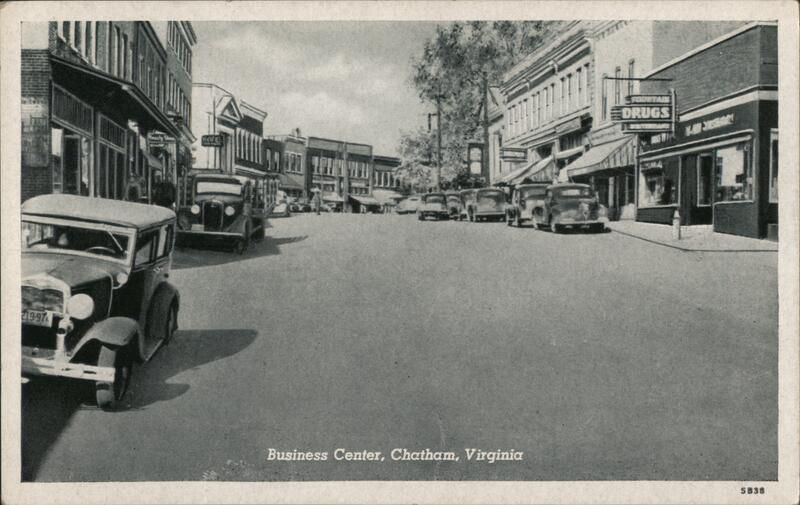
Chatham VA is a small town in southwest Virginia about 230 miles from Washington DC, with a population of only 1,232. Chatham is interesting to me because it was the site of a real estate project, whose owner I represented when I first entered the private practice of law in 1972. And here is my confession:
I graduated from law school in 1967, and between then and 1972, I did some post-graduate work, I served in the military, I worked for the urban renewal agency of the City of St. Louis, and I worked for the U.S. Department of Housing and Urban Development (“HUD”). In May, 1972, I accepted a position with a small, two year old Washington DC law firm, which was created to help clients involved in affordable housing and community development. It was my first job actually practicing law.
I was not sure what I was going to be doing as a lawyer, and expected to practice with a private firm only a few years before going back into government or some other form of public service. I did not know that I was starting a private law career that would extend 40 years, until I retired.
One of the first assignments I had was to represent a small company located in New Jersey which was going to build a multifamily townhouse project in Chatham VA through an FHA insured mortgage loan and rent subsidies provided through what was known as the Section 236 program. The subsidies which would be paid by HUD to decrease the owners’ monthly payments from what was then probably a loan which bore interest at, say, 7%, to the amount due under a loan of the same amount which which would carry a 1% loan. The mortgage interest subsidy was made available through the Section 236 program on condition that the mortgage savings were used to reduce rent levels so that families would relatively low incomes could afford to live there for at least 20 years.
My job was not to be the local real estate lawyer (we had one of those, and I was not licensed to practice in Virginia in any event), but rather to represent the owners with regard to their relationship with the lender, the architect, the contractor, and (and here is where our supposed “expertise” came in) with the federal government. I don’t remember much today about the local Virginia lawyer. He may have been very experienced, or he may not have been. I really don’t know. But I was completely unexperienced, never having participated in a transaction of this nature.
In addition, this was not a normal Section 236 project. This was a townhouse project where each townhouse had its own legal description and property tax obligation, and – in fact – it was the goal of the owners, once the 20 year compliance period had passed, to convert the development into a condominium development, selling off units (without income restrictions) townhouse by townhouse. It was very complicated.
The mortgage lender (who obtained FHA mortgage insurance for the loan) was one of the large banks in Charlotte NC. I dealt with their loan officer and his attorney without difficulty during the pre-development period. The run up to the construction loan closing (to be held in the Richmond VA HUD field office) had a number of ups and downs, but proceeded at what I assumed was a normal pace, and after several months of preparation, the closing itself was set.
Because I had never attended much less participated in a HUD Section 236 loan closing (or any other HUD closing), I anticipated that I would travel to Richmond with the senior (not really senior, he was under 40, but he was senior to me) partner with whom I was working. It was only a few days before the closing that I was told this was not to be the case, and that I was to go to the closing myself.
In typical HUD loan closings of this type, it was the owner’s lawyer, the lawyer who represented the owner in regard to federal matters (i.e., me), who conducted a closing in the presence of the HUD representatives, the owner, the lender’s representatives, the contractor, the architect and the title company. This becomes complicated, especially when you have no idea how to do this, and when you have never met in person any of the many people in the room.
But there I was. I knew what had to be signed, and I handled the papers, passing them back and forth, although not nearly as efficiently as I would learn to do in the future. I knew what I knew, and I knew what I didn’t know. I just hoped that the questions that I knew I could not answer would not come up. And all was going smoothly, until I was asked a title insurance question. I don’t remember the question, but I remember that there were two possible answers (perhaps they were “yes” and “no”), and I had no idea which was correct.
Of course, I hadn’t told anyone (including my clients) how inexperienced I was and throughout the process I could see how strongly I was being relied upon. (I should have said this before. My clients were as inexperienced as I was – they had never built a HUD related project before. I knew their naivety; they were unaware of mine.) But when this question came up (and it was an important one, not a tangential one), I excused myself (I forgot what excuse I gave) and went to a payphone (if you remember those) and called my 38 year old senior partner back at the office.
I asked him the question, knowing that he would know the answer because (in fact) the question was one that would now and then come up in a closing at a HUD office, and I was surprised when his answer was “I have no idea.” “What?”, I asked. “No clue. You are on your own on this one.” “Hasn’t this come up in other closings you have been involved with?”, I responded. His answer floored me: “No. I have never done a HUD closing. This is the first HUD closing the firm as ever done.”
Obviously, my due diligence was insufficient. It never occurred to me that the firm had never handled a HUD closing before, so I never sought to ask. Why I wasn’t told, I don’t know to this day. But when I heard what he told me, my heart actually fell to the ground. This was one of the only times in my life, I was caught short like this. I was panicked.
I went back in the room, having thought through the question, and made what might have been an educated guess, but was still a guess. Again, I don’t remember the question or the answer, but I must have done alright. The closing went forward, everyone was satisfied, and I got in my car and drove the 2 hours from Richmond to Washington feeling accomplished, but not happy.
The last event that takes place in the HUD office at this type of closing is that the mortgage note which evidences the construction loan for the project is signed by the owner as borrower and then is “endorsed” by a qualified HUD official to evidence that the lender now had FHA insurance on the loan. What that means is that if the owner misses a payment and the loan goes into default, the lender can transfer the loan to HUD itself (as a replacement lender) and receive an FHA insurance payment from HUD in return.
I quickly wanted to put this experience out of my mind, and that is what I did. I did not expect any additional work from our clients, as they were not likely to build another development of this type. I went on to do other things.
But one day, about six months later, my office phone rang, and on the phone was the mortgage officer who represented the lender (the bank) at the closing, telling me that the owner (my old client) had defaulted on the loan mid-construction (an unusual occurrence, but no surprise to me knowing the inexperience of the owner), and that the lender was going to assign the loan to HUD. I expressed my condolences and assumed he was calling me just to inform me.
But, no, there was more. When a loan goes into default and an FHA insured lender is going to assign the loan to HUD, the lender needs really only to present one document – the original note which bears the FHA insurance endorsement of the HUD official. Without this, loan assignment becomes both more complicated and, I guess, to an extent even uncertain. And, the mortgage officer told me, he could not find the endorsed note in their files, and wondered if I took it with me by mistake.
By now, I was much more sophisticated than I was six months previous, and I told him that he must have it, and that I was sure he would not have left the closing without it. He then told me what I should have guessed. This was his first HUD closing, too.
I remember going into the file room and pulling the closing file, certain that, while I was inexperienced at the closing, I certainly was not so inexperienced that I would have brought the lender’s note home with me. But, lo and behold, there it was, sitting there among all the now worthless other documents that were signed at the closing.
The bank employee was ecstatic, and – as far as I remember – I never told him that I was a rookie, too.
All’s well that ends well. Lesson learned. And yes it made me a better and more careful lawyer, although I must say there were more lessons to be learned, two of which were just as basic as this one.


One response to “I Confess (Part 1)”
Boy oh boy– this brought back memories of doing something for the first time. Scared the hell out of me.! Leah Chanin
LikeLike