We paid our first visit yesterday to the new National Geographic Museum, which, as you may have guessed, has replaced the Old National Geographic Museum. The old museum looked like it was designed by Rube Goldberg – wherever they could find space to put something on the first floor of the National Geographic headquarters, they would. Not that that was bad, but now they have a regular museum. Here is the foyer:
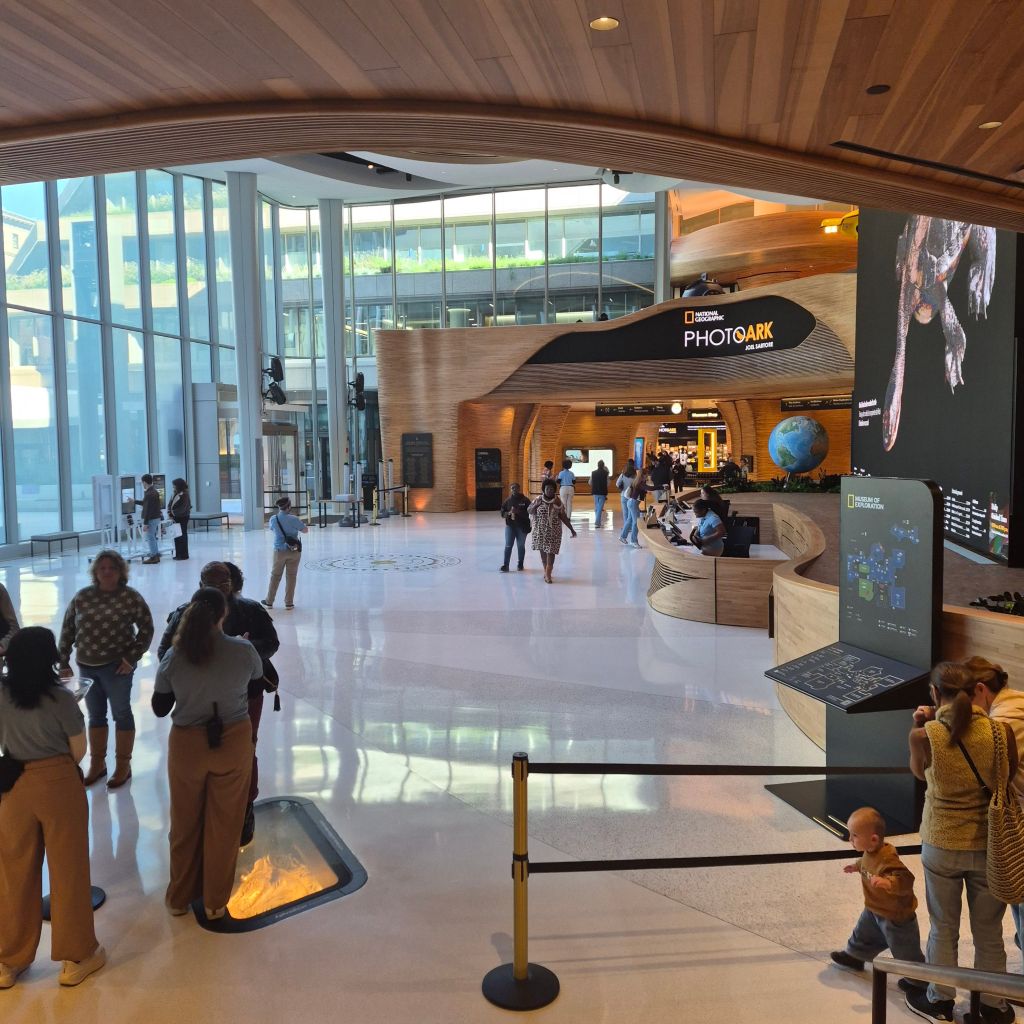
The museum is very spacious and very comfortable. But there are some negatives, the biggest being the ticket prices – $27 for seniors, $24 for children 5 to 17, and $30 for other adults. Another is that you can’t go into the gift shop or the restaurant unless you have a ticket. You normally don’t see that in a museum, but I guess they don’t want lawyers to crowd out tourists at lunch.
A large portion of the extensive first floor exhibit space is devoted to National Geographic photography, much of which is absolutely beautiful. Here are a few examples.
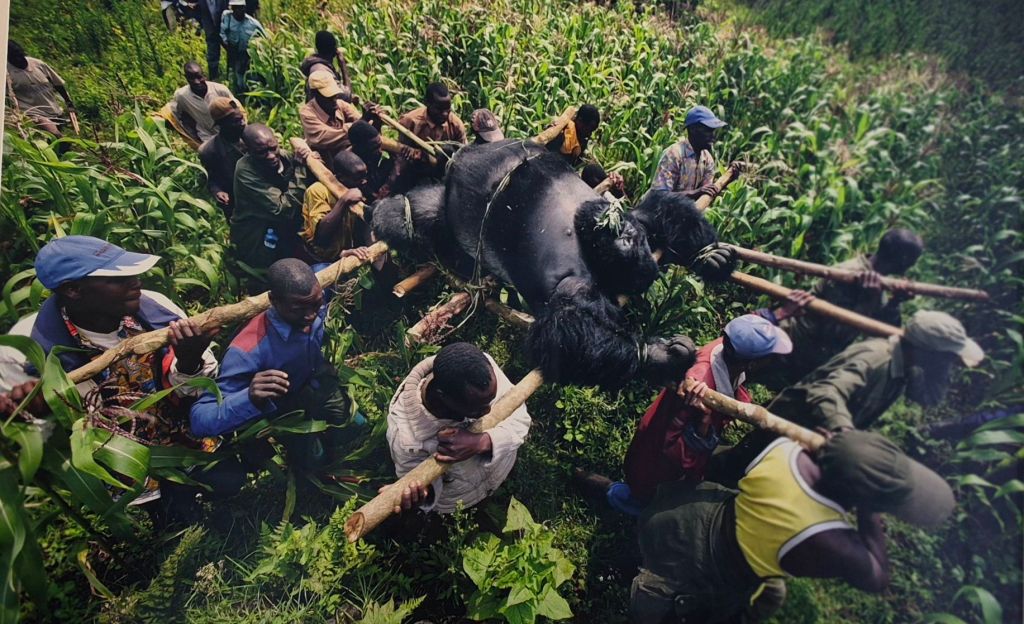
An illegally poached and killed gorilla, being respectfully carried away from the site of its murder.
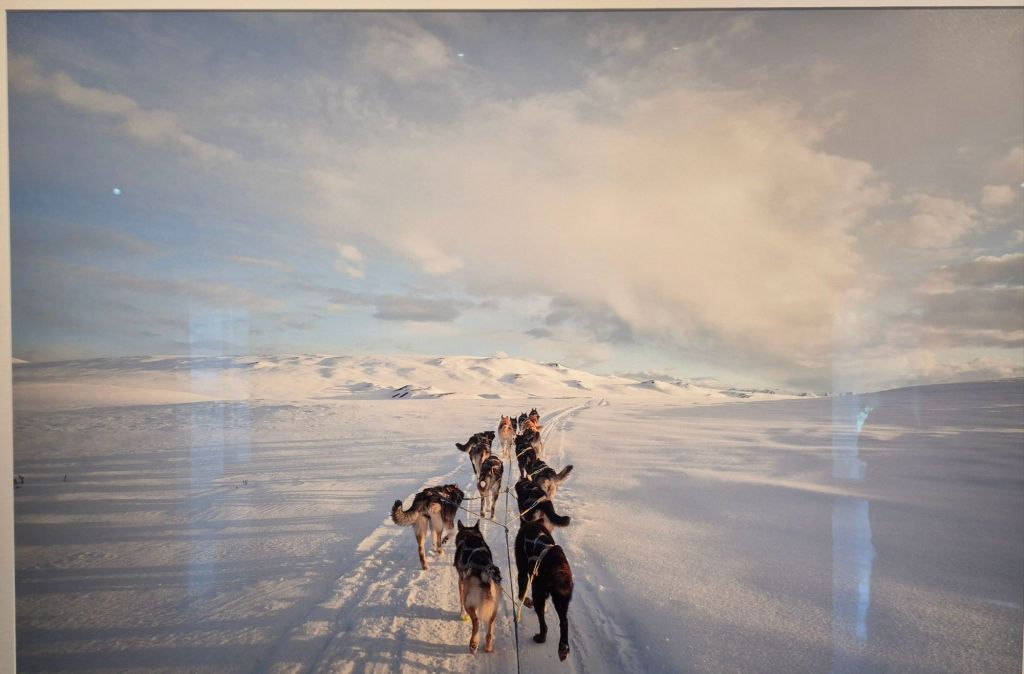
This is a dog sled in Alaska.
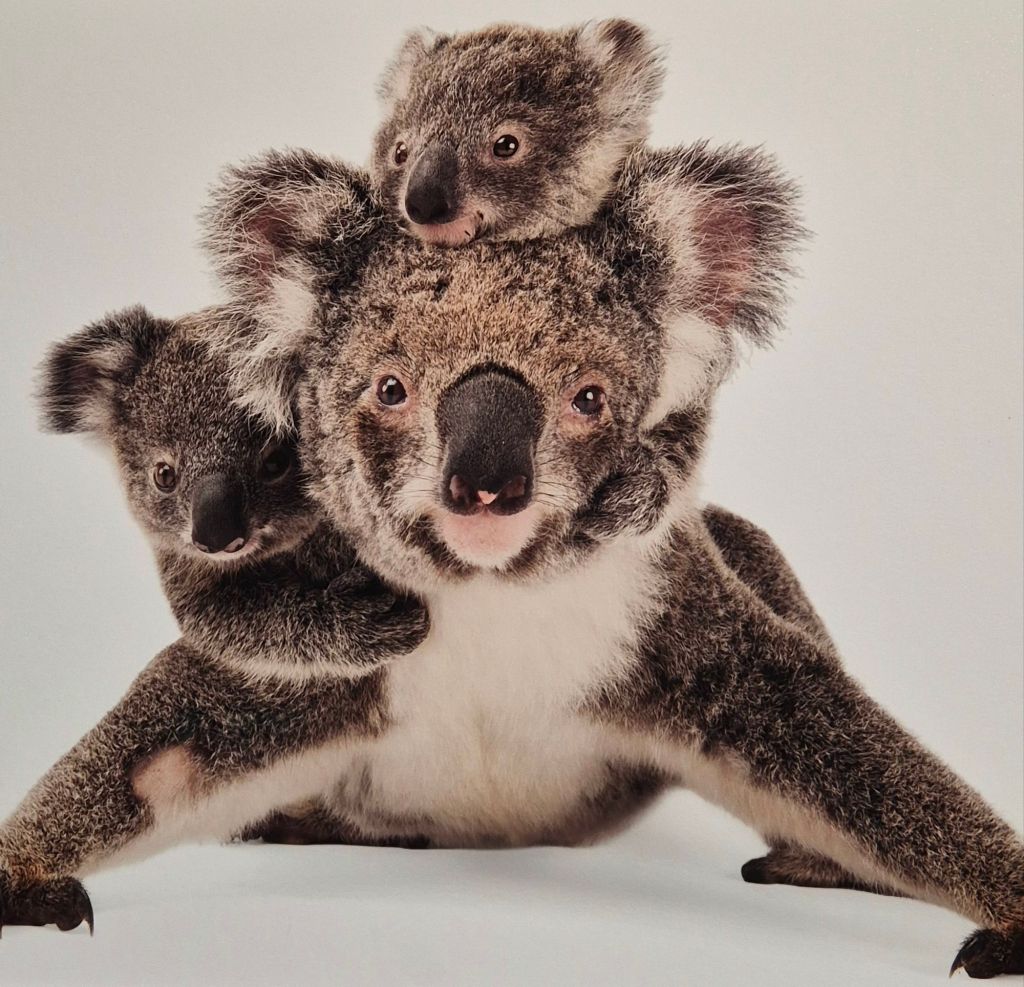
The second exhibit highlights the work of animal photographer Joel Sartone, who has been working for the past 20 years on photographing every animal species under the control of man. This means, I guess that he is not a wildlife photographer, but a photographer of animals in captivity. There are about 25,000 animal species held in captivity, and Sartone has so far photographed 18,000 of them. This exhibit is very nicely arranged , showing information, including place of residence, of every animal shown, and information about their habitat and conservation status. Here is a photo of an endangered koala (actually three).
The second floor has individual bios of over 400 explorers involved in Nat Geo or related projects, as well as equipment including a bathysphere and a seabed walking uniform.
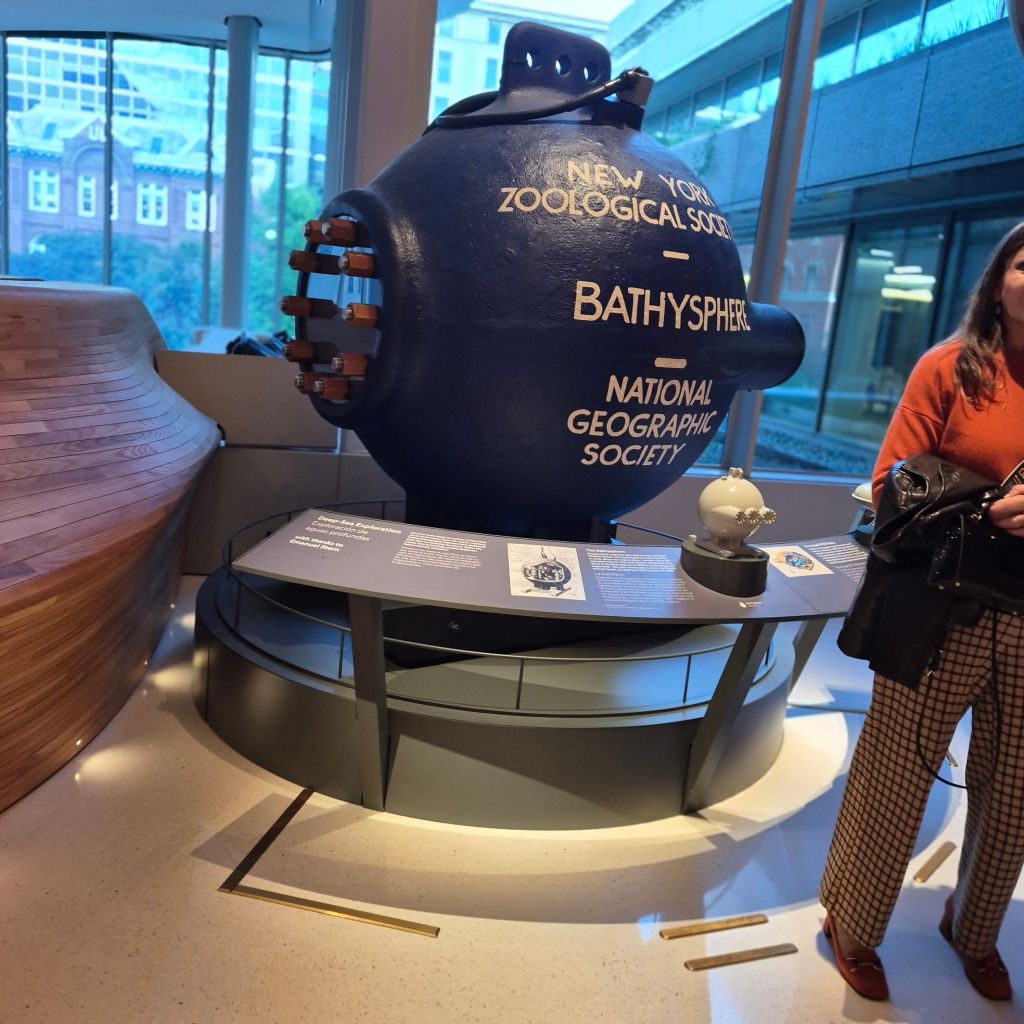
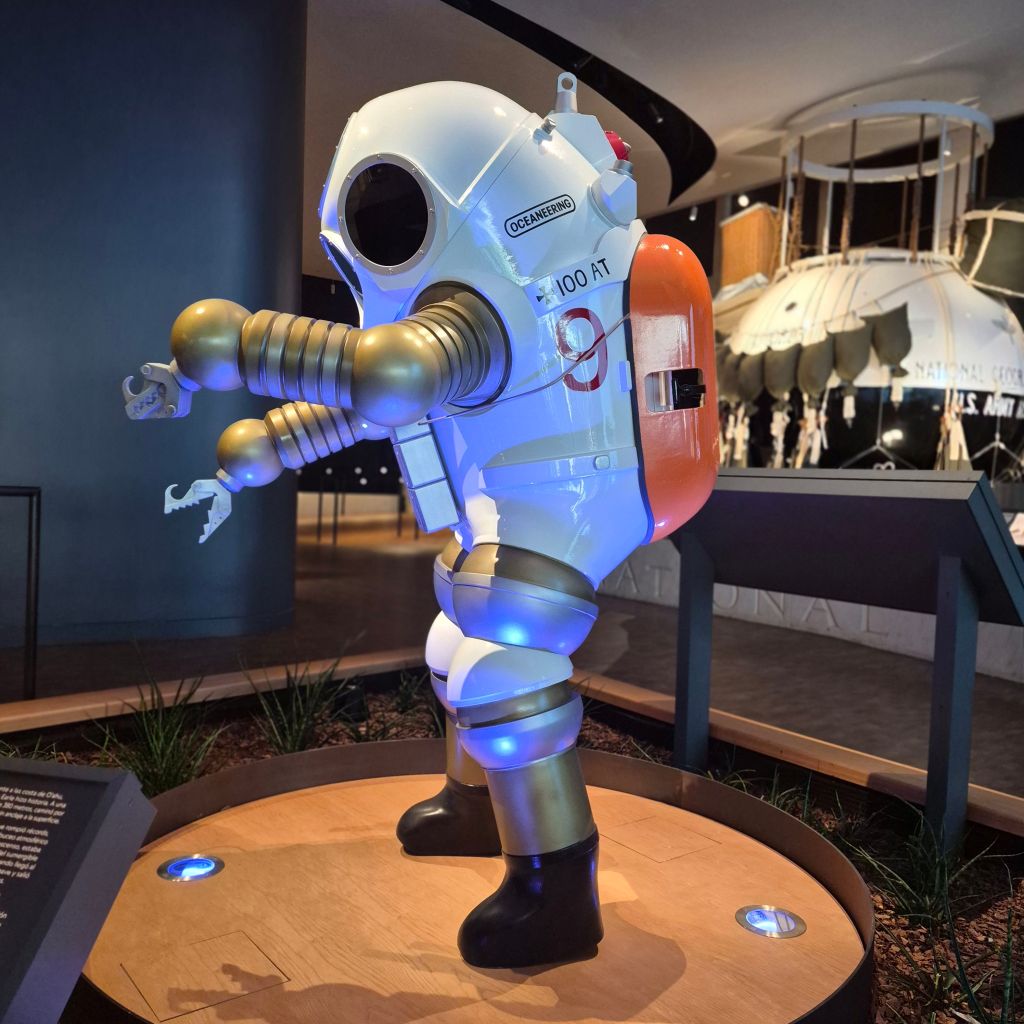
One thing I realized about the National Geographic Magazine that I remember from years past. I recall the articles divided into four categories. The largest section was devoted to how people lived around the world (e.g., how Laplanders got through the winter). The second would be technology (e.g., how they mine diamonds in South Africa). The third would be geography (e.g., mapping the Sargasso Sea), and the fourth would be animals. No longer. People living in remote places must be taboo. Technology is only relevant if it supports exploration. Almost everything is animals.
We spent a little over an hour, maybe 90 minutes. We didn’t feel rushed, but a longer, slower visit may be better, one with a lunch break. The Eatery is intriguing with separate stations offering American, Italian, Vietnamese, Syrian, and Peruvian food.
Yes, a trip to the museum is worthwhile. It is just not for the feint of purse. That’s too bad.
Looks like No Kings Day was a success not only in this country, but around the world. As Edie said, it must be different to go to a No Kings rally in England.
What else? A personal defeat. I always think it a defeat when I stop reading a book in the middle. Especially when I am not really critical of the book. So I apologize to French author Gil Buhet for two reasons. For shutting his book on page 79 and for having no idea how to pronounce his name. Oh, the book? The Honey Siege. It’s the story of a rural school teacher whose only hobby is bee keeping and whose honey is stolen. The teacher is certain it is one of a gang of his pupils and decides on collective punishment. The pupils are outraged at the teacher’s suspicion and form a bond to suss out the real perpetrator. It reads well, but who cares?
Today, it’s the theater and hats off to my assistant Muse who saw we had tickets and told us we shouldn’t miss the pre-show discussion. We didn’t know about a pre-show discussion, so thank you, Muse.
In the information she gave us about the show, Muse said “One thing I liked…”
Whoa. Muse, “how can you “like” something?”, I asked.
Muse does not miss a beat. She told me “Fair catch.” She said that “like” for me and “like” for her or not the same. She told me that, when she tells me she likes something, it means that it is something I would probably want to see. It is “salience, not emotion”.

