When you have a bad head cold that hangs on for over a week, and you give up all non-essential ventures out of the house, you do have time to do some things that you otherwise might not get around to doing. For example, this week I read two books, and I spent time working on a family tree on the both very helpful and frustrating ancestry.com website.
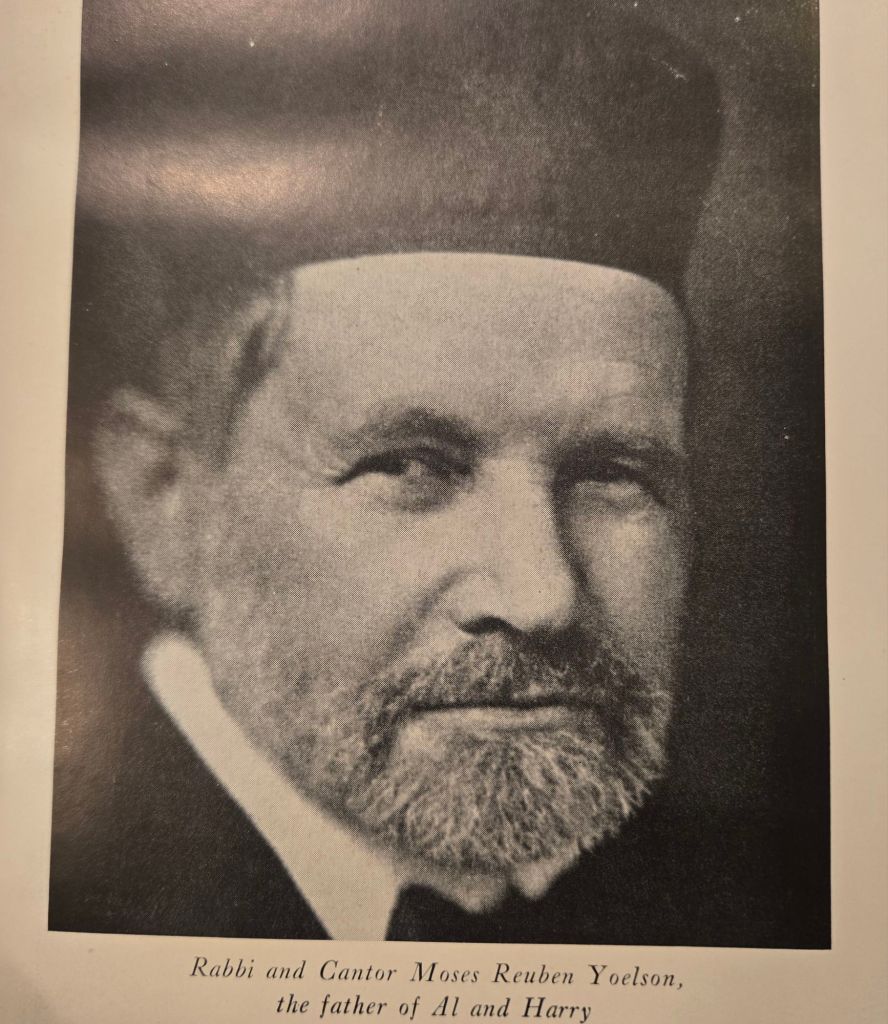
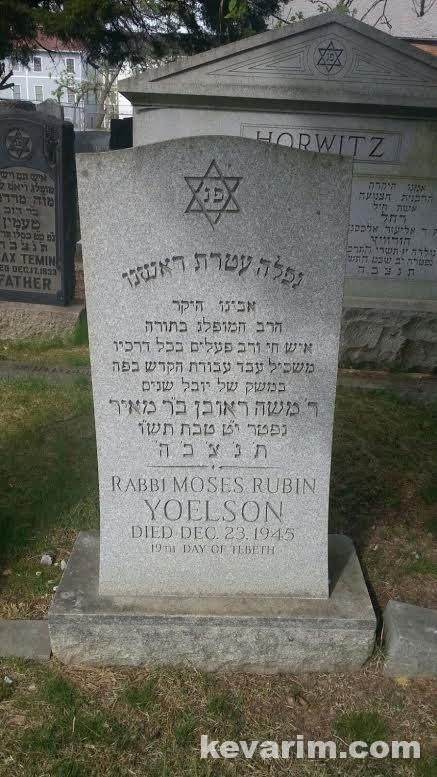
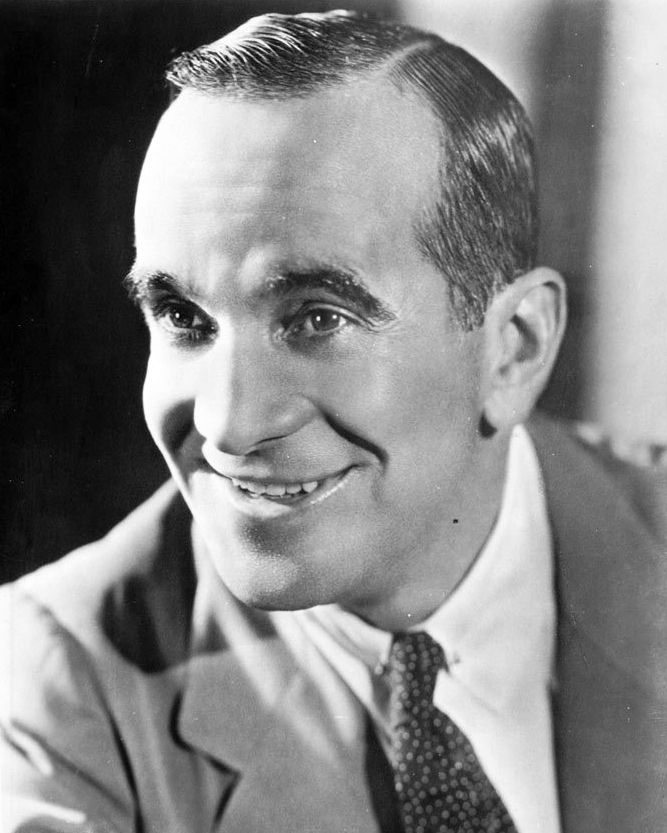
Some of my readers who are also friends and relatives know that, on my father’s side, I am related to Al Jolson, considered by many to be America’s best entertainer until his death in 1950. Jolson was my father’s first cousin. My grandfather, Abraham Hessel, was the youngest brother of Jolson’s father, Moshe Ruben Yoelson, a rabbi/cantor who started his career in a small village on the Nieman River in Lithuania (then part of the Russian Empire) and ended it in Washington DC. He led the old orthodox Talmud Torah Congregation in Southwest DC until it was torn down via urban renewal, and became one of the two synagogues forming today’s Ohev Shalom synagogue on upper 16th Street in Northwest DC.
I was seven when Jolson died, and never met him. I was, I think, two when his father died. In fact, the only Jolson I knew was Al’s younger half brother, George, who was a DC commercial real estate broker, and one of the world’s most affable people. George lived not far from us on Nebraska Ave, and died in 1994. His widow, Adeline, lived to be 100, and I would see her now and then in the neighborhood.
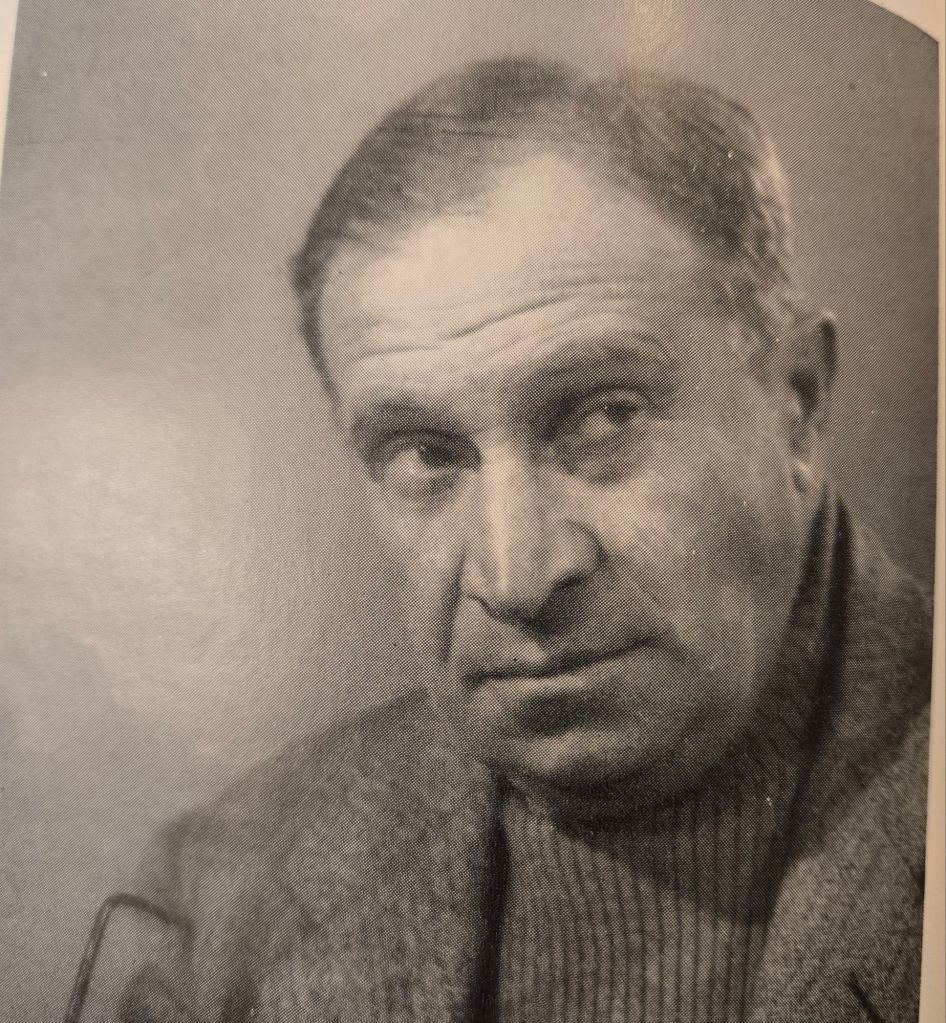
Al Jolson had an older brother, three years older, named Harry, who was also an entertainer, mainly in vaudeville, and who outlived his brother by a few years. He, like Al, lived in Los Angeles, and in 1951 published a book, Mistah Jolson, which was a memoir, and in which Al played a very prominent role. I have had a copy of this book for decades, but I think this is the first time I read it cover to cover.
My father’s and the Jolson brothers’ grandfather was named Meir Hesselson, and he lived (and they were raised) in northern Lithuania, near the Latvian border. The obvious questions are: if Meir was a Hesselson, how did two of his sons become Hessel and Yoelson. And, then, how did a Yoelson have two sons who became Jolsons.
Whether you care about the answer, I don’t know, but some of you do, and others may find it moderately interesting, so here goes:
In the late 19th century in the Russian Empire, all young men were subject to the draft, except for oldest sons. (Now, I am probably oversimplifying, but this is good enough for our purposes.) So my grandfather’s oldest brother, Barnard, could remain a Hesselson, and did, even after moving to America and settling in Elmira, NY. The Hesselson store is still there, although under non-family ownership. But the other four Hesselson boys needed to create fake identities to avoid the draft.
Now, how this was done, I am not really sure, but it must have been sort of an industry, with one branch creating fake identification papers, and another branch knowing what officials to bribe (again, I am sure I am oversimplifying, but who cares?). And it seems that once a young man was set with his new identity, the next thing for him to do was to skip town. And that is what each of Meir Hesselson’s five sons did. And they all eventually made it to America.
So, in this process, Moshe Reuben Hesselson became Moshe Reuben Yoelson, and he became a rabbi in the old country, with a small congregation in the village of Srednik, west of Kovno, in central Lithuania. He had six children in Lithuania and, when Al and Harry were about 6 and 9, he left for America, bringing the rest of the family to join him in Washington DC about three years later. It’s an interesting story and Harry lays it out nicely.
But how to get from Yoelson to Jolson? It was a two step process, both by happenstance, not planning. When Al and Harry started school in southwest DC, not yet knowing much English, they were asked what their name was. They responded “Yoelson”. The teacher nodded and wrote down “Joelson”, and that was that. Yoelson, for the kids, became Joelson; for their parents, it remained Yoelson.
For the second step, you have to move forward about 10 years. Al and Harry, much to their father’s displeasure (to put it mildly) had become obsessed with theater and entertaining, starting by busking on downtown DC street corner. At 15, Harry ran away from home (he had finally found himself with some money, as a prominent man he knew from hotel busking got sick after he came out of a brothel, and Harry helped him get a cab to go home; he gave Harry a $10 gold piece to thank him and to ensure he kept quiet about the affair, and this gave Harry sufficient funds to run away) and went to New York. Al followed not long thereafter (this is another story for another time).
In their early 20s, the two Joelson brothers formed a vaudeville act with a third man, named Joe Palmer. Palmer was an older actor who had become wheelchair bound, and the act was based on three characters, one a patient, one a doctor, and one sort of a go-fer. Yes, tastes were different in those days. One day, at a new venue, the theater operator was preparing the marquee for the front of the building and told them that Joelson-Parker-Joelson had two too many letters for his sign. So, the boys told him just to drop the “e”s in their name, which he did. And from then on, they were each known as Jolson. As simple as that.
The book itself tells not only of the adventures of the Jolson boys, but also the American entertainment scene at the time. This was, of course, before motion pictures, and before the development of musical shows with plots. All entertainment was in the form of revues, with singers, dancers, comedians, one act following another. Jobs were tough, pay was very low and often not available. A hard life.
For a long time, the Jolson brothers shared relatively the same level of fame, although their personalities were obviously different from the start, with Harry being much more settled, and Al being a nervous wreck who was only able to control himself on a stage. Al’s confidence and ambition were also at different levels and soon he outshone is younger brother in fame, so much so that people began to confuse the two, to the detriment of Harry. There were a number of examples where someone would come up to Harry, introduce themselves and tell them that they once performed on stage with Al. They would explain when that was, and Harry would say “No, that was me, not Al”, and they wouldn’t believe him. As Harry says in the book, it turned out that there were two Jolson brothers, and both of them were Al.
It’s an entertaining book, I think, although maybe today for a specialized audience. Harry continued his vaudeville career, both in the U.S. and in the UK, where the music hall tradition remained strong, while Al wound up in the first talkie picture, The Jazz Singer, which kept his career alive. In the late 1930s, though, Al’s career began to wane, and was “saved” by the entry of the United States into World War II, when Al became the first, and probably most active, entertainer to join the USO and perform for American troops around with world tirelessly. After the war, he became the subject of a pseudo-biographic film, The Jolson Story, which became an enormous hit. As Harry (who was left out of the film) said, it was a biographical film for anyone who didn’t know the story of Al’s life. It was more fiction than fact, but was advertised as fact.
When the Korean War began, Al went on the road again, in spite of doctors’ warnings that his health would not permit it. Coming back from a trip, playing cards with friends, Al Jolson had a heart attack and died. He was 64. He left behind his young widow (third wife), and two young adopted children. He never had children of his own. Nor did Harry, whose 40 year marriage ended with his wife’s death in 1947. He married again, a year later, to a woman who had two young teenage children. I assume (I don’t know) that he adopted them, because they both took the Jolson names. I know a little about what happened to them, but not enough to say. I am somewhat curious, of course, but their fate for some reason is just not at the top of my list(s). Some pictures follow:


3 responses to “The Jolson Story (Abridged)”
while you told me some of this it was enjoyable connecting the dots. Didn’t have chance to google but didn’t Larry Parks play Jolson in the movie,
Also didn’t you tell me that according to your relatives Al was not the friendliest person and didn’t associate much with his relatives?
LikeLike
yes and yes
LikeLike
Well done
? ________________________________
LikeLike