I pulled out the contents of a random drawer in my office desk, which has 12 drawers. What would you do with these things if you were clearing out my house?
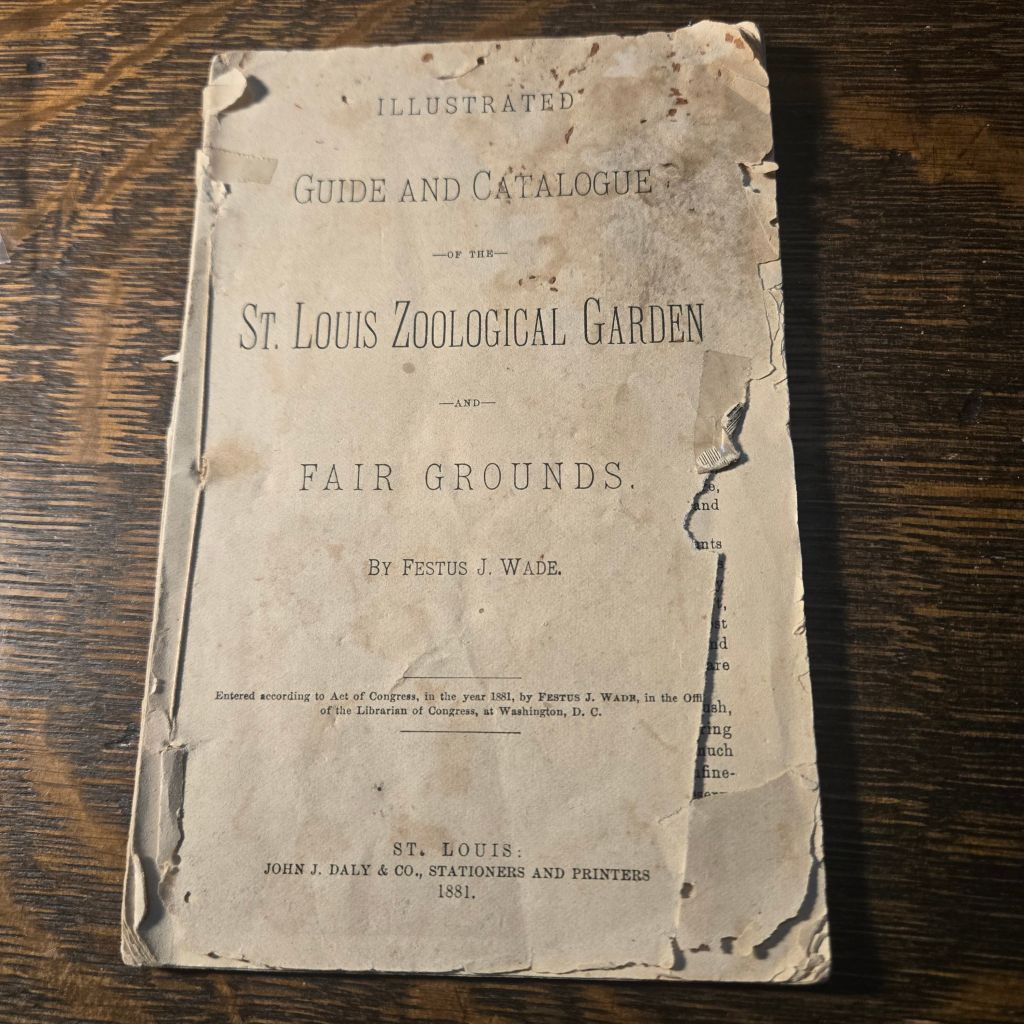
I am sure that guides to the renowned St. Louis Zoo are a dime a dozen. But this one is from 1881. You might be confused if you thought the St. Louis Zoo was established after the 1904 World’s Fair closed. You actually are correct. This is a much earlier, private zoo located at what is now Fairgrounds Park in north St. Louis.
The guide was written by 22 year old Festus Wade, who later became one of the leaders of the organization which developed the World’s Fair, as well as the founder of the Mercantile Bank and Trust, for a long time St. Louis’ largest bank, and then president of the American Bankers Association, and an individual asked by President Taft to help draft the Federal Reserve Act.
I have not located another copy of this booklet.
This original zoo had a large building called the Bear Pit, which held grizzly and black bears, and which still exists today, unused. And no one, I bet, who uses that park knows what once was there.
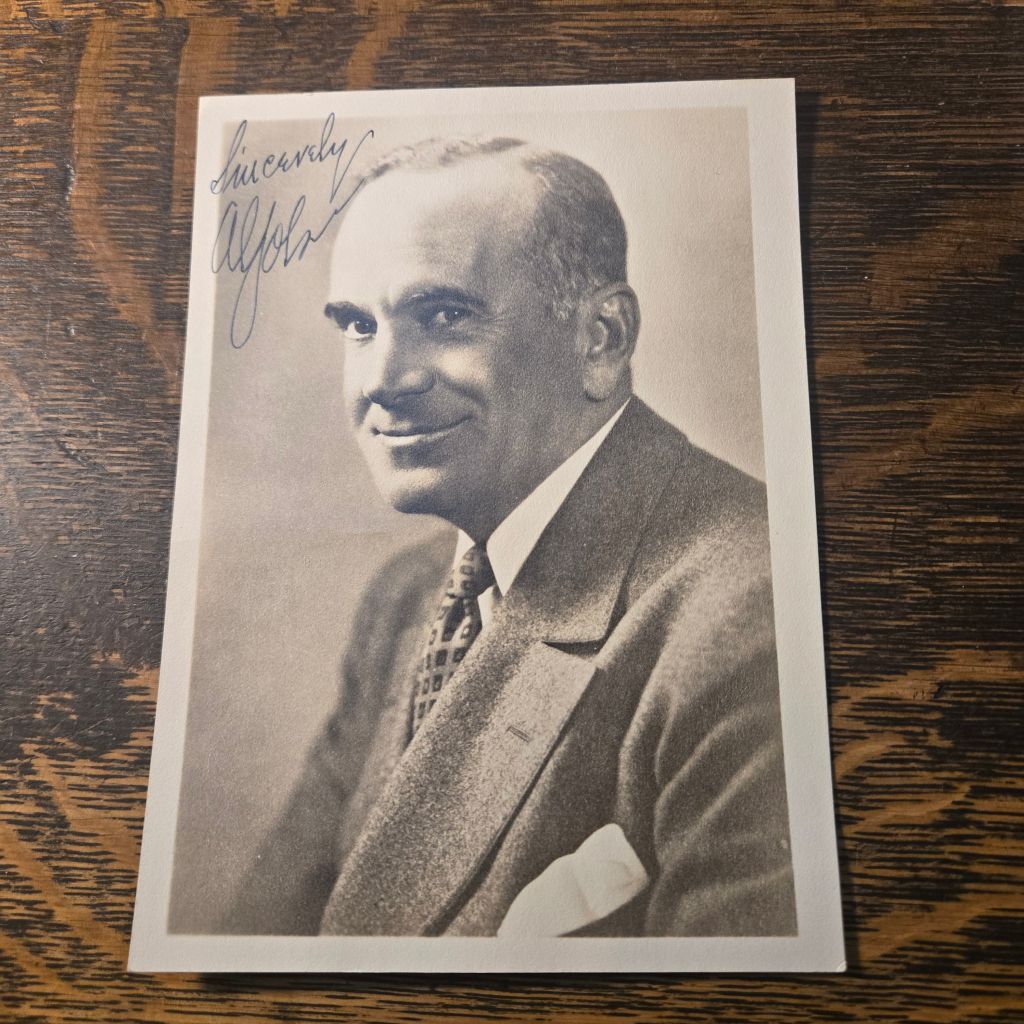
I think I said this before, but singer Al Jolson and my father were first cousins. I have quite a collection of Jolson memorabilia. This signed photo is one piece that does have some value. Jolson’s father, Moshe Reuben Yoelson (my grandfather’s older, but not oldest, brother) lived in Washington DC, where Jolson was born. He led a synagogue in S.W. DC (the building is no longer there), which merged into today’s Ohev Shalom Synagogue on 16th Street. I never met Jolson (who died in 1950) or his father, who died earlier.
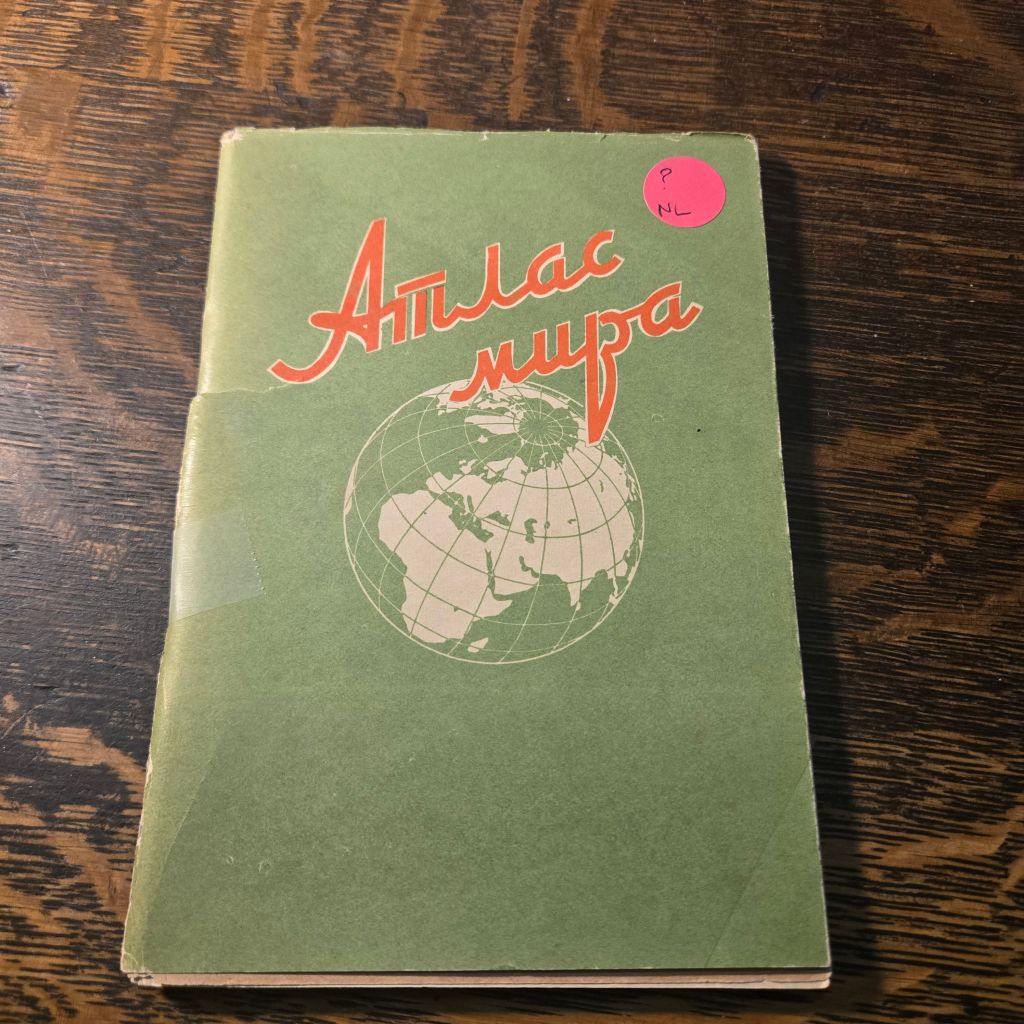
This is a small Russian (or I should say Soviet) world atlas from 1960. I know no one keeps or uses any atlases today, and one in Russian from 1960 has limited value, but I have a number of Soviet atlases of that vintage, as well as a Russian language globe in perfect condition. It’s interesting because it notes lakes and rivers and mountain ranges, and oceans and cities, but has no country markings at all. It is not in a drawer.
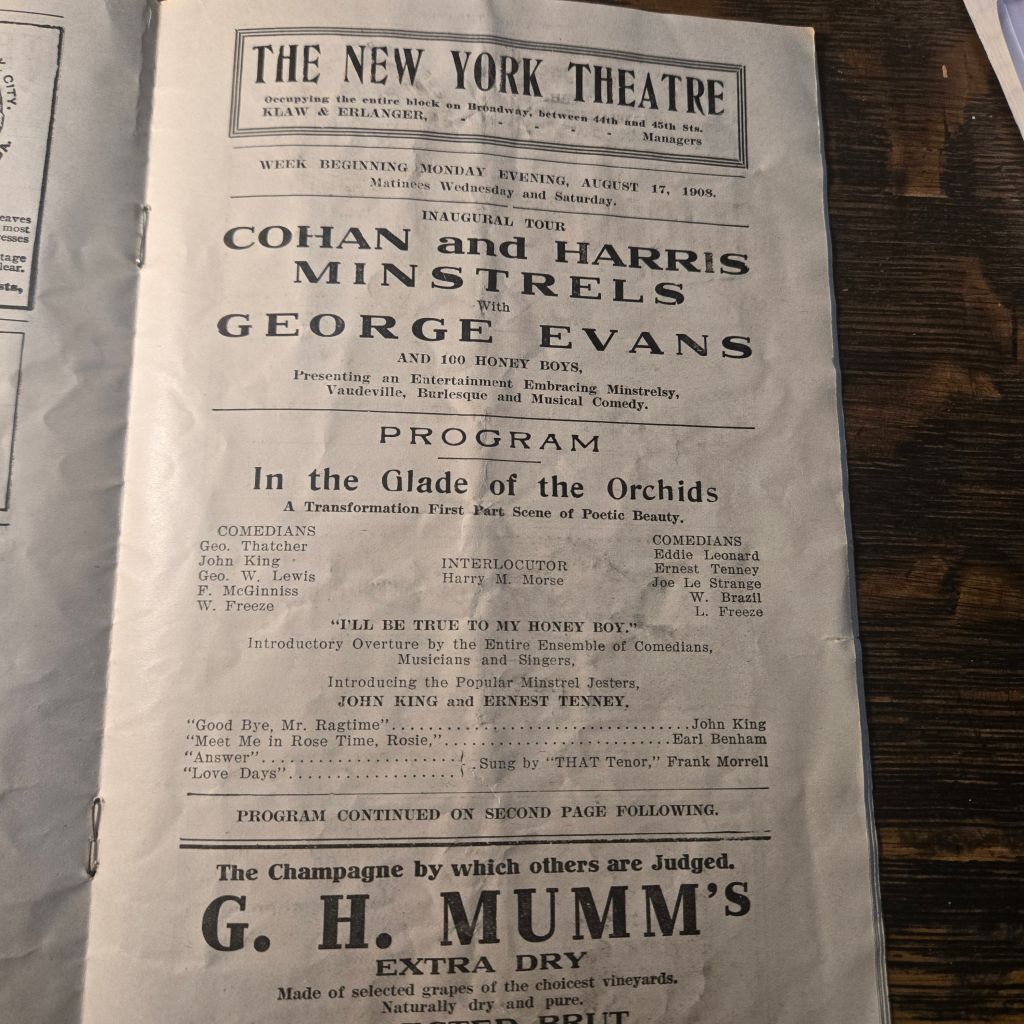
This theater playbill may have limited interest to most of you. If you were clearing the house and came upon it, what would you do? Easy to toss it, right? Looking on EBay, though, I see that someone is selling a copy from the same year (but Washington instead of New York) for just under $200. Maybe throwing it out would not be so smart.
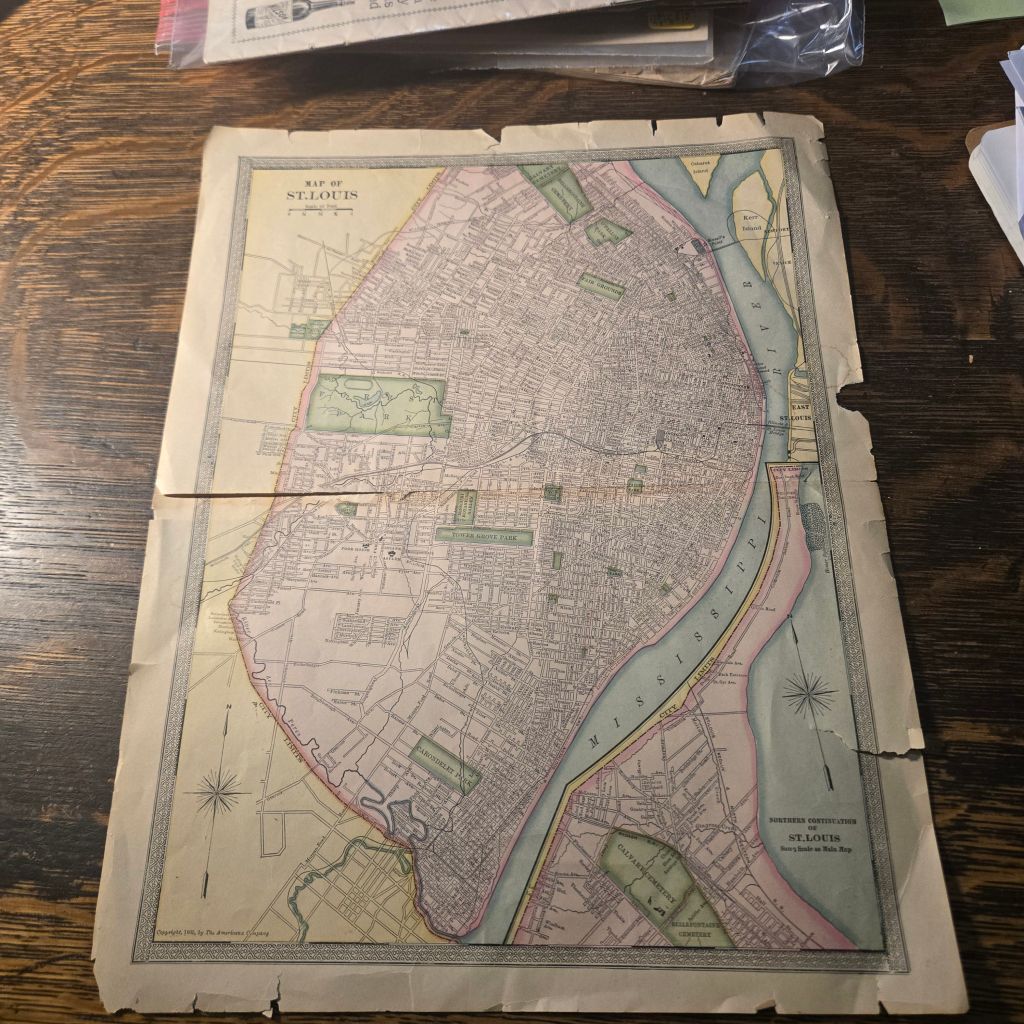
This map of St. Louis is from 1905, one year after the World’s Fair. Now look closely…..
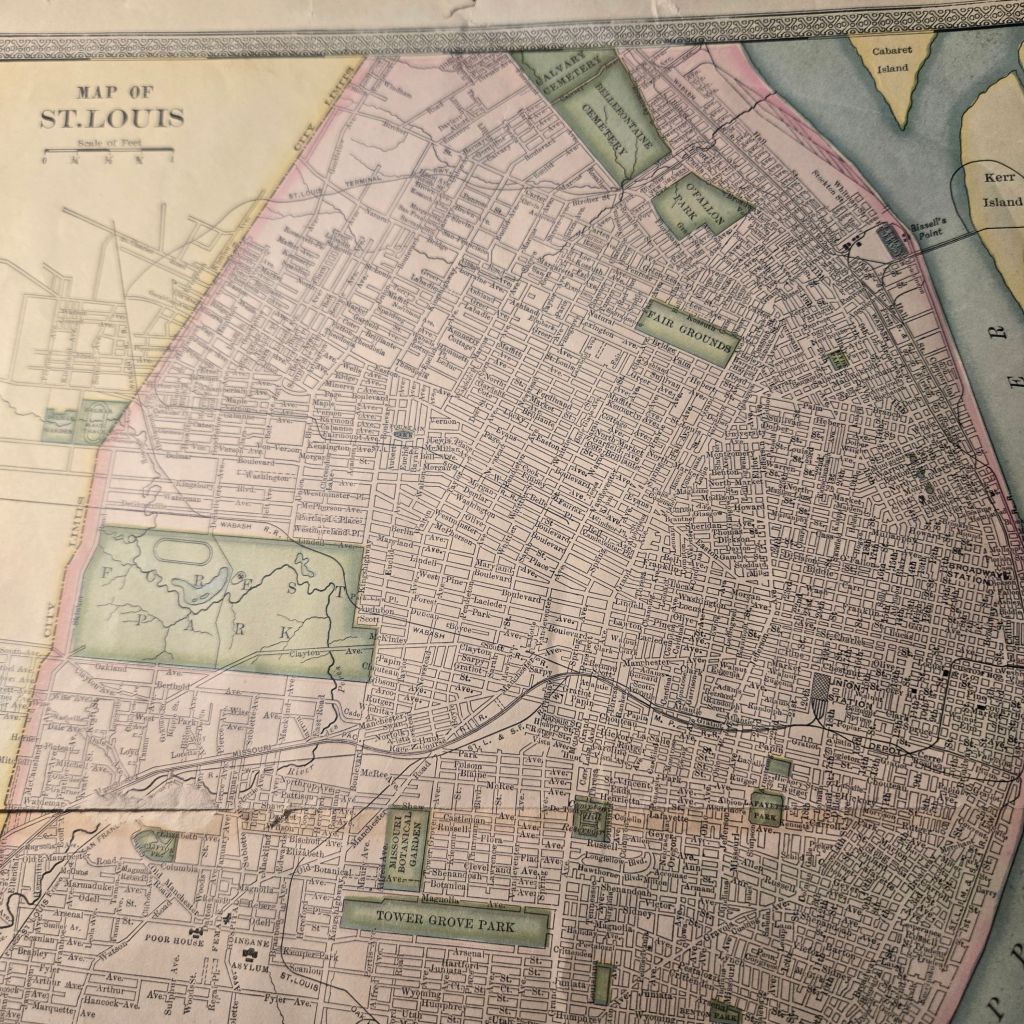
This is obviously the same map. Just as obviously, perhaps, the green marks show city parks and cemeteries, pretty much the same today as then. The largest park (center, left) is Forest Park, where the Fair was located, and where the St. Louis Art Museum and today’s zoo can be found. As an aside, abutting the western park boundary, just outside the city limits, is the start of the Washington University campus. If you look northeast of Forest Park, you see some more green spaces. The smallest and furthest south is today’s Fairgrounds Park, the home of the old zoo referenced above. By the way, there was also a race track in the park. Horseracing was banned in Missouri in 1905. St. Louis’ three tracks all closed, and the area’s racing moved across the river to Illinois.
The rest of the drawer is a hodgepodge. An 19th century map of Africa showing a lot of unknown territory, a 19th century lithograph of the St. Louis waterfront, a very complete guidebook to Plymouth MA from 1920, a brochure in English and Chinese publishing the then new Constitution of the Republic of China in 1928, the year Chiang Ksi-Shek declared the country unified under a new overall structure (didn’t last that long), a note from right winger Pat Buchanan, a letter to Metropolitan Opera General Manager Schuyler Chapin, a 1920s invitation to “you and your lady” to attend a speech by Vice President Charles Dawes under the auspices of the Nebraska Society of Chicago, a 165 page 1946 guide to Washington DC with a large pull-out street map, a three-hole laminated notebook sheet on how to improve your bowling, and finally a small pre-Nazi German book titled Die Minnesinger, with very nice illustrations:
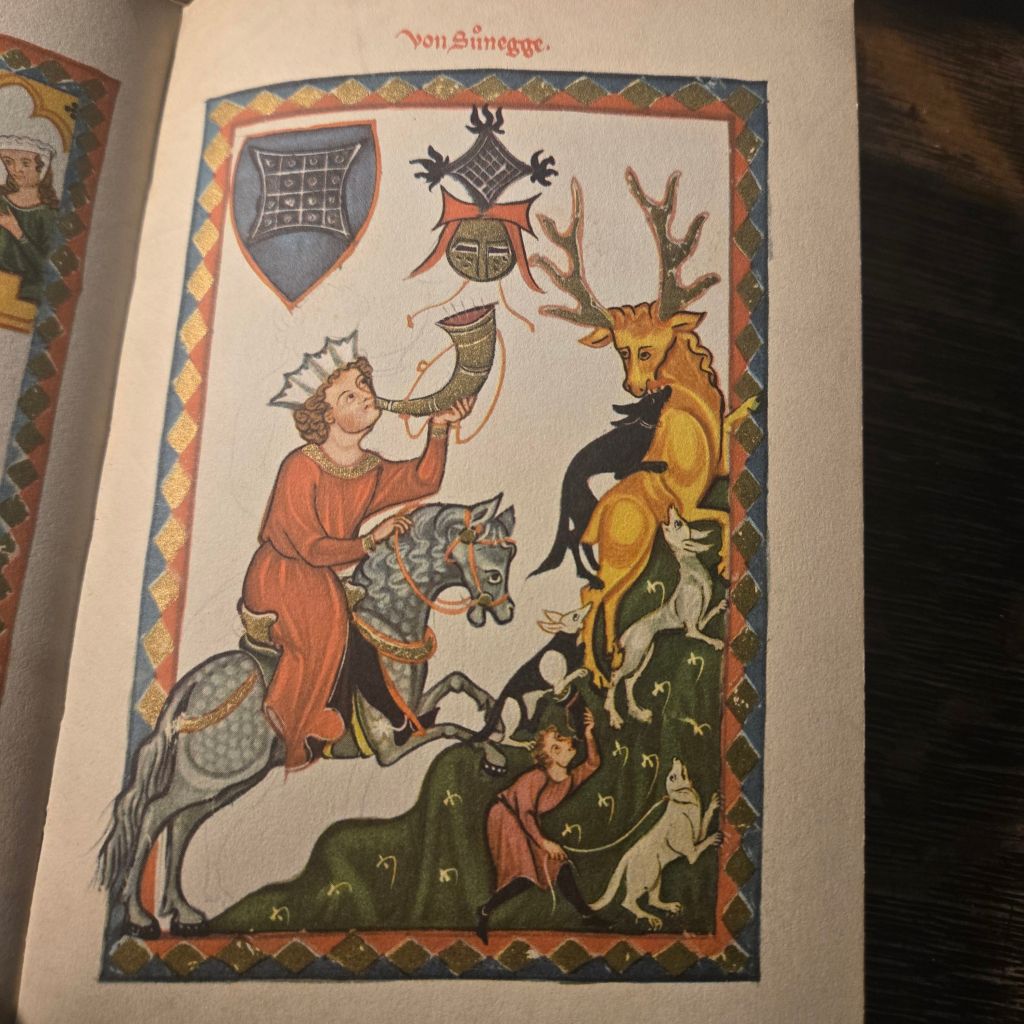
And, yes, my entire house looks just like this.
 Art is 80
2 responses to “Now You Can See What I Mean…”
I always marvel at the extensive range of your interests, Art.
LikeLike
sounds like you have a choice. Turn your house into a museum or a good will store
LikeLike