After Japan bombed Pearl Harbor and Germany declared war on the United States, President Roosevelt signed several “Presidential Proclamations” affecting citizens of enemy nations, whether German, Japanese or even Italian. But the severest of his proclamations came a few months later when he signed Order 9066, which had a more limited, but more unjust, scope.
Order 9066 affected residents of western United States were of Japanese, or partial Japanese ethnicity only. It didn’t matter if these individuals were citizens of Japan, whether they were in the United States legally or without authorization, or even whether they were natural born or naturalized citizens. They were rounded up, forced to abandon businesses and homes, and moved to barracks in isolated “camps” in remote areas of California, Arizona, Idaho and Utah. Altogether, about 200,000 ethnic Japanese were subjected to this treatment. Of these, approximately 120,000 were U.S. citizens. They were kept in these camps for up to four years.
Yes, there were objections. Lawsuits were filed, and the issue went up to the Supreme. In the well known Korematsu case, the Court ruled 6 to 3 that the dangers created by the war overrode the Constitutional rights of these individuals.
I had long known about this outrage, but paid little attention to it. Then, some years ago, there was a craft show at the Renwick, and a very, very good show, of works created by internees in these camps. It really humanized the situation for me.
Now, at the Smithsonian’s American Art Museum, there is a large exhibit of paintings by three women, two of whom were interned in these camps, and one of which was able to avoid interment by moving to another part of the country. Their names are Miki Hayakawa, Hisako Hibi, and Mine Okubo. I visited the exhibit today and listened to most of a tour given by an excellent museum docent.

This painting was made before the car during the depression, when Okubo worked for the Federal Arts Project.
Here is another by Okubo from the same period.
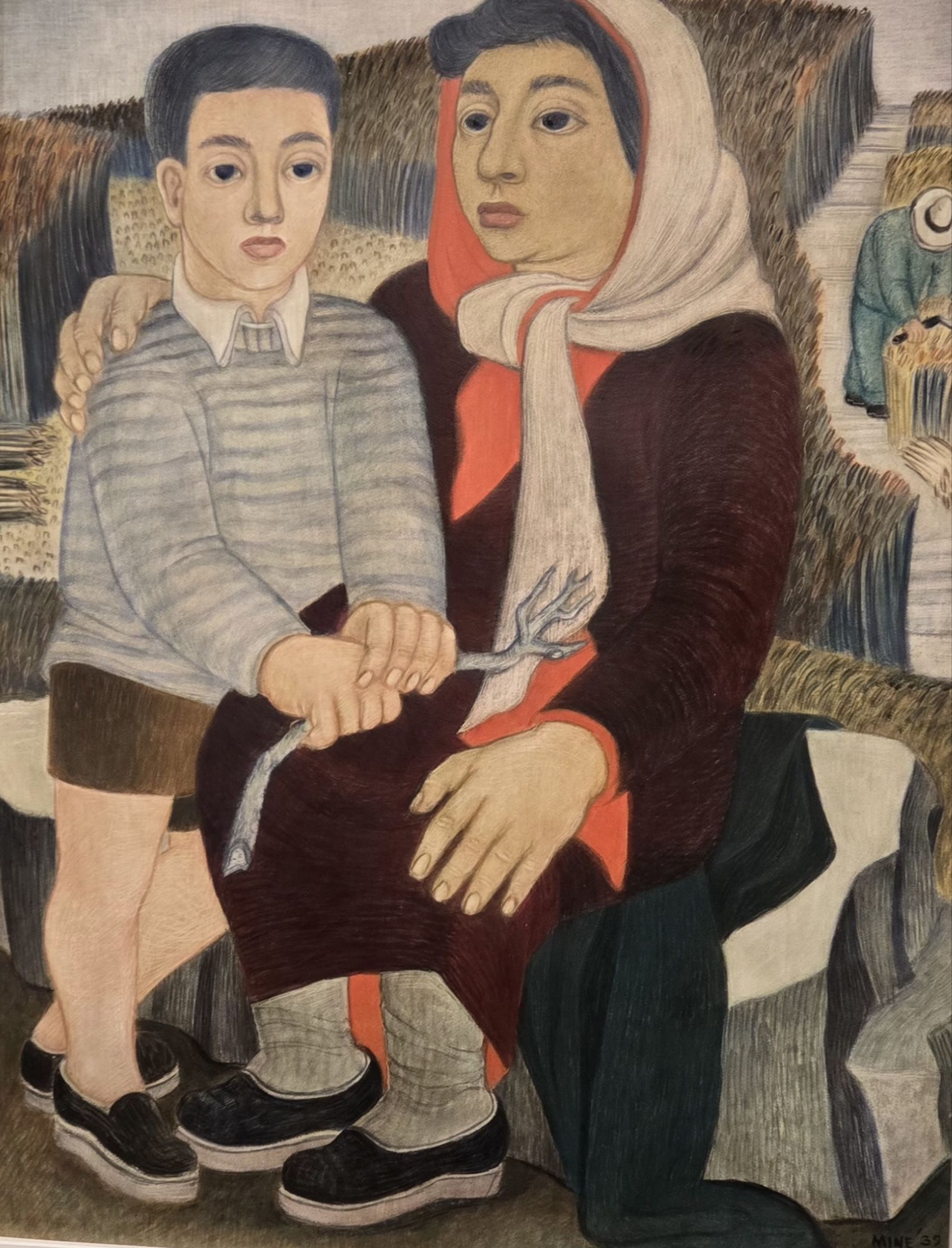
This is a prewar painting by Hayakawa.
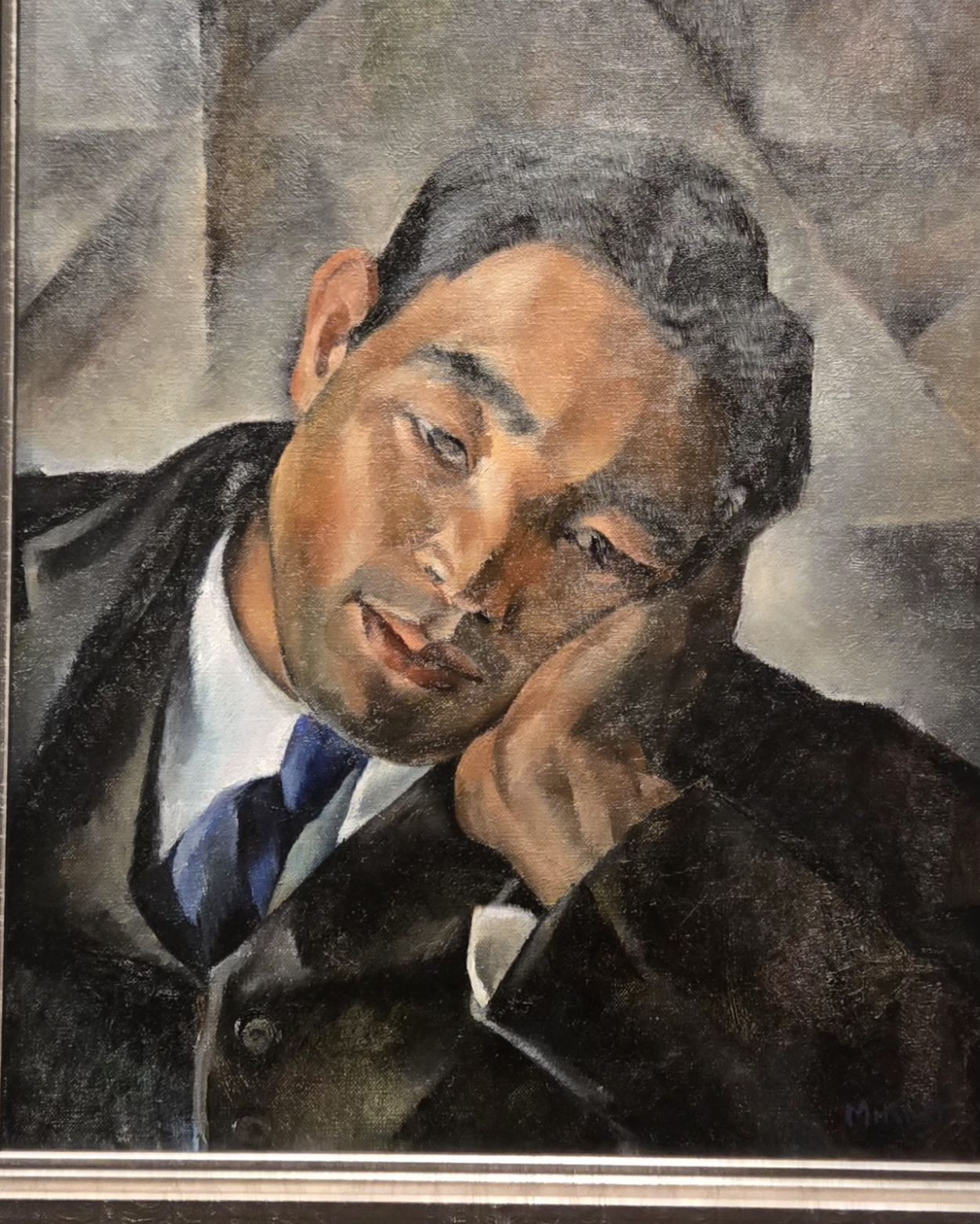
The style of painting changed after they were removed. Here is what Hibi saw when she reached the first camp, a transit camp.
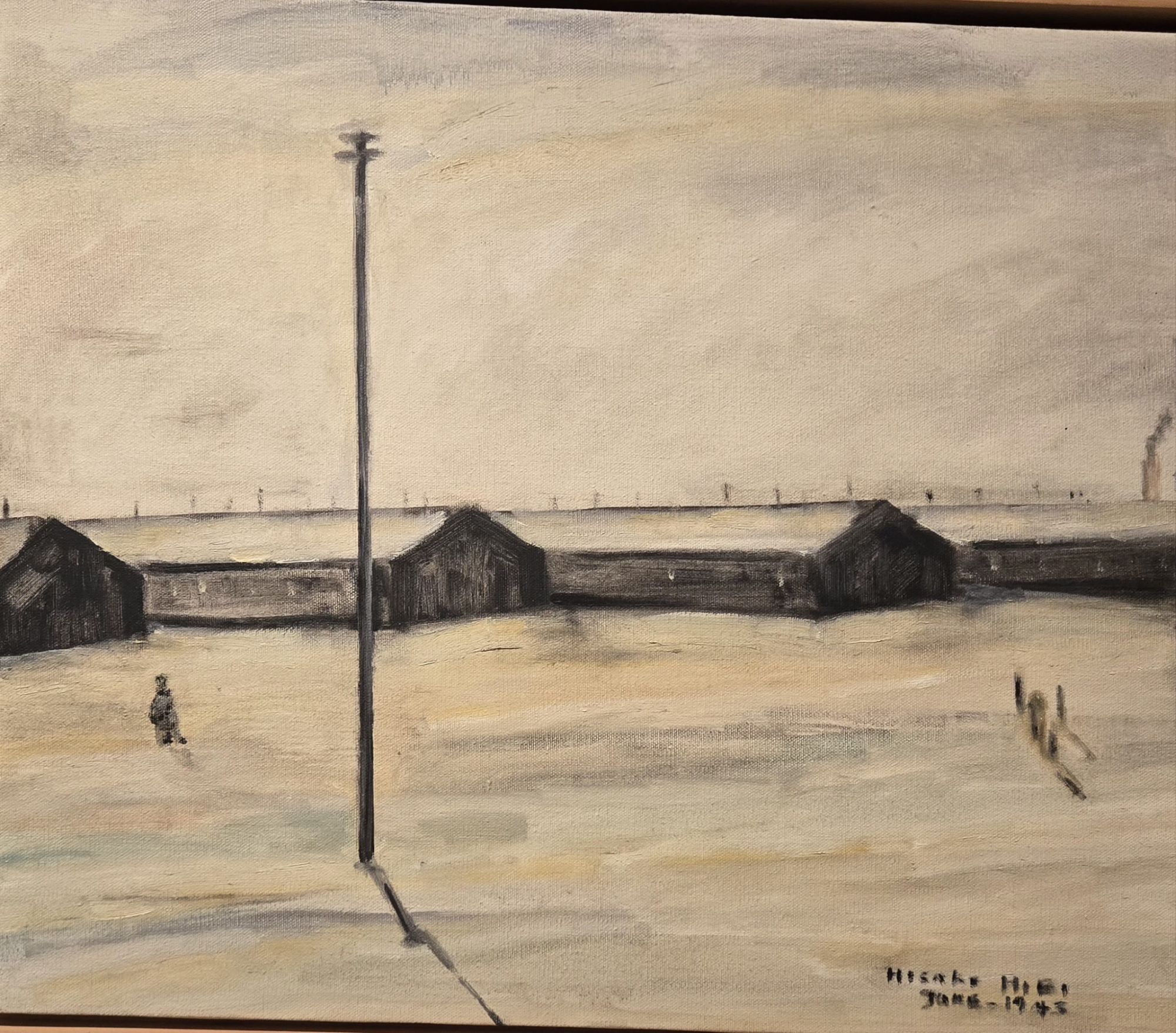
Here is an actual photo of Mine Okubo at the Topaz, Utah camp, where I believe she lived over two years.
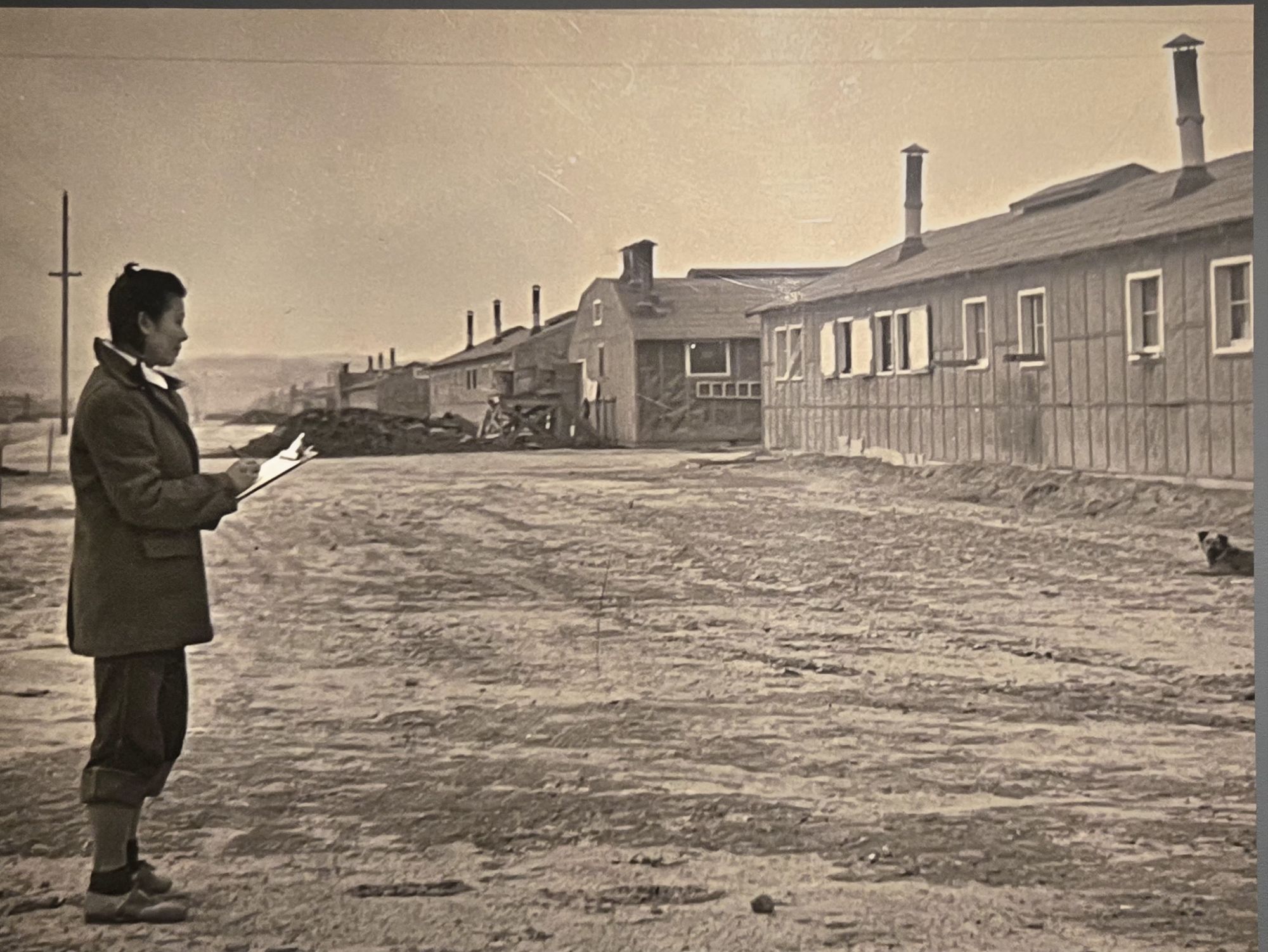
In the years after liberation, styles changed again. Here is a work of Okubo from the 1960s.
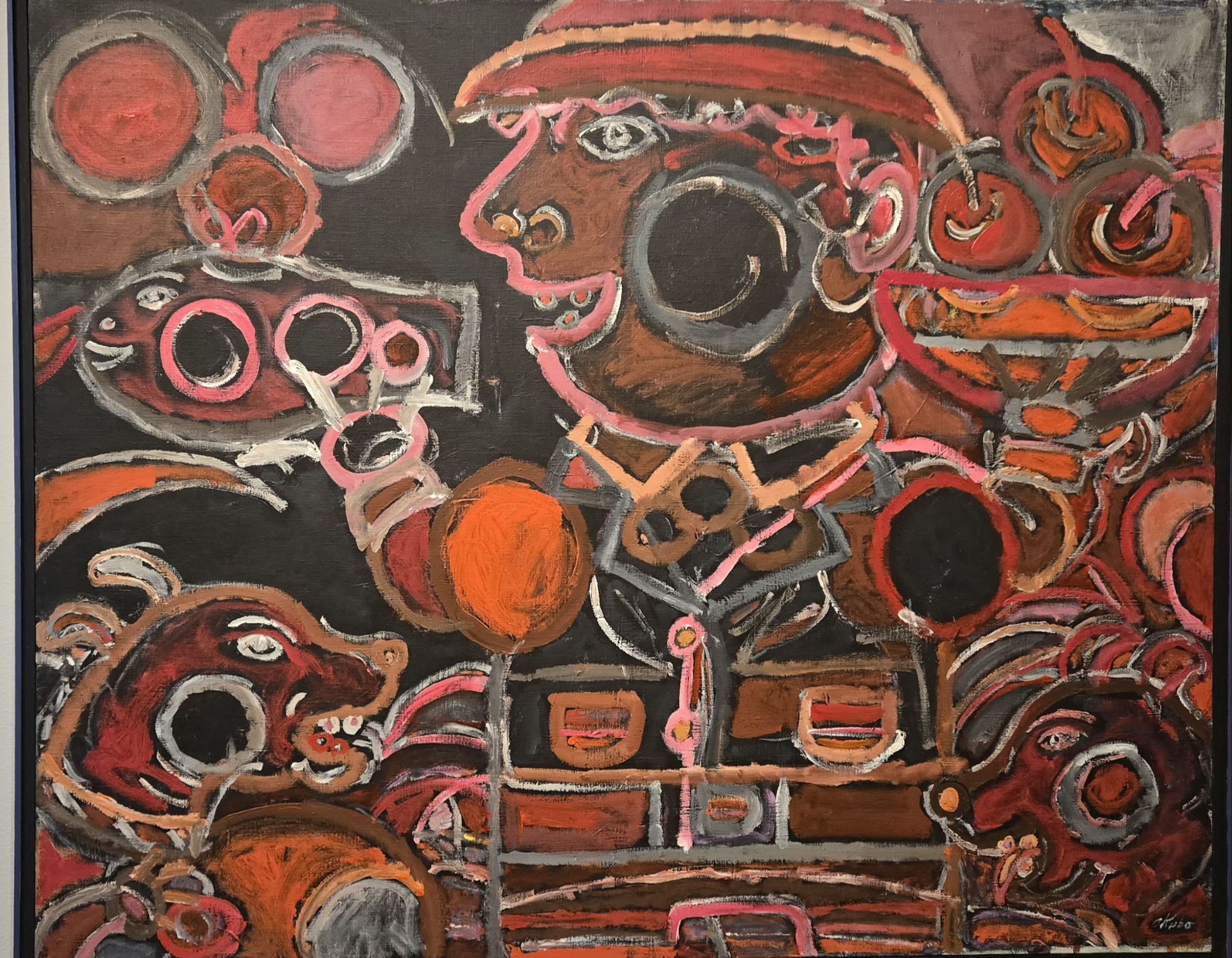
And a very different work by Hisako Hibi from that same period.

And a final one, by Okubo. It’s simple, but I liked it.
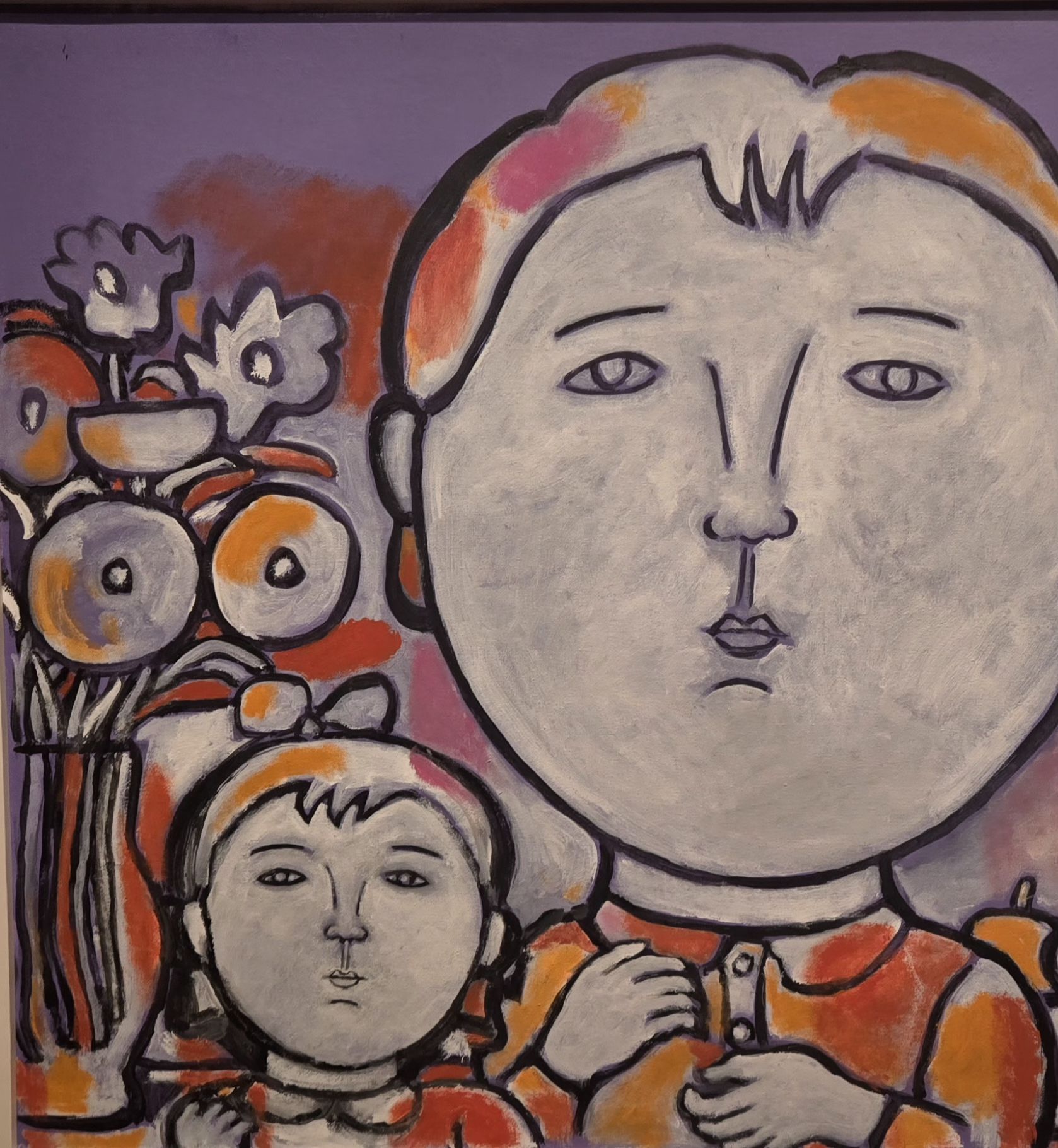
It’s a large exhibit of history and human resilience, as well as art. Try to see it. It will be there until mid- August.
 Art is 80
2 responses to “So It Can’t Happen Here? It Already Has.”
frightening
LikeLike
Love those paintings.
LikeLike