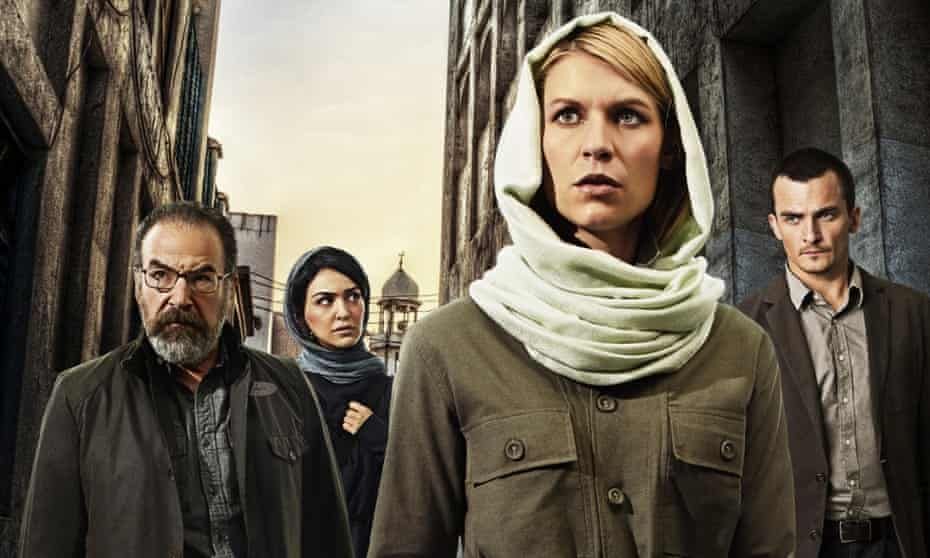
(1) A few weeks ago, Edie and I decided to rewatch (my computer says that “rewatch” is not a word; let’s make it one) Homeland, now on Netflix. We had watched it when Homeland was first broadcast on HBO, where it ran for eight years, from 2011 through 2018. In those days, so long ago, HBO released episodes once a week each year for a few months, and then you had to wait with bated breath for eight or nine months for the next season to start.
Now, deciding to rewatch Homeland, whether or not you want to binge it in a week, or slowly watch it over a period of weeks or months, is to commit yourself to a major undertaking. Each episode is a little less than an hour long, but there are eight years of them, twelve episodes per year, or 96 episodes altogether. Last night, we finished Season 4, so we are half way through, 48 episodes watched, and 48 more to go.
Some of what we are watching is very familiar to me, and some I don’t really remember, or remember in detail. In fact, I remember the earlier years the best. I don’t know if you watched Homeland back in the day, but its genre is what I would call “political suspense”. I don’t know if that is an official genre, but that pretty well describes it. The two stars, who stuck with the show from start with end, were Claire Danes, who played Carrie, a bipolar CIA operations agent, and Mandy Patinkin, who played Saul, her boss (and sometime Director of the Agency).
The first three years were devoted to the return of Marine Sergeant Nicholas Brody, who had been a prisoner of al-Qaeda for 8 years, and who returned a different person than the man who went to fight al-Qaeda years before. Season 4 had a different plot, this time set primarily in Islamabad, Pakistan, where Carrie had been appointed CIA station chief, and which involved not only the Pakistani government, but a Taliban leader from Afghanistan, and ended up with an attack on the U.S. Embassy in Islamabad and the breaking off of relations between the United States and Pakistan. Was the attack Taliban, al-Qaeda, the Pakistani government, or a combination of all or some? We will watch an episode or two of Season 5 tonight or tomorrow. I frankly couldn’t tell you what comes next.
Now, 2011 is really not that long ago. I was already 69 years old in 2011, for example. But in some ways, it was a very long time ago. I say this because I don’t think that today, in 2026, a program like Homeland would noy be filmed. Today, you find a lot of suspense series and films on Netflix. But they are generally just domestic bad guys, or maybe a foreign lone wolf, facing good guys. They don’t make a major political statement, like Homeland does.
We have so far seen episodes in Pakistan, Afghanistan, Iran, Syria, Lebanon, and (presciently) in Venezuela. Each of these countries is filled with awful people. If there are good people, we don’t see them. And, clearly, except for the episodes in Venezuela (which are, in fact, a bit weird), the bad guys are all Middle Eastern, the women all with head coverings, the men often dressed in traditional, not western, clothing.
There aren’t any series today (are there?) about any of the conflicts in which the country is currently embroiled. And I can’t really imagine a series based on American intelligence services and the challenges that they are facing abroad, where the plot necessarily makes the populations of countries all evil.
I can’t tell you what has changed. Maybe it’s just a question of the public’s taste. Maybe my whole premise is wrong. But, to me, Homeland, as good as it is, seems extraordinarily dated.
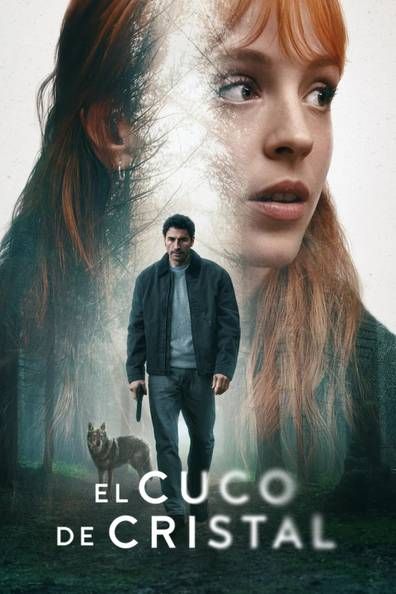
(2) Otherwise, I haven’t found any great new series to watch while I am on the treadmill or stationary bicycle. I went through a six part Spanish series called (in English) The Crystal Cuckoo, that I stuck with but don’t really recommend, although it was well acted and nicely photographed. A young woman just out of medical school in Madrid has a serious heart attack and winds up having a heart transplant. In Spain, you are not supposed to learn the identity of the donor, but she figures it out, and decides to go to a very attractive, historic old Spanish mountain town, to meet the donor’s mother, and learn about his life. She gets more than she bargained for. Yes, in effect, she finds a new “family”, but she also finds out that the family is embroiled in a series of mysterious disappearances that have taken place of a long period of time. Her donor’s father, her donor’s aunt, and several others have disappeared without a trace. Her donor himself, who died in a one car accident, was researching all of these disappearances. Did he really die in an accident? Was he the victim of a homicide when he car when over a cliff? Did he commit suicide?
Naturally, our heroine, over a period of less than a week, helps the locals solve the mystery. By the time the series is over, everyone is accounted for, and the criminal is apprehended. And – I don’t think this was necessary – she falls for the brother of her donor (who happens to be a member of the Guardia Civil with whom she works to solve the crimes), and he for her. Okay, here is the question. If a man dies and a woman gets his heart via a transplant, and she strikes up a romantic relationship with the dead man’s brother, is that incest?
Curious minds would like to know.
(3) I just watched thrvfirst of three episodes of another Spanish series, Two Tombs. Another mistake?
 Art is 80
One response to “Are There Better Things To Do?”
if you are looking for something light and funny with an excellent cast try Good Omens
LikeLike