This is the second part of my description of items on a random shelf in my office. Yesterday, we saw D. Fisher’s bust of Moses draped in Mardi Gras beads. Today, before we get to some books, we show a hand carved gourd, by Peruvian artist Cesar Aquino Velli.
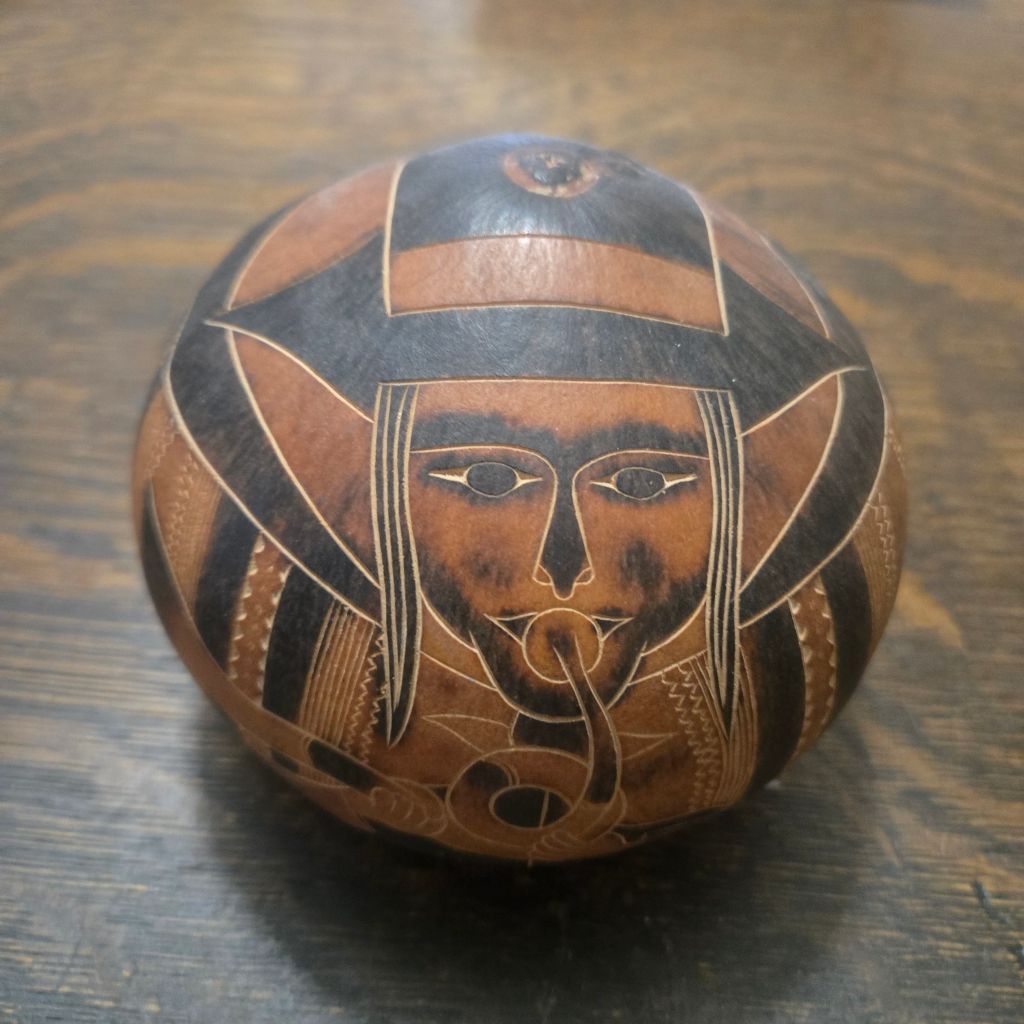
And then to the books, quite different from those shown yesterday.
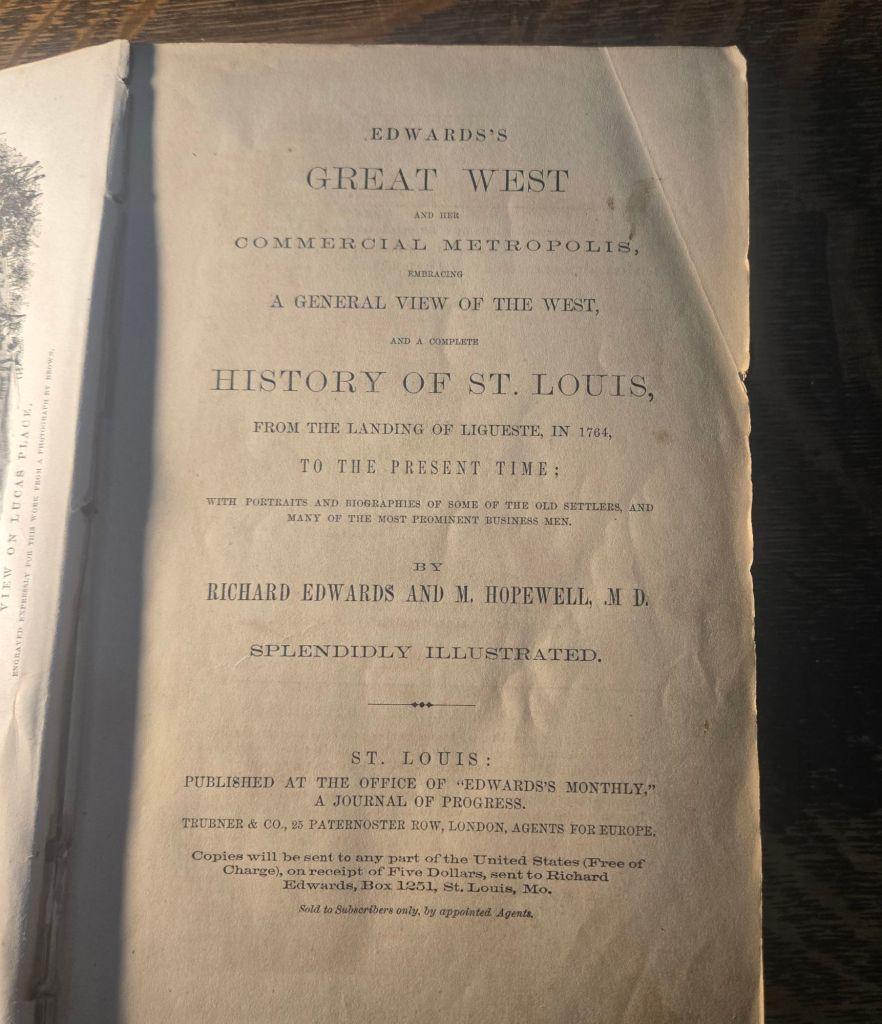
The cover of this book is not in good shape, but the book, Edwards’s Great West…..History of St. Louis, is. It is a very detailed history of the City of St. Louis “to the present time”. The “present time” is 1860. St. Louis history starts in 1764. In 1860, it was already a major commercial center, and had a population of about 160,000. Ten years later, after the Civil War, its population had doubled to more than 300,000.
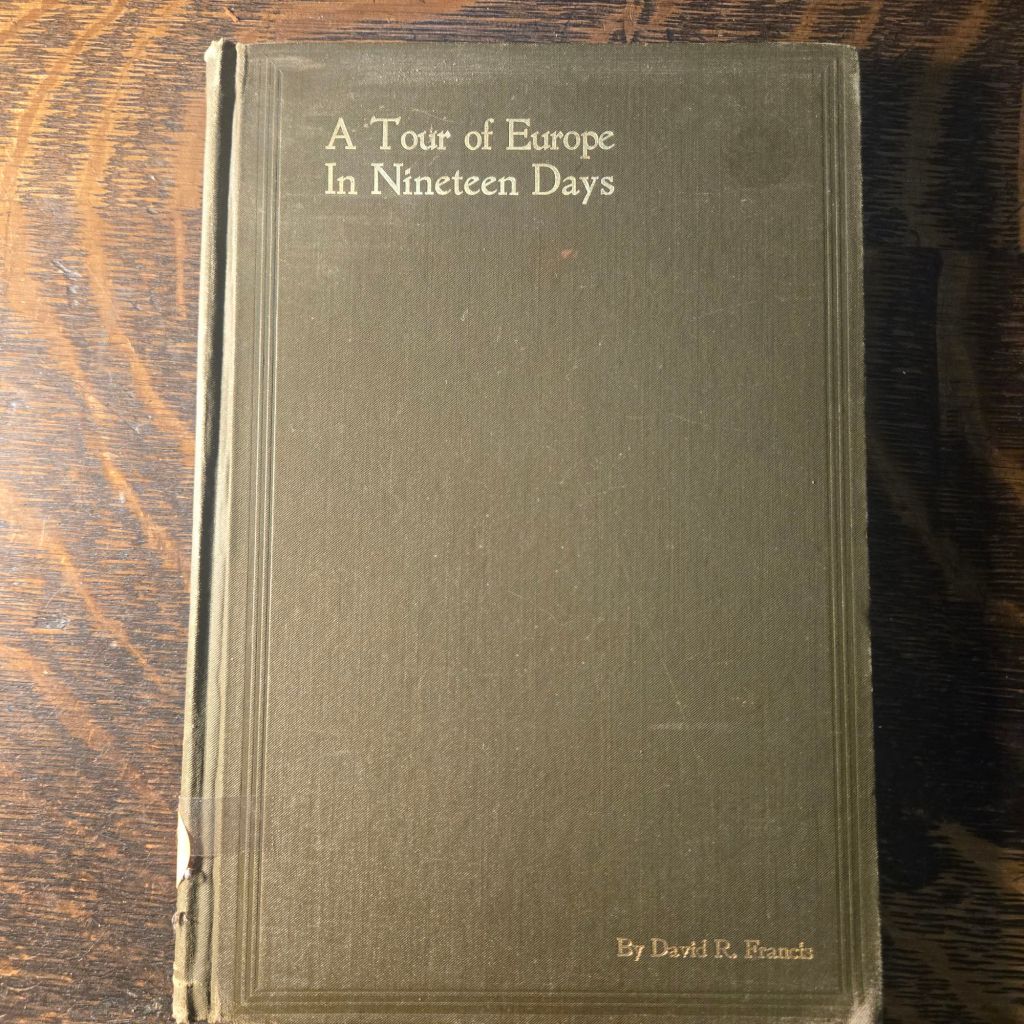
You may know that I have a fairly extensive collection of items related to the St. Louis 1904 World’s Fair. For some reason, two World’s Fair-related books are on this shelf and not with the other 100+ items.
The book pictured above is by (and was signed by) David Francis (1850-1927). Francis occupied several positions over his life, including Mayor of St. Louis, Governor of Missouri, Secretary of the Interior, and U.S. Ambassador to Russia. He was also the head of the first American organizing committee for the Olympics, and the President of the Louisiana Purchase Exposition, the organization that supported the Fair.
The book pictured above, A Tour of Europe in Nineteen Days, is the story of Francis’ whirlwind trip to Europe to drum up support for the Fair, and to encourage European countries to put together exhibits. It was a very successful trip.
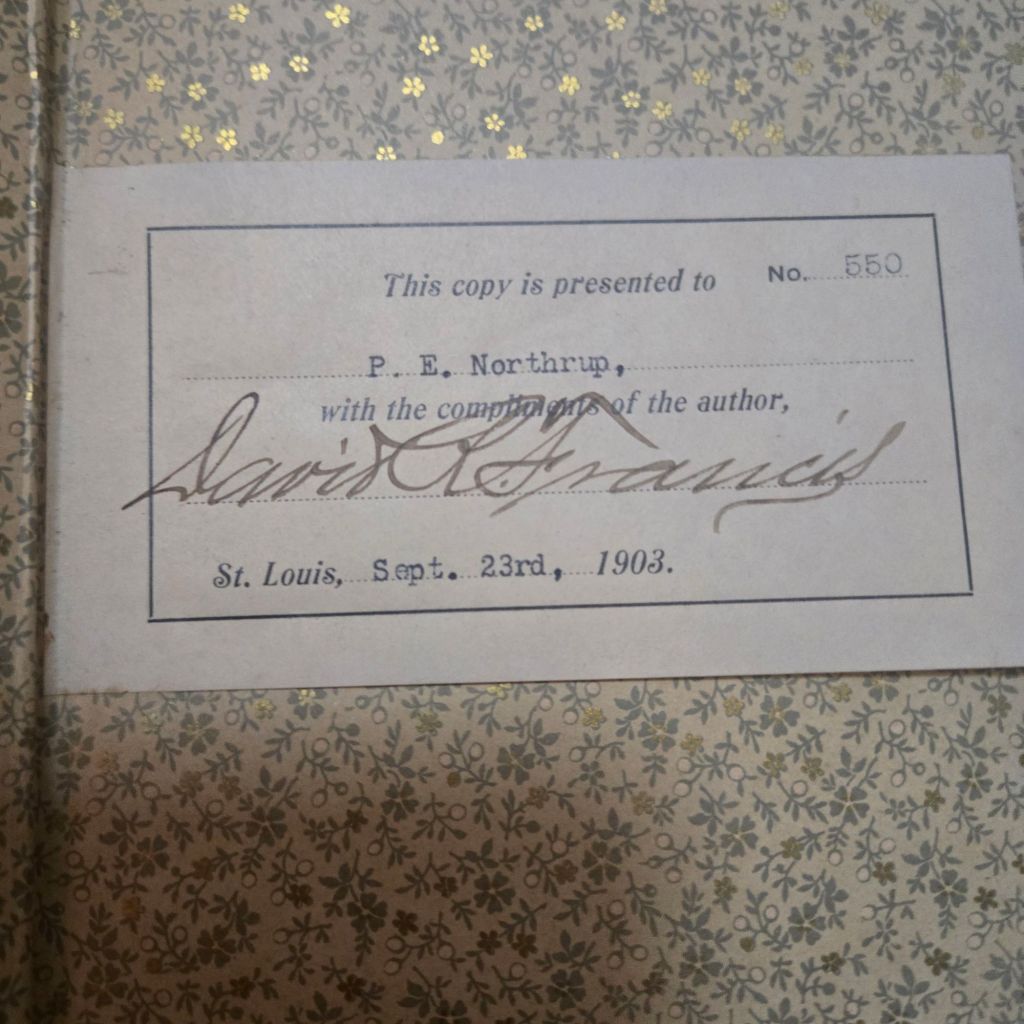
You can see that this copy was given to P. E. Northrup. As best I can tell, Northrup was a publisher of maps, the man who created and printed the official maps of the Fair site.
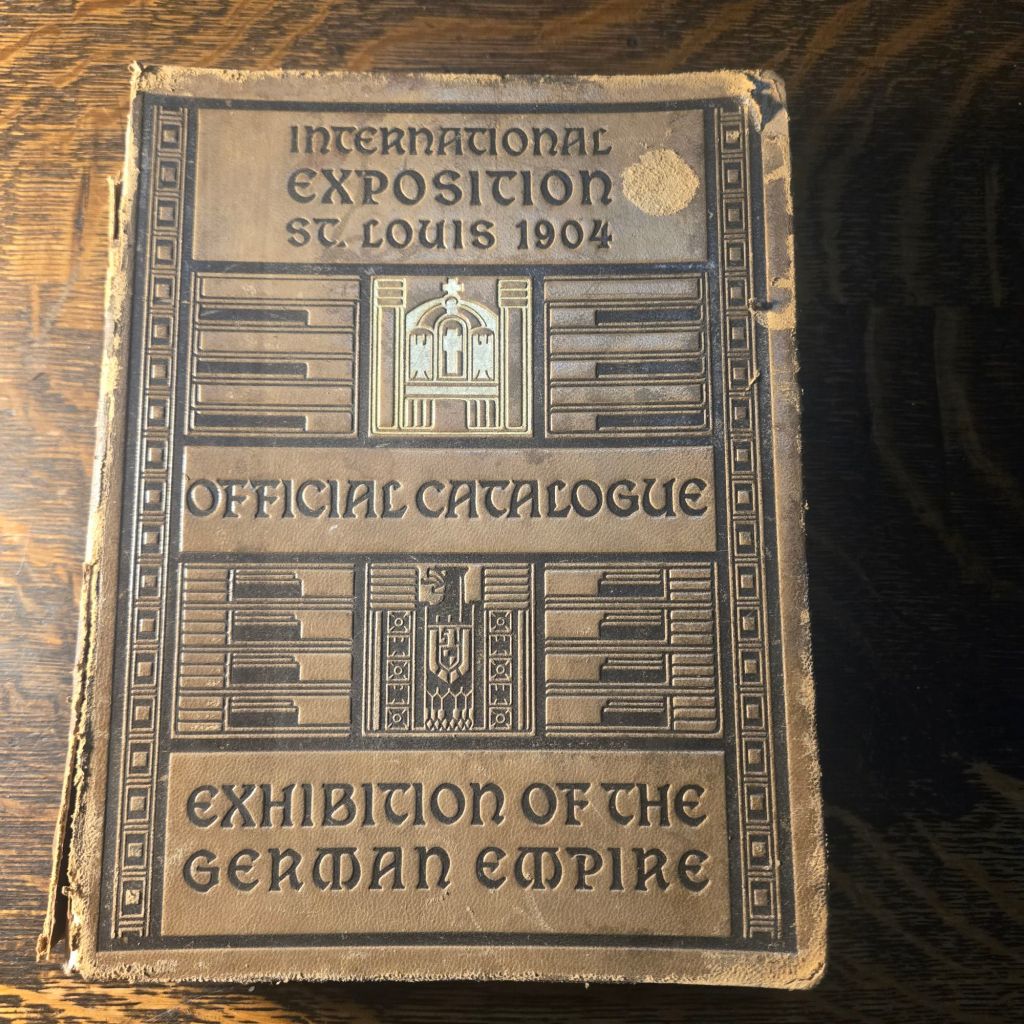
One of the countries exhibiting was the German Empire, and this elegantly designed book is a catalogue of its exhibit. This is not a brochure, but a hard cover book with over 500 pages of text and illustrations.
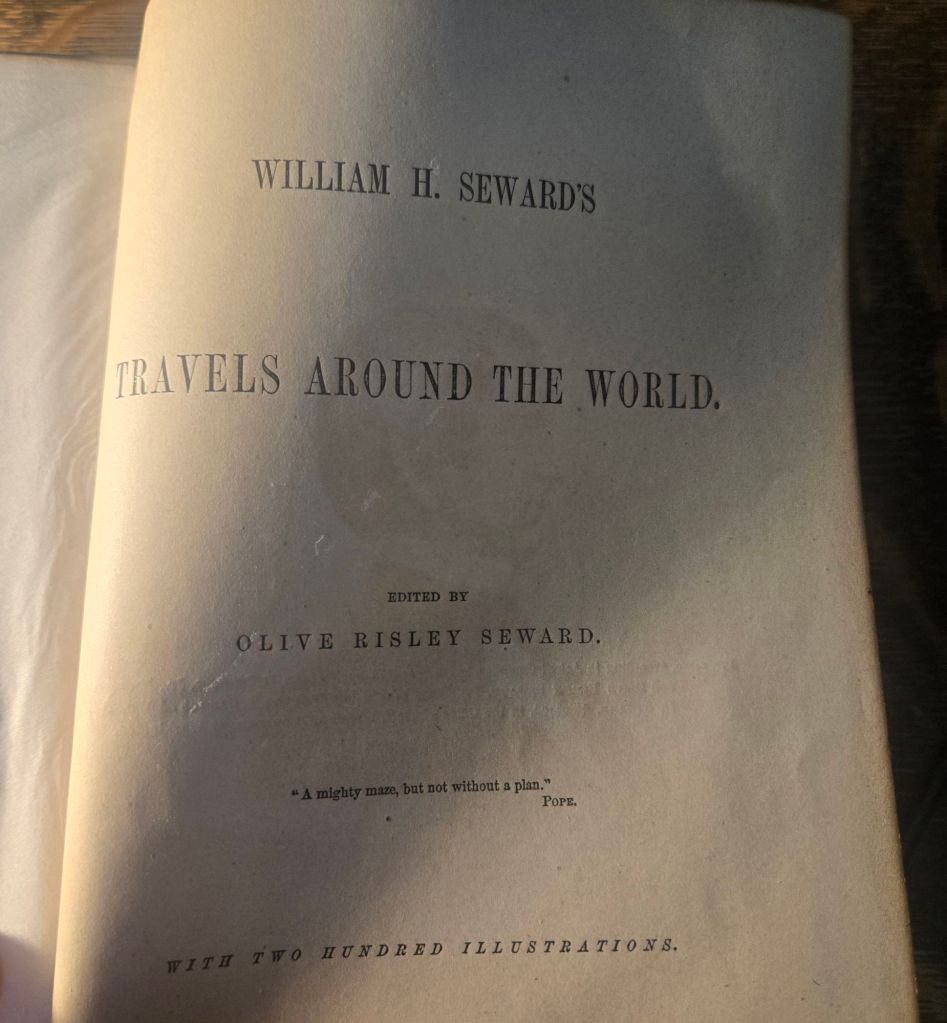
William Seward (1801-1872) was another man who held several offices. Governor of New York, Senator from New York, he hoped to be the Republican candidate for the presidency in 1860, but was edged out by Abraham Lincoln. He became Lincoln’s Secretary of State, and was attacked and seriously injured the night Lincoln was assassinated. He remained Secretary of State under Andrew Johnson, negotiating in the purchase of Alaska (Seward’s Folly) in 1867 from the Russians. After his retirement from government, he went on an around-the-world trip, accompanied by his adopted daughter Olive. He wrote the story of his trip for the book pictured above, but he died before it was finished. Olive completed the book and saw to it that it was published.
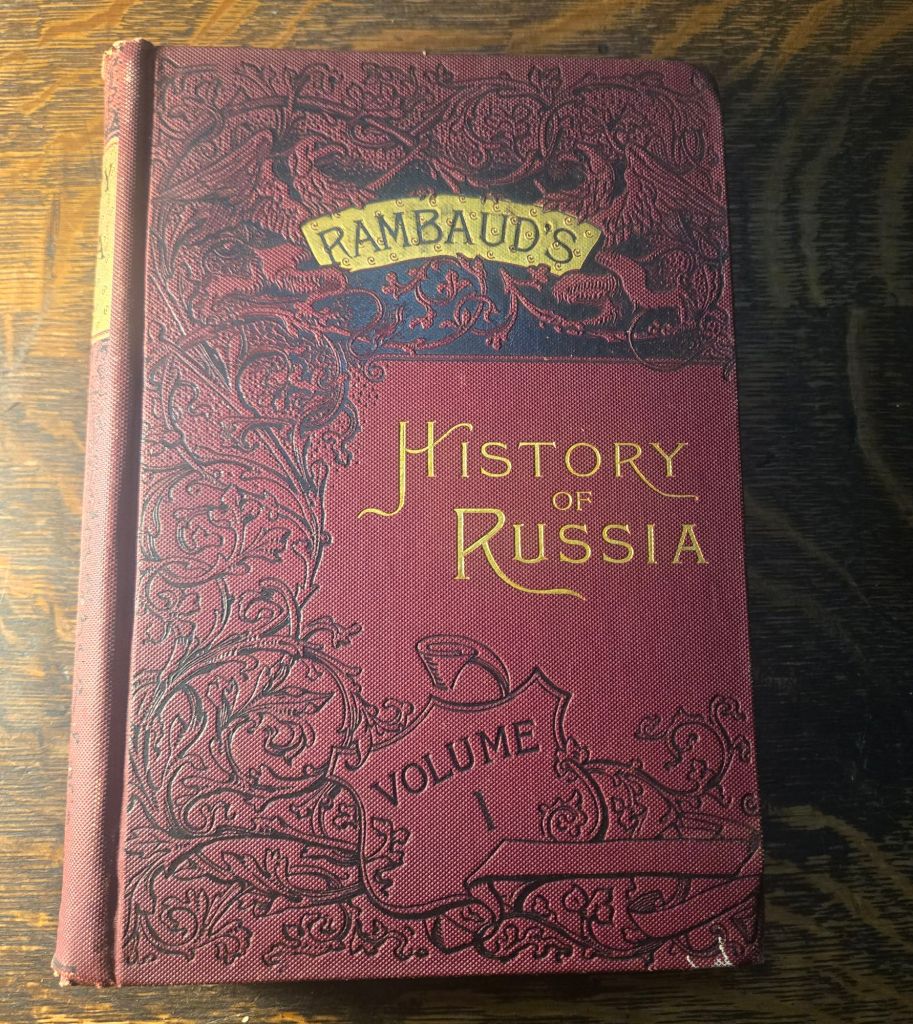
Just short notes about the final two books on the shelf, pictured above. Alfred Rambaud (1842-1905) was a French historian who, for a time, lived in Russia, studying its language, culture and history, and writing a very detailed history of the country from medieval times onward. I have the two volume American edition (only one volume pictured), the first volume published in 1879 and the second in 1882.
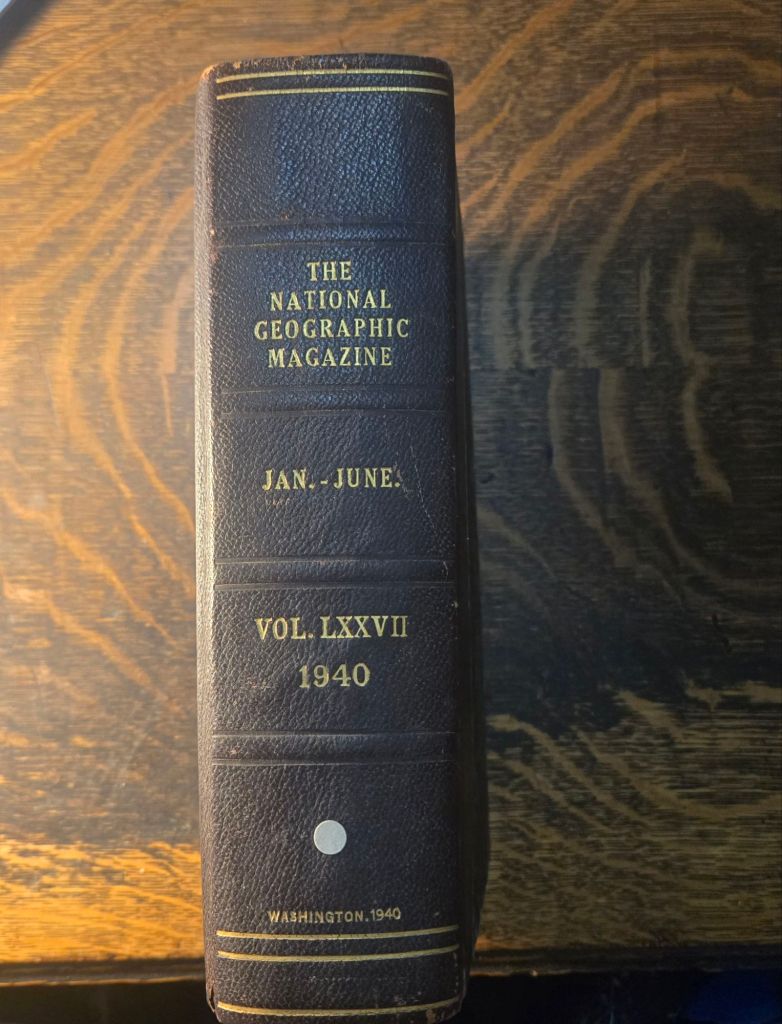
The final book pictured (there are a few more on the shelf that I am not mentioning here) is a bound copy of the National Geographic Magazine from the first half of 1940 (with several large maps folded in a back pocket). Why I have this random volume is unclear, but, as usual, there is something special about it. On the front cover, there is the gold embossed name of the original owner of this bound volume. It was General Henry H. (“Hap”) Arnold (1886-1950), one of the founders and commanders of the United States Air Force, and later a founder of both Pan American World Airways and the think tank, the Rand Corporation. That must be why I have kept this volume.
 Art is 80