We hadn’t been to the Hirshhorn for some time, so we picked that as our go-to museum today. It is filled with good things and most of what is on display today will be on display through most of 2026, so you have time. The only exhibit closing soon is a small Basquiat and Banksy exhibit on the lower level that is not very significant.
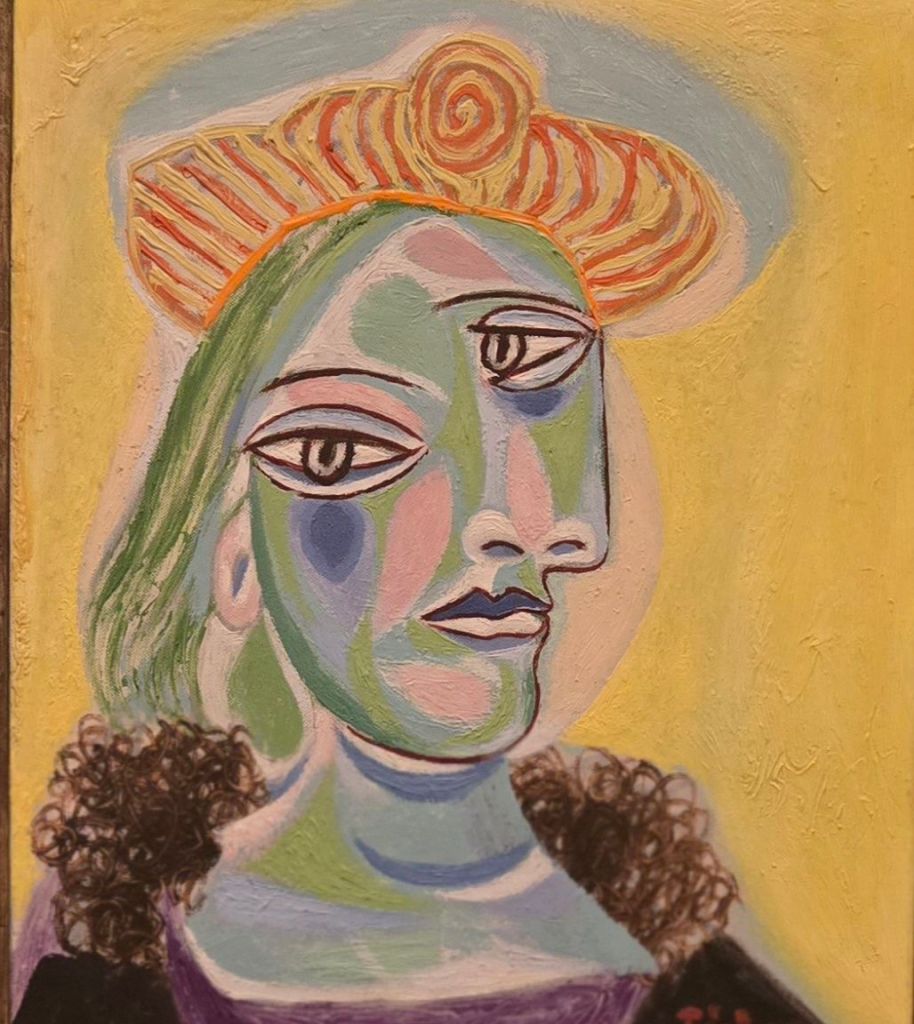
Edie was surprised as we walked by this Picasso and I said, “Oh, that’s Dora Maar.” I am not sure why she was surprised. I’d know that face anywhere. Google said that Picasso painted Maar over 60 different times. Okay, curators, there’s a challenge for you.
The second floor is dedicated to works of art from the Hirshhorn’s own collection. Back to Google: The Hirshhorn’s full collection contains 12,000 pieces. The current large exhibit contains 208, or about 1.7% of the full collection. Many of the pieces are worth a lot of attention. I only photographed a few.

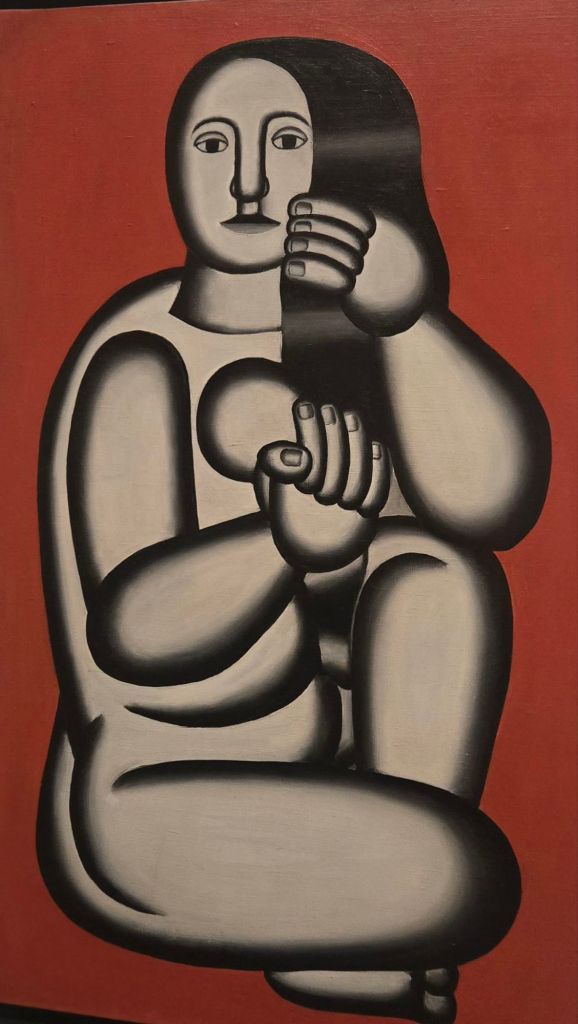
My question here is: why did Marsh choose a subject that must have taken an enormous amount of time both to plan and to execute, while Leger picked something that could be done over a rainy weekend?
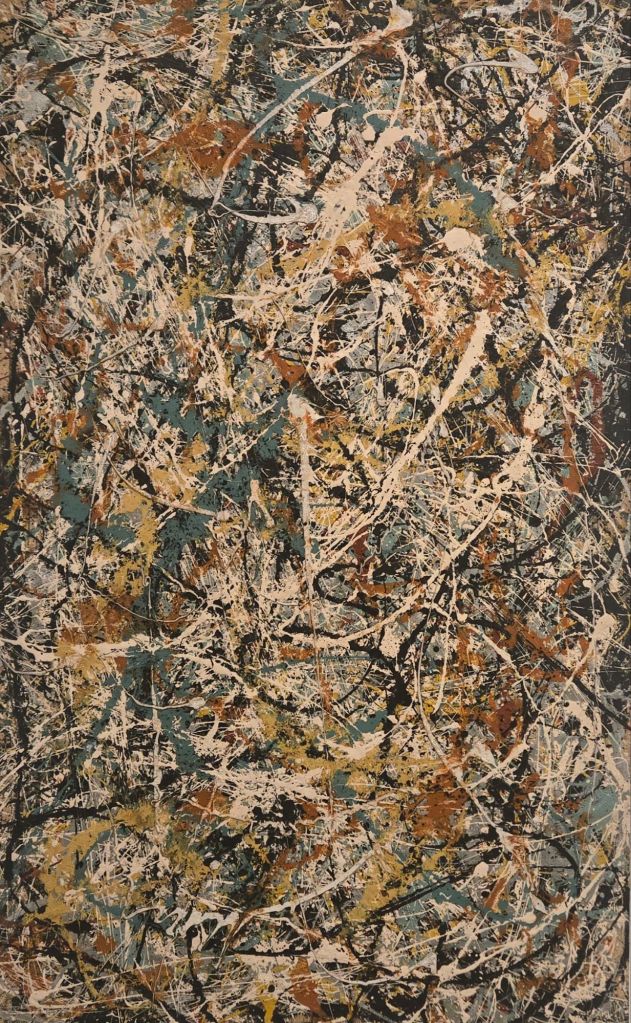
A related question relates to Jackson Pollack. I want to know: how did you pick your subjects?
What intrigued me most today was one piece in the third floor exhibit, titled “Big Things for Big Rooms”. Here it is:

It is called “Carrera Line” and is by Richard Long (Sir Richard Long), a British land artist, a sculptor who uses natural objects for the most part, and whose art is primarily based on long solitary walks he takes. (I know, don’t ask.)
This piece, which is 47 feet long, is composed of broken pieces of Carrera marble, the same marble that Michelangelo used in many of his sculptures. Here, the pieces are placed to form a rectangle with very even sides. No stones stick out.
I had a lot of questions for the guide in the room. He could answer some, but not all.
Q. Are the pieces connected to each other at all?
A. No.
Q. Who decided how to place them here?
A. Richard Long came and did the placement.
Q. The sign said the Museum purchased this piece on 2008. Has it been displayed before now?
A. Not here, but in other cities in Europe, including Long’s home town, Bristol, England.
Q. When it isn’t displayed, how is it kept?
A. I don’t really know. I assume in big boxes?
Q. Richard Long is now 80. If he becomes unable to assemble the rocks at a future exhibit, who will?
A. I assume a curator. I don’t really know.
Q. If a curator takes a bunch of rocks from a bunch of boxes, and assembles them, so they sorta look like this, is it still a work by Richard Long?
A. [Blank stare]
It seems that this rock collection was “completed” in 1985 and sold (not sure when) to a Swiss collector. My guess is it was displayed in Europe while owned by the Swiss collector, with assembly by Richard Long.
I am told by the guide that it had never before been displayed here so my guess is that the Hirshhorn, almost 20 years ago, bought these boxes of rocks and just put them in storage for almost two decades until someone said, ” You know, Richard Long isn’t getting any younger.”
At any rate, I was really intrigued. And I really like the piece(s). Whether it is art, I don’t know. But if it is, and it probably is, it maybe close to the end of its useful life, and will be as ephemeral as so much of Banksy’s work.
I hope the Hirshhorn didn’t pay too much.
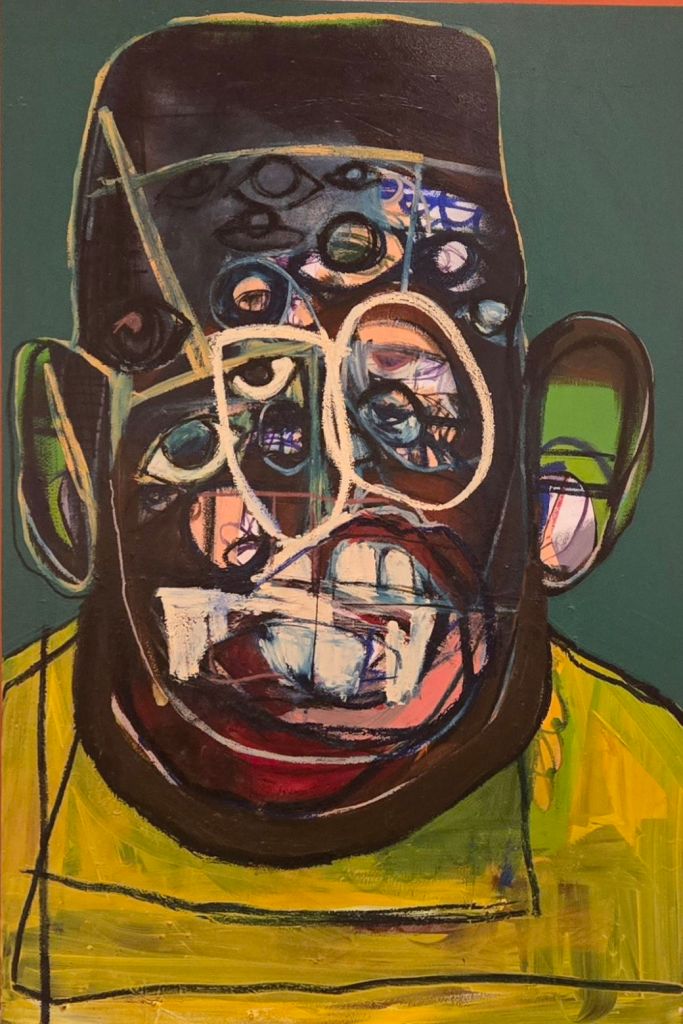
I will leave you with one more portrait. Can you guess who this is? Clue: it is not Richard Long.
 Art is 80