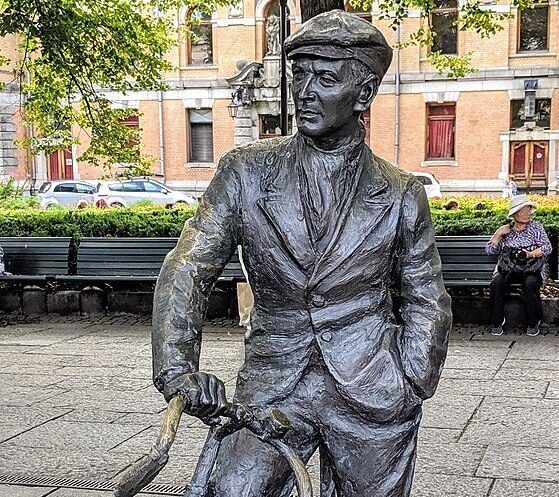
We watched a terrific film on Netflix last night. It is called Number 24, and is a biopic telling the story of Gunnar Sønsteby and the Norwegian resistance during the Second World War. Most of it is dramatized, but it is centered around a lecture Sønestby gave to what appeared to be a large group of Nowegian high school students before his death at 94 in 2012. The film, which earned a 100% Rotten Tomatoes score, is not a Holocaust film. Although the fate of Norway’s Jews is mentioned, this is a film dedicated not to saving a small, targeted percentage of the population but is dedicated to saving a country. I recommend it very highly.
Norway was under German control for 5 full years. Its king and government fled into exile in London; it was run by a puppet government led by Vidkun Quisling, who was executed by a Norwegian firing squad after a trial in October 1945. His name gave rise to the term “quisling”, now an English word meaning “traitor. “
The Norwegian resistance movement was active during the entire occupation. Many members lost their lives, but more outlived the war, and Sønsteby was the most decorated resistance hero in the country.
Sønsteby started his lecture saying he was going to talk about values. And the question of values is one of the film’s most important topics. Yes, there is history and a lot of courage and at least as much luck, but every resistance activity, which brought dangers to those undertaking the action, but also to those who might become collateral damage, had to be judged on a scale of values, something is still a question in lesser forms of resistance to governmental actions today.
Karl Marthinsen led the roundup of Norwegian Jews. The country had a very small Jewish population, and 2/3 of Norway’s Jews were able to escape to neutral Sweden. Marrhinsen was killed by the resistance, and in return for that, apparently a sizeable number of Norwegians (some resistance members and sone who were apolitical) were killed either by the Quisling government or by the Germans). A student asked Sønsteby whether, considering the reprisals, killing Marthinsen was worth. He said “It is impossible to answer that question.”
Other than luck, why was Sønsteby so successful. For one thing, he was a careful planner. For another, he kept calm. His nerves never failed him. This is a rare attribute, to say the least.
So, if one night you are wondering what to do for the next 1 hour and 52 minutes, try Number 24.
 Art is 80