I have been wondering what the better answer is. Is it
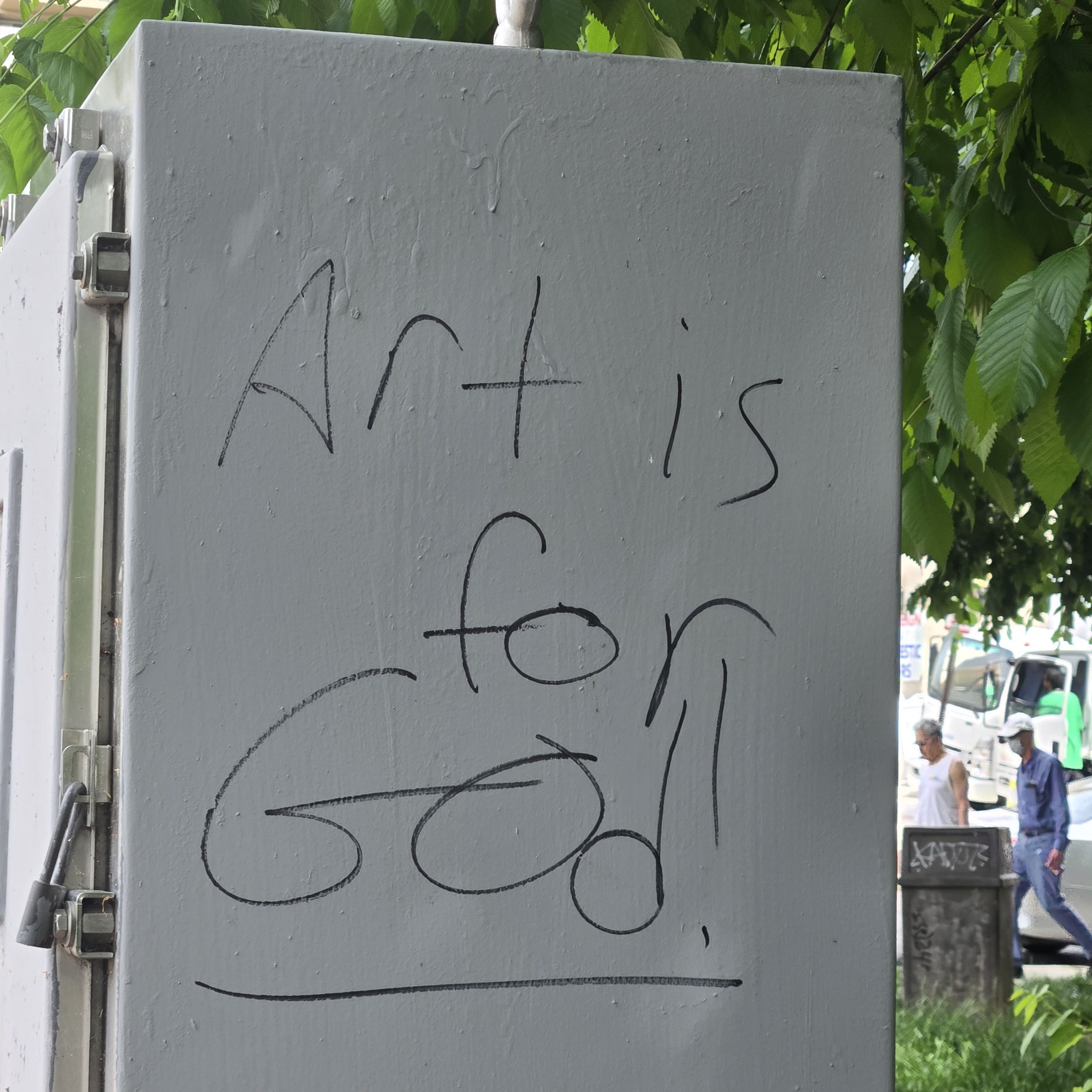
or is it
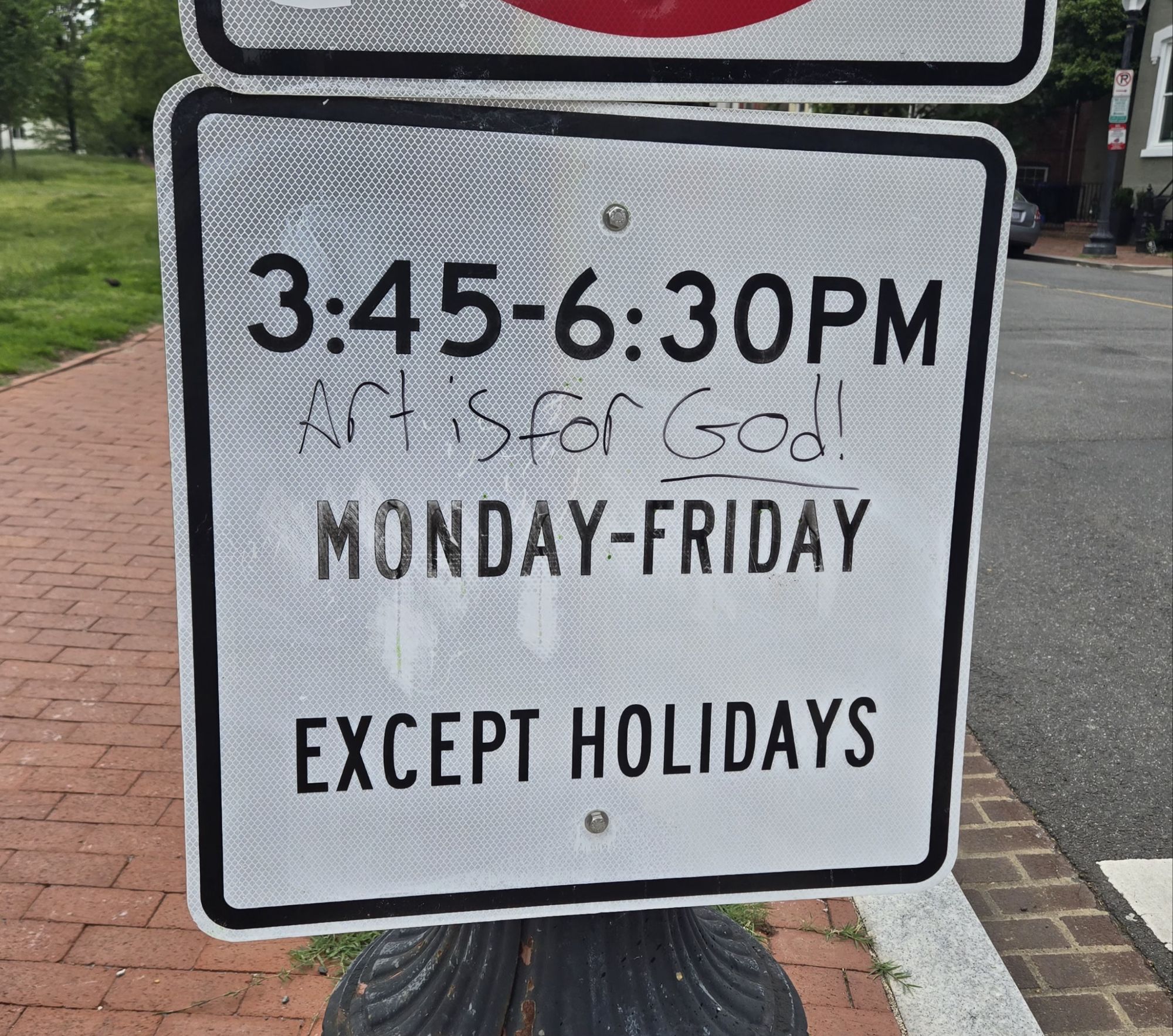
I guess the answer is subject

I guess that is enough of that. (Seen on a walk down P Street yesterday)
Usually, the question is not whether you are for God, but rather whether God is for you. Both, of course, are silly questions.
A more serious question is what does, or should, “belief” in God mean. Many people believe their “belief” in God constitutes proof that God exists. And not only that, but their belief in a specific God with specific characteristics constitutes proof that that specific God exists. And some believe that anyone who does not believe in their specific version of God will be eternally damned, but that they will be eternally rewarded. Therefore, I guess, they are on the side of God.
It is clear to me that this is nonsense, but worldwide, I seem to be in the minority, but what do I know?
Moving on…..
I just finished a novel written in the early 1950s by L. P. Hartley, The Go-Between. It’s a very good book, and a very good way to let your mind escape the troubles of the day. But, like everything, when you really think about the book, it brings you right back to today.
The book is structured as a memoir of an Englishman man now in his 60s, thinking back at the summer he turned 13, which he spent visiting a school friend, whose family owned a rural estate and whose members held some relatively minor noble titles. This was a world very different from the lower middle class world in which he normally lived with his widowed mother.
But, as he said, all was not paradise in Eden. His friend had an older sister (maybe 5 or so years older) whose engagement was about to be announced to a presentable young man who bore the title of Viscount. And while she knew that the Viscount was the right man for her, her heart was with the young, charming farmer who lived nearby. And our narrator during this odd summer became, as the title of the book implies, the go-between, the postman, the fellow who carried secret messages between the two young (but presumably fairly chaste) lovers.
Now, perhaps our hero was somewhat naive, but he had no clue that he was carrying secret messages setting up secret meetings between his two somewhat older friends. Until he did. And then, he did not know what to do. He knew that if you going to be engaged to one man, you weren’t supposed to be running off to secret meetings with another. He knew that her fiance-to-be would not be very happy, nor her parents, nor her 12 year old brother, if they knew. And he liked all of these people, he didn’t want any of them to get in trouble, and he certainly didn’t want himself to get in trouble, especially as the entire group had been so kind to him all summer.
All he knew is that he wanted to do what was right. For a long time, he didn’t know what that would be. Perhaps he never did; you will have to read the book (or see the film, one of the plays, the musical or the opera, each of which has been written based upon this book) if you want to know.
But isn’t this a universal dilemma? At least a dilemma that people in public service also have. Often, they don’t think that what they are doing is correct; they often might be helping support an activity that actually is perverse, is harmful. But if they stop what they are doing, somebody (perhaps everybody) is going to get hurt, and consequently so will themselves. So, they decide to do nothing, or to pretend that they aren’t really doing anything that bad, or they never reach a conclusion at all. Maybe this is where we are, and if so, maybe we will find that the pressure of being a go-between becomes just too strong. And then the dam will break.
But now, for a second, let’s go back to God. God does not figure in Hartley’s book. Yes, most people seem to go to church on Sunday, but it seems that is because that just is what you do.
Our 12 year old boy does not think about church or God. He does not turn to God and ask “What should I do?”
Of course, some people would. Would they come to a different answer? Would their anxiety be lessened? Would they be more certain they made the right decision? Would they have made a better decision?
Obviously, we don’t know the answers as they relate to the characters in the book.
But as we make decisions every day, the question is very relevant. Does the God each of us may envision influence our decision making? My guess is that we really don’t know the answer to that question even if we think we do. Does that God lead us to making better decisions? My guess is “no”, or at least that there is no evidence, much less proof, that better decisions are made buy those acting as they think God would like them to act.
But does believing you are following God’s lead as you decide what to do ease the anxiety of decision making. I assume, for many, it does. And that may be enough to make the delusion of thinking there is a God, that you have the correct concept of who that God is, and that you are following the guidance of that God for some eternal purpose worthwhile.
 Art is 80