We are staying in a small hotel. 23 rooms, a patio and a pool. Our room is small, but adequate. And with a very nice shower. It is located in the historic part of Key West, surrounded by homes built between 1850 and 1890, the growth period for this 25,000 (today) population island.
The breakfast is a cold breakfast, with a fair number of choices. The only thing warm is the coffee. Next to the coffee, there is a large assortment of tea bags. Unfortunately, there is no hot water for the tea. The response from a hotel worker was simply “No, we have no hot water today.”
Tomorrow? “I doubt we will have hot water tomorrow.”
Go figure.
Today was a 10,000 step day. Much of it walking through old Key West from the hotel to Duval Street, the biggest commercial street in town. What does it look like? Here:
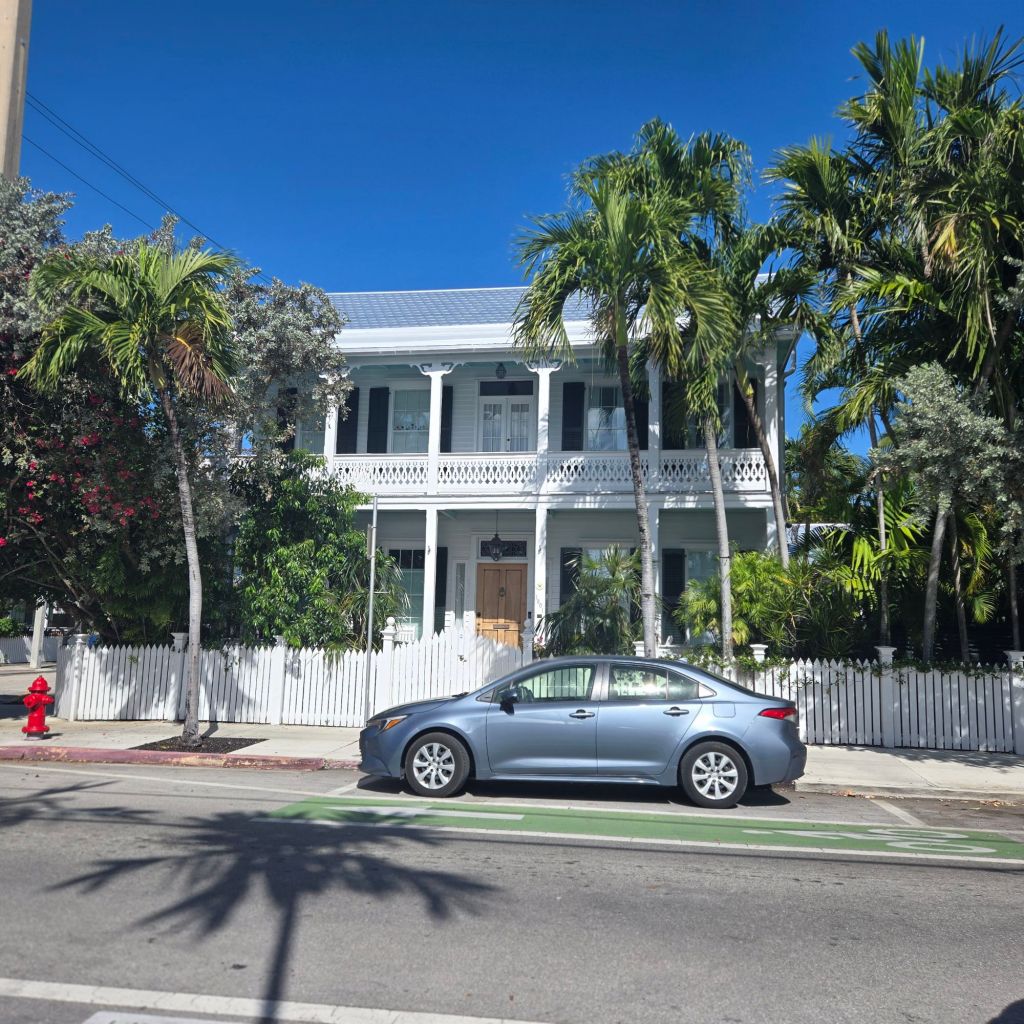
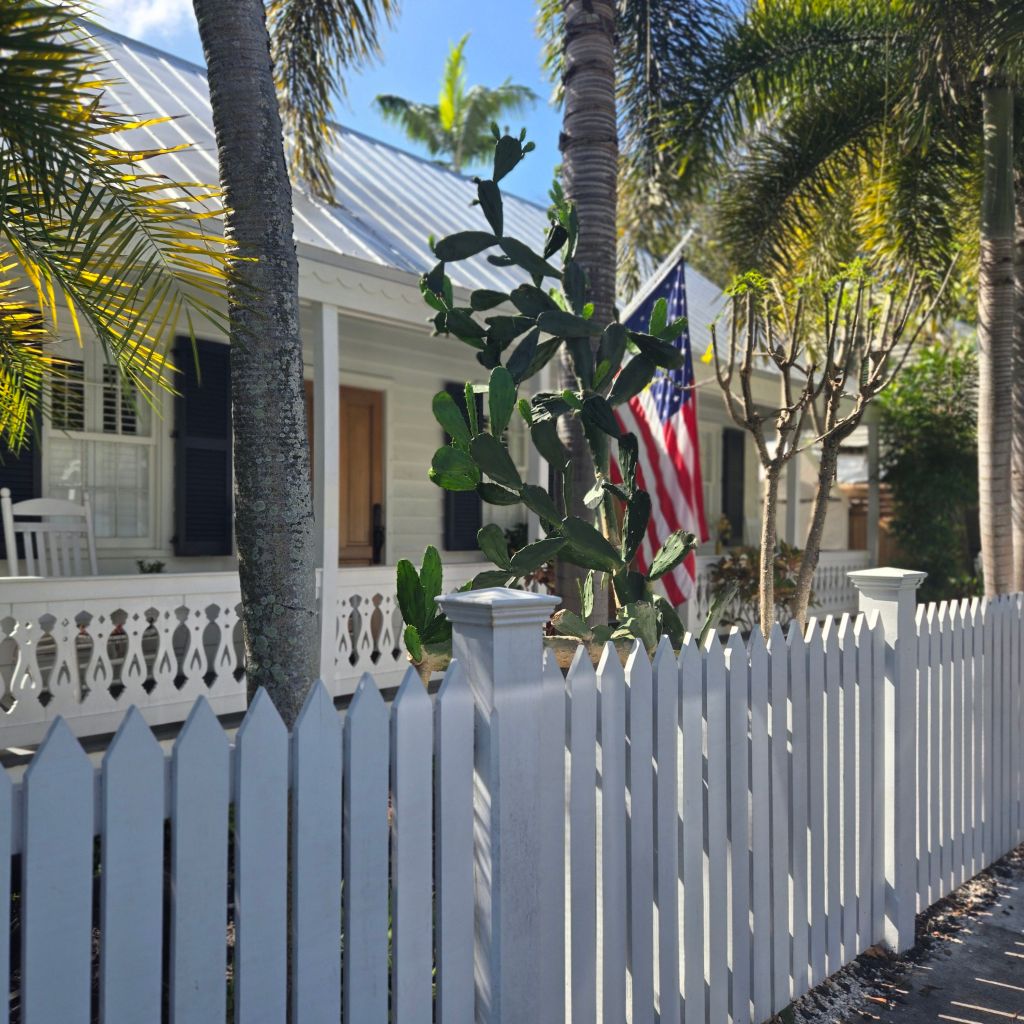
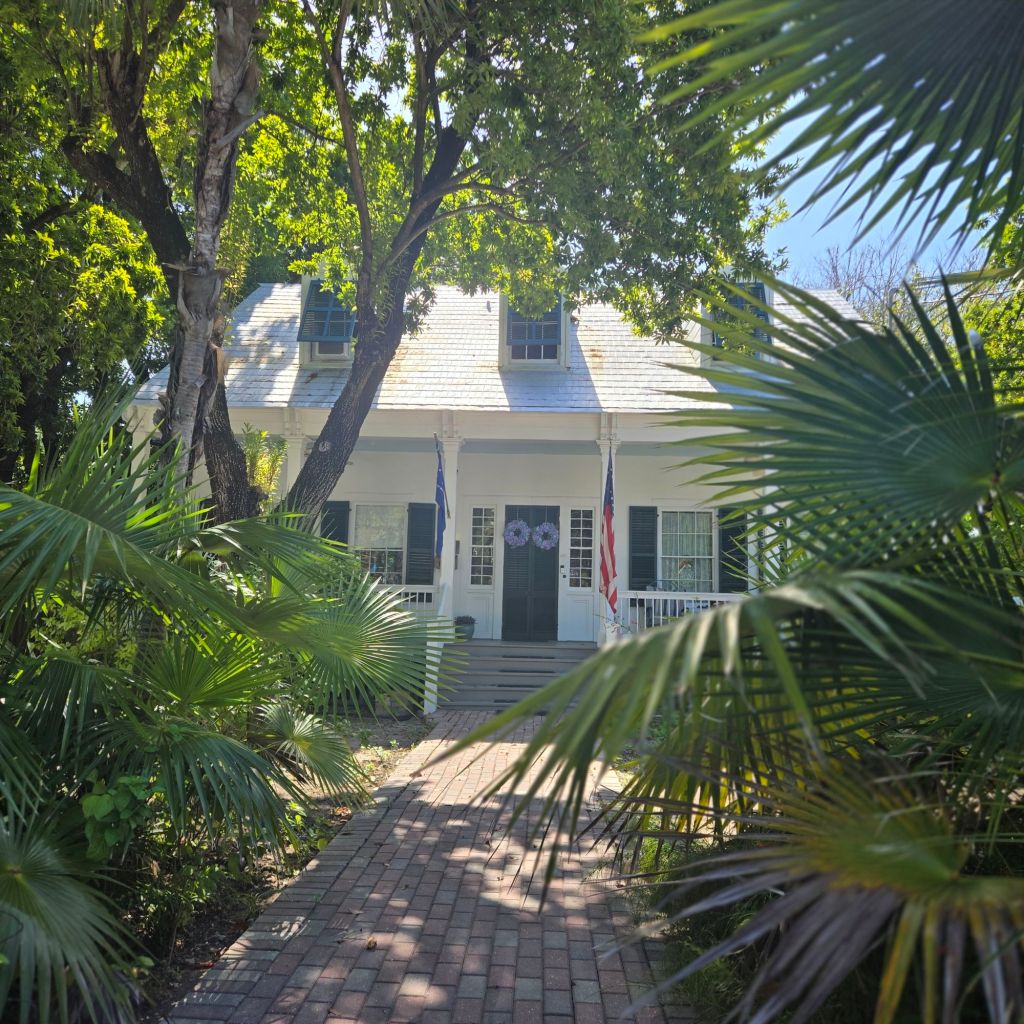
This last house has an interesting past.

Our biggest stop was at Ernest Hemingway’s house, which he and wife #2 bought in 1931. The house had been vacant for 40 years, so needed much renovation. Wife Pauline’s uncle paid the bill (he was a founder of Pfizer pharmaceuticals) for the acquisition and renovation.
We had a terrific guide and learned many things. Here are a few photos:
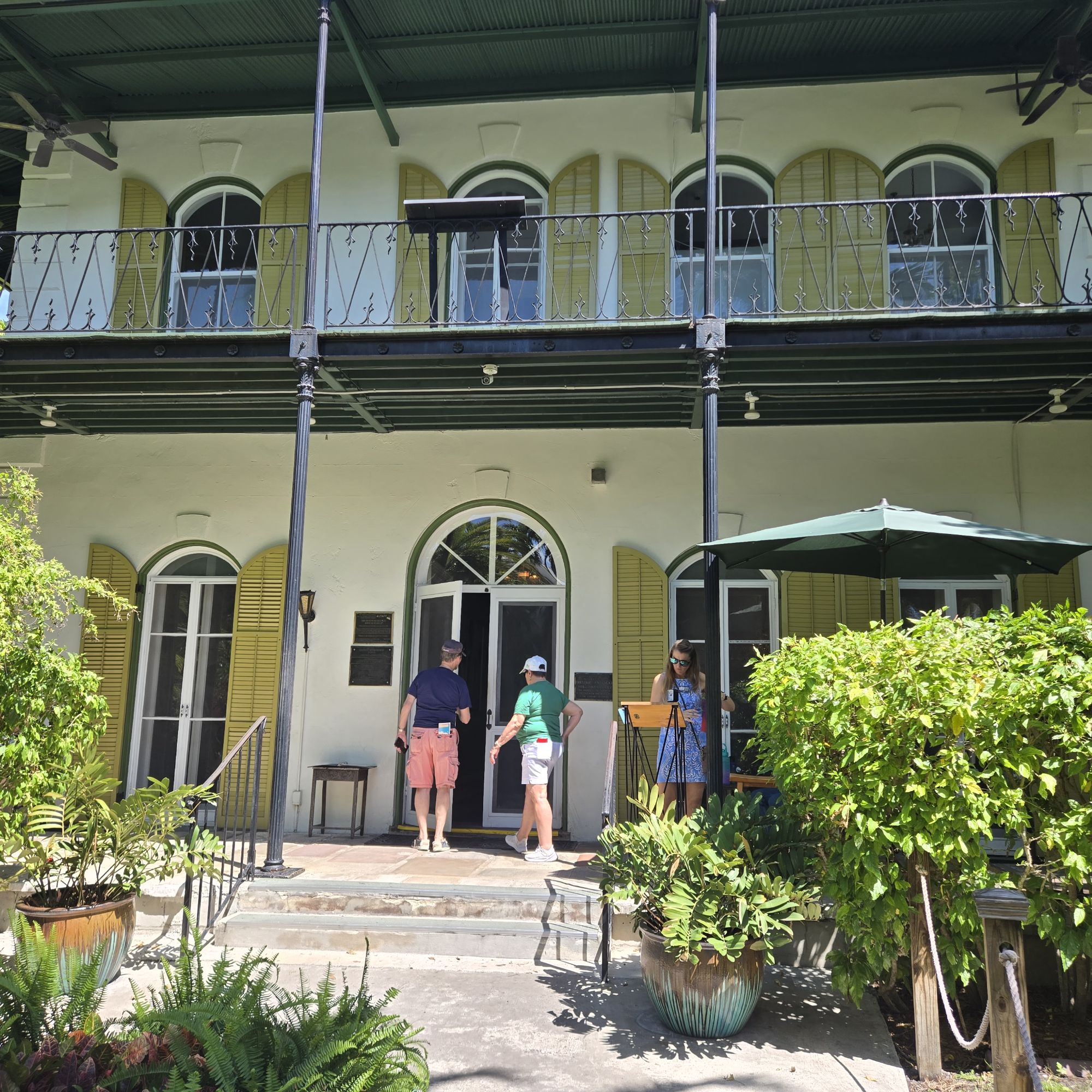
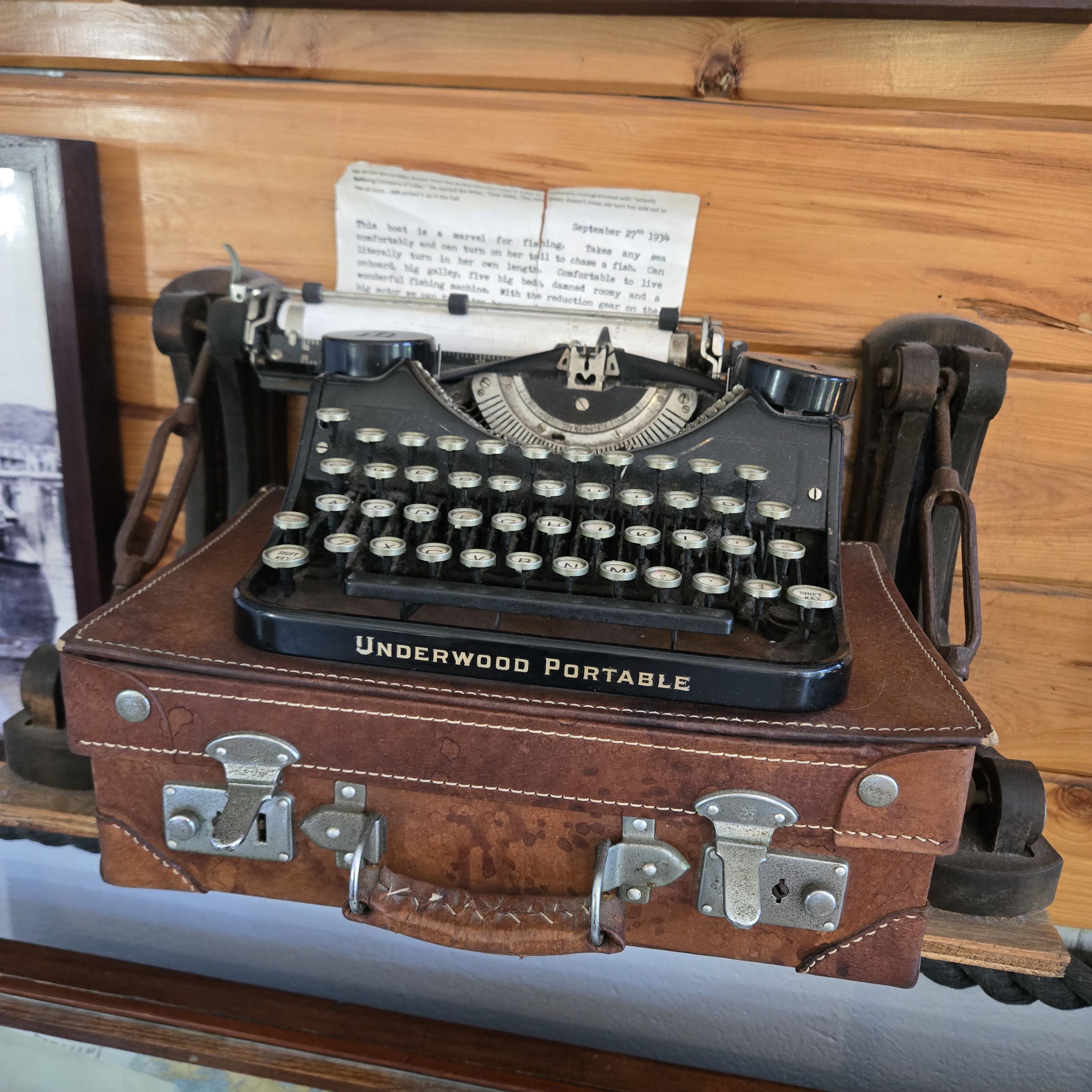
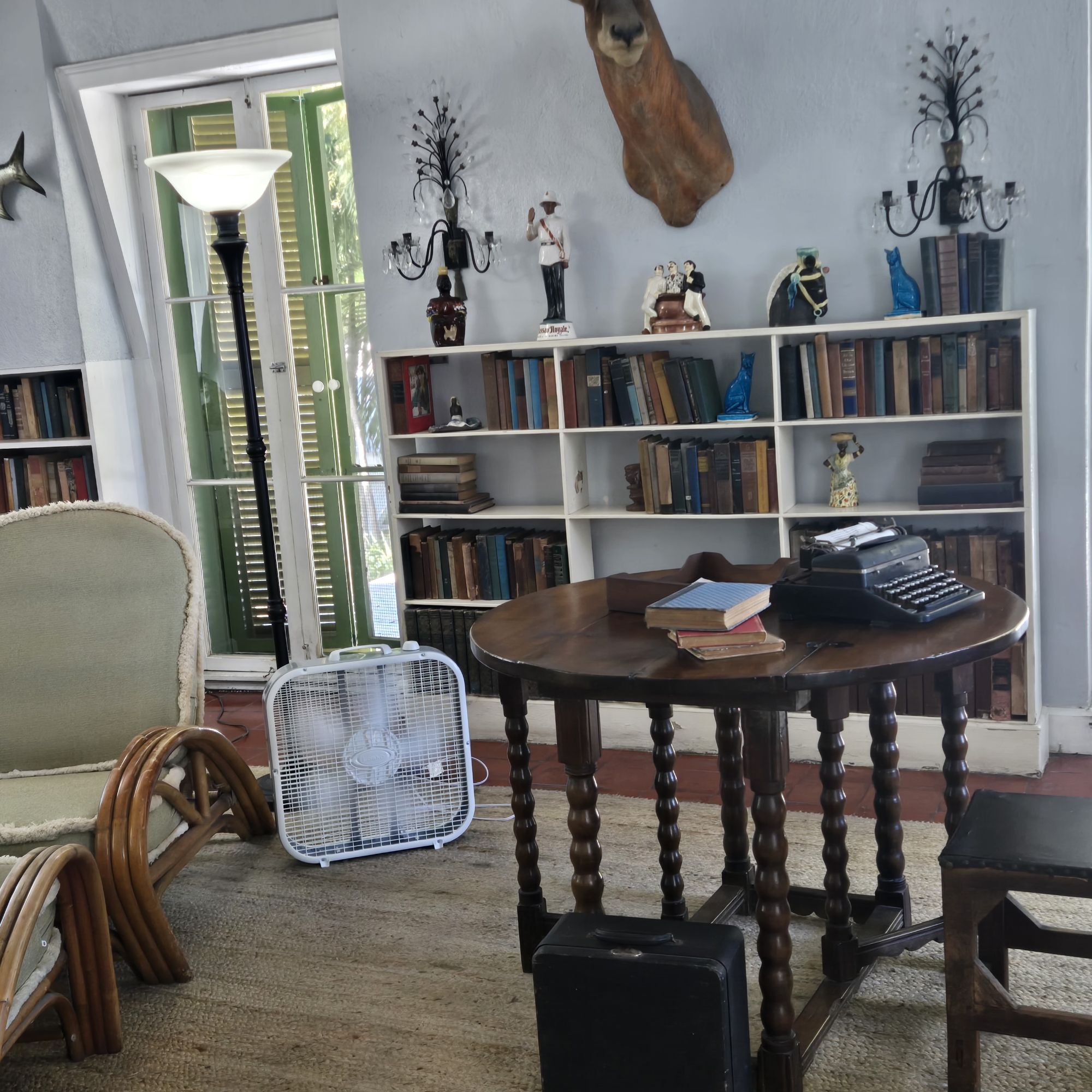
Very worthwhile.
Very near the house is the Key West lighthouse. Both the lighthouse and the keeper’s museum looked good, and I would have liked to see the view from the tops, but….no elevator, and we are not spring chickens. Just under 100 claustrophobic steps up. And down.
Speaking of chickens, roosters and hens wander all around the city. Here is one:
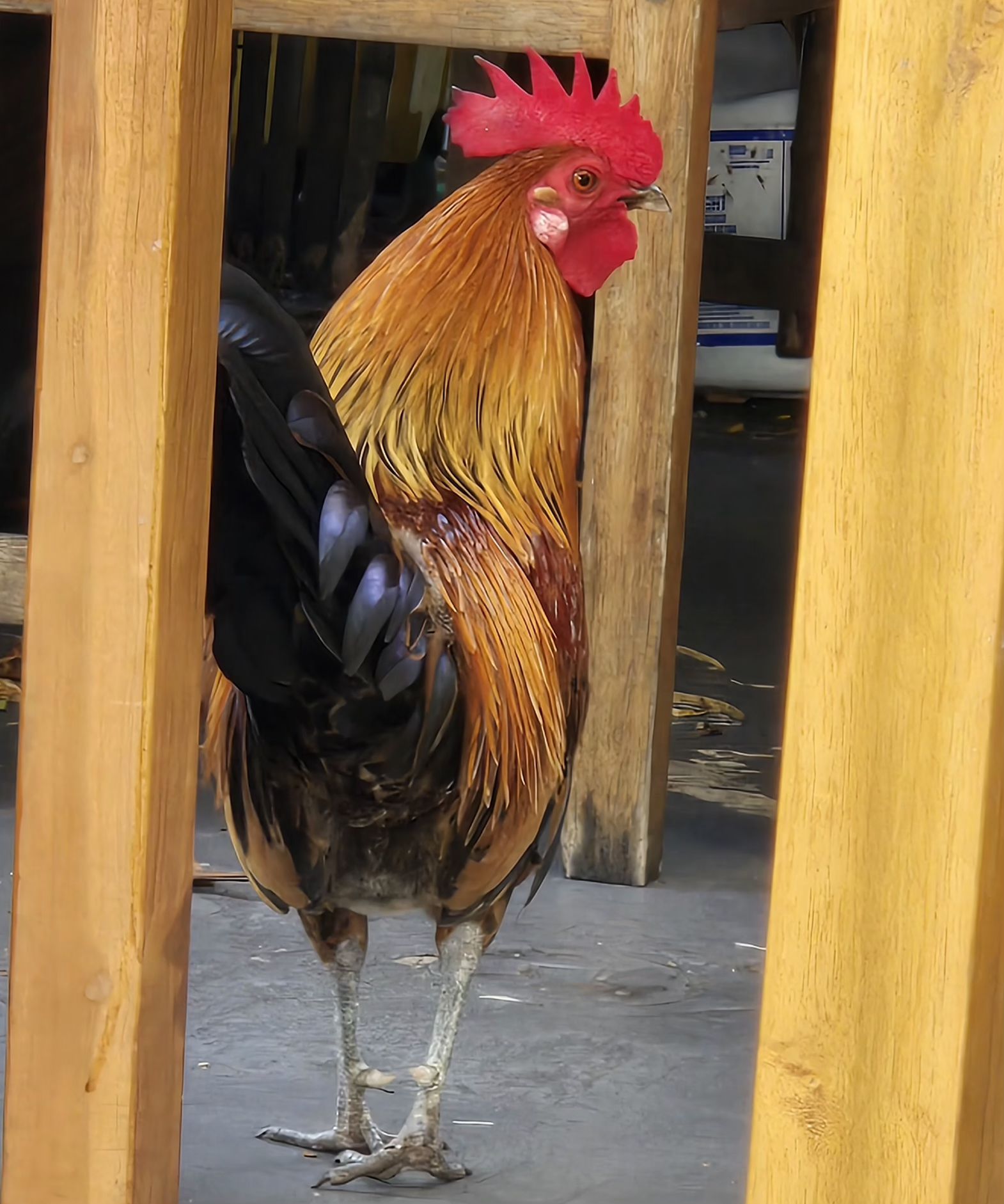
And there are cats. Like this one:

The Hemingway house has 57 cats, with their own staff.
The other highlight of the day was meeting Alejandro F. Pascual, author of this book.
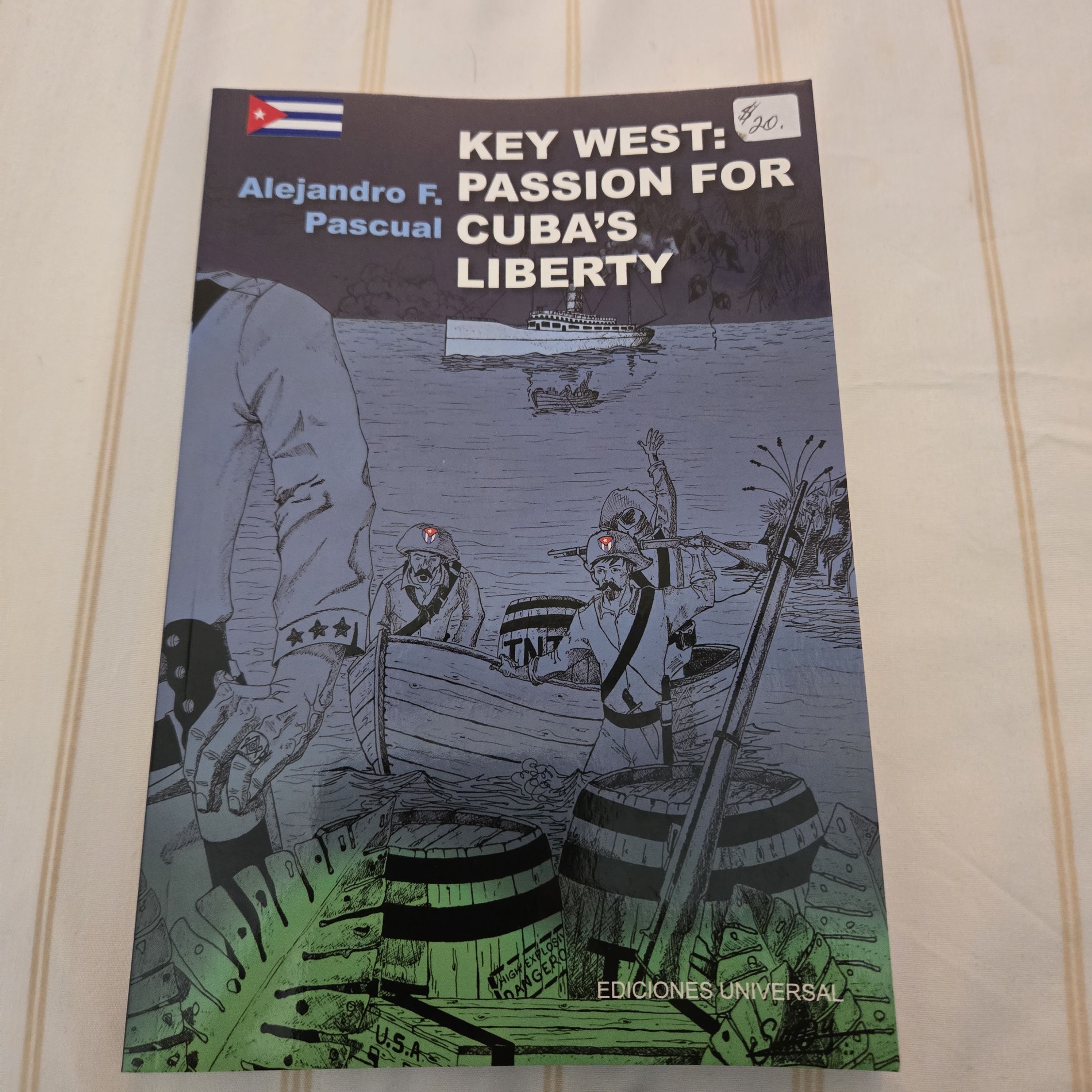
Key West is 50 miles closer to Cuba than it is to Miami, and its history is replete with Cuban influence. For one thing, I didn’t know that Key West once had over 100 cigar factories, all rolling Cuban grown tobacco. After a major fire before the end of the 19th century, cigar rollers, led by the Ybar family, began to move to Tampa.
Pascual left Cuba at 14. Spent the biggest part of his career working in New York for the Latin American edition of Newsweek Magazine. Moved to Key West twenty years ago because the vegetation and the feel of the air here is like Cuba.
I read a little of the book about the settlement of Cuba that I had never thought about. By 1850, Spain had been kicked out of Latin America, leaving only Puerto Rico (then less developed) and Cuba as Spanish colonies. Latin American Spanish loyalists flocked to Havana. They were by and large, as you would imagine, both conservative and financially successful. When Castro took over and so many Cubans fled to the US, they probably included descendants of this earlier group. It might explain the financial success of the immigrant population and their predilection to vote Republican.
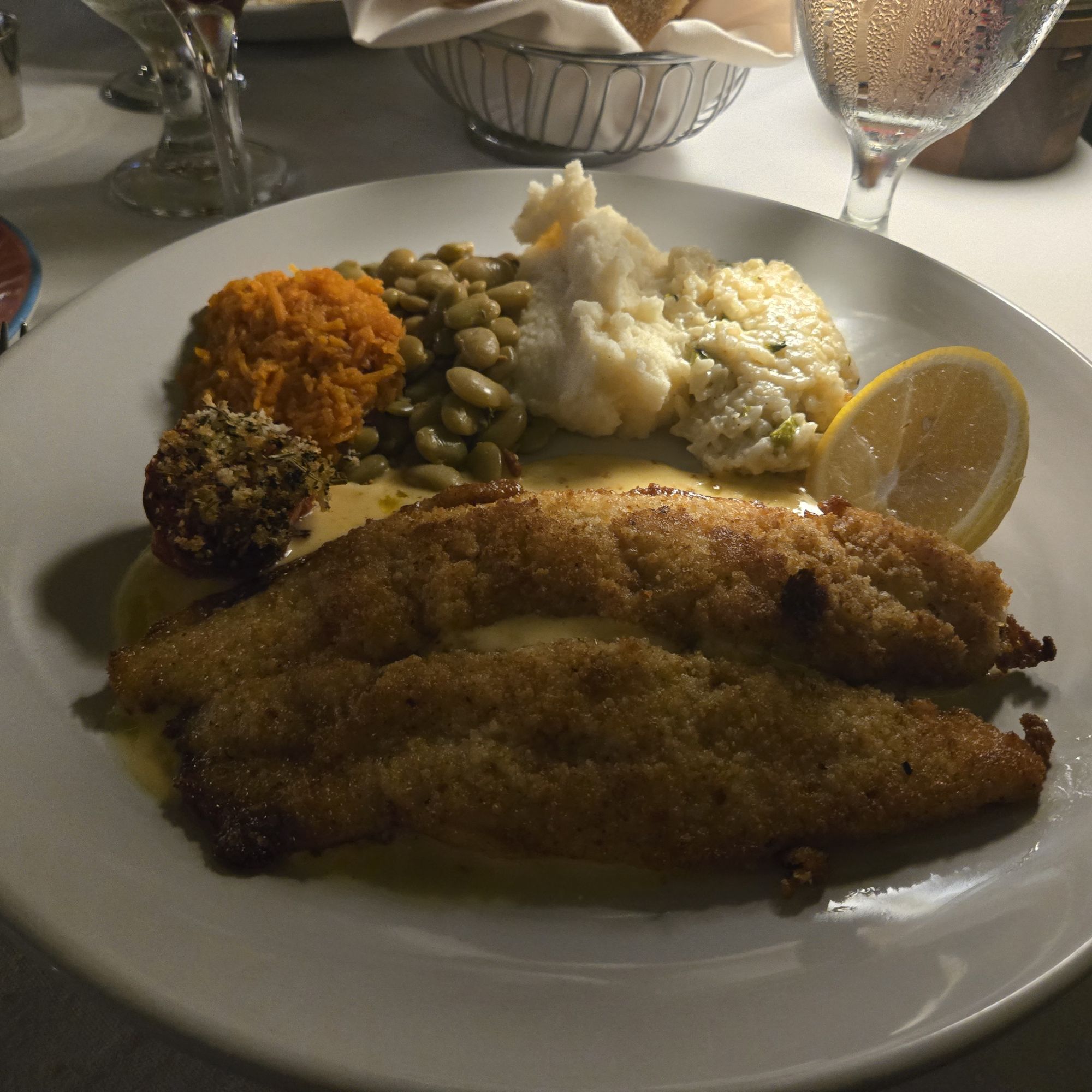
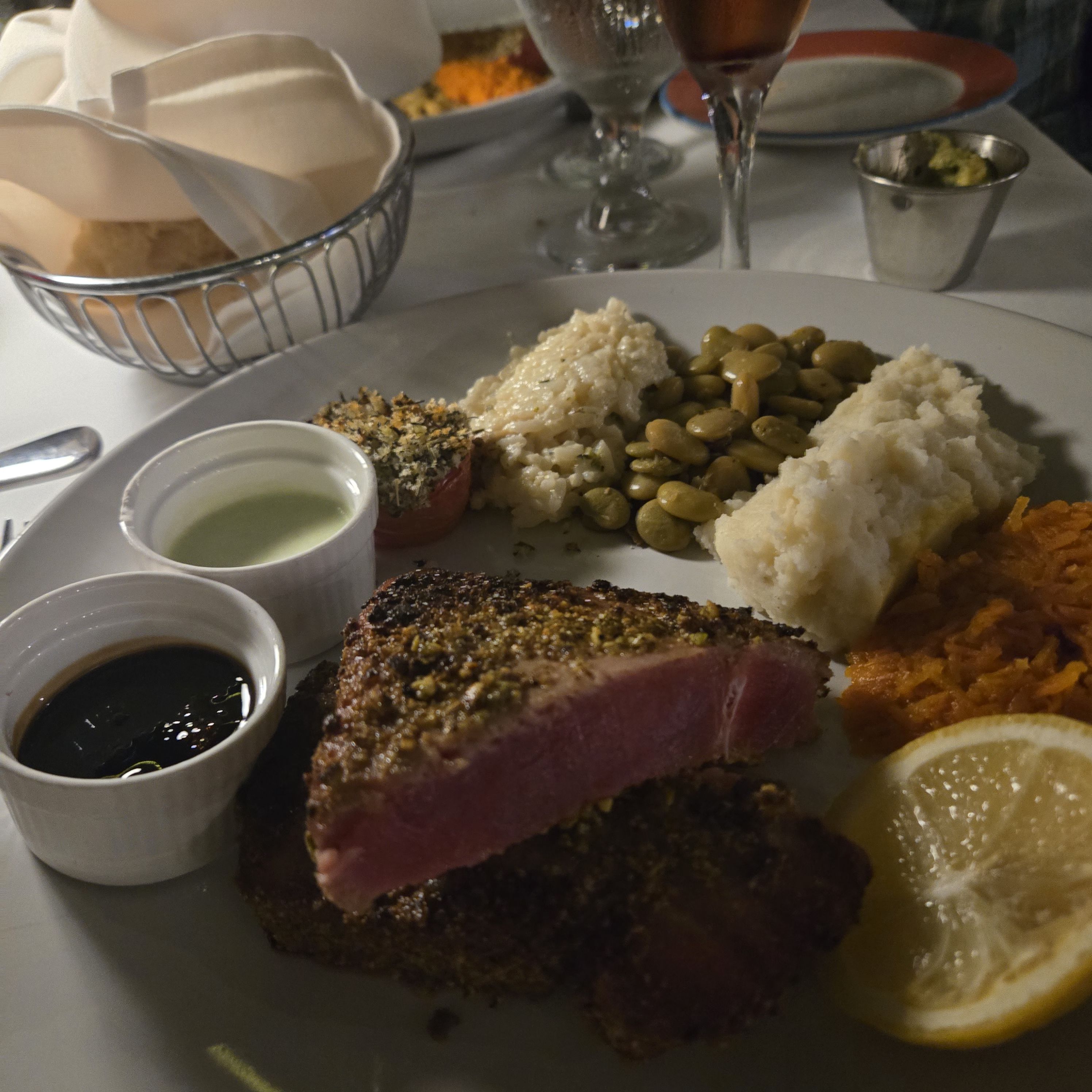
We went back to Cafe Sole last night. Hogback snapper and tuna.
We ended our evening with Donald Trump.
 Art is 80
One response to “Day 6. The Sun Also Rises.”
Nice edition.
LikeLike