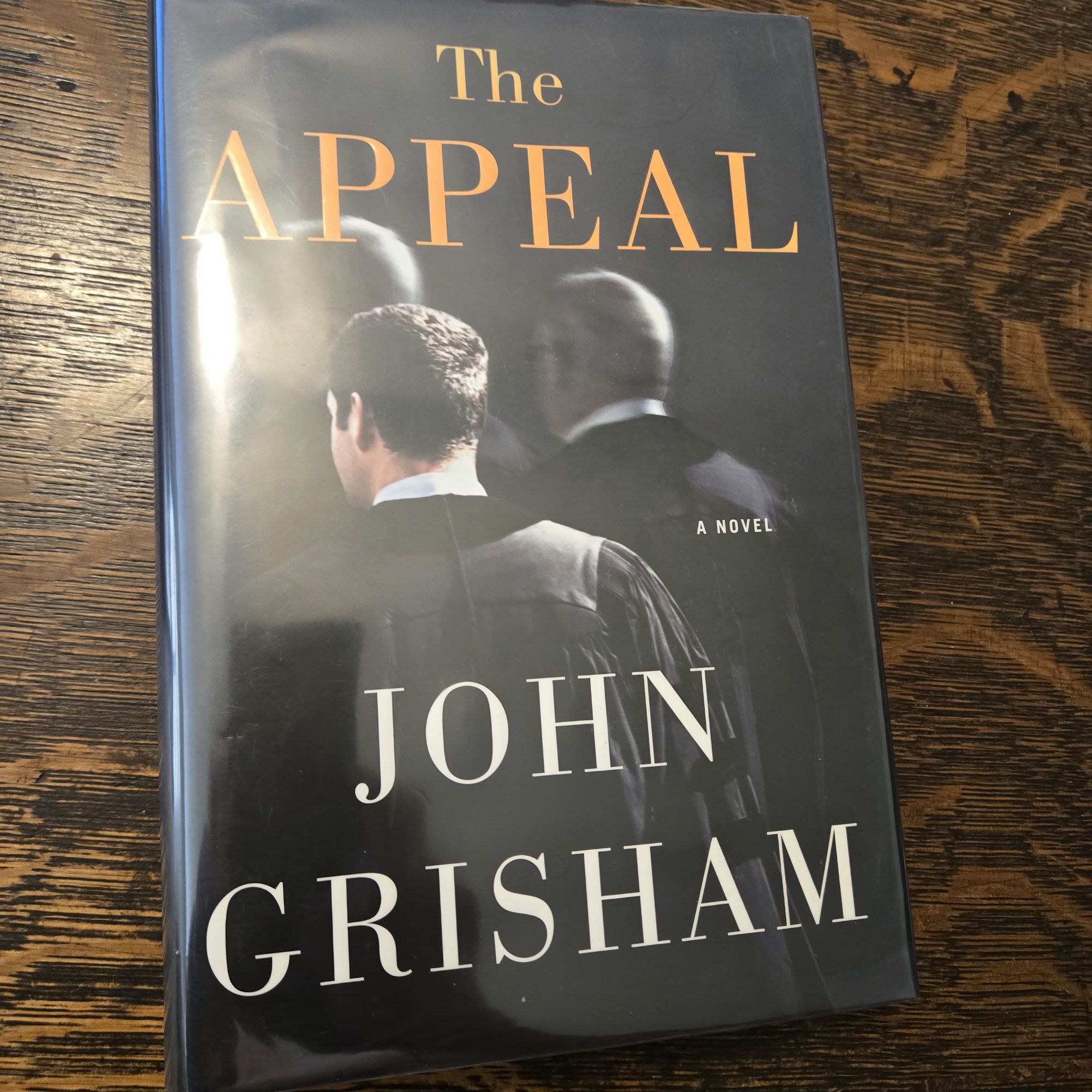
Yesterday, when I wrote about John Grisham’s The Appeal, I suggested that perhaps all novels were about this year’s presidential race. The Appeal focused on a race to become a Mississippi Supreme Court justice that was based on disinformation believed by a large percentage of the state’s voting population.
Last night, as we watched the results of the election on CNN, largely leaving the sound off, I read through another novel that I picked up at random. It was Gallions Reach by H.M. Tomlinson (“there he goes again, how does Art find such obscure titles?”), first published in 1927.
In this book, a young Londoner, Jimmy Colet, trying to find his identity (he has a job he doesn’t like, working for someone he doesn’t respect, and he is very much afraid of becoming trapped by his maybe girl friend), gets into an argument with his unpleasant boss, gets so mad that he finally lets him have it on the jaw, and is then faced with the discovery that he has unwittingly killed his employer.
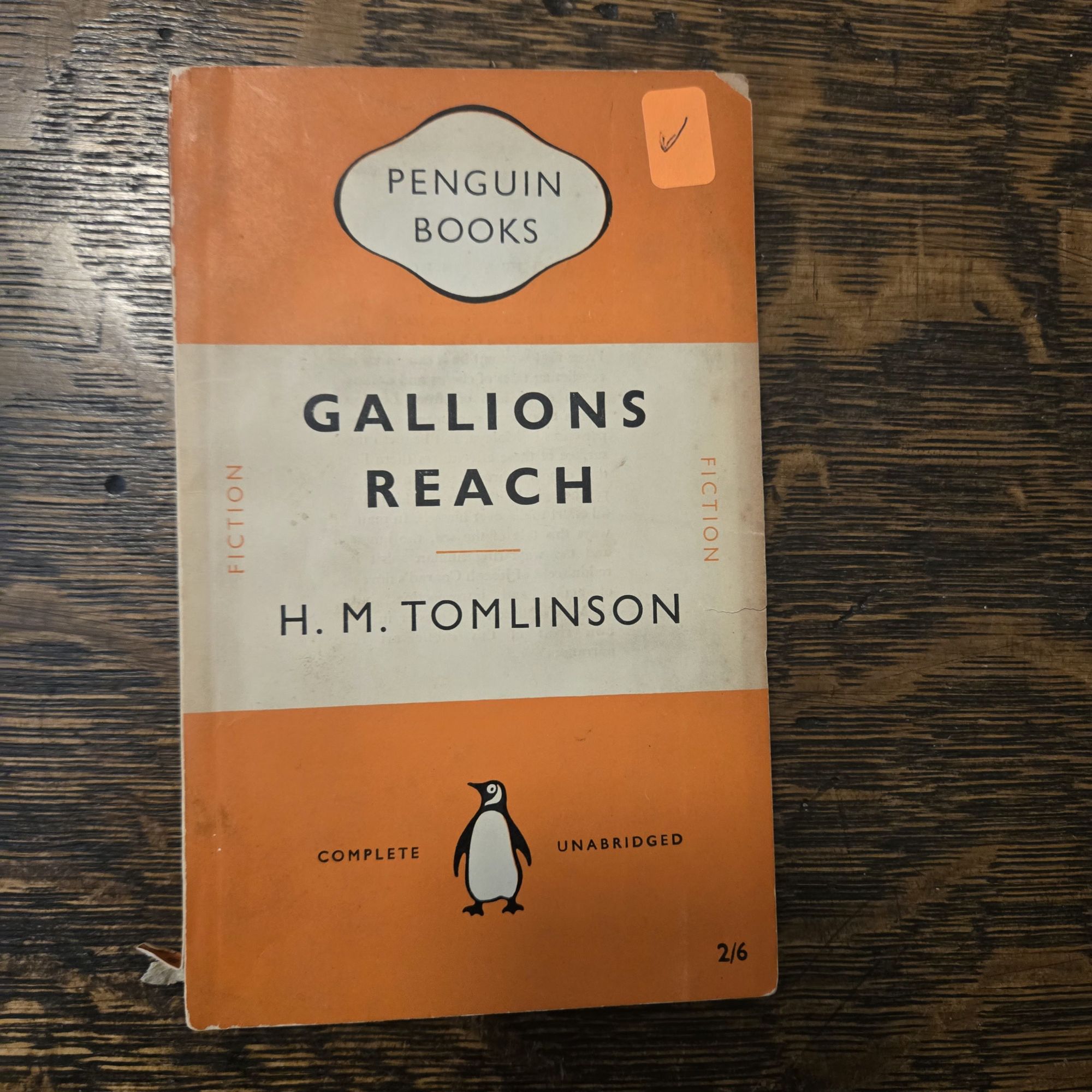
Jimmy doesn’t know what to do, finds himself on the Thames docks (in a neighborhood known as Gallions Reach), agrees to do someone a favor and take a package to a cargo ship and leave it there, walks onto the ship, and fails to get off before the ship embarks on a long voyage that will wind up in Rangoon, with Jimmy, not exactly a stowaway, becoming a member of the crew. The ship encounters a storm at sea, its rudder somehow is loosened and breaks off, the ship founders, Jimmy and others get into lifeboats, the ship sinks, and they are picked up by a passenger ship which drops them off at their destination. Aboard this ship, Jimmy meets an English prospector for precious metals and agrees to become his assistant in prospecting deep into the jungle. After a series of adventures, Jimmy makes his way back to Rangoon, where he finds a ship heading back to London and decides to board it, go back home, and face his fate.
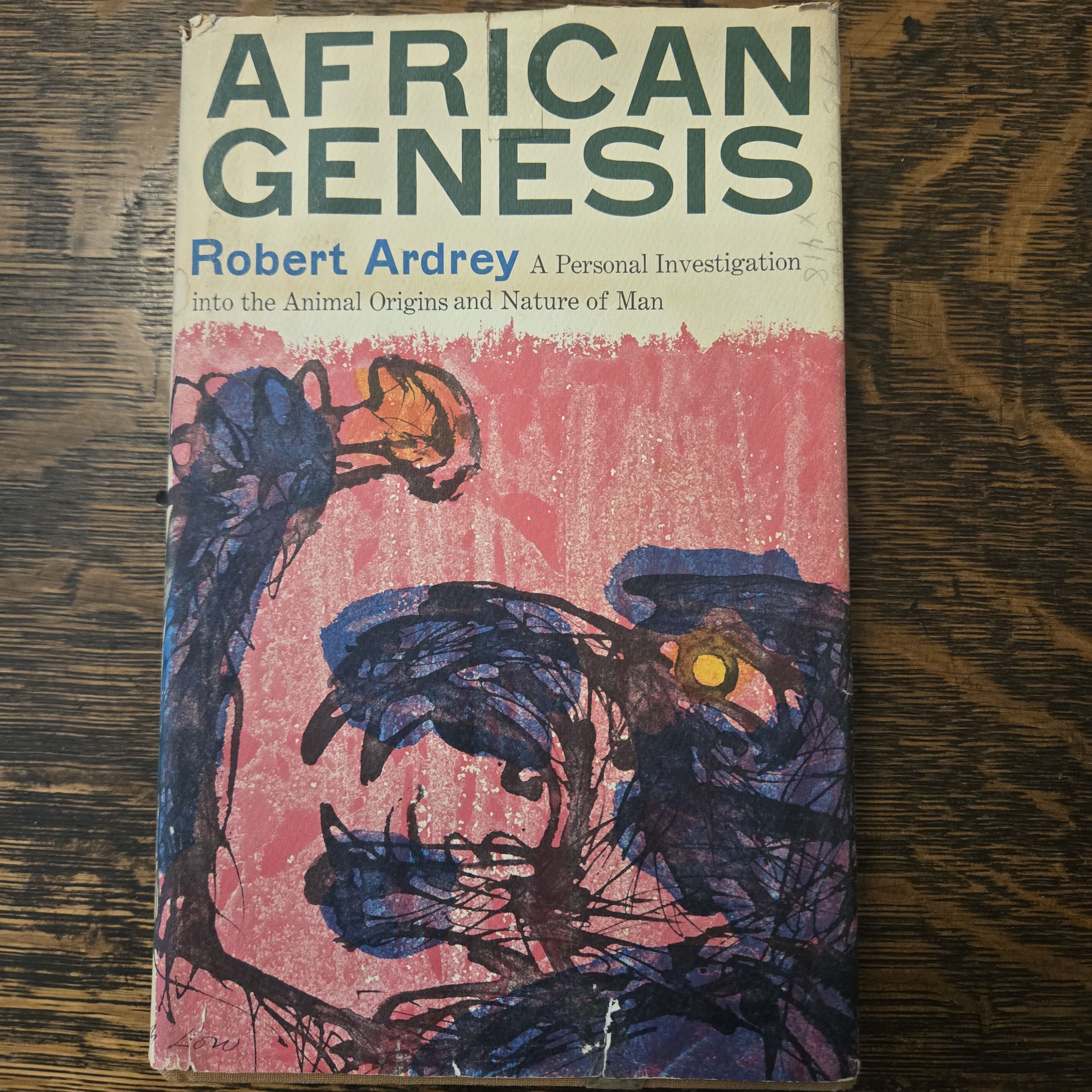
How does that fit in with the tragedy of yesterday’s election? It reminded me of one of my all time favorite books, African Genesis, by Robert Ardrey, “a personal investigation into the animal origins and nature of man” (from the cover). Ardrey, in his 1961 best seller, looks at the various needs of man – food, shelter, health, love – the usuals. But he concludes that there is one emotional need that trumps (oh, that word again) the others. That is the need to escape boredom.
Jimmy Colet, in Gallions Reach, is as bored as you can get. So he seeks away to escape that boredom. He slugs his boss, he runs away to sea, he decides to prospect in the Burmese jungle with a total stranger, and he does that until his boredom escaping adventures themselves become boring. And then he heads back home.
The economy may be strong, inflation may have been defeated, unemployment may be low…..but people are dissatisfied, they are bored, they need what they perceive as change. “Let’s vote the bastards out”, they say, not quite realizing that in the fact they are voting the bastards in.
A stretch? Maybe, but that is the way I looked at it.
I should add one more thing. Yesterday, on the outside rack at Lost City Books, in Adams Morgan, I found a $4 copy of Archibald MacLeish’s book from 1940, A Time to Speak, inscribed by the author. It’s a book of essays, published elsewhere in the late 1930s, that all seem to relate, one way or another, to the rise of Hitler and the destabilization of the world.
One essay, published in 1938, is titled The Irresponsibles. I looked at it because I was intrigued by the name (thinking of the “deplorables”, I guess), and saw it was a sad and angry, and well written, diatribe against the writers and academics who saw what was going on the world with the rise of fascism and other things, and just let it go, not using their bully pulpits to fight against it. Of course, MacLeish says, some did try to alert the rest of the world, but in fact, he concludes, not enough did. In fact, very few.
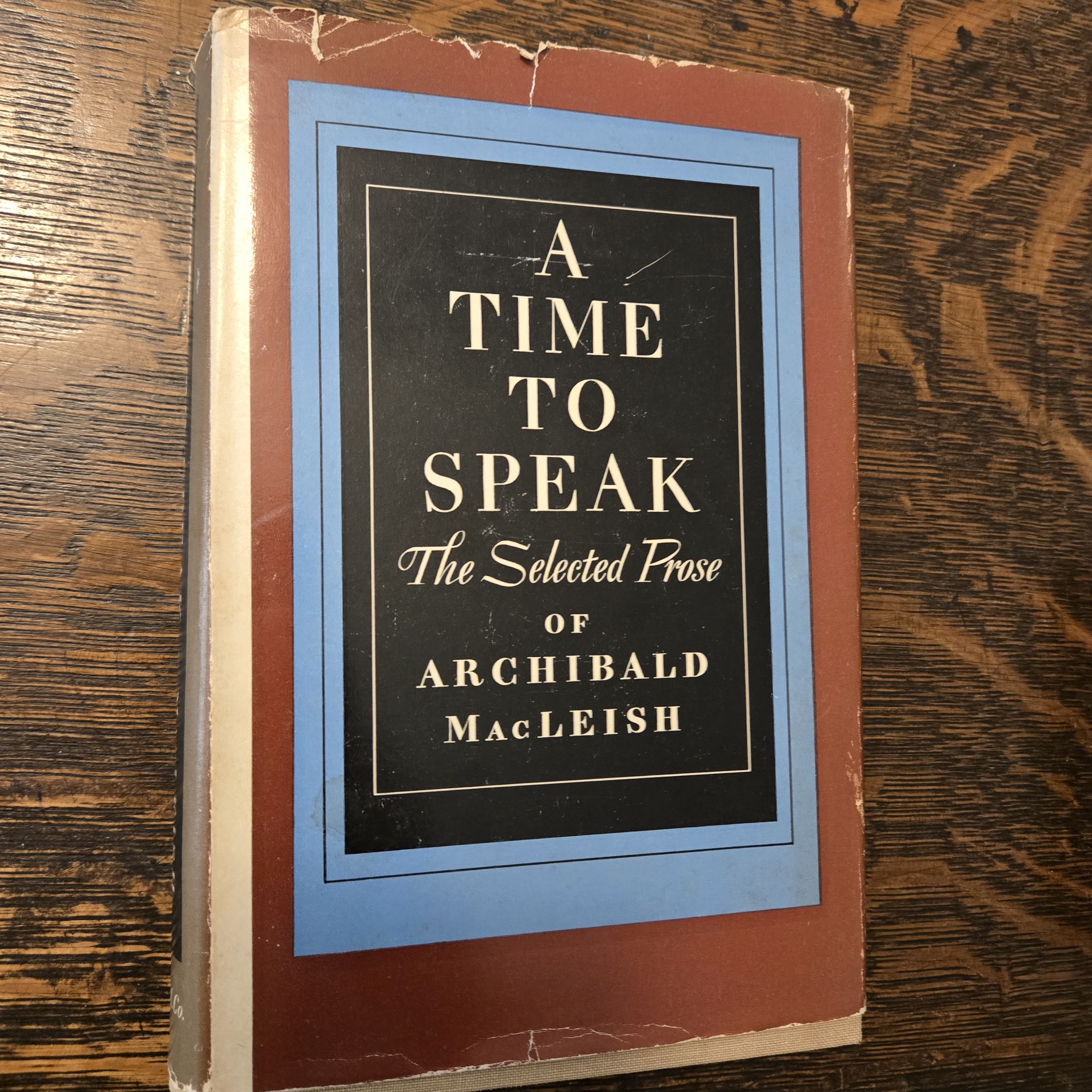
MacLeish says: “Why did the scholars and the writers of our generation in this country, witnesses as they were to the destruction of writing and of scholarship in great areas of Europe and to the exile and the imprisonment and murder of men whose crime was scholarship and writing — witnesses also to the rise in their own country of the same destructive forces with the same impulses, the same motives, the same means — why did the scholars and writers of our generation in America fail to oppose those forces while they could…….?”
You see what I mean? All of the books, no matter which ones you pick up by accident, all of them deal with yesterday’s election.
Now, back to my regular activities.
 Art is 80