We are crossing 9th Street NW on Rhode Island Avenue, and heading towards 5th Street, our next stopping place.
Three of the larger buildings on this part of Rhode Island Avenue qualify as affordable housing.
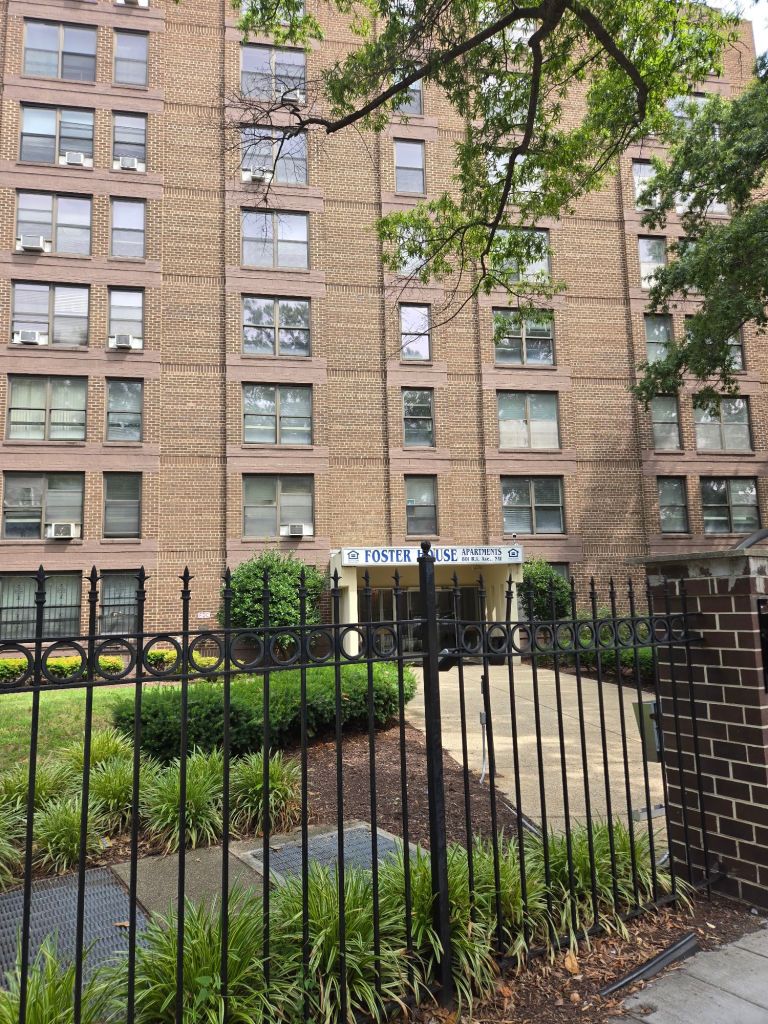

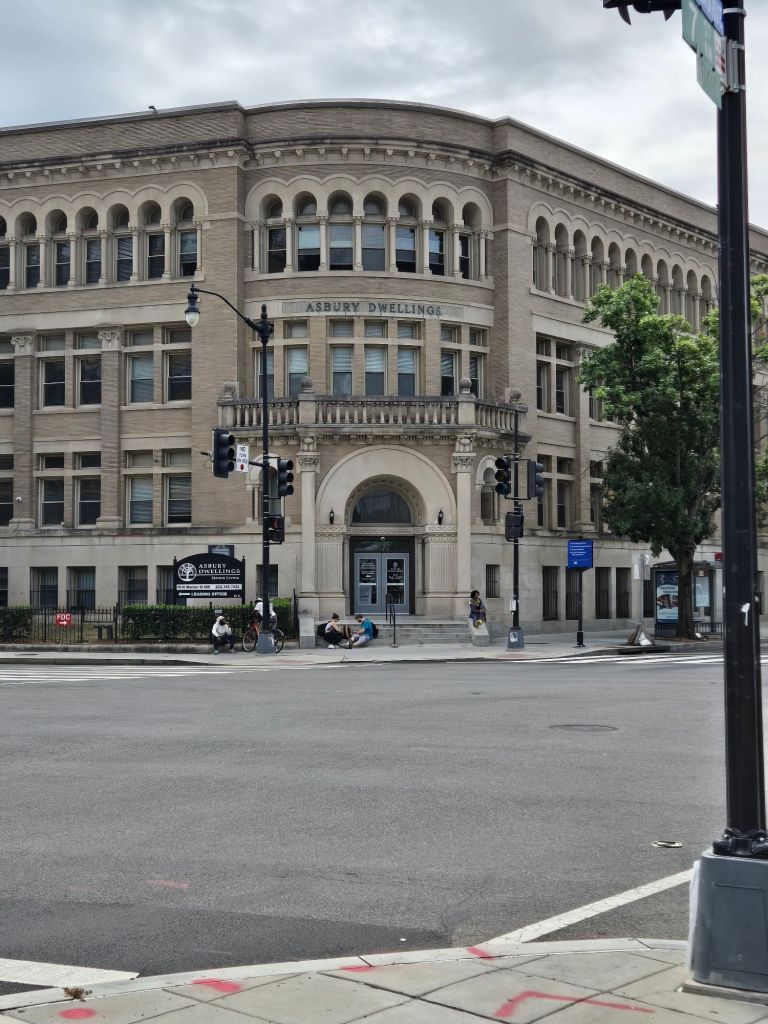
Their stories are very different.
The first, Foster House, at 8th and RI, is a development for low income seniors that was built over 50 years ago by New Bethel Baptist Church. The church, located a few blocks from this property, still owns Foster House through a non-profit corporation.
This is a 76 unit property, and about four years ago, it was about one third vacant. Whether this has changed, I don’t know, but Foster House is one of the three subsidized housing developments in the city that has been targeted through enforcement actions by the DC attorney general. The allegations relate to failure to upgrade or update the building since it opened in 1973, and failure to provide adequate maintenance. There was an attempt to put the building into receivership last year, but I don’t know where that stands.
The church maintains it just does not have the funds to do what is needed and that the building can not be fixed, and should be demolished and replaced. The church proposed to do just that a few years ago, but the plan has been caught up in processing issues since that time.
The second building, at 7th and Rhode Island, is much different. It is brand new, opening up within the past year.
This is also an “affordable” building, but I believe was constructed under a program that primarily serves middle income tenants, rather than low income tenants. On the first floor, there is retail space. 7th Street, like Rhode Island Avenue, is a major street that deserves its own walk. As it heads north, it passes the Howard University campus (its name is changed to Georgia Avenue), it goes by the former Walter Reed Hospital grounds (now the site of major development activities) and goes on to downtown Silver Spring, Wheaton, Olney and beyond (“beyond” literally means “the great beyond”), to Judean Gardens cemetery, where Edie and I have our plots).
But I digress. This building at 7th and Rhode Island will, I am sure, be very successful. And it is attractive, something you cannot say about Foster House (well, I guess you “can”).
The third building, Asbury Dwellings, has the most interesting story of all. Like Foster House, it is an apartment property serving low income seniors. While Foster House was built in 1971, Asbury Dwellings was built in 1902. It started out as McKinley Vocational School, a trade school for White high school students. When McKinley moved to a new campus, it became the Shaw Junior High School, a school for Black students. (Remember, until 1956, DC schools were completely segregated.)
I am not sure when the building was remodeled and converted to housing, but it has been several decades. From the outside, this building has always looked immaculate. I assume it fills its role more than adequately.
Let’s finish up today with one other group of residential buildings in this area.

These small row houses look like they were built before 1900. While most DC row houses are brick, these have wood facades. The houses look to be in very good condition, with fresh paint and clean yards. That’s all I know about them. But they provide one more element in the eclectic mix of housing on this part of Rhode Island Avenue.
Tomorrow we will look at other aspects of these few blocks. Sculpture, restaurants, monuments and more.
 Art is 80