On the day I walked from Logan Circle on Rhode Island and 13th Street, I went as far as 5th Street. I don’t think we will get that far today in this post, but then, I guess you don’t really know before you start.
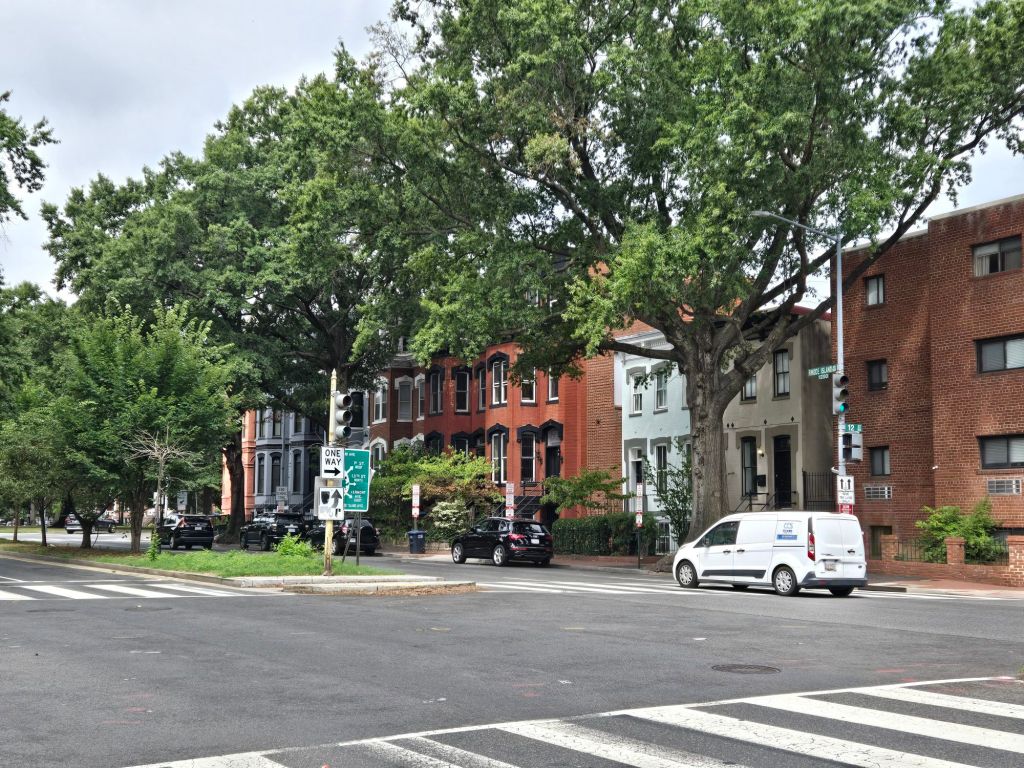


You may recall that I said that we are leaving Washington the capital and entering Washington the city. Here are three examples of residential developments on the next two blocks. First, row houses, now restored after some years of decline, a typical modern apartment/condominium building recently completed, and another new building, designed to fit in with and resemble older architecture.

Walking on, I wanted to meet some neighborhood residents. I found Gary, who looked very comfortable, and who obviously only spoke to me in sign language.
I also found our first example of street art. These delicious murals, painted in an alley on the side wall of a moderate townhouse, draw a lot of attention from passersby.
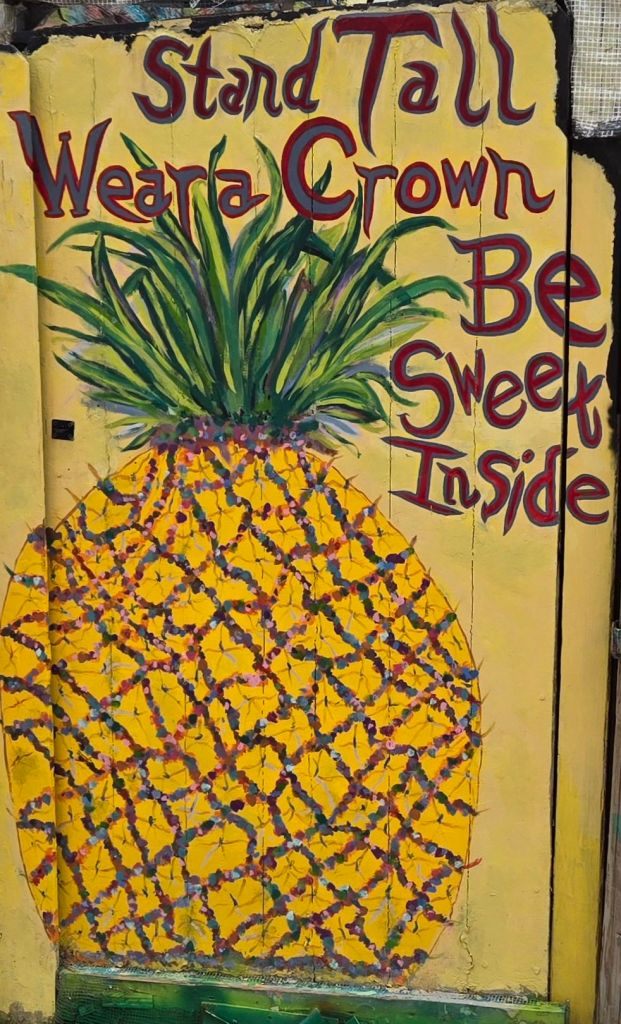
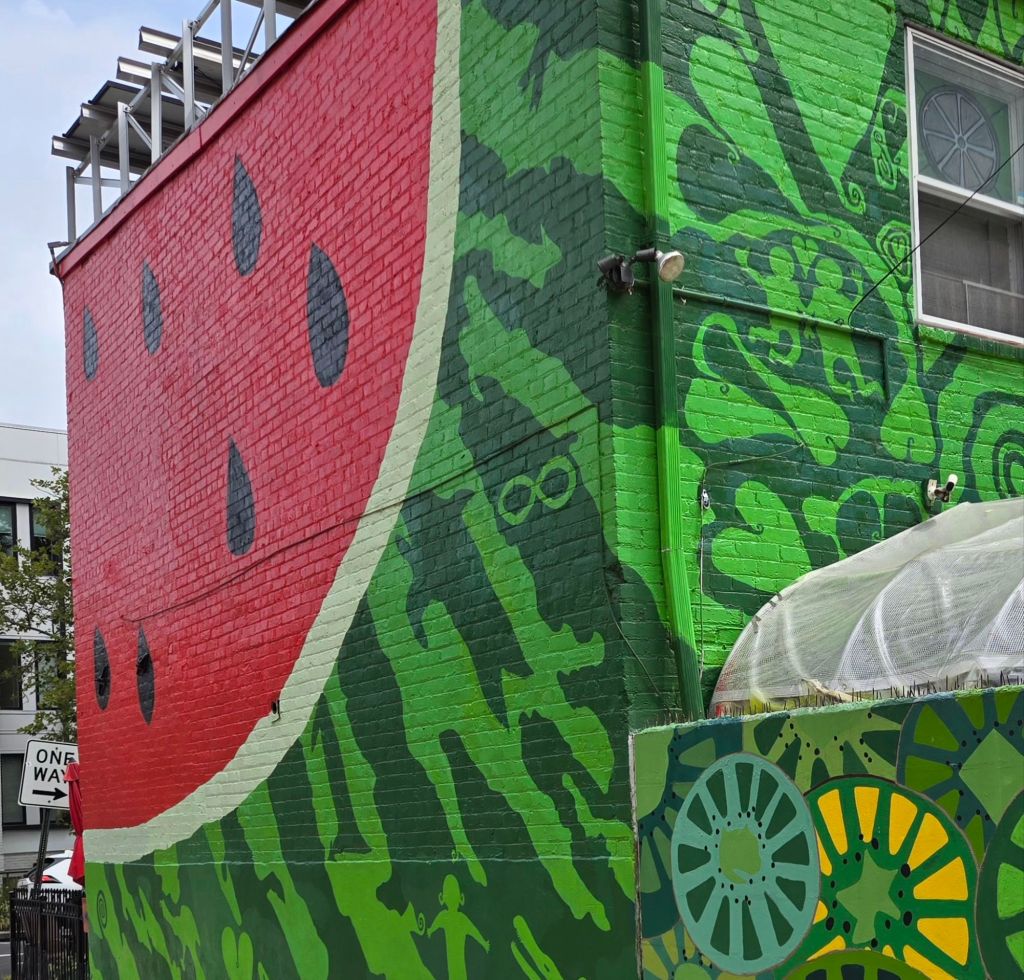
And we are already now walking between 10th and 9th Street.
We pass some school athletic facilities, and if you look around the corner onto 9th Street, you see the entrance to Banneker Academic High School.

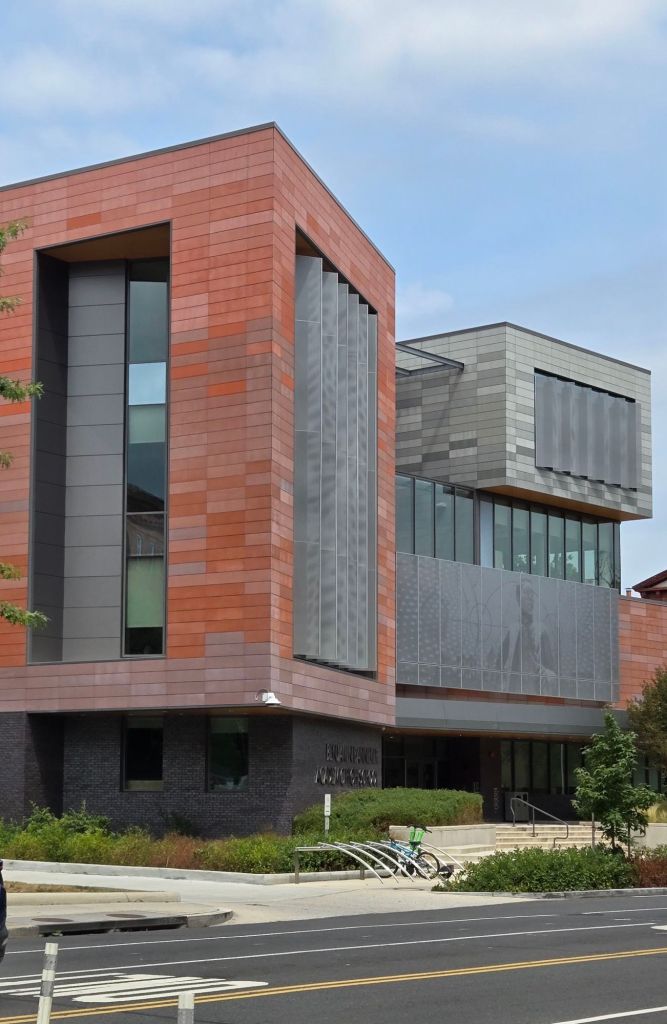
Banneker High School is known for many things, including being the school at which my son-in-law Andrew teaches. Beyond that, it is known as an academic magnet school, one of two in the DC public school system, which admits its students in 9th grade and admits no transfer students, and from which virtually all students move on to college. It is a relatively small high school, with about 500 students overall, who come from all sectors of the city. It was named after Benjamin Banneker.
Benjamin who?
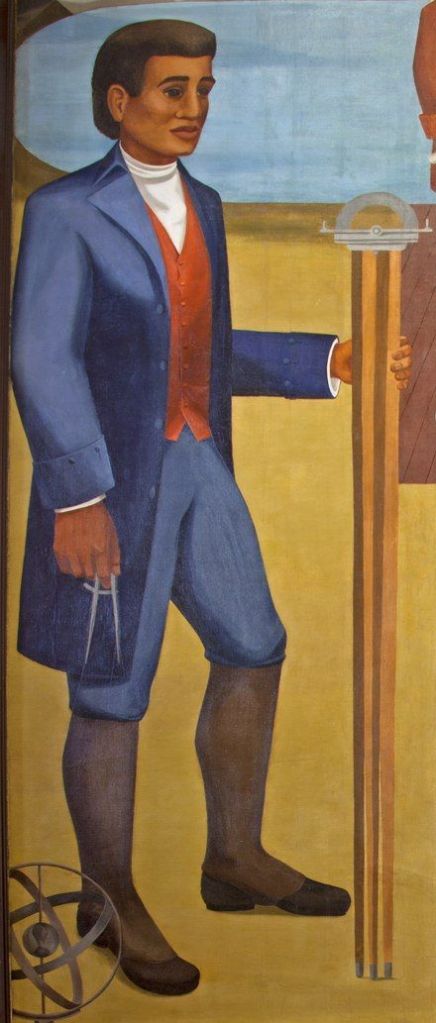
Banneker (I downoaded this mural from the DC Recorder of Deeds office) was a free Black, born in Baltimore in 1731. He died in 1805.
He was the owner of a hundred acre farm, a naturalist, an astronomer, a surveyor, and the author and publisher of several almanacs. Exceptional accomplishments for an African-American in the 18th century in colonial America (or for anyone else). You can see an extensive summary of his life on Wikipedia.
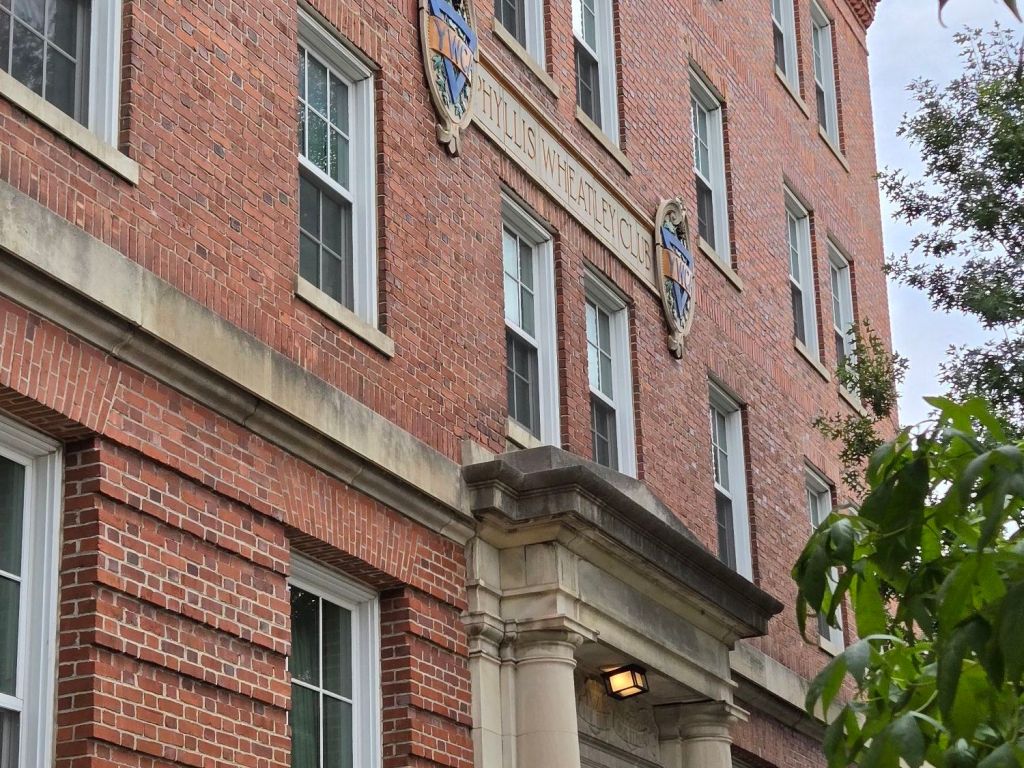
Between 10th and 9th Streets, you pass two other important institutions on the north side of Rhode Island Avenue. The first is the Hillcrest Children and Family Center, the second the Phyllis Wheatley YWCA.
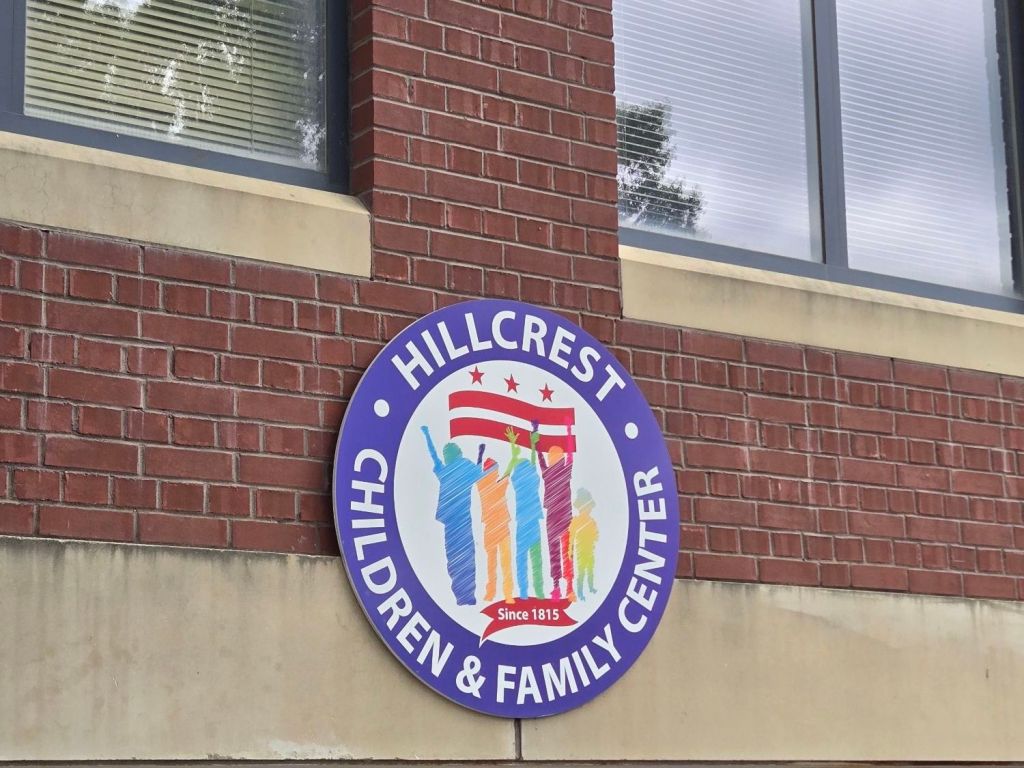
The Hillcrest Children and Family Center is a social service agency which concentrates on mental health assistance and substance abuse recovery programs. It is not, by the way, a new organization. It was established in 1815. And not only that. Its founder was Dolley Madison.
The Wheatley Y also has an interesting history. Unfortunately I don’t know enough about it. But its building is 100 years old, and it was established as a Y for Black women (maybe the first). For the last decade, and after a full renovation, the building now contains 86 units of housing for low income women of several races, and provides related services. Phyllis Wheatley, by the way, was an African-American poet who, like Benjamin Banneker, lived in the 18th century.
On the south side of Rhode Island Avenue, there is another school, the Seaton Elementary School. Its entrance has this sign:

William Seaton, by the way, was mayor of Washington for about ten years in the 1840s, and was a supporter of public education (as well as a slave holder). I looked at the school’s website. The school is 1/3 Black, 1/3 Hispanic, and 1/3 White and Asian. Its students come from about 30 countries.
So…..we have reached 9th Street. Enoigh for today. Next time, we will see if we can get to 5th Street. I think we can. I think we can.
 Art is 80
One response to “A Walk Down the Street. Part 4.”
A good walk, thx!
LikeLike