If you read this blog on a regular basis, you may know that I attend a breakfast meeting every Thursday (sometimes live with real food, sometimes each to his own, on Zoom) with about 30 or more men, all about the same age (if you consider 70-100 the same age). Each week, one of us makes a presentation on a subject of our choice.

You may also know that I attend a breakfast meeting on most Friday mornings, with a smaller and less cohesive group, a breakfast sponsored by my ex-law partner of 20 or so years. These sessions have a guest presenter.
This week, I had both meetings, and each of them told me some things I didn’t know.
The Thursday presentation was about 19th century photographer Eadweard Muybridge. You may know Muybridge, who was born in England in 1830 and died there is 1904, although he spent almost all of his adult life in the United States. He is known for his sequential photographs (at least that is what I call them), mainly of horses and people, where you see a series of photographs, taken one shortly after another, so that if you flip the pages they are on, they almost look like a primitive motion picture. Indeed, some regard Muybridge as a founding father of motion pictures.
His series pictures included running horses (he was able to actually show how horse legs moves during faster gaits, something that cannot be caught by the naked eye), and people (often nude, and including himself, which were accepted during a rather prudish era because of their scientific interest. He also photographed nature (as Ansel Adams would do much later), and made stereopticon photos, able to be watched through stereopticons in three dimensions.
But I never thought how these sequential photographs were made. It turns out that the famous horse photographs were made using 24 sequential cameras, set at a very fast shutter speed, and timed to go off within something one and a half seconds of each other, all operated automatically. Quite an achievement for 1878.
Muybridge was an interesting guy. He early went to San Francisco where he was a book dealer, but left shortly after he learned that his wife was pregnant and he was not the father. Why did that require him to leave town? Because he shot and killed his wife’s male friend during a card game, was arrested, and tried for murder. There was no question but that he fired the shots that killed his rival, but he was acquitted at trial on the basis that the murder was justifiable. I guess that’s the way things were in those days.
His departure ended his book selling days, and that’s when he became interested in the still new art of photography. And, his career mushroomed, his innovations in his new field multiplied, and his murder trial was apparently simply forgotten.
The guest at my Friday breakfast meeting was Katie Frohardt, the Executive Director of an organization called Wild Earth Allies. I had never heard of Wild Earth Allies, and was amazed at all it seems to be doing.
Frohardt, born in Connecticut, schooled in Virginia and back in Connecticut, married and moved to the DC area. Her new husband, working for the United Nations in the mid-1990s, became part of a team working to help Rwanda recover from its 1995 holocaust, and Katie, not wanting to be a new bride left at home, got a job with US AID, also in Rwanda, where they lived and worked for a few years.
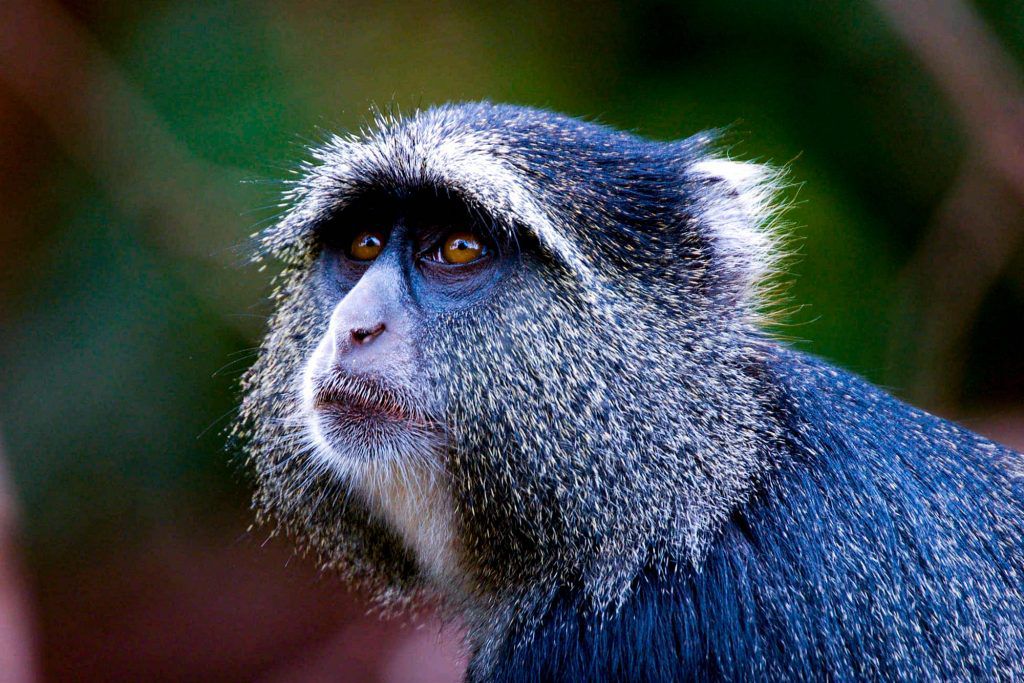
Sometime after their return to the United States, and after she had a variety of jobs related to her field of land use planning and conservation, she founded her current organization to work on specific projects around the world, providing technical help to other local organizations involved in worthwhile projects. She talked about some of these projects, including projects still in Rwanda to conserve certain wild animal species such as silverback gorillas, and in the neighboring Democratic Republic of Congo (working with Grauer’s gorillas and with blue monkeys (previously thought to be extinct). But they are also working in the United States (she gave as an example work being done to restore the Great Cypress Swamp in Delaware) and in Belize (where they have been working with fishermen to keep tortoises from being caught in fishing nets), and in Cambodia (preserving the forest habitats of Asian elephants) and elsewhere.
What a fascinating group of important programs assisted by an organization with only 8 employees in its home office. Frohardt is an excellent spokesperson, and made many interesting points. One concerned animal poaching, obviously a major problem, but she didn’t talk about the problem, she talked about the poachers, who poach to make a living, and how expert they become on animal habitats and animal habits, and what great employees they make for conservation organizations once they leave poaching behind. As to the fishermen in Belize, they mainly fish for lobsters, and they use netting. It was discovered the small LED lights in their netting will both keep tortoises away and increase the lobster harvest; this is something now being tried in other places across the world.
This coming week? I don’t know about the Friday program yet, but I have been informed that the topic of the Thursday program is “Why, why not, and because”. We will see…….
 Art is 80